The storm has passed, the shingles on your driveway tell part of the story, and now the adjuster is on the calendar. In Columbus, that's usually the moment homeowners start guessing, worrying, and hoping the first number from the carrier will make the repair easy. It usually won't.
A roof damage insurance adjuster is not just taking a quick look and closing the file. The first inspection shapes the scope, the estimate, and the negotiating position in every conversation that follows. If you're waiting for the visit, treat the next few days like a claim file, not a house chore.
Table of Contents
- The Storm Just Left and an Adjuster Is on the Calendar
- What a Roof Damage Insurance Adjuster Actually Does
- Inside the Field Inspection Workflow
- The Week Before the Adjuster Arrives
- During the Visit What to Say and What to Watch
- When the Estimate Comes Back Low or Incomplete
- Columbus and Central Ohio Tips That Change the Math
- A Homeowner's Final Checklist and What Comes Next
The Storm Just Left and an Adjuster Is on the Calendar
A homeowner in Gahanna calls after a hard hailstorm. The yard is littered with leaves, the gutters look beat up, and a ceiling stain showed up in the hallway the next morning. The insurer sets an inspection, and now the whole claim turns on what the adjuster sees, what gets photographed, and what gets left out.
That's the part many overlook. The inspection is not the end of the process; it's the opening move. If the adjuster documents the wrong slopes, misses collateral damage, or decides the roof is just worn out, the claim can start small and stay small.
The claims system is big enough that even one roof matters. In 2023, 5.3% of insured homes had a claim, and about 1 in 36 insured homes had a property-damage claim tied to wind or hail, according to the Insurance Information Institute's homeowners insurance facts. Property damage, including theft, made up 97.3% of all homeowners insurance claims that year, which is why roof losses sit inside a huge, established claim ecosystem, not some rare side issue.
If you want a simple read on whether a storm likely caused damage, start with a grounded checklist like this storm damage roof guide. The point isn't to self-diagnose like an adjuster. The point is to know whether you've got enough signal to press the claim forward with confidence.
Practical rule: the first inspection usually sets the tone, but it doesn't have to set the final answer.
What a Roof Damage Insurance Adjuster Actually Does
A roof adjuster's job is straightforward, even if the process feels messy. They inspect the roof, decide whether the damage looks tied to a covered peril, and write an estimate that the carrier can use to settle the claim. That estimate is only as good as the slopes they saw, the photos they took, and the evidence they accepted as storm-related.
A company adjuster works for the insurer. An independent adjuster is hired by the insurer too, but usually as a contracted outside field adjuster. A public adjuster works for you, the policyholder, which is a different game entirely.
Adjuster Types at a Glance
| Adjuster Type | Hired By | Paid By | Loyalty / Goal |
|---|---|---|---|
| Company Adjuster | Insurance carrier | Insurance carrier | Protect the carrier's interests and settle the claim based on the policy |
| Independent Adjuster | Insurance carrier through contract | Insurance carrier | Provide field inspection and estimating support for the carrier |
| Public Adjuster | Homeowner | Homeowner, usually by agreement | Represent the policyholder's interests and push for a fuller claim outcome |
That distinction matters when the estimate feels light. A homeowner-facing explainer on the patio roof contractor guide makes the same basic point from a contractor angle, the person in the driveway is not automatically neutral just because they're polite. Politeness doesn't make them your advocate.
A public adjuster is a licensed professional retained by the policyholder, and one source says homeowners have the legal right to hire their own adjuster at any point in the claims process: insurance claim recovery support on public vs company adjusters. That same source notes public-adjuster representation becomes especially relevant when an insurer's estimate is more than 20% lower than contractor bids.
Your adjuster doesn't need to be your enemy, but you should never confuse their job with yours.
Inside the Field Inspection Workflow
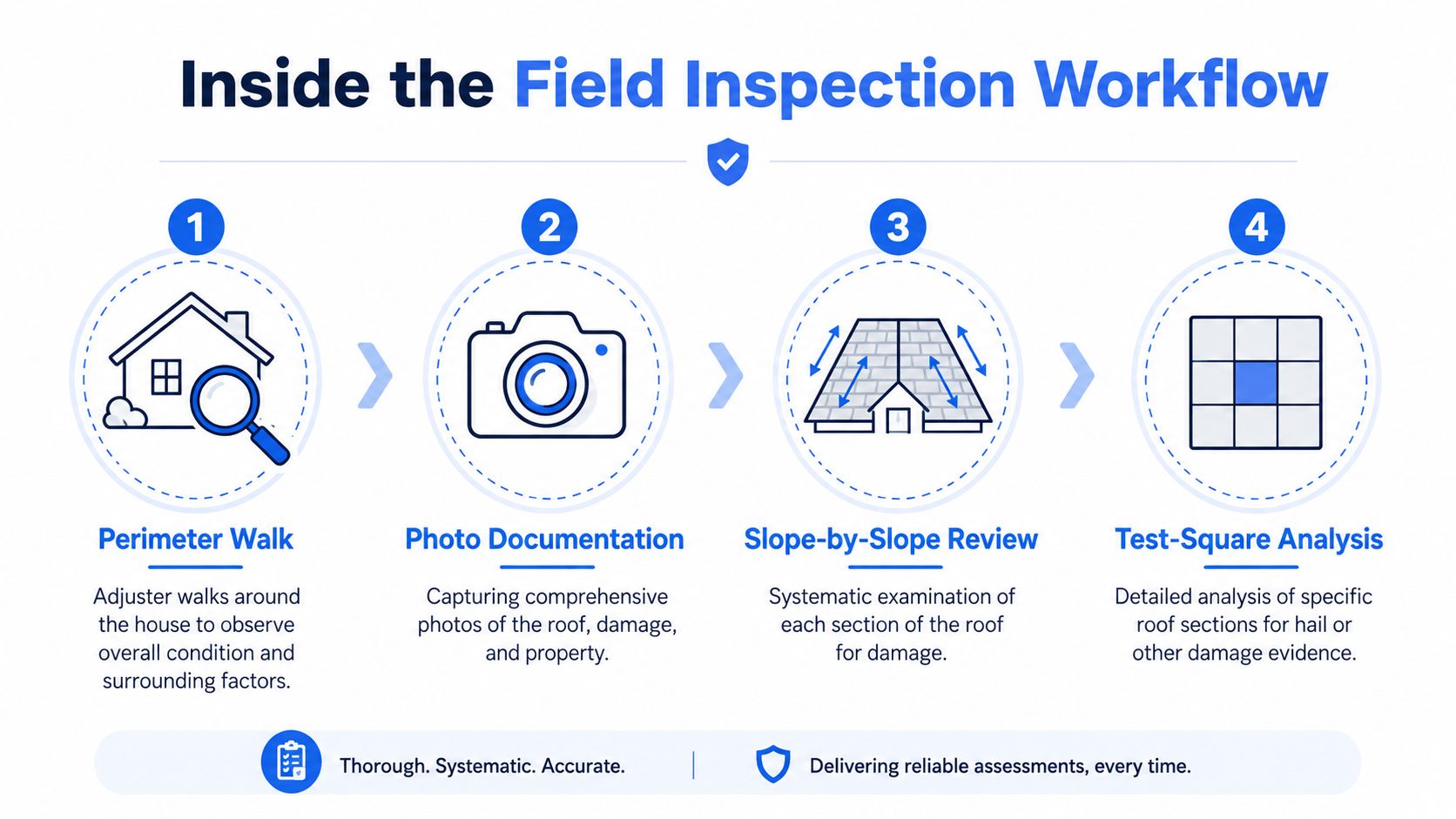
The field inspection is a sequence, not a vibe. A competent adjuster usually starts with a perimeter walk, looking at the roof from the ground, checking the elevation changes, the soft metals, the edges, and anything that shows storm direction or collateral damage. Then comes photo documentation, because if it isn't captured, it often doesn't make it into the estimate.
How the roof gets evaluated
Next is the slope-by-slope review. Each roof plane should be evaluated on its own, because wind and hail don't always hit every side the same way. For hail claims, one industry source describes the common 10-by-10-foot test square method and says many carriers look for roughly 8 or more functional hail hits per square to justify slope replacement, while also checking soft metals like gutters, vents, flashing, and condenser fins for collateral impact: what insurance adjusters look for on roofs.
That technical point matters. Shingle bruising by itself can be debated. Impact density, distribution, and collateral metal damage usually carry more weight because they help show severity and directionality instead of random wear.
The final step is the scope. The adjuster enters measurements and quantities into estimating software, often Xactimate, then applies the policy terms, deductible, limits, and depreciation to build the first settlement. One industry guide says a residential inspection usually takes 30 minutes to 2 hours, depending on roof size, pitch, and the amount of non-roof damage: roof insurance adjuster what to expect.
If the roof also has leaks or attic signs, a separate inspection path may be worth pursuing through a roof leak detection service. Don't assume the adjuster caught everything just because they climbed up there once.
The Week Before the Adjuster Arrives
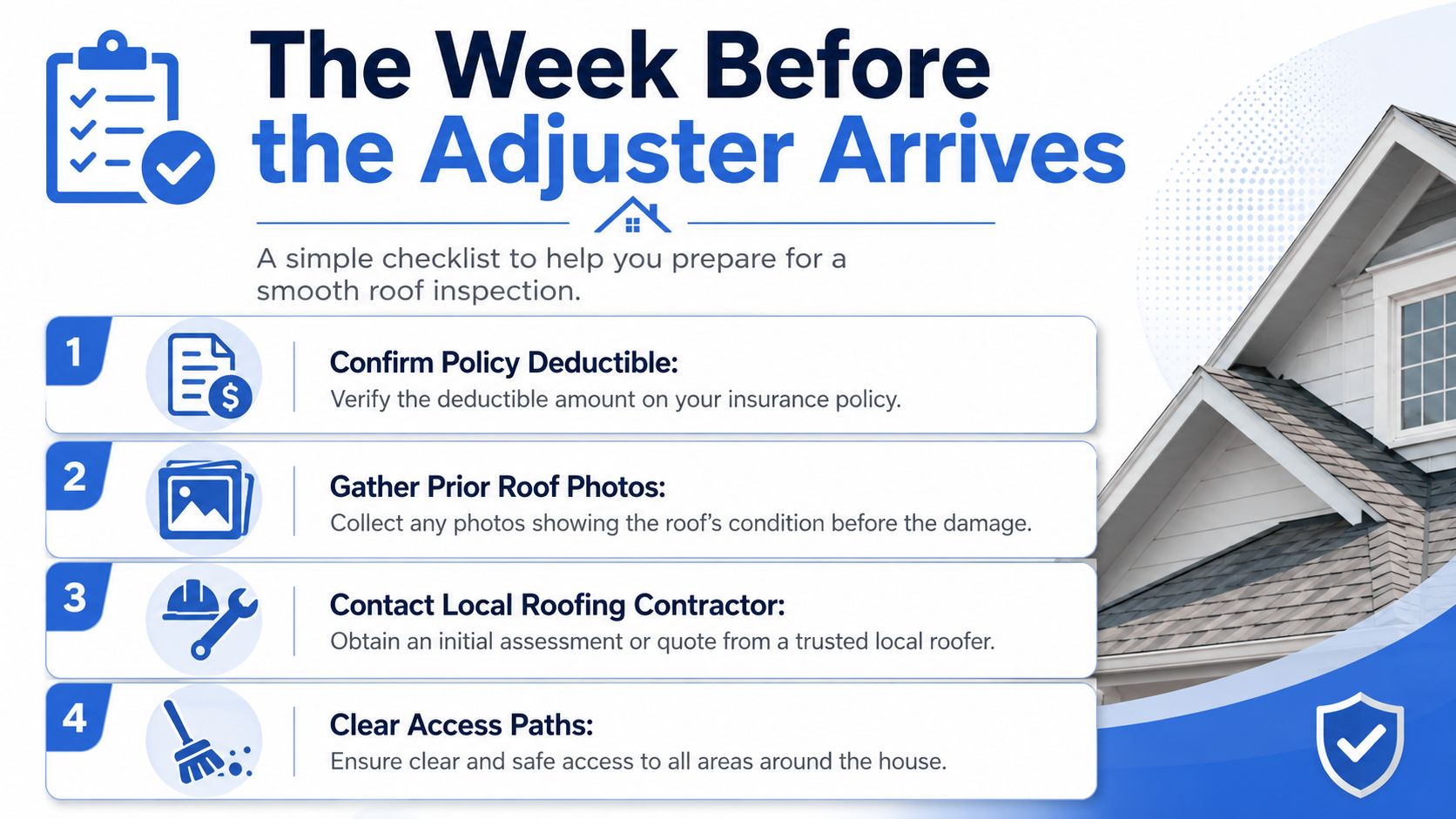
The smartest move is to build your own file before the carrier builds theirs. That means getting the deductible straight, gathering older roof photos, and lining up a contractor-side inspection so you're not relying on one person's first impression. If there's collateral damage on gutters, siding, vents, or flashing, capture it now, not after someone tells you it's “just cosmetic.”
What to gather before the visit
- Confirm the deductible: Pull out the policy and verify the wind or hail deductible, not just the standard one.
- Find old roof photos: Look for listing photos, maintenance photos, or anything that shows pre-storm condition.
- Schedule a local contractor inspection: Get a written contractor opinion before the carrier forms its scope.
- Check the exterior: Photograph gutters, downspouts, vents, drip edge, siding, and any dented soft metals.
- Walk the interior: Note stains, bubbling paint, wet insulation, or any active leak points.
- Clear access: Make sure the attic hatch, driveway, and side yards are open and safe to reach.
That last one is more important than people think. If an adjuster can't get to a roof plane or doesn't go into the attic, the inspection can miss the very evidence the claim depends on.
A homeowner who keeps the process organized usually spends less time arguing later. If you need a local contractor quote to compare against the carrier's scope, this is the stage to get it, before repairs start and before the file gets messy.
During the Visit What to Say and What to Watch
Be present, calm, and specific. Don't hover like a prosecutor, and don't disappear into the kitchen while the inspection happens. Stand your ground on the facts, ask direct questions, and make sure the adjuster understands you expect every slope, every relevant elevation, and any interior issue to be considered.

Questions worth asking on the spot
- “Will every slope be inspected?”
- “Are you getting physical access to the steep or hard-to-reach areas?”
- “Are you checking soft metals, vents, flashing, and gutters too?”
- “If you can't access a plane, how do we handle a re-inspection?”
- “Please don't treat this as final until the interior and roof scope are compared.”
That last point matters because first scopes are often incomplete. A practical guide on how to handle difficult customer conversations is useful here, not because you're trying to be difficult, but because you need a steady tone when the carrier's version and your version don't match.
Don't sign a final release or accept a scope you haven't read. If the adjuster wants a signature on the spot, slow it down and take the paper home. Your notes, your photos, and your contractor's comparison sheet are more useful than a rushed decision made on the driveway.
If the adjuster skipped a roof plane, the dispute is often about coverage scope, not whether you were “nice enough” during the visit.
When the Estimate Comes Back Low or Incomplete
A low estimate is not the end of the road. It's the signal to move up a ladder, not start a shouting match. Most claims should be tested first with a contractor-side comparison, then escalated only if the gap stays real.
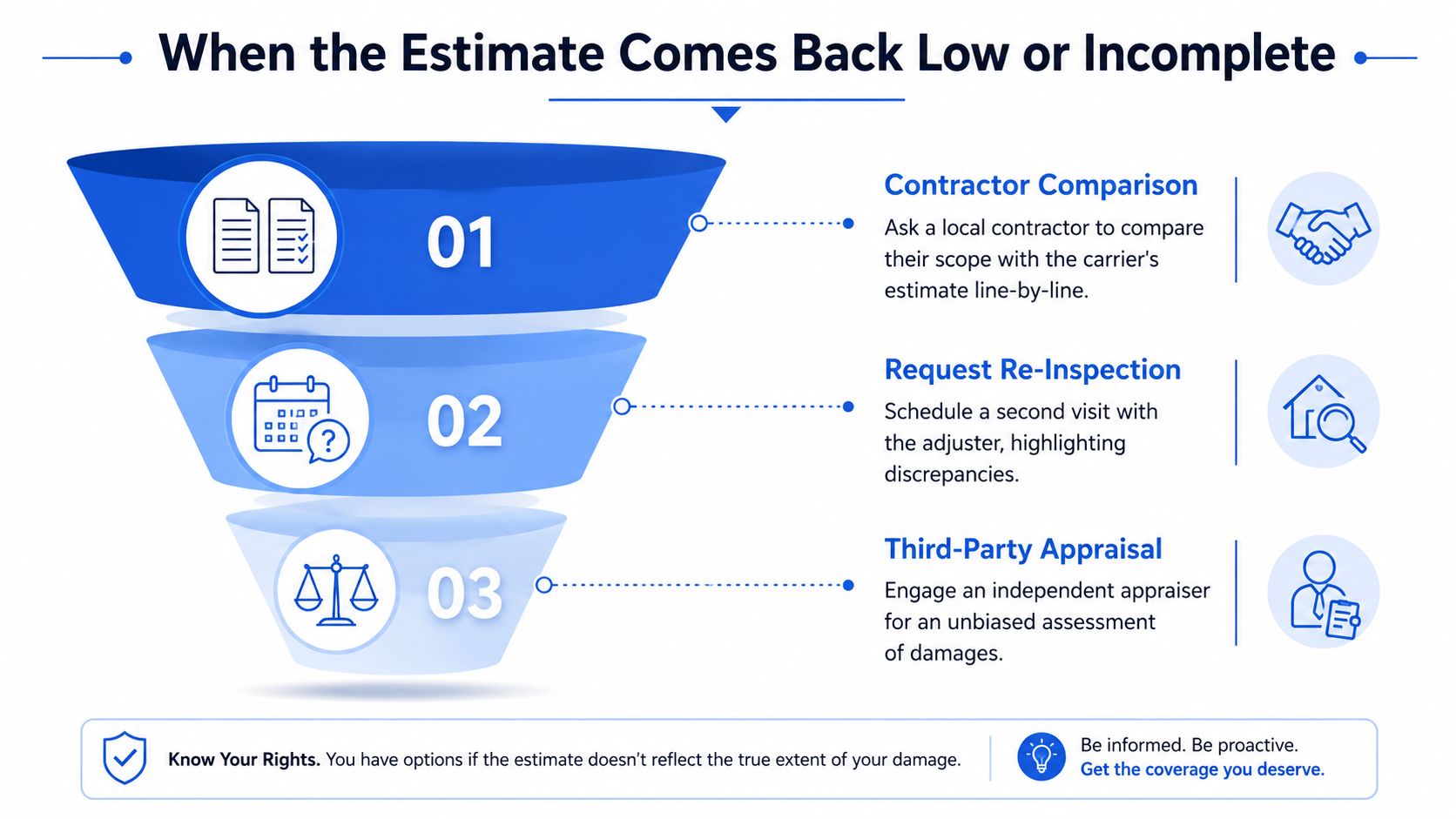
Three practical escalation paths
- Contractor comparison. Have a local roofer compare the carrier scope line by line. This catches missed flashing, wrong quantities, omitted accessories, and work items the adjuster never priced.
- Re-inspection. Ask for another visit when access was limited or the first scope clearly missed roof planes, steep sections, or collateral damage.
- Third-party appraisal. Use the appraisal clause when the policy allows it and the dispute is now formal, not just conversational.
A roof claim guide that discusses undervalued roof claims lays out the same basic escalation logic. Start with the scope. Don't jump straight to the nuclear option if a line-item correction will fix the problem.
Public-adjuster involvement makes sense when the insurer's number is materially off. Independent roofing-claims guidance says insurance estimates can undervalue roof damage by 20% to 40% according to RICOWI-linked reporting, and another source states some commercial roof claims settle for 20% to 50% less than actual value without independent representation: how to work with insurance adjusters for roofing accurate damage assessments. Those are not small misses, and they're exactly why a neutral estimate can change the outcome.
If the claim still stalls, a supervisor review, the appraisal clause, or a complaint with the state insurance department may be the next move. Use each step only when the file supports it.
Columbus and Central Ohio Tips That Change the Math
Central Ohio claims move differently than claims in places where hail or hurricanes dominate the calendar. Around here, spring and summer storms can hit fast, and a roof that looked fine in March can be disputed in June if the file doesn't show the storm timeline clearly. The homeowner who keeps a clean paper trail usually has a stronger position when the adjuster questions age versus damage.
The deductible also changes the discussion. Some central Ohio policies use a 1% to 2% wind and hail deductible, so the same repair can feel very different depending on the carrier language and roof value. Don't guess on that number, pull it from the policy before the visit.
Why local help matters
A local contractor who works Ohio claims knows the carriers, the code issues, and the adjustment habits around Columbus. That's faster than hoping an out-of-area storm chaser understands local permit expectations or building-code upgrade coverage. If code items become part of the scope, that can change the settlement math in a real way.
For homeowners comparing a repair to replacement, a local cost reference helps frame the discussion. This roof replacement cost guide is useful when you're trying to understand whether the carrier's number lines up with the actual job. It won't replace a written scope, but it will keep you from accepting a lowball offer just because it sounds official.
HIBCO ROOF LLC also provides storm damage inspections and works with homeowners on the insurance claim process after a claim is filed. That kind of support is useful when the adjuster's scope and the contractor's scope don't match.
A Homeowner's Final Checklist and What Comes Next
Keep the process simple. Before the visit, confirm the deductible, gather old photos, and get a contractor inspection. During the visit, ask whether every slope and collateral item was checked, and don't sign anything you haven't read. Afterward, compare the carrier scope line by line and push for a re-inspection, public adjuster review, or appraisal only when the file supports it.
The claim doesn't always close with the first check. Supplemental claims and code-related items can still be added later, and the file often stays open longer than homeowners expect. Stay organized, stay calm, and treat the adjuster as one step in the process, not the final verdict.
If you're dealing with roof storm damage in Columbus or the surrounding area, HIBCO ROOF LLC can inspect the roof, document the damage, and help you compare the carrier's scope to the actual repair needs. If you want a local contractor who understands storm claims from the field side, visit HIBCO ROOF LLC and set up a free estimate.