
A national asphalt shingle roof repair typically averages approximately $1,000 to $1,200, while Columbus homeowners commonly see $400 to $2,500, with many ordinary repairs landing between $600 and $1,500. The final asphalt shingle roof repair cost depends on the damaged area, roof access, storm urgency, shingle availability, and whether the leak has reached the underlying structure.
You notice the problem during a Columbus spring storm. Water marks appear near a ceiling corner, wind has lifted shingles on the rear slope, or hail has left small bruises across the roof surface. The first instinct is usually to search for a price, but the visible damage rarely tells the whole story.
A missing shingle can be a limited repair. A leak near a valley, chimney, skylight, or roof edge may involve flashing and underlayment. If water has reached the decking, the job changes again. The numbers below are useful for setting expectations, but a roof inspection is what separates a reasonable repair from an expensive guess.
Table of Contents
- Understanding Asphalt Shingle Roof Repair Costs in Columbus
- Key Factors That Determine Your Repair Bill
- Repair vs Replace Decision Framework
- Navigating Insurance Claims for Storm Damage
- Real Columbus Repair Cost Examples
- Next Steps and Free Inspection Guidance
Understanding Asphalt Shingle Roof Repair Costs in Columbus
A Columbus homeowner with a few wind-displaced shingles may receive a much smaller estimate than a homeowner whose roof has hail damage across several slopes. National pricing supports the broad starting point. HomeAdvisor's asphalt shingle roof repair guide places the average repair at $1,177, with most projects between $367 and $1,990. Another industry guide puts the national average near $975, while noting that a very small repair can cost as little as $150 when only a few shingles need replacement.
In Central Ohio, I look at the roof system rather than the shingle alone. A contractor may need to lift surrounding courses, match the existing product, repair the underlayment, reseal flashing, and restore the path water uses to drain. Those steps explain why a small-looking roof problem can still produce a four-figure estimate.
What Columbus homeowners usually see
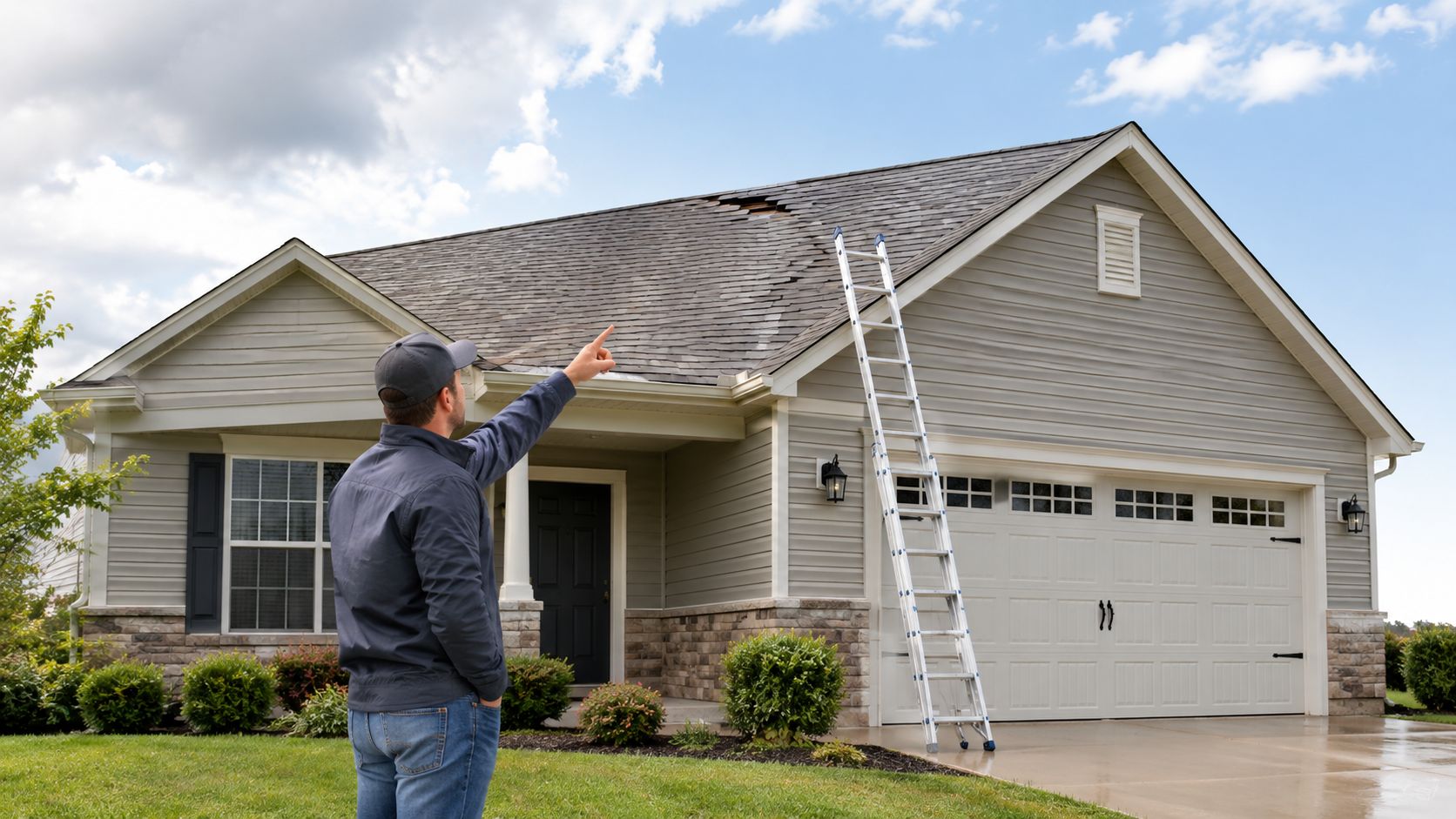
For practical budgeting, $400 can cover a limited shingle replacement when access is straightforward and the damage is easy to isolate. A broader repair may reach $1,500, while a job involving concealed rot, damaged decking, or several connected failure points can approach or exceed $2,500. Those Columbus figures are a local planning range, not a published Columbus pricing survey, so the written scope matters more than the headline number.
Central Ohio storms create several recurring patterns. Wind can lift tabs or break seals, hail can bruise shingles without creating an obvious hole, and heavy rain can expose an old flashing weakness. A roof may need attention even when the damage isn't dramatic from the ground.
Why two nearby homes get different estimates
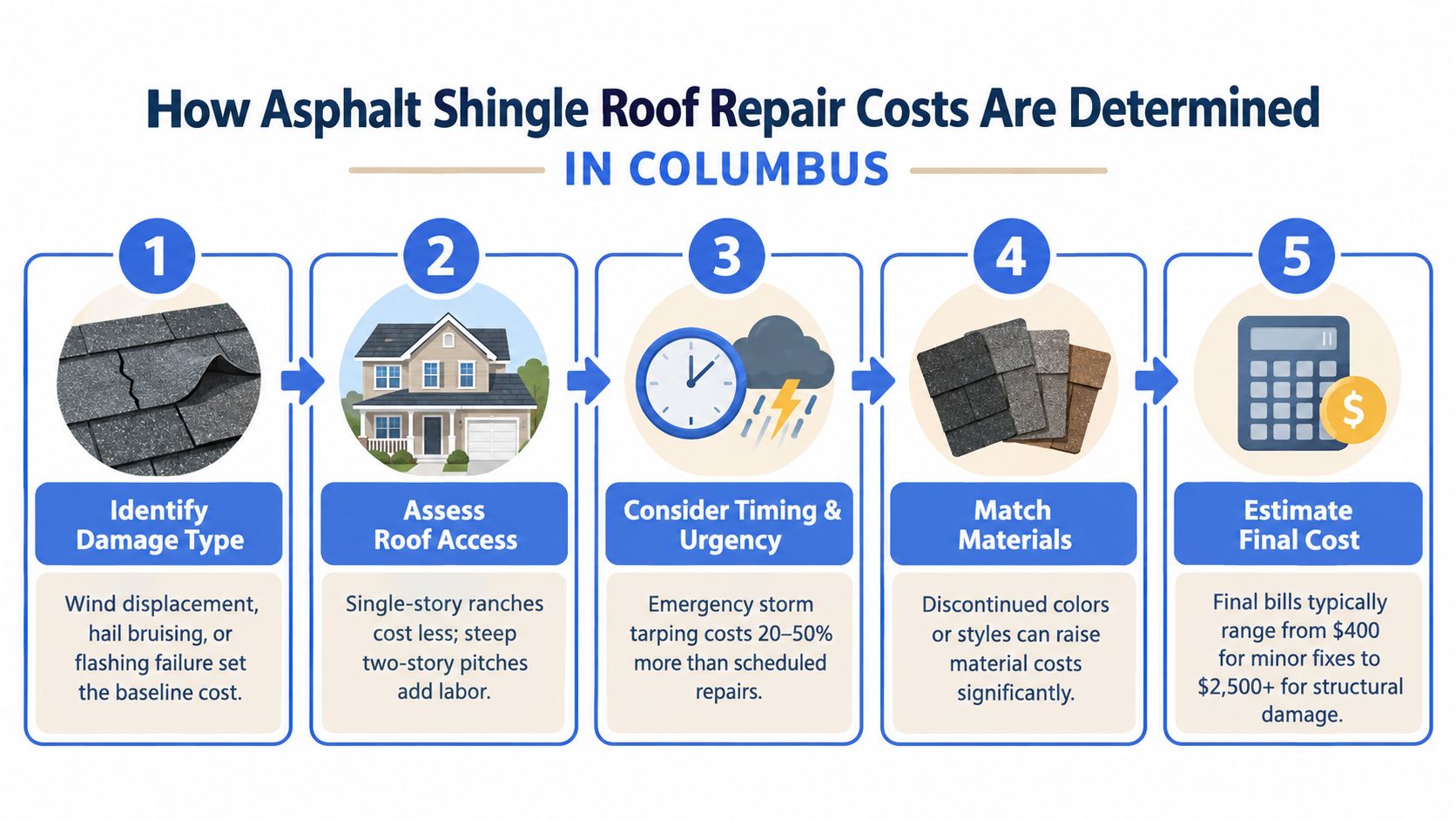
Roofing labor includes setup, fall protection, movement around the property, and cleanup. A single-story ranch with a low-complexity roof gives a crew easier access than a steep two-story home with dormers, valleys, or limited staging space. Material matching also changes the work, especially when the original shingle style has been discontinued.
Homeowners who need help identifying legitimate providers can use a directory to find roofing contractors with verified contacts. Before authorizing work, ask each contractor to identify the damaged components, explain whether the leak source was confirmed, and separate emergency protection from permanent repair.
Practical rule: A repair estimate should describe the failed part of the roof, not just say “storm damage” or “leak repair.”
Key Factors That Determine Your Repair Bill
A Columbus repair estimate follows the work required, not the number of shingles visible from the driveway. A few displaced shingles may need limited removal and replacement. Hail bruising across an entire slope, failed valley flashing, or wet decking requires more inspection, labor, and potentially broader removal.
Damage type and repair scope
Published cost guidance provides useful planning ranges, but the final Columbus price depends on access, weather exposure, and what the roofer finds beneath the surface. RoofVista's shingle repair cost guide places a few missing or cracked shingles around $150 to $400, a small section around $250 to $700, and valley or ridge repairs around $400 to $1,000. It also reports an 20% to 50% premium for after-hours work and service-call minimums commonly between $150 and $300.
HomeGuide's asphalt shingle repair breakdown lists shingle and related flashing repairs between $100 and $600, shingle flashing work at $200 to $500, and replacement and sealing of up to 25 shingles at $100 to $300. These ranges help compare estimates, but they do not replace a written scope identifying the failed roof component.
| Damage Type | Complexity | Typical Cost Range | Time Required |
|---|---|---|---|
| A few missing or cracked shingles | Low | $150 to $400 | Short scheduled visit |
| Up to 25 shingles with sealing | Low to moderate | $100 to $300 | Short repair visit |
| Small damaged roof section | Moderate | $250 to $700 | Scheduled repair |
| Shingle flashing failure | Moderate | $200 to $500 | Depends on access and water damage |
| Valley or ridge repair | High | $400 to $1,000 | More detailed labor |
| Structural damage, see repair-vs-replace framework | High | Scope-dependent | Inspection, removal, and reconstruction |
For a leak, compare the diagnosis with the proposed surface repair using this roof leak repair cost reference. The important question is whether the contractor traced water to its entry point or just replaced the area where the interior stain appeared.
Access, pitch, and location
A low-slope section over a garage is easier to stage than a steep rear elevation on a two-story home. Established Columbus neighborhoods can add logistical work when landscaping, narrow driveways, additions, or detached garages restrict ladder placement and material movement.
Valleys, ridges, chimneys, skylights, and roof-to-wall transitions require precise detailing because water must be redirected without creating another entry path. On some homes, property protection and safe setup take longer than the shingle replacement itself.
Timing and material matching
After a storm, emergency tarping and after-hours calls cost more because crews must mobilize quickly and work around changing weather. Scheduled repairs give the contractor more control over labor, materials, and sequencing.
Matching also affects the bill. Shingles fade, and older colors may no longer be manufactured. A responsible estimate should state whether the repair will blend closely, remain visibly different, or require a larger replacement area for a consistent appearance.
Repair vs Replace Decision Framework
A Columbus homeowner may face two very different decisions after a storm: replace a few damaged shingles, or invest in a roof that has reached the end of its useful service. Repair preserves a sound roof with a limited failure. Replacement becomes reasonable when damage affects several areas or the existing system can no longer provide dependable waterproofing.
Start with age and damage extent
A roof under 10 years old with isolated storm damage usually deserves a repair-first evaluation. Age alone does not justify replacement when shingles remain flexible, granules are intact, and the underlayment and decking are sound. Central Ohio weather can create a localized failure without making the entire roof unsalvageable.
An asphalt roof around 20 years old with widespread granule loss, recurring leaks, curling, or brittle shingles deserves a replacement discussion. Asphalt shingles commonly last 12 to 30 years, according to the material context in Angi's asphalt shingle repair guide. Product quality, installation, ventilation, weather exposure, and maintenance all affect where a roof falls within that range.
A roof can look worn without needing replacement, and it can look acceptable while a flashing or decking failure requires immediate work.
Use the inspection to answer five practical questions:
- Is the damage isolated? One slope, penetration, ridge, or valley supports repair more than damage spread across several roof areas.
- Is the roof still serviceable? Field-wide granule loss, brittle shingles, and recurring leaks point toward replacement.
- Did water reach the structure? Localized decking damage may be repairable, while deterioration across multiple areas changes the project.
- How long will you keep the home? A short ownership horizon may favor a sound repair. A longer horizon can justify replacing an aging system before emergency failure.
- What does the written math show? Compare the repair price with the service you can reasonably expect from the remaining roof.
Recognize the false economy
Repeated patching becomes a poor investment when each visit addresses a new symptom on an aging roof. HomeGuide's broader roof repair cost guidance places re-shingling an entire section at $350 to $1,000 per square, with one square equal to 100 square feet. Once repairs involve substantial underlying structural damage, the project can reach $3,000 or more, before considering broader replacement needs.
Replacement still requires a clear explanation. A full tear-off recommendation for one failed plumbing boot, chimney flashing area, or isolated wind loss should identify why targeted work would not restore the system. For a homeowner preparing to sell, a documented repair may address an inspection concern without turning a manageable defect into a major project, provided the roof is not broadly failing.
The practical comparison is straightforward. Repair usually fits a younger roof, localized damage, and sound surrounding materials. Replacement becomes more rational with late-life shingles, multiple leak sources, broad storm impact, or structural deterioration. The written inspection should connect the observed conditions to the recommended scope and expected service.
Homeowners can also review this roof replacement versus repair comparison and ask a Columbus contractor to apply the same reasoning to the actual roof.
Navigating Insurance Claims for Storm Damage
Wind and hail damage can create a legitimate insurance question, but not every roof repair belongs in a claim. Policies generally distinguish sudden storm damage from normal aging, worn sealant, and gradual deterioration. Your policy language controls, so treat contractor guidance as documentation support rather than a promise of coverage.
Document the condition first
Start with photographs from the ground and from accessible areas. Capture missing shingles, exposed underlayment, dents on vents and metal components, damaged gutters, fallen branches, interior stains, and any temporary protection. Don't climb onto a wet or steep roof to collect evidence.
Ask the contractor for:
- A written inspection report identifying each damaged roof component.
- Date-stamped photographs showing close details and wider roof context.
- A repair scope that separates shingles, flashing, underlayment, decking, and interior protection.
- An explanation of probable cause, distinguishing storm impact from age-related wear.
- A temporary protection plan if water is entering the home.
Then contact the insurer before authorizing substantial permanent work. Emergency measures that prevent additional damage can be necessary, but keep receipts, photographs, and invoices.
Compare the estimate with the deductible
A small repair that falls below your deductible may be more practical to pay directly. A larger covered loss may justify filing, but the decision depends on the policy, deductible, claim history, roof condition, and the insurer's scope.
Don't accept a verbal promise that the carrier will pay for every item on a contractor's estimate. Request the adjuster's written scope and compare line by line. If the adjuster misses damaged flashing, ventilation components, or decking, provide the contractor's documentation and ask for a reinspection.
This insurance claim guide can help homeowners understand the process before signing a work authorization. The contractor should be willing to explain the scope without pressuring you to file a claim or inflate damage.
Before signing: Ask who handles supplements, whether the estimate includes temporary protection, how undiscovered decking damage is handled, and what workmanship warranty accompanies the repair.
Be cautious with anyone who guarantees coverage, asks you to sign over all insurance rights without explanation, or urges immediate authorization before documentation. Reputable contractors can assist with photos, measurements, and communication while leaving coverage decisions to the carrier and policyholder.
Real Columbus Repair Cost Examples
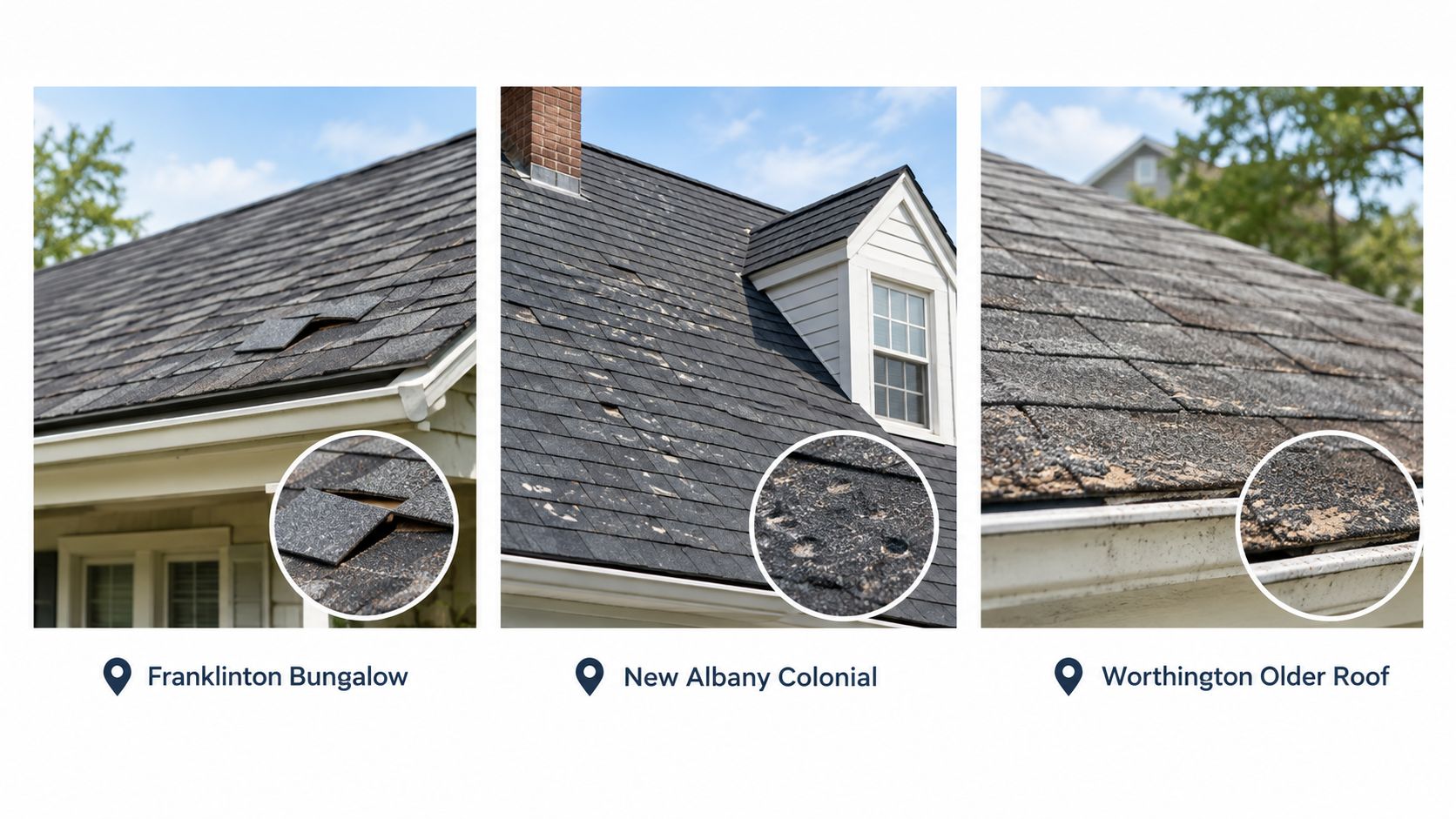
Columbus repair estimates change with the roof's design, the damage pattern, access, and how far the crew must go beneath the shingles. A few wind-displaced shingles on an open roof plane can stay near the lower end of the range. Hail damage at a flashing transition, or hidden moisture beneath an aging roof, can push the scope much higher. These examples show how different conditions affect pricing. They are not invoices from named Columbus projects.
A small bungalow in Franklinton has wind-displaced shingles on one accessible roof plane. The crew can reach the area without complicated staging, the surrounding shingles remain serviceable, and the inspection finds no damaged decking. A scope covering a few shingles, replacement fasteners, sealant, and cleanup fits the lower end of the published $150 to $400 range for a few missing or cracked shingles established earlier in this article.
A targeted repair is the sensible choice here. The homeowner should still check the attic for moisture and inspect the repaired area from the ground after the next substantial rain. Replacing the entire roof would add cost without solving a broader failure.
A hail-damaged colonial in New Albany
A larger colonial has hail impacts across one roof slope, including damaged field shingles and compromised flashing near a transition. This requires more than swapping isolated shingles. The crew must establish the damage boundary, match materials, remove surrounding courses, and reseal the flashing.
A limited section repair may fall within the $250 to $700 range. Work involving a valley or ridge component can move toward $400 to $1,000, based on the valley and ridge ranges covered in the cost factors section. If the inspection finds structural damage beneath the shingles, the project can reach the $3,000 or more threshold documented earlier.
Storm damage should be documented before permanent work begins, then compared with the policy deductible and the adjuster's scope. A claim may make sense for a larger loss, while a limited repair may be more practical when the covered amount is small or the policy excludes part of the work.
An aging roof in Worthington
A Worthington home has widespread granule loss, brittle shingles, and several leak points. Patching individual locations can stop specific leaks, but it will not restore the deteriorated shingle field or remove the risk of another failure elsewhere.
Replacement evaluation is more appropriate when deterioration is this widespread. Damaged decking or broad moisture intrusion can increase the replacement scope, but isolated patches remain a poor investment if they only delay the larger decision and leave the roof near the end of its serviceable life.
What these examples have in common
“Asphalt shingle repair” can mean replacing a few shingles, rebuilding flashing, partially re-shingling a slope, or repairing structural material beneath the roof covering. A credible estimate identifies the failure, includes photographs, separates materials from labor, and states what the repair should accomplish.
The estimate should also explain whether matching shingles are available and whether adjacent materials can be removed without creating additional damage. Homeowners should request at least two written opinions when the work is extensive, insurance-related, or close to the cost of replacing an aging roof.
Next Steps and Free Inspection Guidance
Start with four facts: roof age, damage location, storm or wear-related cause, and the condition of the surrounding shingles. Add the insurance deductible, your ownership plans, and the amount you can comfortably spend without rushing into a decision.
Use this checklist during inspections:
- Ask for photographs: Make sure the report shows the actual failure, not only a general roof overview.
- Request separated pricing: Shingles, flashing, underlayment, decking, labor, disposal, and temporary protection should be clear.
- Verify credentials: Confirm licensing, insurance, references, and the contractor's written workmanship warranty.
- Compare scopes: A lower price isn't useful if it omits flashing, sealing, cleanup, or damaged substrate.
- Clarify timing: Active leaks and exposed underlayment need prompt protection, while a dry, localized issue may allow time for careful estimates.

A Columbus homeowner doesn't need to choose repair or replacement from a single number. Get the source of the leak confirmed, understand the scope, compare the estimate with the roof's remaining service life, and document storm damage before permanent work begins.
For a written estimate, inspection, or storm assessment, HIBCO ROOF LLC offers Columbus-area homeowners roof inspections, asphalt shingle repairs, replacement evaluations, storm documentation, insurance claim assistance, and financing pre-qualification options. Visit HIBCO ROOF LLC to request a free, no-pressure evaluation and get a clear repair-versus-replace recommendation for your home.