

Gutters most often overflow in heavy rain because the volume of water coming off the roof exceeds what the gutter and downspout system can carry away, and that mismatch shows up in three main ways, blockage, wrong size, or wrong slope. When the rain is coming down hard, the water finds the weak point fast, and it usually shows up as a spill over the front lip, a sheet running behind the gutter, or a downspout that can't move water out of the trough quickly enough.
You usually notice it the same way homeowners around Columbus do, standing at a window while water pours off the edge and runs down siding you just paid to have cleaned. It looks like a simple clog at first, but overflow is often a system problem, not just a dirty-gutter problem.
Table of Contents
- When Water Spills Over the Gutter Edge
- Why Gutters Overflow in Heavy Rain in the First Place
- How to Diagnose the Real Cause Before You Start Fixing
- DIY Steps That Actually Reduce Gutter Overflow
- When to Upgrade Seamless Gutters, Leaf Guards, and Downspouts
- How Columbus Homeowners Should Choose Next Steps
- Questions Homeowners Ask After Reading This
When Water Spills Over the Gutter Edge
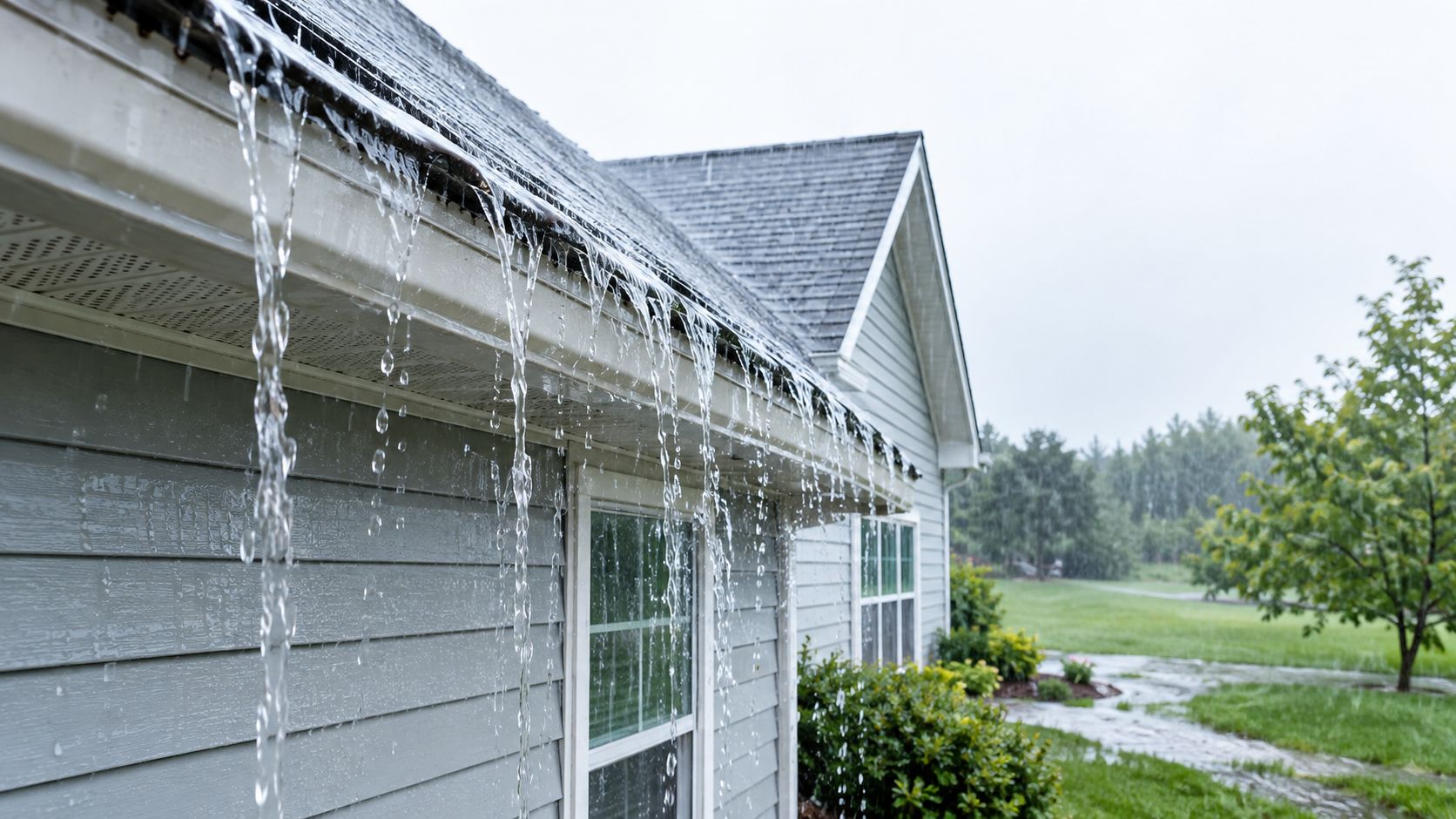
A gutter spill during a downpour is more than a nuisance. Once water is missing the trough, it's headed for the places you don't want it, siding, fascia, soil next to the foundation, and eventually the basement wall or crawlspace if it keeps happening.
What overflow actually means at the house
Overflow isn't just water going “too high.” It means the gutter system has lost control of runoff at the point where the roof dumps water into it. That can happen because the channel is blocked, the system is too small for the roof area, or the gutter is pitched badly enough that water pools instead of moving.
In the field, I usually see the first warning signs in the yard before I see them at the eave. Soil washes out near a corner, mulch gets moved, or a stripe appears on the siding below one section while the rest of the gutter looks fine. That tells you the failure is localized, not random.
Practical rule: if water is leaving the gutter edge during a hard storm, treat it as a drainage failure, not just a cleaning issue.
That matters because repeated overflow doesn't stay cosmetic for long. Wet soil next to the foundation keeps getting saturated, and the exterior walls stay wet longer than they should. If you want a broader homeowner explanation of the failure pattern, the guide to gutter overflow causes from ACR Roofing Dublin is a useful starting point.
Why Gutters Overflow in Heavy Rain in the First Place
The cleanest way to diagnose overflow is to separate the causes. A gutter can be spotless and still fail, and a dirty gutter can still be the wrong size even after you've scooped it out.
The four failure modes that show up most often
Clogs are the obvious one, leaves, twigs, seed pods, and roof grit block flow and make water back up. In Ohio, I also keep an eye on shingle granules. A Toronto-area explanation notes that asphalt shingle granules can wash into gutters over time and form dams that trap debris, which means a gutter can look mostly clear and still act partially blocked. Those granule dams are easy to miss until a storm pushes water over the edge.
Capacity mismatch is the other big one. A system built for ordinary rain can overflow during a cloudburst, especially when the roof dumps a lot of water into one section. A 2026 guide even frames modern guard flow capacity at 60 GPM and says it can handle rainfall intensities of 12 to 17 inches per hour without overflow, which shows how some newer guidance is starting to evaluate gutters by flow rate, not just by debris control.
Improper pitch causes water to sit in the trough instead of traveling to the downspout. If the gutter sags, even slightly, the low spot becomes a mini pond during a storm.
Roof geometry can concentrate runoff. Valleys and large roof planes push a lot of water into one run, so one section of gutter may overflow while another stays dry.
Why a clean gutter can still dump water
That's where guards and installation details come in. Independent coverage also points out that gutter guards can still shed water over the nose during the heaviest cloudbursts. That's a detail many homeowners don't expect, because the guard solved the leaf problem but didn't solve the water-volume problem.
For size questions, a basic sizing reference like gutter sizes for houses helps frame why one house needs more capacity than another. The main takeaway is simple, if overflow keeps showing up during intense rain, the roof and drainage system may be outmatched, not dirty.
How to Diagnose the Real Cause Before You Start Fixing
The safest way to diagnose overflow is to watch it from the ground first. You're looking for patterns, not guessing based on one wet gutter section.
A rain-day check
Stand back and watch where the water fails. If the overflow starts at one corner, one valley, or one low section of gutter, that points toward slope or roof-runoff concentration. If water spills along a long run during hard rain, that usually suggests limited capacity or a blocked downspout.
Look at the ground, too. Mud splash on siding, erosion lines in mulch, and pooling near the foundation tell you where the system is dumping water. If the overflow stops after a shower but returns in a thunderstorm, the system may be fine for light rain and overloaded for heavy rain.
A dry-day check
Once the storm passes, inspect the gutter line from the ground or with binoculars. You want to spot obvious sagging, hanging sections, debris stuck near outlets, and downspout exits that don't carry water away from the house. A gap between the drip edge and gutter can also let water miss the trough entirely, especially when rain is blowing hard.
If you want a simple visual reference for where the roof edge and gutter should meet, the gap between drip edge and gutter topic is worth checking before anyone starts moving hardware around.
If overflow happens only at the same low spot every storm, don't start with cleaning. Start with pitch and support.
The point of the diagnosis is to sort temporary blockage from repeated overload. Once you know which one you're dealing with, the repair path gets a lot clearer.
DIY Steps That Actually Reduce Gutter Overflow
The safest fixes are the ones you can do from the ground or with limited ladder time. The goal is to restore drainage, not to make the system look busy.
Start with the simplest flow blockers
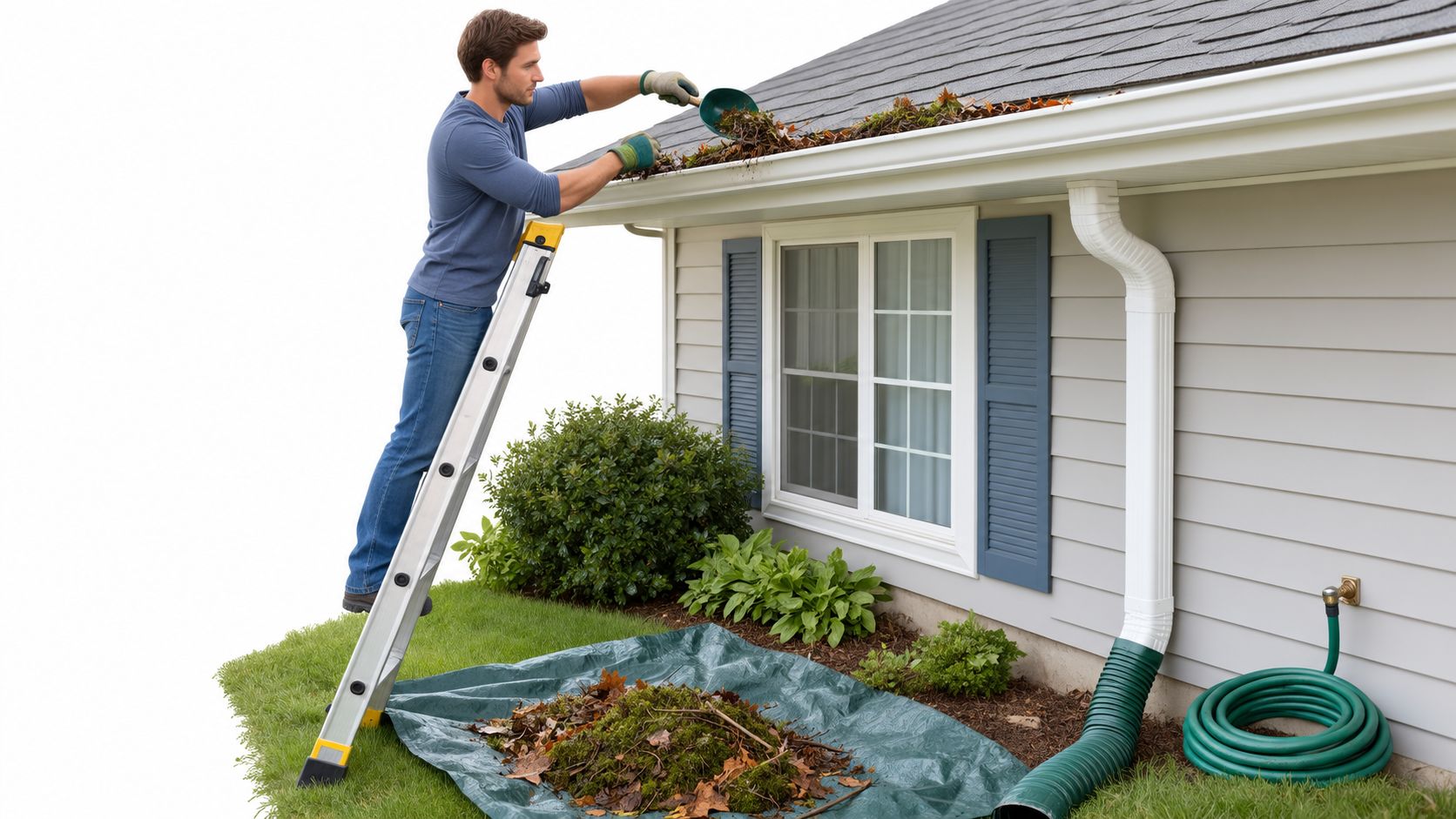
Clean the gutters thoroughly, then check the downspouts. A lot of people stop after scooping the trough, but the clog is often in the outlet or elbow. If water backs up at one point and drains fine everywhere else, that outlet deserves the first look.
Add downspout extensions where water is dumping too close to the house. That doesn't fix capacity, but it does keep the overflow from soaking the foundation line. Splash blocks can help in a pinch, though they're temporary and don't replace a proper discharge path.
Know what a real improvement looks like
A good DIY fix changes the storm behavior you see at the ground. Water should leave the house farther away, the soil near the foundation should stay less saturated, and the overflow should ease at the exact spot you corrected. If the same section still spills in the next hard rain, the problem is probably not debris.
Gutter guards are useful when leaf load is the main issue, but they're not a cure-all. A 2026 Toronto-area explanation notes that roof granules can still build up and that partial blockages, sagging sections, and undersized systems can still overflow even when the gutters look clean. Independent coverage also says guards may still shed water over the nose in the heaviest cloudbursts, so don't treat a guard install like a capacity upgrade.
Where DIY should stop
Temporary support adjustments can sometimes take the worst sag out of a short section, but that's a short-term correction, not a structural repair. If you see repeated overflow after cleaning, or if water keeps pooling in the same place, the gutter run probably needs a professional reset or replacement.
Practical rule: cleaning can buy time, but it can't redesign a gutter that was undersized on day one.
If you're comparing protection options, top gutter guards for storm season is a helpful resource for thinking through guard performance in heavy rain.
When to Upgrade Seamless Gutters, Leaf Guards, and Downspouts
Replacement decisions get messy when people bundle everything together. Continuous gutters, leaf guards, and downspout upgrades solve different problems, so the right choice depends on what failed.
Match the upgrade to the symptom
| Overflow Symptom | Likely Root Cause | Upgrade Option | What to Expect |
|---|---|---|---|
| Water spills during hard rain, but the gutter is mostly clean | Capacity mismatch | Larger or better-placed gutters and additional downspouts | Better storm handling, less edge spill |
| Overflow starts after debris-heavy seasons | Leaves, twigs, and granules | Seamless gutters with leaf guards | Less clogging, less routine cleaning |
| One section holds water in the trough | Improper slope or sagging | Rehang or replace the run | Water moves more consistently toward outlets |
| Water blows over the front in major cloudbursts | Water volume exceeds guard performance | Downspout and discharge upgrade, possibly larger gutter run | Better outlet flow and less backup |
Continuous gutters help by reducing leak points and snag points, but they don't fix a roof that throws too much water into one run. Leaf guards help with debris, not storm intensity. Downspout upgrades matter when the outlet is the bottleneck, which is why I never look at a roofline without checking where the water exits.
What to ask before you buy
Ask how the installer will handle seams, slope, and outlet placement. Ask whether the system is being sized for the roof area that drains into it, not just for the house perimeter. A contractor should be able to explain why one section needs more discharge than another.
If you want a local example of what a contractor can provide, HIBCO ROOF LLC installs one-piece gutters and leaf guard protection systems as part of its exterior work in Columbus and central Ohio. That kind of service makes sense when the issue is a mix of debris control and drainage performance, not just one or the other.
The main trade-off is straightforward. Better protection usually means better capacity planning, not just a prettier gutter line.
How Columbus Homeowners Should Choose Next Steps
For central Ohio homes, the best sequence is boring and effective. Confirm the gutters are clean, watch how they behave in a hard rain, fix slope or discharge issues first, and then decide whether guards or replacement are worth the money.
If overflow showed up only after storms got stronger, don't assume the house changed and the gutter didn't. The system may have been adequate for older rainfall patterns and now needs a real capacity rethink. That's especially true on roofs with valleys, long runs, or one or two downspouts doing too much work.
When you call for a free inspection, document where the water spills, whether it happens in light rain or only heavy rain, and whether it's the same section every time. Photos of soil washout, siding stains, and foundation puddling help a contractor separate a cleaning issue from a layout problem. If the water is reaching the foundation line, that's not a wait-and-see issue.
For homeowners who want to understand how overflow affects the house beyond the gutter line, the foundation protection gutters resource is a useful companion. It's the right lens when the primary concern is keeping water away from the structure, not just keeping leaves out.
Questions Homeowners Ask After Reading This
Why do my gutters overflow right after I clean them? Because cleaning removes debris, but it doesn't fix undersized gutters, bad slope, or a downspout bottleneck.
How can I tell if the roof is the actual bottleneck? If overflow shows up in the same storm pattern, especially near valleys or long runs, the roof is probably feeding more water into that section than the gutter can handle.
Are guards worth it in heavy summer storms? Sometimes, yes, for debris control. No, if the problem is storm volume, because guards don't automatically increase drainage capacity.
What does early foundation trouble look like? Soil washout, repeated wet patches near the house, and water that keeps landing close to the foundation line are the signs to take seriously.
When does overflow become more than a maintenance problem? When it keeps happening after cleaning, stains the siding, or sends water toward the basement wall or crawlspace.
If your gutters overflow in heavy rain, HIBCO ROOF LLC can inspect the roof, gutters, and drainage path as one system and help you sort cleaning issues from capacity issues. Visit HIBCO ROOF LLC to request an inspection or estimate for Columbus and central Ohio homes.