
A brown ring on the ceiling always shows up at the worst time, usually after a hard rain, a windy night, or the first warm day when the attic starts smelling damp. You wipe the stain, you wonder if it's old, and then you realize the paint is soft and the drywall isn't dry. That's the point where water damage roof repair stops being a nuisance and starts being a real home-protection job.
In central Ohio, I've seen plenty of homeowners chase the stain instead of the leak. That shortcut burns time, money, and patience. The roof leak is often nowhere near the spot you see inside, and the fix usually depends on tracing the entry point, checking the deck, and deciding whether the problem is a shingle, flashing, or hidden interior damage that needs drying before anything gets sealed back up.
Table of Contents
- Why Water Damage Roof Repair Is More Complicated Than the Stain in Your Ceiling
- Diagnosing a Roof Leak the Right Way
- Emergency Triage in the First 24 to 48 Hours
- Deciding Between Roof Repair and Full Replacement
- Working With Insurance After Roof Water Damage
- What to Expect From a Local Roofing Contractor
- Preventing the Next Leak With Seasonal Roof Maintenance
Why Water Damage Roof Repair Is More Complicated Than the Stain in Your Ceiling
A homeowner calls after a storm and says the ceiling stain is “small.” Then I get there, look in the attic, and find wet sheathing on the opposite side of the house. That happens all the time. Water does not fall straight down. It can run along rafters, underlayment, insulation, and framing before it finally shows up inside.
That is why water damage roof repair is rarely a paint-and-patch job. Water damage and freezing made up 22.6% of all homeowners insurance claims from 2019 to 2023, according to U.S. claims data cited by the Insurance Information Institute, and the average claim amount was $15,400 in that same period, with about 1 in 67 insured homeowners filing a water-damage-or-freezing claim each year This Old House summary of water damage statistics. Those numbers match what homeowners learn fast, once a leak starts, the costs can climb quickly.
A stain on the ceiling is the symptom. It is not the diagnosis.
A roof leak in central Ohio usually starts with a small failure, a lifted shingle, bad flashing, a tired pipe boot, or a skylight edge that was never tied in right. The stain inside is only the first visible clue. If you patch the drywall and never track the entry point, the next rain usually finds the same weakness again.
Practical rule: if the roof leak showed up inside, assume the entry point is farther upslope or around a penetration until you prove otherwise.
That is why a structured inspection matters. A homeowner who understands the leak path can talk to a roofer with real information instead of guessing. If you want a plain-language reference before anyone climbs a ladder, how to fix a leaking roof is a useful starting point.
The question is not whether the ceiling needs cosmetic repair. It is whether the problem is a loose shingle, damaged decking, or interior damage that needs to be documented before the insurance adjuster or contractor ever writes up the job.
Diagnosing a Roof Leak the Right Way
Start in the attic. That's where the truth usually shows up first. You're looking for daylight at the deck, staining on the underside of the sheathing, damp insulation, and any trail that points uphill or sideways instead of straight down.
Start where the water actually traveled
A daylight attic inspection works because water often reveals itself where the roof deck has been wet the longest. Look for dark wood, a tide line, rust around fasteners, or moldy areas near penetrations. If the stain is old, don't assume the leak is fixed, old leaks leave a trail and then go quiet until the next storm.
From there, move to the exterior and inspect the obvious failure points. Check shingles for lifting, tearing, missing tabs, and granule loss. Then look hard at flashing around chimneys, walls, vents, and skylights. The most common misses are exposed nail heads, unsealed flashing edges, brittle pipe boots, and skylight flashings that never got tied into the water-shedding layers correctly.
If you want a contractor to find the right issue fast, a roof leak detection visit should be systematic. I'd expect attic review, roof walk, photo documentation, and a written explanation of the likely entry point. A straightforward example of that kind of service is the kind a homeowner can request through roof leak detection service.
Use a two-person hose test
The hose test works only if two people do it. One person stays inside the attic or under the leak path, the other wets the roof from the bottom suspect area and slowly works upward in short sections. That order matters because you're trying to catch the first place water appears, not the last place it runs to.
Don't hose the whole roof at once. You'll hide the source and create a mess you can't interpret.
Published repair guides also stress that you should soak each section for several minutes, wait long enough for water to travel, and avoid working alone. That advice is boring because it works. A solo test almost always leads to the wrong conclusion, usually the visible stain instead of the underlying defect.
The goal here is simple. Narrow the suspect area before anyone starts replacing materials. Good diagnosis saves money because it keeps the repair targeted instead of turning into a guess-and-patch job.
Emergency Triage in the First 24 to 48 Hours
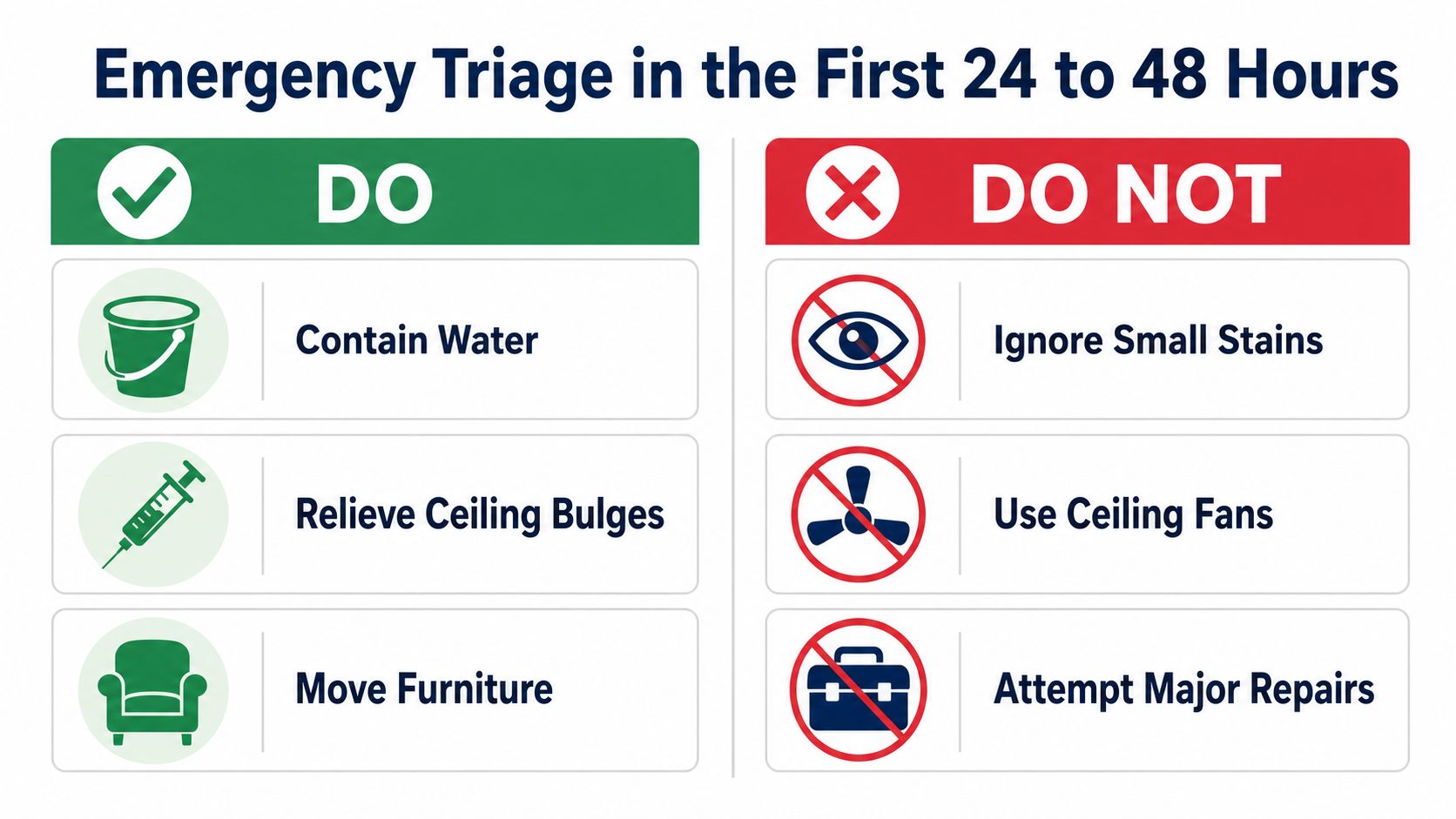
The first 48 hours are about limiting damage, not making the roof pretty. If water is actively coming in, catch it, move anything valuable out of the way, and protect the room below. If the ceiling is bulging, a controlled puncture to relieve trapped water can prevent a larger collapse, but only if you do it carefully and have a bucket ready.
The roof itself should be stabilized from the outside only if it can be done safely. A properly secured tarp over the damaged section is reasonable. Climbing up with roofing cement and trying to smear a quick fix on a wet or windy roof is not a repair, it's a temporary patch that usually makes documentation and later diagnosis harder.
Document before cleanup changes the scene
Take wide shots and close-ups of the roof, attic staining, ceilings, walls, and damaged belongings before you move much around. Water often travels along framing members before showing up indoors, so photos help explain why the stain is not always under the entry point. That matters for insurance, resale, and for any contractor trying to separate a roof issue from an interior moisture issue.
The U.S. Department of Energy advises homeowners to assess the extent of damage, remove damaged materials, and allow the structure to dry before rebuilding, and it also recommends tarps or other water barriers during emergency stabilization U.S. Department of Energy roof and ceiling repair guidance. That aligns with the practical sequence: stop the intrusion first, then dry and document.
Don't create avoidable damage
A few mistakes keep showing up:
- Don't ignore small stains. Small stains often mean the leak has already been active long enough to reach the drywall.
- Don't rely on ceiling fans alone. Air movement doesn't dry soaked insulation or hidden cavities.
- Don't attempt major roof repairs from a ladder. Wet shingles, steep pitches, and hidden soft spots turn a quick fix into a fall hazard.
- Don't close up damaged walls too early. Hidden moisture becomes a mold and insulation problem fast.
The Home Depot's ceiling repair guidance says the area has to be completely dry, including the space between drywall and insulation, before you close it back up Home Depot water-damaged ceiling guidance. That's the part homeowners skip when they're trying to get the room back to normal. Skipping it is expensive.
Deciding Between Roof Repair and Full Replacement
Homeowners often get trapped by bad advice. Some people keep paying for spot repairs on a roof that's already done. Others replace a system that only needed flashing reset and targeted deck work. The right call comes down to the condition of the roof system, not panic.
The four things that actually matter
Age matters because shingles and sealants don't wear evenly. Scope matters because one penetration leak is a different problem from broader shingle failure. Deck condition matters because soft or rotted sheathing changes the repair from surface work to structural repair. And if the leak is isolated to one flashing detail, you should not act like the whole roof has failed.
Consumer-facing repair estimates also show why that distinction matters. Minor roof repairs commonly run about $360 to $1,550, while more complex leak repairs can exceed $2,500 This Old House summary of water damage statistics. If a roof is aging and already leaking in more than one place, those repair bills add up fast.
| Criterion | Leans Toward Repair | Leans Toward Replacement |
|---|---|---|
| Age of roof | Roofing system still has useful life left | Roof is near the end of its service life |
| Leak pattern | One penetration or one isolated detail | Multiple leaks or broad shingle failure |
| Deck condition | Sheathing is dry and solid | Soft, rotted, or open deck areas are found |
| Cost logic | One targeted fix solves the problem | Repeated repair quotes keep stacking up |
My view: if the deck is sound and the leak is isolated, repair it. If the roof is chasing leak after leak, stop feeding it money.
That's where a written estimate earns its keep. It should separate diagnosis, materials, labor, and timeline so you can compare real options. For a cost-focused walkthrough of the decision point, roof leak repair cost is the kind of reference homeowners should read before approving anything.
One more thing. Don't let “partial work” become a habit. A few spot repairs on a failing system are usually the most expensive way to delay replacement.
Working With Insurance After Roof Water Damage
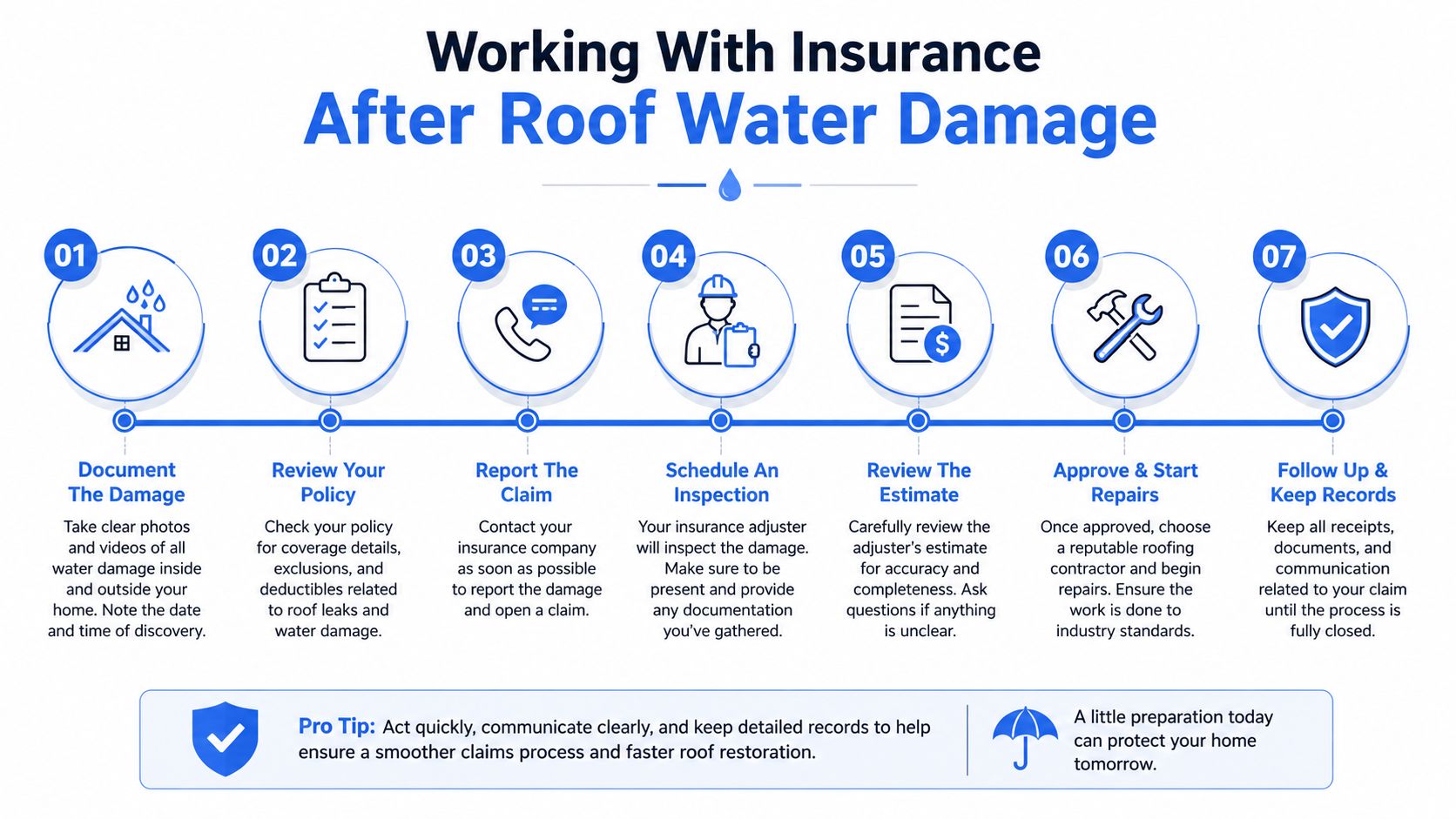
Insurance only helps if the file is clean. Start with proof, then sort out the cause. If wind, hail, or a sudden leak event damaged the roof, build the record immediately with photos, video, and a contractor's written findings.
A strong claim file includes the roof, attic, ceiling stains, damaged insulation, and any belongings affected by the leak. Moisture readings and a written scope of work help show the damage is not just cosmetic. If you want homeowner-facing context on coverage and claim issues, house insurance insights is a useful place to start.
What to say and what to avoid
Keep the story factual. Say when you noticed the leak, where the visible damage is, and what you documented. Do not guess at the cause if you do not know it yet, and do not downplay the damage because the stain looks small. A small stain can hide soaked insulation or rotten sheathing.
Deductibles matter too. If the repair estimate is below your wind or hail deductible, filing a claim usually does not make sense. That is not a moral issue, it is a math issue. As noted earlier, water damage claims can get expensive fast, but many localized roof repairs never reach that kind of payout.
Build the record in order
Start with timestamped photos and video. Add attic shots that show the path of moisture, then exterior shots of the suspect area. Keep receipts for emergency tarping, dehumidifiers, or temporary dry-out work if you use them. That sequence helps the adjuster understand the event, and it helps you later if the property disclosure question comes up during resale.
The point is simple. Good documentation protects the claim, and it protects you if the repair gets questioned later. If you want to compare contractors before you commit, how to choose a roofing contractor is worth reading before you sign anything.
What to Expect From a Local Roofing Contractor
A serious contractor doesn't start with a sales pitch. They start with an inspection. That means a roof walk when conditions allow, attic review, photo documentation, and a written estimate that tells you exactly what they found and what they propose to fix.
The visit should feel organized, not improvised
Expect the contractor to separate diagnosis from repair options. If there's a leak, they should tell you whether the problem is likely shingles, flashing, a vent boot, skylight integration, or deck damage. If a replacement is on the table, the estimate should say why.
The best crews also explain materials and cleanup. Manufacturer-backed products, documented installation practices, debris removal, and clear communication are not extras. They're what keep a roof system from becoming a recurring problem. That standard is the baseline I'd expect from HIBCO ROOF LLC, a licensed and insured Columbus-area contractor that handles inspections, repairs, and full replacements.
Credentials and warranty language matter
Manufacturer credentials matter because they tell you the installer has been trained to use the system the way it was designed. That's especially important when the work touches skylights, flashings, or the underlayment stack. A warranty is only useful if the installation matches the warranty terms.
A homeowner should also ask how the job will be staged. Many replacements can be completed in a single day when the crew and materials are coordinated. That doesn't mean every job should be rushed, it means a well-run contractor respects your time and doesn't leave the house exposed longer than necessary.
Ask for the written scope before you sign. If a roofer won't put the repair sequence in writing, keep shopping.
For a practical checklist of what to look for when comparing companies, how to choose a roofing contractor is worth reviewing before you commit. The right contractor reduces stress because they tell you what's wrong, what it costs, and what happens next.
Preventing the Next Leak With Seasonal Roof Maintenance
People treat roofs like appliances, install them and forget them until something leaks. That mindset is expensive. Roofs need a spring look and a fall look, especially in central Ohio where freeze-thaw, wind, and storm debris all punish weak spots.
Two checks beat one emergency
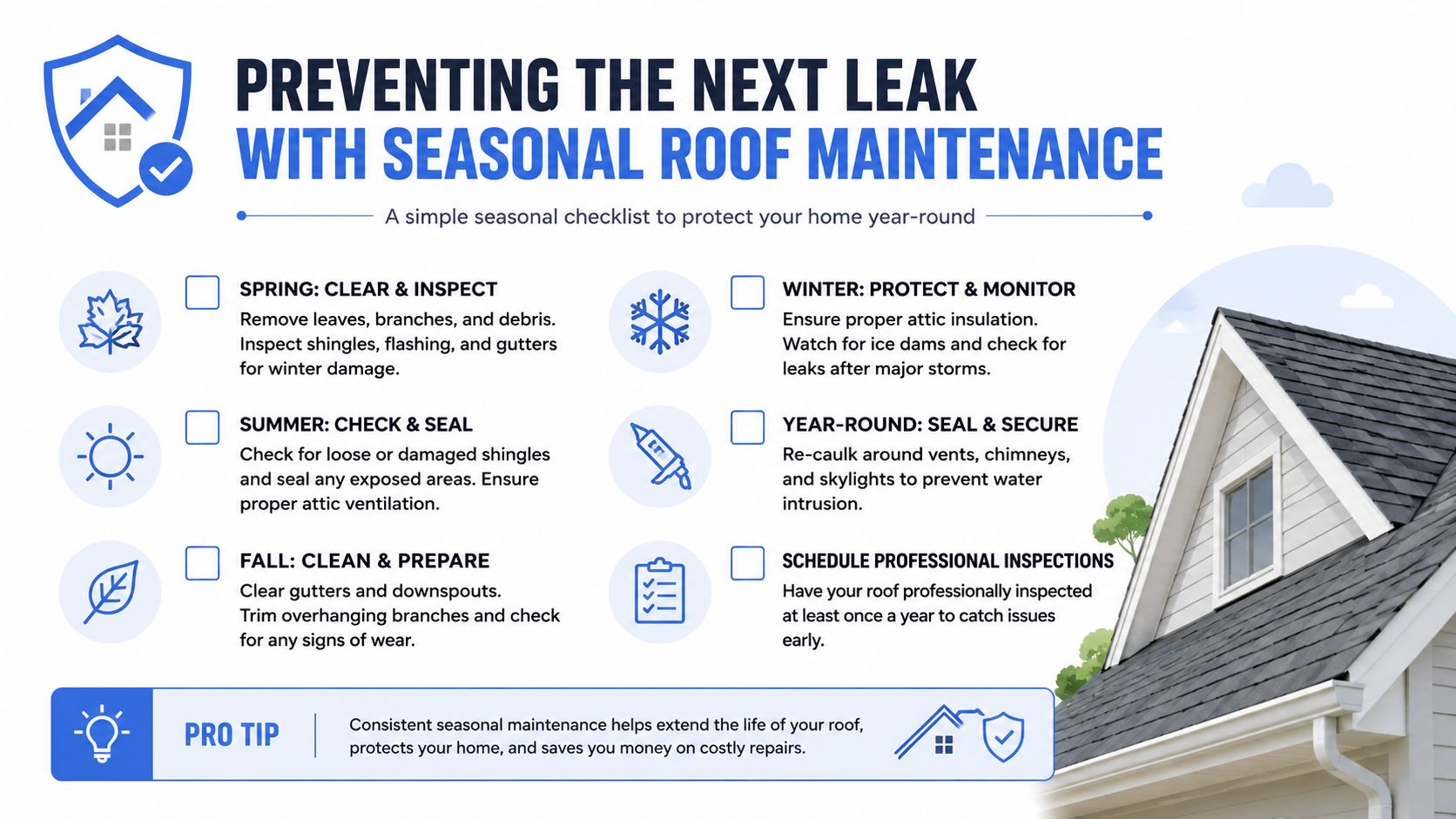
Spring is the right time to look for storm damage, lifted shingles, loose flashing, gutter backups, and attic moisture from winter. Fall is the right time to clear debris, check seals around penetrations, and make sure water can move off the roof before snow and ice arrive. That rhythm catches a lot of trouble before it becomes ceiling damage.
A good maintenance pass should include:
- Cleaning gutters and downspouts so water doesn't back up under the edge.
- Trimming overhanging branches that scrape shingles and dump debris.
- Checking flashing and sealant around vents, chimneys, and skylights.
- Inspecting attic ventilation so trapped moisture doesn't linger.
- Watching for moss or algae that can hold water against the roof surface.
The U.S. Department of Energy also notes that unbaffled vents can let wind-driven moisture into attic spaces and cathedral ceilings U.S. Department of Energy roof and ceiling repair guidance. That's why ventilation isn't a side issue, it's part of water control.
If you want a simple example of how a seasonal maintenance mindset looks in the world, seasonal gutter upkeep in Flagstaff is a useful reminder that drainage habits matter wherever homes deal with weather and debris.
Small fixes beat big repairs
The cheaper move is usually the boring one. Tighten the detail before it leaks. Replace a failing boot before it splits. Re-seal flashing before wind lifts it. A free inspection from a local contractor is often the fastest way to catch those problems while they're still cheap.
That's the whole game. Protect the roof, protect the attic, protect the ceiling, and you stop paying for the same leak twice.
If you've got a stain, a drip, or a roof leak that hasn't been fully traced yet, HIBCO ROOF LLC can inspect the problem, document the damage, and tell you whether you need a repair or a replacement. Visit HIBCO ROOF LLC to request a free estimate and get the leak diagnosed before the next storm makes it worse.