
A homeowner in Columbus notices peeling paint beneath the eaves after a wet spring. One gutter is sagging near the corner, and the soffit looks darker than it did last year. It's tempting to blame an aging paint job, but those symptoms often point to a roof-edge system that's taking on water or losing its ventilation path.
Gutter soffit replacement is not just an exterior facelift. The right repair starts by finding the moisture or airflow failure that caused the damage, then choosing between a localized patch and a coordinated roofline rebuild. This guide covers the warning signs, material choices, installation sequence, cost drivers, ventilation requirements, and maintenance practices that matter for Columbus and central Ohio homes.
Table of Contents
- Why Your Roof Edge Deserves Attention
- Understanding Gutters, Soffits, and Fascia as One System
- Warning Signs Your Gutters and Soffits Need Replacement
- Materials and Options for Your Replacement
- What the Replacement Process Looks Like
- Cost Factors and Choosing the Right Scope
- Benefits Beyond a Better-Looking Roofline
- Maintaining Your New Gutters and Soffits
Why Your Roof Edge Deserves Attention
The roof edge handles two jobs at once. Gutters collect runoff and direct it away from the walls and foundation, while soffits help bring replacement air into the attic through the eaves. Fascia connects the two physically, because gutters are commonly fastened to the fascia board.
When a gutter pulls loose, water can run behind it and soak the fascia. When the fascia softens, gutter hangers lose their grip. When soffit vents become blocked, painted over, or damaged, the attic may lose the intake airflow it needs to work with upper exhaust vents. The visible peeling paint is only the part you can see.
Field rule: Treat roof-edge symptoms as clues, not as a complete diagnosis.
A small soffit patch can be sensible when the damage is isolated, the surrounding wood is sound, and the water source has been corrected. It's the wrong approach when rot extends behind the gutter, the fascia no longer holds fasteners, or moisture has entered the attic. Installing new gutters over deteriorated fascia may hide the defect while leaving the structure exposed.
Central Ohio weather makes inspection worthwhile after heavy rain, wind, and freeze-thaw cycles. The practical sequence is straightforward: inspect the drainage path, check the fascia and soffit, verify attic airflow, then define the work. That process prevents homeowners from paying for attractive new trim that fails because the original cause remains.
Understanding Gutters, Soffits, and Fascia as One System
Start at the top of the drainage side. Gutters catch roof runoff as water leaves the shingle edge, then carry it toward downspouts. The downspouts need to discharge water away from the home instead of allowing it to collect beside the foundation.
Fascia is the vertical board at the roof edge. It gives the roofline a finished appearance and provides the mounting surface for gutter hangers. If that board is soft or rotted, a gutter may look properly aligned while its fasteners are holding in failing material.
Soffit is the underside panel of the roof overhang. Many soffits contain intake vents that draw air into the attic. That intake must remain open and continuous so air can travel from the eaves toward ridge or gable exhaust points.
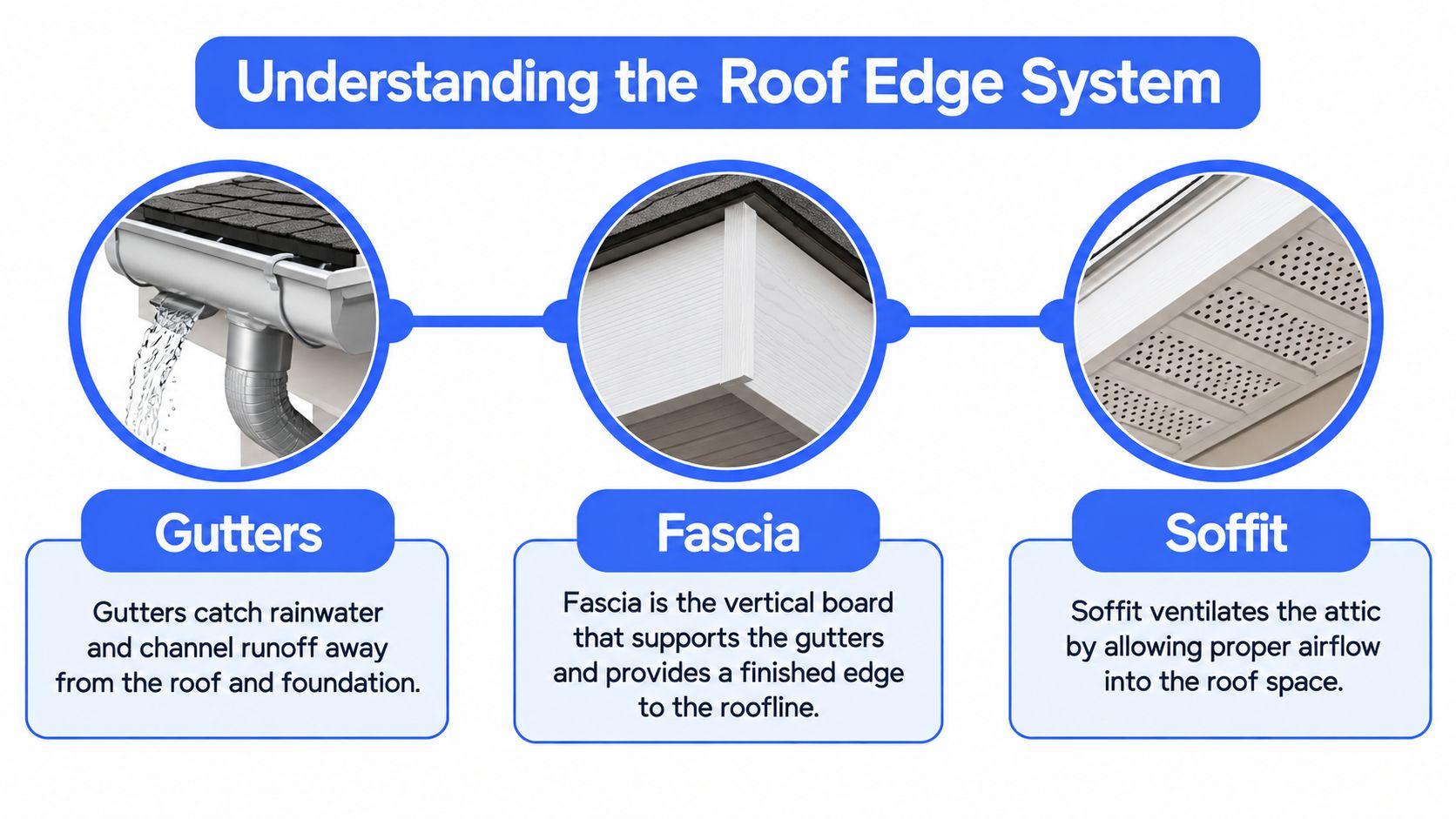
Think of the eaves as the home's drainage and breathing apparatus. The gutter handles liquid water, the fascia supports the drainage hardware, and the soffit manages air entering the attic. Blocking one function can damage the others. For example, overflow can stain or rot soffit panels, while a closed soffit can increase attic moisture and leave wood vulnerable to decay.
Homes with limited eave space may use a continuous strip vent or an over-fascia vent instead of a broad vented soffit panel. The important question isn't which trim profile looks best. It's whether the finished assembly preserves the designed path from soffit intake to upper exhaust. Contractors and homeowners comparing installation approaches can also review this fascia board replacement reference and a practical residential gutter services Oregon resource for broader system context.
Warning Signs Your Gutters and Soffits Need Replacement
Some warning signs are obvious from the driveway. Others only appear when someone looks into the attic or checks the roof edge during rain.
Sagging gutters usually indicate overloaded sections, failed hangers, poor slope, or a fascia board that no longer provides a solid fastening surface. Detached joints and leaking end caps can send water behind the gutter instead of into the channel. Soft fascia, cracked soffit panels, peeling paint, and dark water stains deserve closer inspection rather than a quick coat of exterior paint.
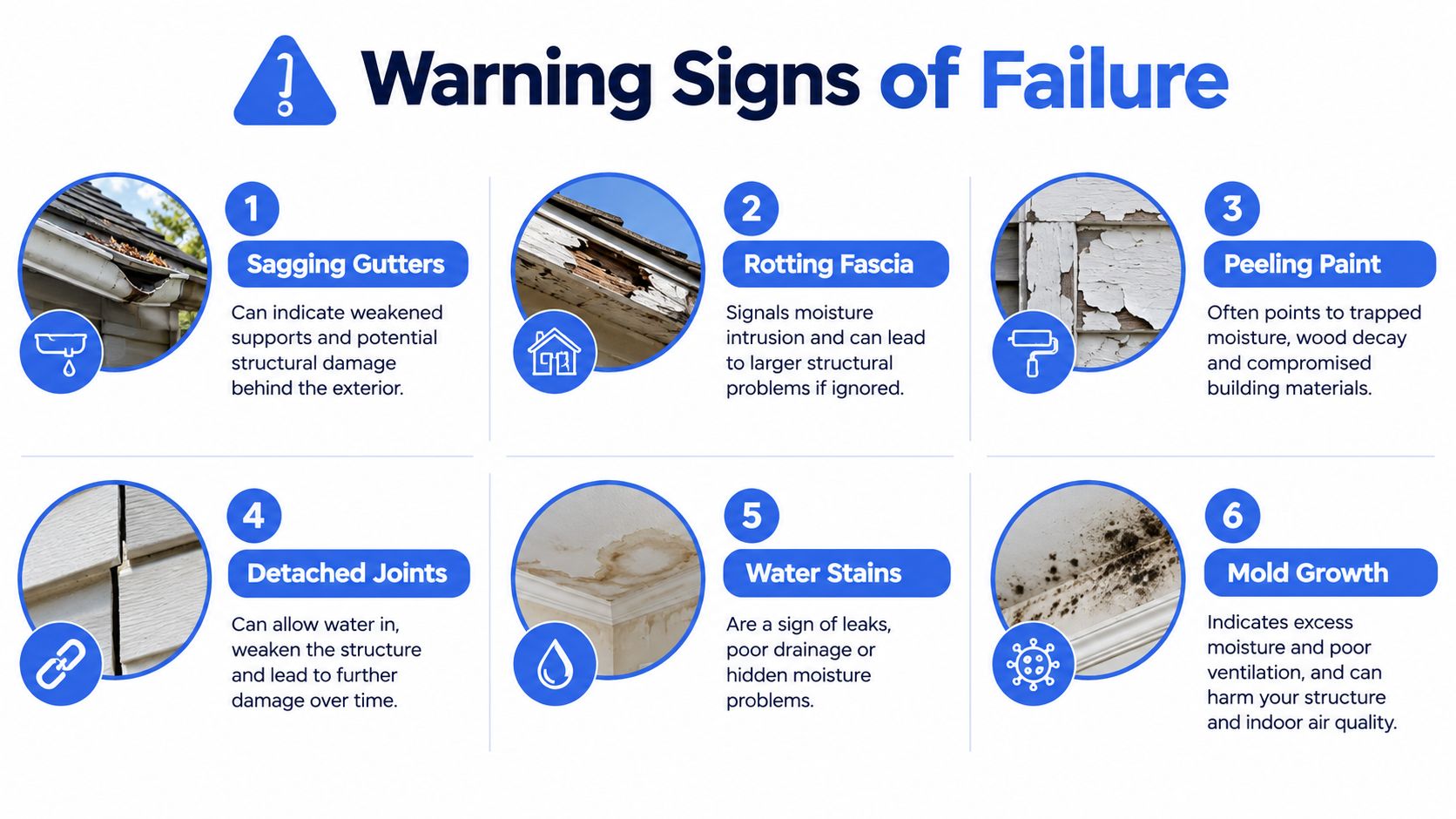
Open gaps create another problem. Birds, squirrels, and insects can enter through missing soffit panels or loose fascia returns, then bring nesting material and moisture into the roof edge. If you see pest activity, don't seal the opening before confirming that no animals remain inside.
Look beyond the exterior
A musty attic smell, damp insulation, or localized mold can indicate a ventilation or water-entry problem even when the shingles appear intact. Blocked or damaged soffit vents are a common cause of damp insulation, because the attic lacks adequate intake airflow.
Winter symptoms can also be revealing. Icicle-prone eaves may relate to heat and moisture movement through the attic, not only to the roof surface. That doesn't prove the soffit is the cause, but it's a reason to inspect insulation, baffles, intake openings, and exhaust ventilation together.
Walk around the home after a heavy rain and look for:
- Overflow: Water spilling over the front edge or behind the gutter points to a drainage or slope problem.
- Movement: A gutter that bows away from the fascia may be pulling fasteners from damaged wood.
- Openings: Gaps at corners, returns, and vent panels can allow pests and wind-driven rain inside.
- Interior clues: Damp insulation, staining, or a musty odor calls for an attic inspection.
New trim won't solve a hidden leak or blocked intake path. Find the failure first, then replace the damaged materials.
Materials and Options for Your Replacement
Material selection should follow the home's exposure, ventilation requirements, maintenance tolerance, and appearance. Vinyl soffit is common because it resists routine moisture and needs little painting, but it can become brittle or deform under impact. Aluminum soffit offers good moisture resistance and a wide range of finishes, though denting and color matching can matter during repairs. Wood soffit suits older and traditionally styled homes, but it demands careful priming, painting, and water management.
For gutters, aluminum in continuous lengths is a practical choice for many Columbus homes because fewer field joints mean fewer potential leak points. Sectional gutters can work for smaller repairs or accessible runs, but each connection needs proper sealing and alignment. Homes under mature trees may benefit from leaf guards, although guards still need inspection and aren't a substitute for a correctly sized and sloped gutter.
Vented or unvented soffit
Use vented panels when the roof design depends on soffit intake. An unvented panel may be appropriate where ventilation is provided elsewhere or where the eave design doesn't form part of the attic's intake system. A contractor should verify that choice rather than covering existing openings because a solid panel looks cleaner.
Where a broad soffit vent won't fit, a continuous strip vent or over-fascia vent can preserve intake at the eaves. The replacement should also keep insulation, baffles, and vent openings aligned. A roof ventilation standard described in this soffit and fascia cost guide uses net free vent area equal to at least 1/150 of attic floor area, or 1/300 when intake and exhaust are balanced, so the design needs to be checked rather than guessed.
| Material | Best For | Maintenance Level | Relative Cost |
|---|---|---|---|
| Vinyl soffit | Low-maintenance homes and straightforward profiles | Low | Lower |
| Aluminum soffit | Moisture exposure and finish flexibility | Low to moderate | Moderate |
| Wood soffit | Traditional homes and custom detailing | High | Moderate to high |
| Seamless aluminum gutter | Long runs and fewer field joints | Low to moderate | Moderate |
| Sectional gutter | Small repairs and accessible sections | Moderate | Lower |
For a broader look at gutter sourcing and product considerations, the Blue Lake Roofing Supply guide can help homeowners understand how material availability affects the final selection.
What the Replacement Process Looks Like
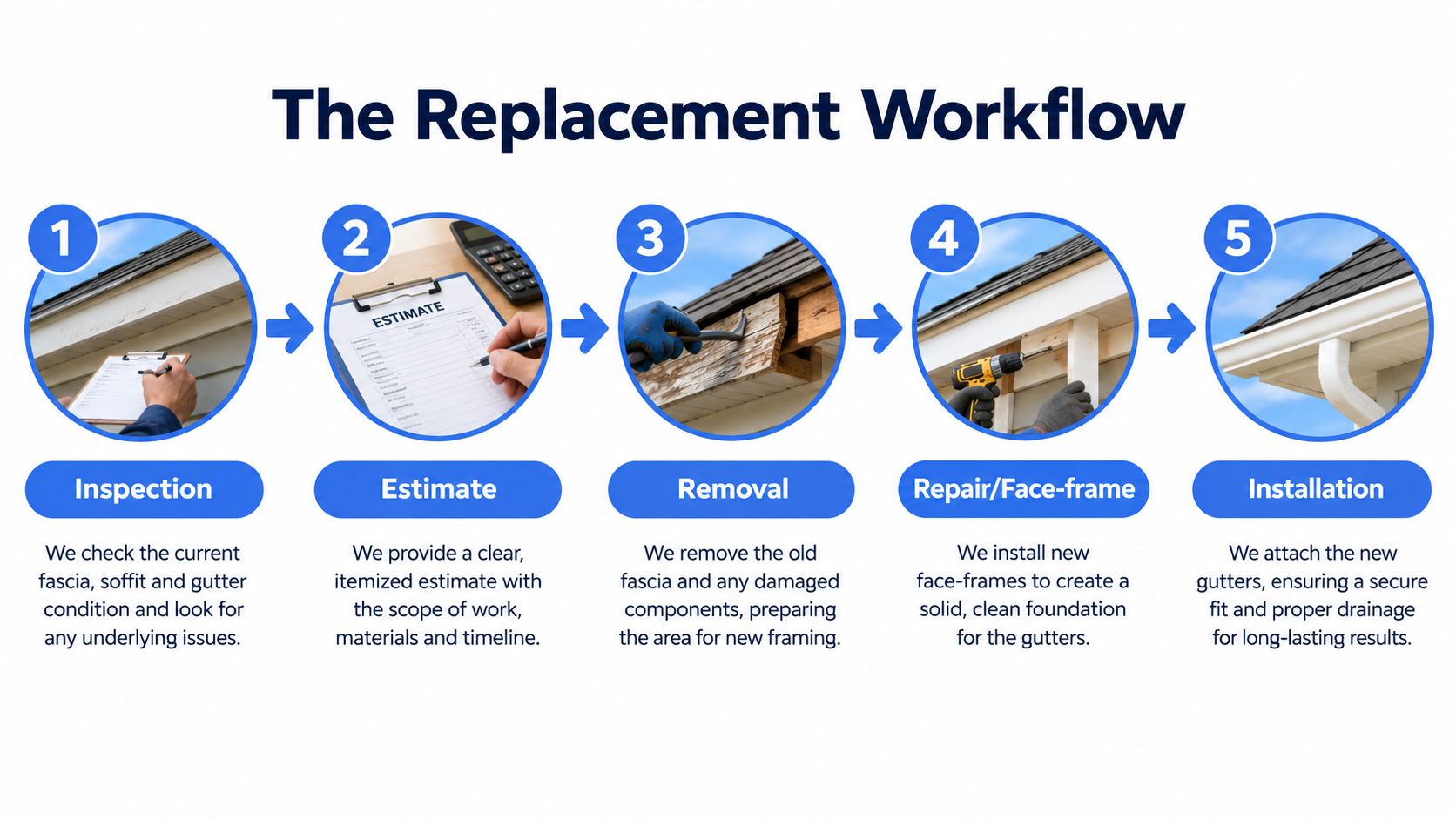
A professional gutter soffit replacement should begin with an inspection, not a material sales pitch. The contractor checks the gutter slope and outlets, probes questionable fascia, examines soffit panels and returns, and looks in the attic when moisture or ventilation is suspected. The written estimate should identify the affected runs, the proposed materials, ventilation work, disposal, and items that could change after removal.
The removal stage explains why these components are often best handled together. Gutters are attached to the fascia, so they usually come down before fascia repairs can begin. Once the gutter is removed, the crew can expose the board, inspect the roof edge, and determine whether the soffit is damaged from the exterior or from moisture inside the eave.
The usual installation sequence
- Inspection and estimate: The contractor documents damage and confirms the intended scope.
- Material planning: Profiles, colors, vent types, fascia dimensions, gutter sizes, and downspout locations are coordinated before ordering.
- Removal: Gutters and damaged trim come off carefully, with debris kept away from landscaping and entry paths.
- Structural repair: The crew replaces compromised fascia, repairs framing where necessary, and corrects the moisture source.
- Soffit installation: Vented or unvented panels are installed with the required airflow path preserved.
- Gutter installation: New gutters and downspouts are fastened to sound fascia with current or manufacturer-recommended hangers that meet applicable requirements.
The final walkthrough should include water-flow checks, visible fasteners and joints, vent openings, downspout discharge, and cleanup. A useful example of how exterior companies describe gutter installation scope is available through Flagstaff gutter installation services, though Columbus homeowners still need a local contractor to account for their own home and code conditions.
Clear communication matters as much as neat trim lines. The estimate should state what happens if hidden rot appears, when materials arrive, how access will be managed, and who removes the old components. A clean jobsite and documented installation practices are basic signs that the work has been planned rather than improvised.
Cost Factors and Choosing the Right Scope
The right scope depends on what the crew finds behind the visible damage. A small, accessible soffit patch may cost only a few hundred dollars, while more involved repairs can reach a few thousand dollars depending on scope, according to homeowner repair guidance from Modernize's gutter replacement resource. Combined gutter and soffit replacement commonly falls in the roughly $4,500 to $12,000 range, with home size and material selection affecting the total, as the same source explains.
Those figures are not a substitute for a site-specific estimate. Cost usually moves with:
- Roofline length: More gutter, fascia, soffit, hangers, corners, outlets, and downspouts increase labor and material.
- Home size and access: Multiple stories, steep slopes, porches, landscaping, and tight side yards make removal and installation slower.
- Material grade: Premium finishes, custom woodwork, and moisture-resistant products carry different material costs than standard vinyl or aluminum.
- Rot depth: Surface damage is a different job from fascia that has lost its fastening strength or framing that needs repair.
- Project coordination: Doing gutters, fascia, and soffit together can reduce repeated removal and reinstallation.

Repair or coordinated rebuild
A localized repair makes sense when damage is confined to one section, the adjacent fascia is solid, the gutter can be removed and reinstalled without disturbing failing material, and the source of water has been corrected. Replacing only a cracked panel won't make sense if the gutter is pulling away across the same run.
A coordinated rebuild becomes more reasonable when rot, sagging, pest entry, or repeated overflow affects several connected components. The goal isn't to sell a larger project. It's to avoid paying for a new gutter that must later come down when the fascia fails.
Homeowners who need to phase work can ask for a written sequence that identifies what should happen first. Some contractors also offer financing pre-qualification, which can help a homeowner evaluate a larger repair without committing before the scope and terms are clear. For another discussion of project variables, review this gutter replacement cost guide.
Benefits Beyond a Better-Looking Roofline
A finished roofline is useful, but appearance is only one result. The larger benefit comes from restoring the functions that sit behind the trim.
Proper soffit intake gives the attic's ventilation system a route for replacement air. When baffles and openings remain continuous, air can move from the eaves toward upper exhaust points. That helps reduce summer heat buildup and lowers the likelihood of condensation, wet sheathing, mold, and timber decay caused by trapped attic moisture. The relationship is mechanical, not promotional. Restricted intake reduces air exchange, and reduced air exchange leaves moisture with fewer ways to leave.
The soffit ventilation system guide provides additional context for evaluating intake and exhaust together rather than treating a vent panel as a decorative component.
A tighter roof edge
New soffit panels and repaired fascia can close the gaps that squirrels, birds, and insects use to reach the attic. Sealing those openings only works when the contractor confirms that animals and nesting materials are gone and that the new panels don't block required ventilation.
Water control protects other parts of the exterior as well. A properly supported gutter carries runoff away from siding and foundation areas, while sound fascia gives hangers a reliable fastening surface. If the roofline is failing during a home sale, visible rot, loose gutters, and staining can also raise questions during an inspection. A coordinated repair gives the property a cleaner, more finished condition without pretending that trim replacement fixes unrelated roof defects.
Maintaining Your New Gutters and Soffits
Maintenance starts with the calendar. Most guidance recommends cleaning gutters at least twice a year, typically in spring and fall, because clogged drainage and overflow can contribute to soffit and fascia deterioration over time. Homes near mature trees may need cleaning three or four times a year, according to this gutter, soffit, and fascia replacement resource.
Central Ohio homeowners should also inspect soffits and fascia after major storms. Look for loosened panels, fresh staining, separated gutter joints, missing downspout straps, and branches resting on the roof edge. A storm inspection doesn't require climbing onto the roof. Binoculars and a look from safe ground level can reveal movement or open gaps that deserve a closer professional check.
Simple checks between cleanings
- Watch heavy rain: Water should stay in the gutter and flow toward the downspouts instead of spilling behind the channel.
- Check the roof edge: Peeling paint, dark streaks, soft-looking wood, and detached panels can signal renewed moisture.
- Keep vents open: Dust, insect nests, paint, and insulation should not cover soffit intake openings.
- Inspect the attic: Damp insulation, musty odors, staining, and mold growth call for diagnosis rather than more exterior caulk.
- Look for roof granules: Granule buildup in gutters can indicate shingle wear and should be considered alongside the roof's overall condition.
The local contractor you choose should provide a written scope, explain whether the work is a patch or a coordinated rebuild, and document the installation. HIBCO ROOF LLC offers Columbus-area inspections, no-pressure written estimates, continuous gutter installation, leaf guard options, manufacturer-backed materials, project communication, and post-installation debris removal as part of its roofing and exterior work.
If your gutters are sagging or your soffits show peeling paint, staining, rot, or open gaps, schedule a roof-edge inspection before replacing trim by guesswork. Visit HIBCO ROOF LLC to request a free written estimate for gutter, soffit, fascia, or related exterior work in Columbus and central Ohio.