A ceiling stain usually doesn’t show up at a convenient time. You notice a brown ring over the hallway, a soft spot near a bathroom vent, or peeling paint in a bedroom corner after a hard rain. Then the questions start. Is it the roof, the attic, the siding, the chimney, or a plumbing line? Is it new damage, or has water been moving for weeks?
That uncertainty is what makes leaks stressful. The visible stain inside your house is often only the end of the story. A professional roof leak detection service exists to remove the guesswork, trace the water back to its entry point, and document what needs to happen next. If you’ve never called a roofer for this kind of problem before, it helps to know what the process should look like from the first phone call through the written findings.
Table of Contents
- That Sinking Feeling When You Spot a Water Stain
- Common Causes and Signs of a Hidden Roof Leak
- Professional Diagnostic Methods Explained
- The Step-by-Step Professional Service Process
- Typical Timelines and Costs for Leak Detection
- From Detection to Repair and Prevention
- Homeowner FAQs About Roof Leak Services
That Sinking Feeling When You Spot a Water Stain
Most homeowners react the same way at first. They stare at the ceiling, hope it’s old, and then wait for the next rain to see if it gets worse. Sometimes it does. Sometimes it disappears for a while, which is almost worse because it gives a false sense that the problem solved itself.
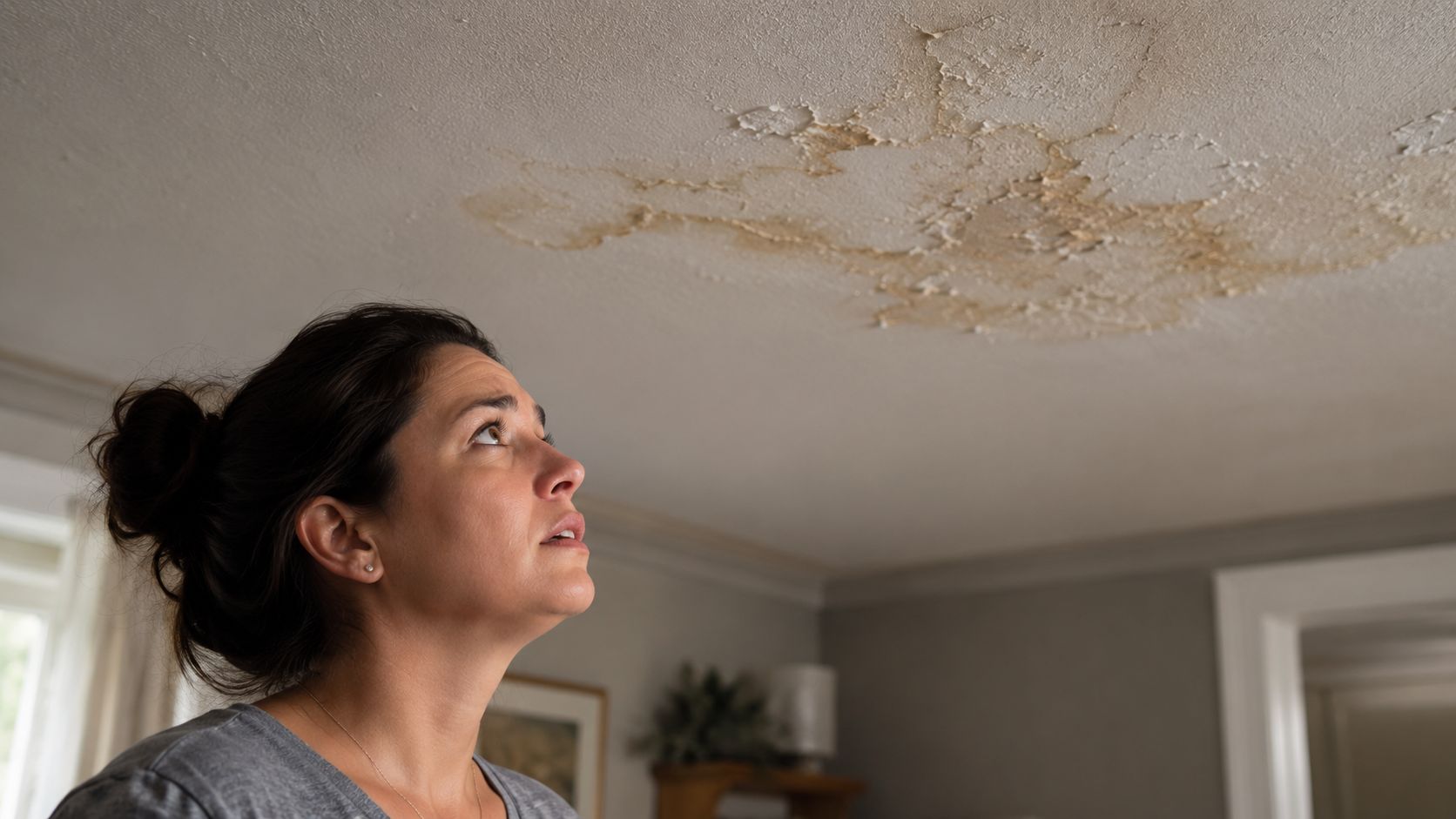
A stain doesn’t tell you much by itself. Water can enter at one point on the roof, travel along decking, framing, underlayment, or insulation, and show up somewhere else inside. That’s why guessing from the room below rarely works. What you need is a methodical inspection that starts with the symptom but doesn’t stop there.
Why homeowners call for help quickly
A proper roof leak detection service is built around finding the source without tearing apart good materials unnecessarily. A contractor should look at the roof covering, penetrations, flashing details, attic conditions, moisture patterns, and drainage paths before offering repair options. The point is to diagnose first, then repair with purpose.
Practical rule: The stain you see inside is evidence of water movement, not proof of the roof entry point.
That approach is becoming more common as detection tools improve. The global roof water leak detector market is projected to grow from USD 3.4 billion in 2026 to USD 6.6 billion by 2036, at a 6.8% CAGR, reflecting wider adoption of technology-enabled leak detection services such as infrared imaging and electronic moisture tools, according to Future Market Insights on projected roof water leak detector market growth.
What reassurance should sound like
When a homeowner calls with an active or suspected leak, calm matters. A good contractor doesn’t jump straight to “you need a whole new roof,” and doesn’t dismiss the issue either. The right response is simple. We’ll inspect it, identify the source as accurately as conditions allow, document what we find, and explain the next step in plain language.
That alone lowers the temperature of the situation. Once the problem has a process, it stops feeling like a mystery and starts feeling manageable.
Common Causes and Signs of a Hidden Roof Leak
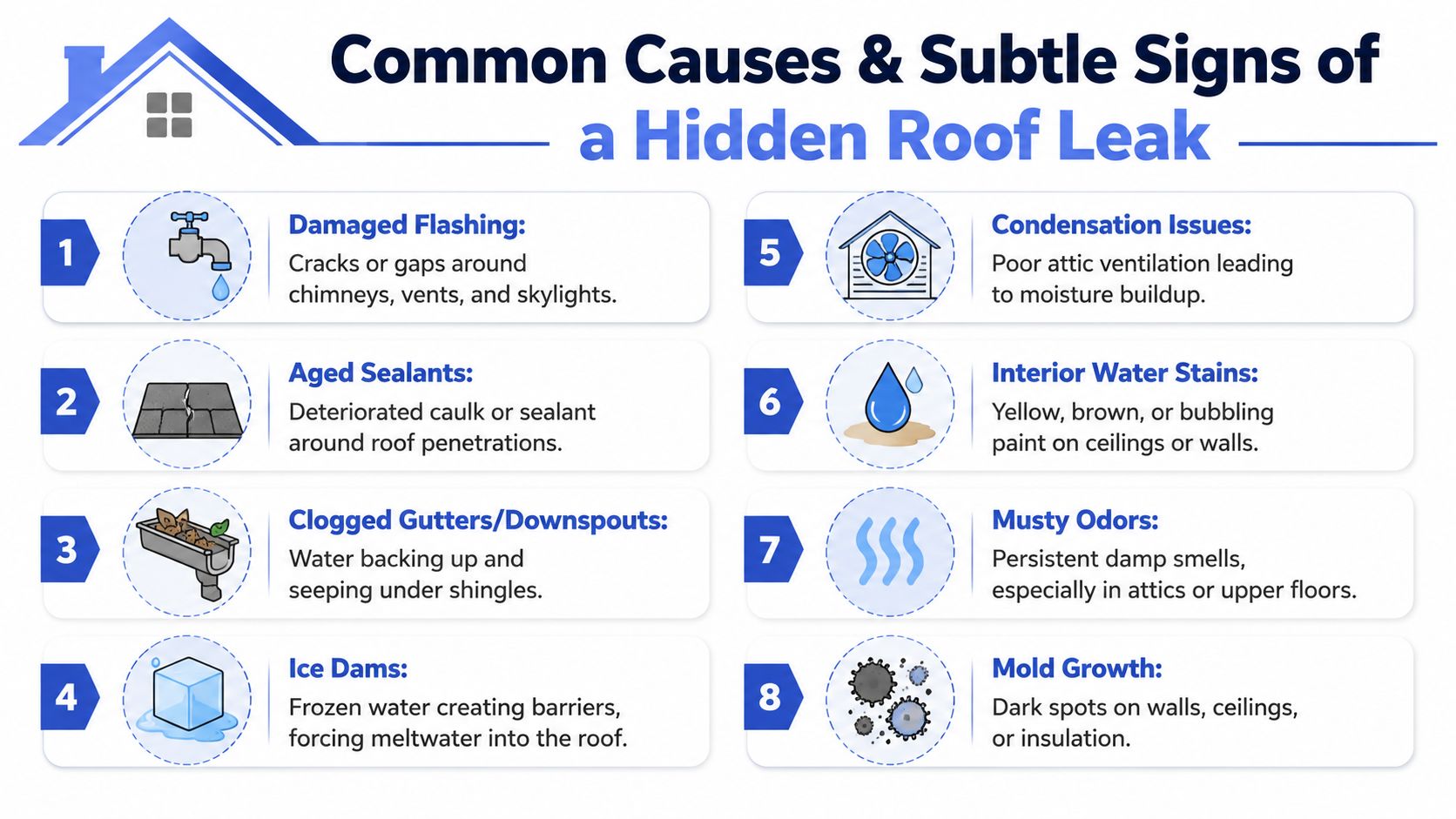
Most hidden leaks don’t begin in the middle of an open field of shingles. They start where the roof changes direction, where materials meet, or where something penetrates the surface. That includes vents, chimneys, skylights, pipe boots, valleys, wall intersections, and flashing details that have aged or shifted.
Where leaks usually start
That pattern shows up in inspection work consistently. Data from the National Roof Certification and Inspection Association shows that 60% of professional inspections identify leaks at critical transition points such as chimneys, vents, and skylights that aren’t visible from ground level, as noted in NRCIA guidance on finding roof leak sources.
Homeowners often spend too much time looking for missing shingles because that’s the damage they can imagine. In practice, many of the leaks I see come from details that look minor until water starts exploiting them. A cracked vent boot, lifted counterflashing, dried sealant, backed-up gutter edge, or worn underlayment near a transition can all allow water in without creating dramatic exterior damage.
If you want a second plain-English overview of protecting your home from leaks, that resource does a good job reinforcing why hidden entry points deserve attention.
What you can notice before a contractor arrives
There are useful signs to note before inspection day. They won’t replace diagnosis, but they help narrow the pattern.
- Interior staining: Yellow or brown rings on ceilings, upper walls, or around trim often mean water has been present more than once.
- Paint or drywall changes: Bubbling paint, peeling tape lines, sagging texture, or soft drywall usually point to ongoing moisture.
- Musty smell: A damp odor in an attic, closet, or upstairs room can show moisture is trapped even when you don’t see drips.
- Attic clues: Wet insulation, darkened sheathing, rusty fasteners, or daylight at penetrations all matter.
- Exterior trouble spots: Debris-packed valleys, damaged pipe collars, exposed nail heads, and loose flashing deserve close attention.
One useful homeowner checklist is this guide to a sign of roof leak, especially if you’re trying to document what you’re seeing before a contractor arrives.
A hidden leak usually leaves a pattern before it leaves a puddle.
One caution matters here. Condensation can mimic a roof leak. Poor attic ventilation, bathroom exhaust dumping into the attic, or seasonal moisture buildup can produce stains and mold-like spotting. That’s another reason professionals inspect both inside and outside. The repair is very different if the issue is moisture management rather than rain entry.
Professional Diagnostic Methods Explained
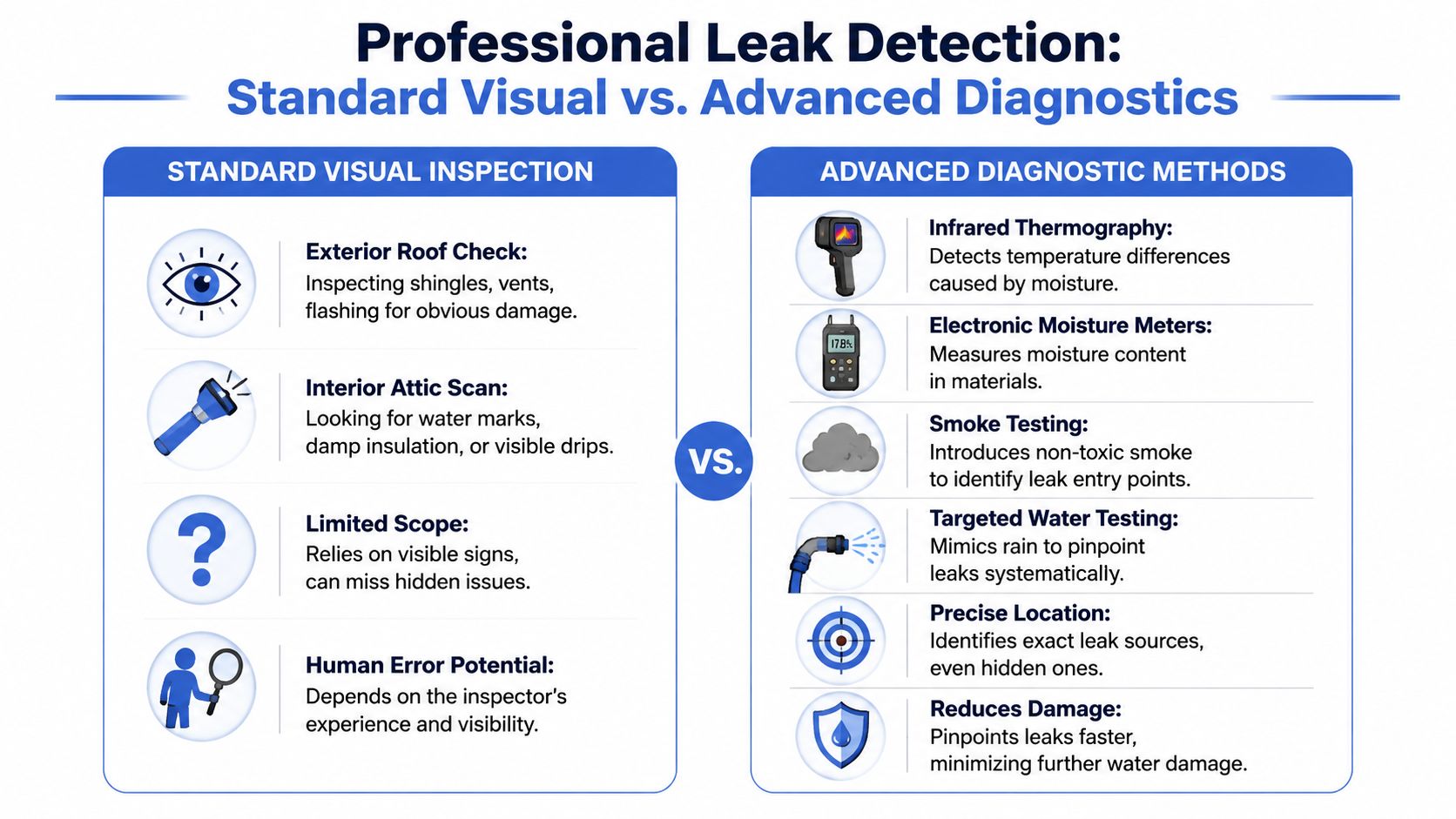
A leak inspection should start simple and only get more technical as needed. The first job is still observation. A contractor checks roofing materials, penetrations, flashing lines, attic surfaces, and the interior area where the symptom appeared. Sometimes the cause is obvious. Many times it isn’t.
What a visual inspection can and can’t do
A standard visual inspection works well for clear defects. Missing shingles, torn membrane sections, open flashing laps, deteriorated boots, impact damage, and obvious drainage issues can often be identified that way. It’s the right starting point because it’s fast, safe, and non-invasive.
Its limitation is also obvious. It depends on visible evidence. If water is traveling under materials or through concealed pathways, eyesight alone may not be enough.
That’s why a professional roof leak detection service sometimes adds diagnostic tools rather than relying on educated guesses. If you’re comparing service options, this page on free roof inspections shows how one local contractor, HIBCO ROOF LLC, frames the inspection step before repair decisions are made.
When advanced testing makes sense
One of the most useful methods is infrared thermography. It’s a non-invasive process that uses thermal imaging cameras to capture temperature differences across the roof surface. Because water holds heat differently than dry roofing materials, moisture can appear as a thermal anomaly, as explained in Douglass Colony’s overview of infrared thermography for roof leak detection.
In plain terms, think of it as a heat camera looking for areas that don’t behave like the surrounding dry roof. It doesn’t “see water” directly. It sees temperature patterns that suggest trapped moisture. That’s especially useful when the leak path is hidden below the surface.
Another valuable option is electronic moisture testing or more specialized Electronic Leak Detection on certain roof systems. These methods help narrow down wet areas or pinpoint breaches without unnecessary tear-off. A good hidden water leak detection guide can help homeowners understand why non-destructive methods are often preferred before anyone starts opening materials.
Here’s a quick visual explanation of how pros approach this work in the field.
Other methods still matter too. Targeted water testing can help when a leak only appears under certain wind-driven rain conditions. Smoke testing may assist on assemblies where air movement helps reveal pathways. Moisture meters are useful in attics, ceilings, and wall transitions to confirm whether materials are actively wet or only stained from older events.
Advanced diagnostics don’t replace roofing judgment. They support it.
The trade-off is straightforward. More advanced testing can improve accuracy, but it isn’t always necessary for a straightforward leak. A good contractor should explain why a tool is being used, what it can confirm, and what its limits are.
The Step-by-Step Professional Service Process
Homeowners feel better when they know what happens next. Leak detection should follow a clear sequence, not a vague promise that “someone will take a look.”
What happens on the first call
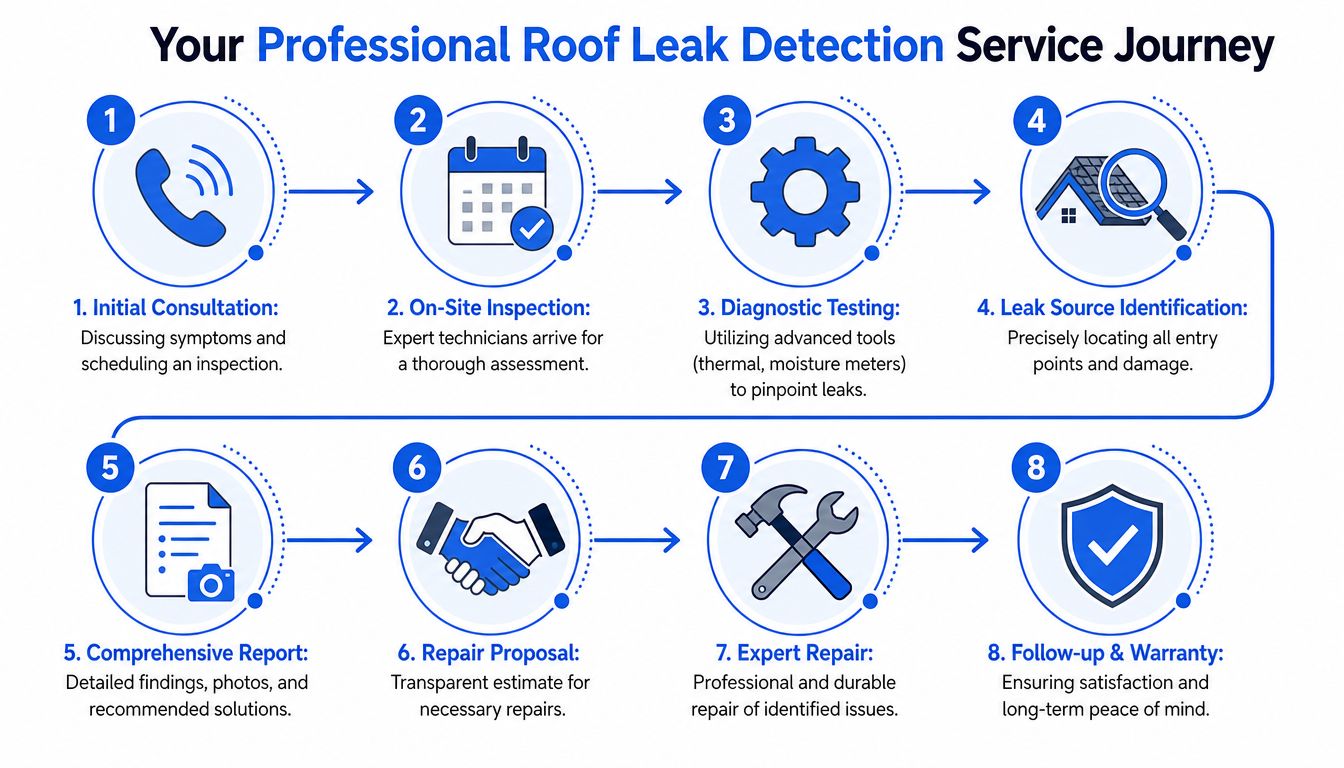
The first call is usually short, but it matters. The contractor should ask where you see the stain or drip, when it happens, whether it follows rain, whether wind seems to make it worse, and if the home has a chimney, skylight, low-slope section, or recent storm exposure. Photos help. So does knowing whether the leak is active right now.
From there, scheduling should be direct. If the issue is urgent, the contractor may discuss temporary protection first. If it’s not actively leaking, the goal is to inspect before the next weather event changes the evidence.
What happens at the house
On site, the process should move from broad to specific.
- Interior review first: The inspector checks the stain location, attic access if available, insulation condition, decking marks, and moisture path clues.
- Exterior roof inspection: Roofing materials, flashing, vents, valleys, wall intersections, and drainage details are examined.
- Diagnostic testing if needed: If the source still isn’t clear, the contractor may use moisture tools, thermal imaging, or controlled testing.
On flat and low-slope systems, some contractors use Electronic Leak Detection with Electric Field Vector Mapping, a non-destructive method that applies a low-voltage electrical field so water can create a conductive path that helps locate the breach with precision, as described in StructuraView’s explanation of Electric Field Vector Mapping for waterproofing membranes.
After the field work, you should get a clear explanation of findings. That usually includes photos, marked problem areas, whether the leak source is confirmed or strongly indicated, and what repair path makes sense. If storm damage may be involved, the contractor may also organize the documentation in a way that supports an insurance conversation.
The best inspection reports answer three questions clearly. Where did water get in, what got damaged, and what should happen next?
A professional process shouldn’t pressure you into authorizing work on the spot. It should leave you with usable information and a written path forward.
Typical Timelines and Costs for Leak Detection
Two questions come up on almost every call. How much will it cost to find the leak, and how long will the process take? The first thing to keep straight is that diagnosis and repair are separate. The inspection fee covers the work required to locate and document the source. It doesn’t automatically include the repair itself.
What the inspection fee covers
Professional roof leak inspection services in the United States typically cost homeowners between $175 and $350 on average, with a broader range of $75 to $3,000 depending on roof size, complexity, and the technology needed to identify the water source, according to Yelp’s pricing overview for professional leak detection services.
That spread makes sense in real life. A simple asphalt shingle leak near exposed flashing may need only a focused inspection. A larger roof, a difficult access condition, or advanced diagnostic equipment can push the fee higher. What matters is knowing what you’re paying for: inspection time, diagnosis, documentation, and in some cases specialized testing.
Estimated costs for roof leak detection services
| Service Type | Average Cost Range |
|---|---|
| Basic professional leak inspection | $75 to $3,000 |
| Typical homeowner inspection average | $175 to $350 |
Timelines vary by weather, urgency, roof access, and whether the leak is currently active. Some inspections are straightforward and can be completed in one visit with same-day findings. Others need dry conditions, better attic access, or a return visit for controlled testing.
A homeowner should expect the contractor to explain timing in practical terms, not vague promises. If conditions limit what can be confirmed that day, that should be stated plainly. That honesty is part of a good roof leak detection service.
From Detection to Repair and Prevention
Once the source is identified, the repair should match the defect. Not every leak calls for a large project. Some need a flashing repair, a pipe boot replacement, resealing at a specific penetration, or replacement of a limited damaged shingle area. Other cases reveal widespread wear, repeated past repairs, or moisture intrusion that has affected more than one area.
Choosing the right repair after the diagnosis
The smartest repair is the one tied directly to the documented cause. If the contractor found failed flashing, replacing shingles around it without correcting the flashing detail won't solve much. If the issue is a worn pipe boot, a broad sealant smear around the area may buy little time and create a callback later.
Homeowners dealing with vent-related leaks often benefit from seeing a focused example like this article on a leaky roof caused by failed pipe boot. It shows why the exact detail matters more than general patching.
If water is entering during a storm and you need immediate guidance before a full repair can be scheduled, resources like 24/7 roof leak help from Eagle Restoration can help you understand short-term emergency priorities such as protecting interior contents and reducing further exposure.
How to reduce the chance of another leak
Prevention is less dramatic than emergency repair, but it saves the most frustration.
- Keep drainage moving: Clean gutters and downspouts so water doesn't back up at the eaves or valleys.
- Watch roof penetrations: Chimneys, skylights, vent boots, and wall flashings deserve periodic review because movement and aging usually show up there first.
- Check the attic after storms: You don't need to diagnose anything. Just look for fresh staining, damp insulation, or unusual odor.
- Save documentation: Photos, inspection notes, and repair invoices help if the issue returns or an insurance question comes up later.
The long-term value of professional repair is simple. A targeted fix closes the actual entry point, protects the surrounding materials, and gives you a record of what was found. That's much more useful than repeated temporary patching.
Homeowner FAQs About Roof Leak Services
Will homeowners insurance cover leak detection or repair?
It depends on the cause of loss and your policy terms. Sudden storm-related damage is handled differently than long-term wear, deferred maintenance, or old materials. A contractor can document conditions and provide photos, but your carrier decides coverage.
Can I find the leak myself?
You can spot symptoms, but tracing the exact entry point is harder than it looks. Water often travels before it appears indoors. Walking a roof without proper safety equipment also creates unnecessary risk.
Should I wait until the leak becomes active again?
Usually, no. Even if the drip stops, the defect may still be there. Stains, moisture marks, and failed flashing details often remain visible enough for a trained inspection.
What should I ask before hiring a contractor?
Ask whether they're licensed and insured, whether they provide written findings, whether they separate diagnosis from repair pricing, and whether they can document damage for insurance review if needed. Also ask how they handle hidden leak conditions when the first visible clue isn't the true entry point.
Is a free estimate the same thing as leak detection?
Not always. Some contractors offer a free initial inspection, while specialized diagnostic work may carry a separate fee depending on the complexity and tools required. The key is clarity before the visit.
If you're dealing with a ceiling stain, attic moisture, or an active drip in Columbus or central Ohio, HIBCO ROOF LLC provides residential roof inspections, leak diagnosis, repair planning, and insurance claim support for homeowners who need a clear answer before deciding on the next step.







Leave a Reply