
You're probably here because the phrase Class A fire rating showed up somewhere unexpected. Maybe it was on a roofer's estimate, in an insurance conversation, or while comparing shingle brands online. Most homeowners read it, nod, and then wonder what it means for their house.
That confusion is normal. Roofing terms can sound more technical than they need to be, especially when the actual question is simple: Will this roof give my home better protection, and will it meet code if it needs to?
For homeowners in Columbus and Central Ohio, that question usually isn't about wildfire headlines. It's about making a smart replacement decision, understanding what a contractor is selling, and avoiding the mistake of paying for a “Class A” shingle without getting a complete Class A fire rating roof system. That distinction is more significant than generally appreciated.
Table of Contents
- Your Guide to Understanding Roof Fire Ratings
- What Is a Class A Fire Rating
- How Roofs Earn a Class A Rating
- The Difference Between a Product and an Assembly
- Common Roofing Materials with a Class A Rating
- Why a Class A Roof Matters for Columbus Homeowners
Your Guide to Understanding Roof Fire Ratings
A lot of homeowners first hear about fire ratings when they aren't even shopping for fire protection. They're replacing an aging roof, fixing storm damage, or reviewing bids that list product names and terms they haven't seen before. One estimate says “Class A rated.” Another says “architectural shingles.” A third talks about underlayment and roof deck protection. It starts to sound like every contractor is describing a different job.
The most helpful way to look at roof fire ratings is to treat them like a safety label with conditions attached. The label tells you how well a roof system performs when it faces fire from outside the home, such as embers, firebrands, or nearby flames. It doesn't mean the roof can't burn under extreme conditions, and it doesn't mean every product with a Class A label automatically creates a fully compliant roof once it's installed.
In Ohio, homeowners often get tripped up because they assume this topic only matters in Western wildfire zones. That's too narrow. Fire resistance still matters when homes are close together, when embers travel from a nearby structure fire, or when insurers and inspectors want clear documentation of the roofing system you've installed.
Practical rule: If you remember one thing, remember this. A fire rating applies to the roofing system as installed, not just to the shingle sample shown in a brochure.
That's why it helps to slow down and separate the marketing language from genuine protection. The good news is you don't need to memorize testing standards or become a roofing engineer. You just need to understand the hierarchy, know what the rating covers, and ask the right questions before work begins.
What Is a Class A Fire Rating
A Class A fire rating is the highest fire-resistance classification used for roof coverings in the standard A, B, and C system. This classification system provides three levels of protection. Class C offers the lowest level in that group, Class B is better, and Class A is the top tier.
Where Class A fits in the rating scale
A simple way to picture it is to think about winter coats. A light jacket may help in cool weather. A heavier coat works in harsher conditions. A serious insulated coat is built for the worst day of the season. Roof fire ratings work in a similar way. The higher the class, the more severe the fire exposure the roof system is designed to resist.
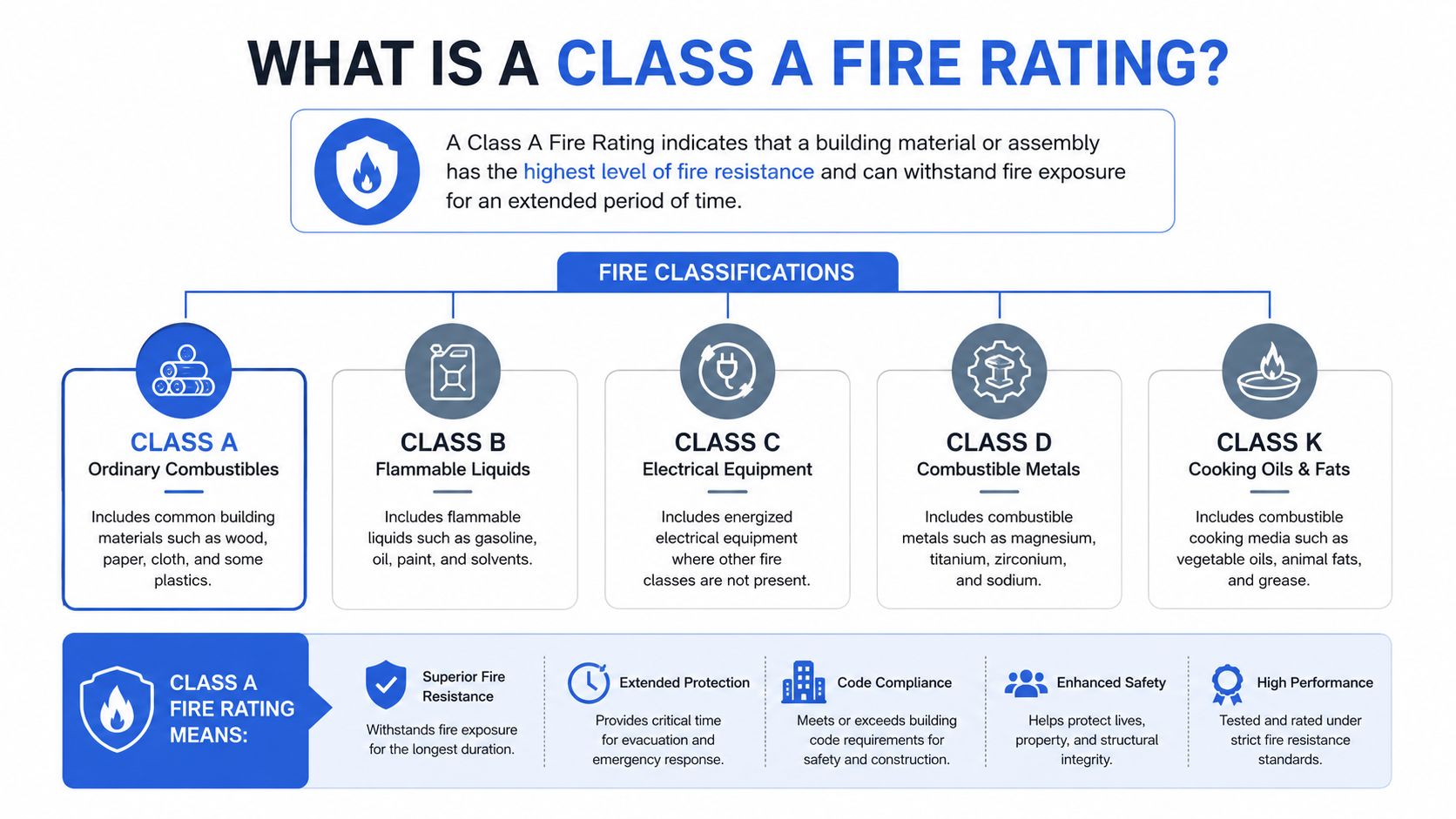
A clear benchmark comes from this explanation of roof fire ratings: a Class A fire-rated roof is defined by its ability to withstand a standardized burning brand measuring 12 inches by 12 inches and weighing 2,000 grams without igniting, while limiting surface flame spread to a maximum of 6 feet. Unlike lower classifications, a Class A roof can typically resist ignition for 2 to 4 hours under sustained test conditions, whereas a Class B roof lasts approximately 1 hour and a Class C roof only 20 minutes before ignition.
That gives homeowners a practical way to compare the ratings. Class A isn't just “a little better.” It's built to meet the toughest standard in this rating group.
What that means in real life
In plain language, a Class A fire rating roof gives you the strongest available defense in standard residential roof classifications against external fire exposure. That includes embers and burning debris landing on the roof surface.
It's also important to keep one misunderstanding out of the way. Class A doesn't mean fireproof. A roof with this rating can still burn under sustained or extreme heat. What the rating tells you is that the roof system performed at the highest level under recognized fire-test conditions.
Here's why homeowners care about that distinction:
- Safety: Better resistance to ignition and flame spread gives your home more protection.
- Documentation: It gives you a specific performance standard to ask for, instead of relying on vague sales language.
- Decision-making: It helps you compare materials that may look similar but don't perform the same way when installed.
A roof can look premium from the street and still fall short if the fire rating only applies to the product, not the full system under it.
How Roofs Earn a Class A Rating
A roofing system doesn't get a Class A label because it “seems durable.” It earns that rating by passing formal fire testing under ASTM E108 or UL 790, the standards used in the United States for roof-covering fire performance.
The three tests a roof system must pass
Here's the homeowner version of what happens behind the scenes.
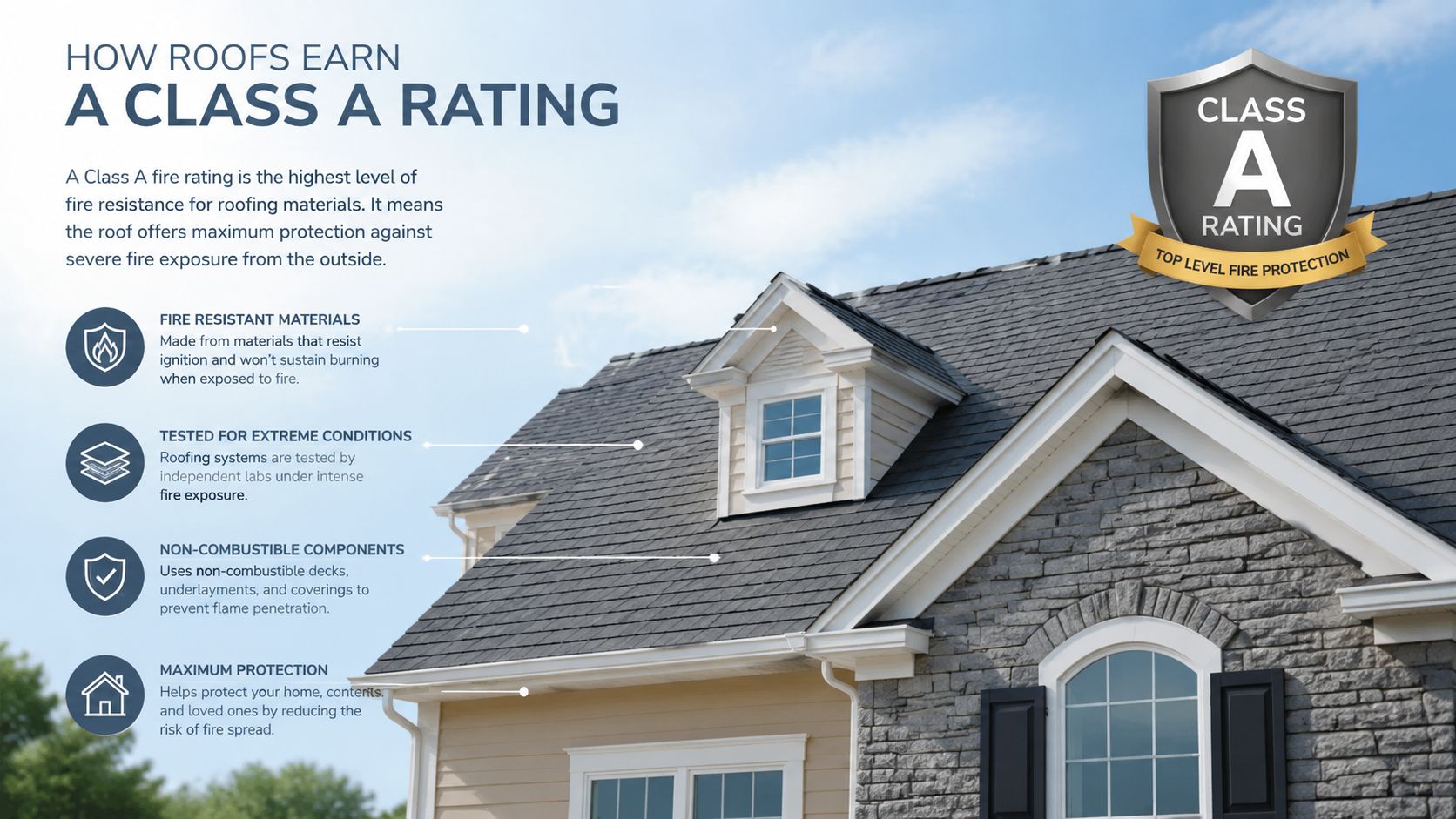
According to this overview of Class A roof testing, a Class A fire-rated roof assembly must withstand severe external fire exposure by limiting flame spread to no more than 6 feet, remaining unignited for 2 to 4 hours, and surviving 15 cycles of intermittent gas flame without structural failure. This performance is validated under ASTM E108 and UL 790, which mandate three specific tests: Spread of Flame, Intermittent Flame, and Burning Brand, where the Class A standard requires resistance to a 12" × 12" burning brand, significantly larger than the 6" × 6" brand for Class B.
Those three tests matter because each checks a different failure point:
- Spread of Flame checks how far fire moves across the roof surface.
- Intermittent Flame checks whether repeated flame exposure causes failure.
- Burning Brand checks whether a roof can resist ignition from a large burning object landing on it.
A roof has to perform across all of them, not just one.
Why the testing matters to homeowners
Lab tests can feel far removed from daily life, but they answer a question every homeowner has: Has this roofing system been proven under real stress, or is it just being marketed well?
That's why the Class A label carries weight. It reflects a system that has been challenged in multiple ways, not a vague promise of toughness. It also explains why contractors who pay attention to the full build-up of the roof often sound more specific than contractors who only talk about shingles.
For a homeowner reviewing a proposal, these are the signs of a serious conversation:
- Specific standards named: ASTM E108 or UL 790 should be part of the discussion.
- System details included: The quote should mention more than the visible roofing material.
- Proof available: The contractor should be able to identify the tested system, not just the product line.
The Difference Between a Product and an Assembly
Many homeowners encounter a common misconception. They hear “Class A shingles” and assume that once those shingles are nailed down, the roof is automatically a Class A fire rating roof. That's not always true.
Why a Class A shingle doesn't always equal a Class A roof
The rating often applies to the assembly, which means the full combination of roof deck, underlayment, and roof covering installed together. If one part of that combination changes, the fire performance can change too.
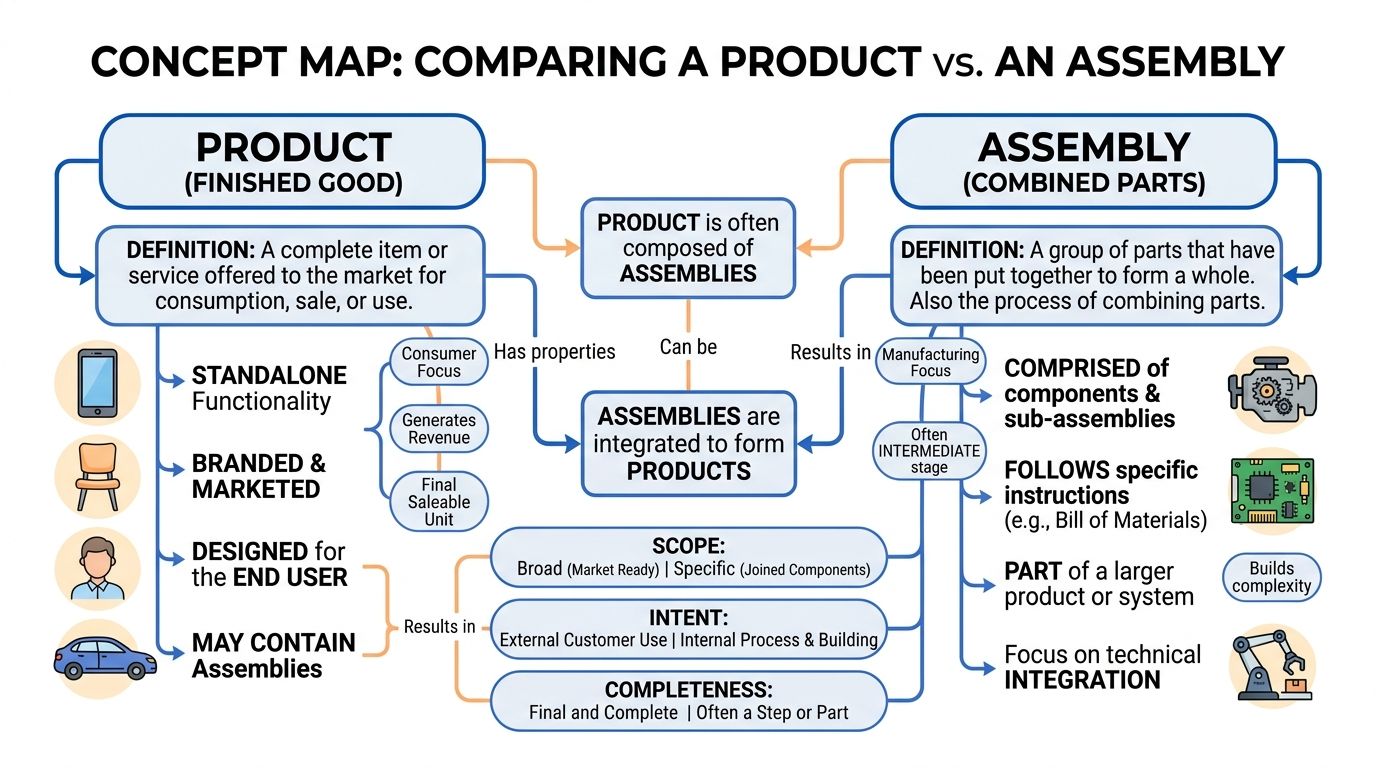
A useful summary appears in this article on Class A product versus Class A assembly: the critical distinction between a 'Class A product' and a 'Class A assembly' is that homeowners often mistakenly believe buying Class A shingles alone guarantees compliance, ignoring that the underlayment and deck must also meet ASTM E108 standards. Using standard asphalt felt underlayment beneath metal or composite shingles can void the Class A rating if the assembly fails the burning brand test.
That's the issue in one sentence. The visible roofing material is only one layer of the fire-rated system.
Here's a simple example. A homeowner chooses a metal roof panel marketed as Class A. Sounds good. But if the installer pairs that metal panel with an underlayment or deck arrangement that wasn't part of the tested assembly, the finished roof may no longer qualify at that level. The product didn't change. The system did.
That's also why details like roof deck protection options matter. The layer beneath the outer roofing material isn't just there for backup water protection. In some systems, it's part of what helps the roof meet the required fire performance.
The safest question you can ask a contractor isn't “Are these shingles Class A?” It's “Is this exact roof assembly Class A as installed on my house?”
Questions to ask before you sign a contract
Homeowners don't need to overcomplicate this. A short list of questions usually clears things up fast.
- Ask for the tested assembly: Request the exact combination of deck, underlayment, and roof covering that supports the stated rating.
- Ask what changes the rating: If the installer substitutes one layer, ask whether that affects compliance.
- Ask for documentation: A reputable contractor should be able to point to the listed system, not just say “this product is rated.”
- Ask about your existing deck: Older homes can have deck conditions that affect what assembly is appropriate.
If a contractor can only talk about brand names and colors, but not about the full tested build-up, that's a warning sign.
Common Roofing Materials with a Class A Rating
Most homeowners in Ohio aren't choosing between ten exotic roofing systems. They're usually comparing a handful of practical options that can be part of a Class A assembly when installed correctly.
Which materials homeowners usually compare
The most common starting point is fiberglass asphalt shingles. They're familiar, widely available, and often the easiest fit for standard residential roof structures. Many homeowners like them because they offer a broad style range without changing the character of the house.
Metal roofing is another common comparison point. Homeowners often look at it when they want a different appearance, long-term durability, or a roof with strong resistance to outside ignition sources. But with metal especially, the underlayment and supporting layers matter, so the assembly question becomes more important, not less.
Then there are concrete or clay tile systems and modern composite products. These can be excellent choices in the right setting, but they usually require closer attention to structure, appearance goals, and installation details. Not every home is a natural candidate for them.
One detail worth knowing comes from FEMA guidance on fire-rated roof assemblies: Class A certification is assembly-dependent; for example, achieving Class A with fire-retardant wood shakes over a wood deck requires installing a 5/8-inch gypsum roof board beneath the shingles to protect the deck from ignition, transforming a non-rated product into a Class A assembly. That's a strong reminder that the supporting layers can completely change the fire classification.
If you're deciding between metal and shingles, a side-by-side review like this comparison of metal roofing vs asphalt can help frame the tradeoffs in appearance, installation, and maintenance.
Comparison of Class A Roofing Materials
| Material | Fire Resistance | Typical Cost | Est. Lifespan | Key Benefit |
|---|---|---|---|---|
| Fiberglass asphalt shingles | Often available as part of a Class A assembly | Generally one of the more budget-friendly options | Moderate | Familiar look and broad style selection |
| Metal roofing | Commonly used in fire-resistant roof systems when paired with the right underlayment and deck | Usually higher upfront than basic shingles | Long-lasting | Strong performance and clean appearance |
| Concrete or clay tile | Can be part of high-performing Class A assemblies | Usually premium | Long service life | Distinctive look and durable surface |
| Composite roofing | Often designed to mimic wood shake, slate, or tile while targeting Class A system performance | Mid-range to premium | Varies by manufacturer and system | Design flexibility with lighter weight than some traditional materials |
A homeowner doesn't need a perfect material on paper. You need the right material for your house, your budget, and the tested assembly your contractor is installing.
Why a Class A Roof Matters for Columbus Homeowners
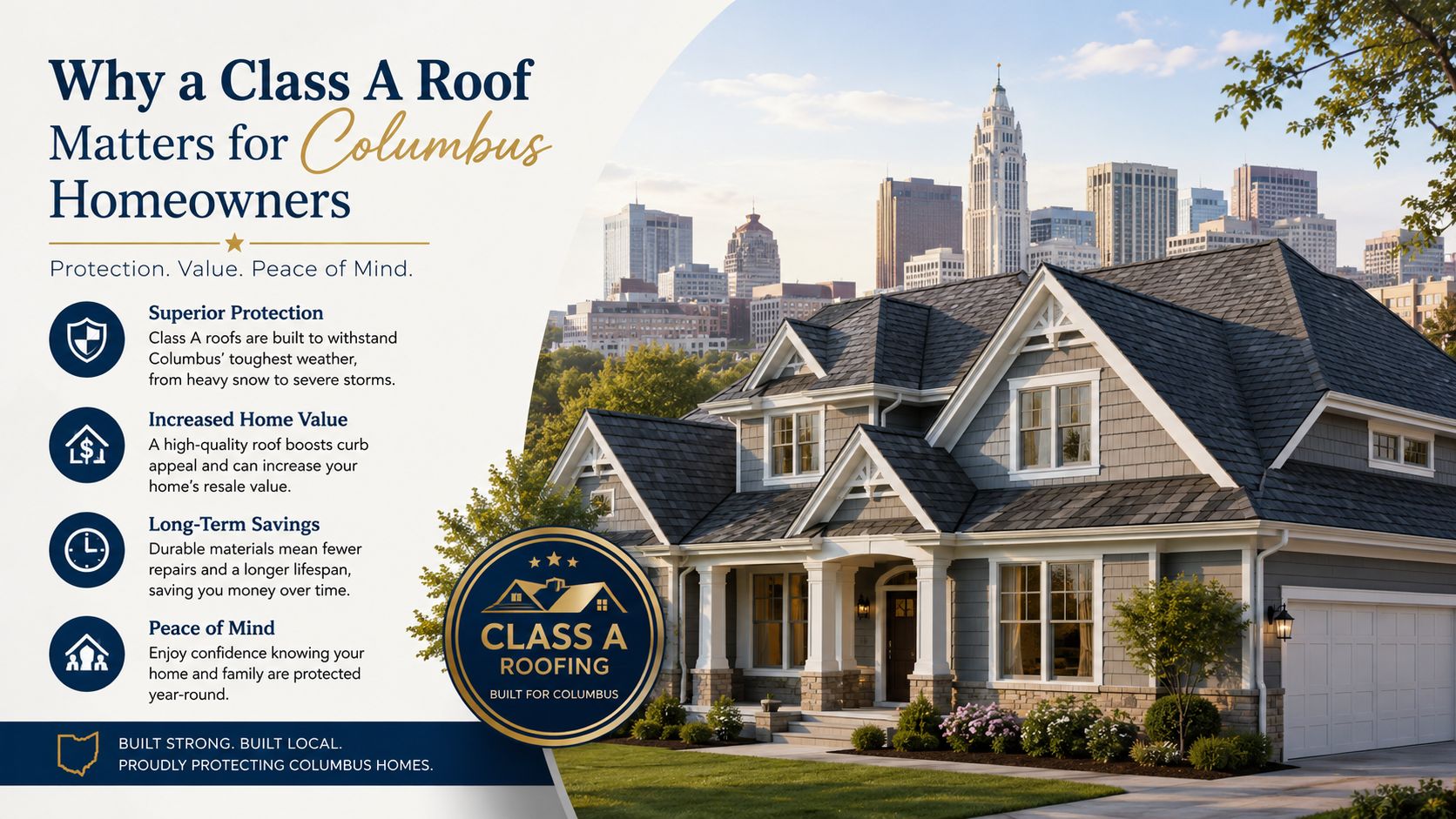
For Columbus-area homeowners, a Class A roof matters for four practical reasons: safety, documentation, resale confidence, and compliance. Even if your neighborhood isn't in a wildfire zone, fire resistance still matters when embers, nearby structure fires, or external ignition sources are part of the risk picture.
Safety and compliance in practical terms
A useful baseline comes from this explanation of Class A fire-rated materials: Class A fire rating requirements are often mandated by building codes in specific high-risk jurisdictions and are the preferred choice for residential homes in areas prone to wildfires. While not fireproof, the rating signifies a Flame Spread Index (FSI) between 0 and 25, offering the highest level of protection against external fire threats.
For an Ohio homeowner, that doesn't mean every home is subject to the same wildfire-driven requirement. It does mean Class A remains the top recognized option when you want the strongest standard residential roof fire classification. If your insurer asks about roof materials or system quality, being able to document the roofing assembly is far better than saying, “I think the shingles were rated.”
That documentation can also help when you're reviewing tailored dwelling fire insurance options for rental property, a non-owner-occupied home, or a property with coverage questions that go beyond a standard homeowners policy. Insurance conversations go more smoothly when the roof system is clearly defined.
Better fire resistance doesn't replace good installation. It depends on it.
What to review before replacing your roof
Before you sign a roofing contract, focus on the items that affect the finished result.
- System paperwork: Ask what assembly is being installed, not just what shingle brand is being used.
- Code fit: Ask whether any local code considerations, manufacturer requirements, or deck conditions affect the fire rating.
- Vent details: If your project includes vent changes, make sure they're treated as part of the full roof system.
- Contractor selection: Use a checklist like how to choose a roofing contractor so you can compare bids on more than price alone.
For many Columbus homeowners, the biggest benefit is peace of mind. You know what you bought, why it performs the way it does, and whether the installed roof matches the protection level discussed during the estimate.
If you want a second set of eyes on your roof, HIBCO ROOF LLC offers inspections, repairs, and full roof replacements for homeowners in Columbus and Central Ohio. If you're comparing proposals and want help confirming whether a roof system is being specified as a true assembly instead of just a rated product, their team can provide a free, no-pressure estimate and walk you through the installation details that matter.