You walk outside, look up at your house, and notice the same problems you’ve been trying to ignore. A panel is loose. A few courses look wavy. The color has faded. Maybe a recent storm made it worse, or maybe the siding has just reached the point where patching it again doesn’t make sense.
For most homeowners in Columbus, the first question isn’t style. It’s cost. You want to know whether you’re looking at a manageable exterior update or a major expense, and you want a straight answer before you invite anyone out to quote the job.
That’s where most siding articles fall short. They throw out broad national numbers, skip the line items that move a bid up or down, and barely touch the Ohio-specific question that matters most: whether upgrades like insulated vinyl are worth paying for in a cold-weather market. If you’re still deciding whether replacement is necessary, this guide on signs you need to replace your vinyl siding is a useful starting point.
Table of Contents
- Is It Time for New Siding An Introduction to Cost
- Vinyl Siding Cost National Averages and Columbus Prices
- The 5 Key Factors That Drive Your Final Replacement Cost
- Insulated Siding The ROI vs The Upfront Cost
- Financing Your Project and Navigating Insurance Claims
- Project Timeline Maintenance and Long-Term Value
- Siding Cost FAQs and Getting Your Columbus Estimate
Is It Time for New Siding An Introduction to Cost
A lot of siding projects start with one small problem that turns into a bigger decision. A homeowner notices a cracked panel after wind, calls about a repair, and then finds out the existing siding is brittle, mismatched, or discontinued. Another homeowner spots staining around a window and realizes the issue isn’t only cosmetic. The siding may still be attached, but it’s no longer doing its job well.
That’s why the vinyl siding replacement cost feels hard to pin down at first. You’re not just buying new panels. You may be paying for tear-off, disposal, trim work, insulation upgrades, and repairs that only show up after the old siding comes off. Two houses that look similar from the street can land in very different price ranges once a contractor starts measuring corners, height, access, and wall condition.
Practical rule: Don’t judge a siding quote by the total alone. Judge it by what’s included, what’s excluded, and what assumptions the contractor made about what’s behind the old siding.
In Columbus and central Ohio, that matters even more because homes vary so much by age and exterior condition. A straightforward ranch with clean wall lines is one kind of project. A taller home with multiple gables, layered trim, storm wear, and older wall details is another. The right budget starts with understanding where your house fits, not with chasing the cheapest number online.
Vinyl Siding Cost National Averages and Columbus Prices
A homeowner in Columbus might see a national average online, multiply it by the size of the house, and assume the budget is close. That usually gets you in the general neighborhood, but not close enough to sign a contract with confidence.
National pricing guides are useful for setting expectations. Installed vinyl siding often falls in a broad per-square-foot range, and total project costs vary widely depending on house size, labor, and trim details. The problem is that national numbers flatten out the details that drive real bids in central Ohio. A basic ranch in Grove City and a taller two-story in Dublin can have similar wall area and very different installed costs once you account for gables, corners, window trim, tear-off, and access.
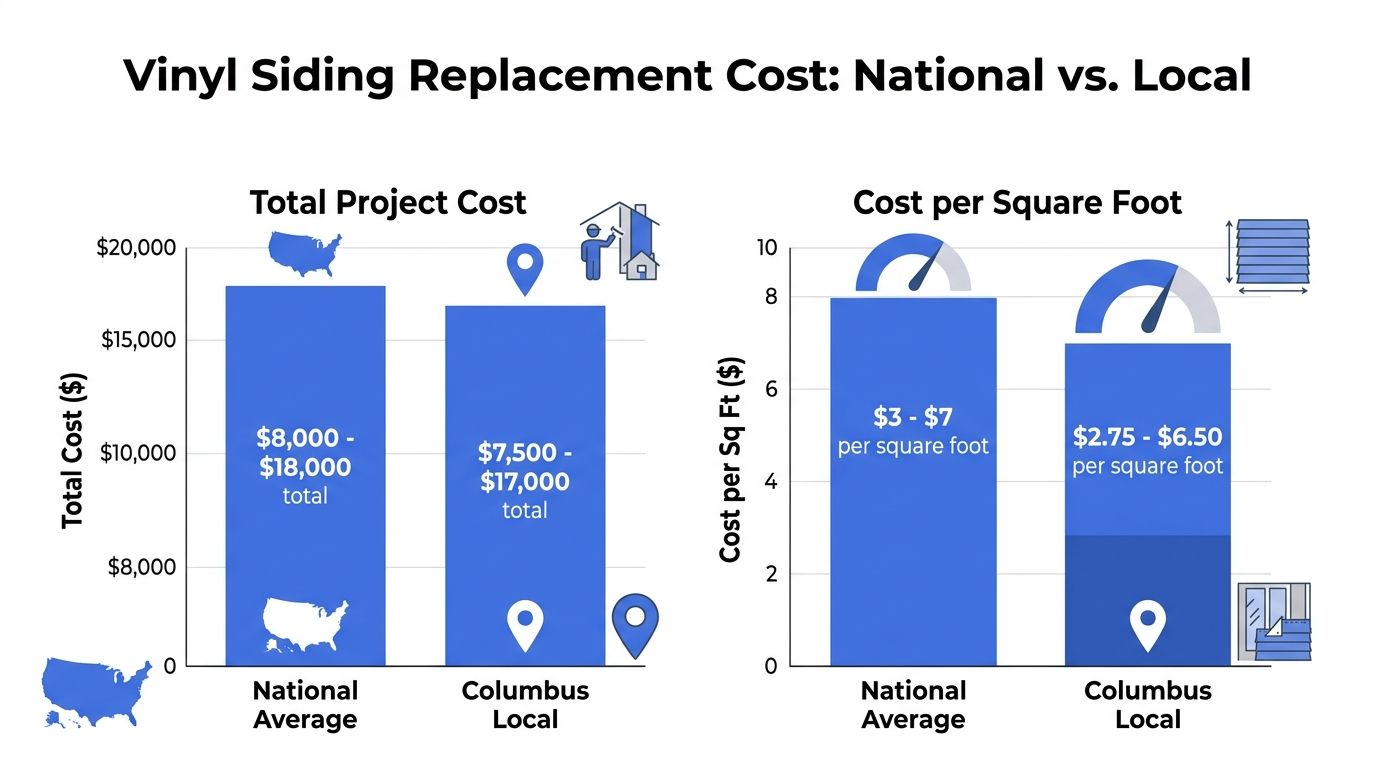
A practical Columbus budget range
For planning, local homeowners should use Columbus-area installed ranges instead of chasing one national average.
| Vinyl siding tier | Installed cost range | What you’re generally buying |
|---|---|---|
| Economy grade | $3.50 to $5.50 per square foot | Thin builder-grade vinyl suited to tighter budgets |
| Standard residential | $4.50 to $7 per square foot | A balanced option for most owner-occupied homes |
| Premium thick vinyl | $6 to $10 per square foot | Heavier panels with a longer expected service life |
| Insulated vinyl | $7 to $13 per square foot | Foam-backed siding with added thermal performance |
Those ranges work best as budgeting tools, not promises. Columbus labor rates are only part of the story. The bigger swing factor is scope. A straightforward installation with limited trim and clean wall prep can stay near the lower half of the range. A house with layered trim, difficult tear-off, taller elevations, or moisture repairs behind the old siding moves up fast.
Why local pricing often beats the online estimate
Columbus homes bring a few realities that national calculators miss. Older homes in central Ohio often have wall prep issues that do not show up until the existing siding is removed. Storm exposure can also leave homeowners with brittle panels, loose corners, or damage around windows and garage walls. That creates a cost gap between the number you saw online and the number a contractor puts on paper.
Insulated siding is another good example. Online pricing tools usually present it as a simple upgrade line item. In Ohio, the decision is more tied to climate, comfort, and long-term value. It costs more up front, but on some homes it also improves wall rigidity and reduces the drafty feel homeowners notice in winter. We will break down that return more carefully later in the article.
One more local point matters. DIY removal rarely saves as much as homeowners expect. It can create disposal problems, expose hidden damage without a repair plan, and slow the crew once the job starts. If you are comparing bids, ask what the quote includes for tear-off, haul-away, trim accessories, and wall prep. That is where low numbers often turn into change orders.
A low siding quote usually means something is missing from the scope. It rarely means the contractor found a cheaper way to do the same job well.
If you want to compare product options before requesting bids, this library of vinyl siding articles and project insights gives helpful context on profiles, upgrades, and replacement decisions.
The 5 Key Factors That Drive Your Final Replacement Cost
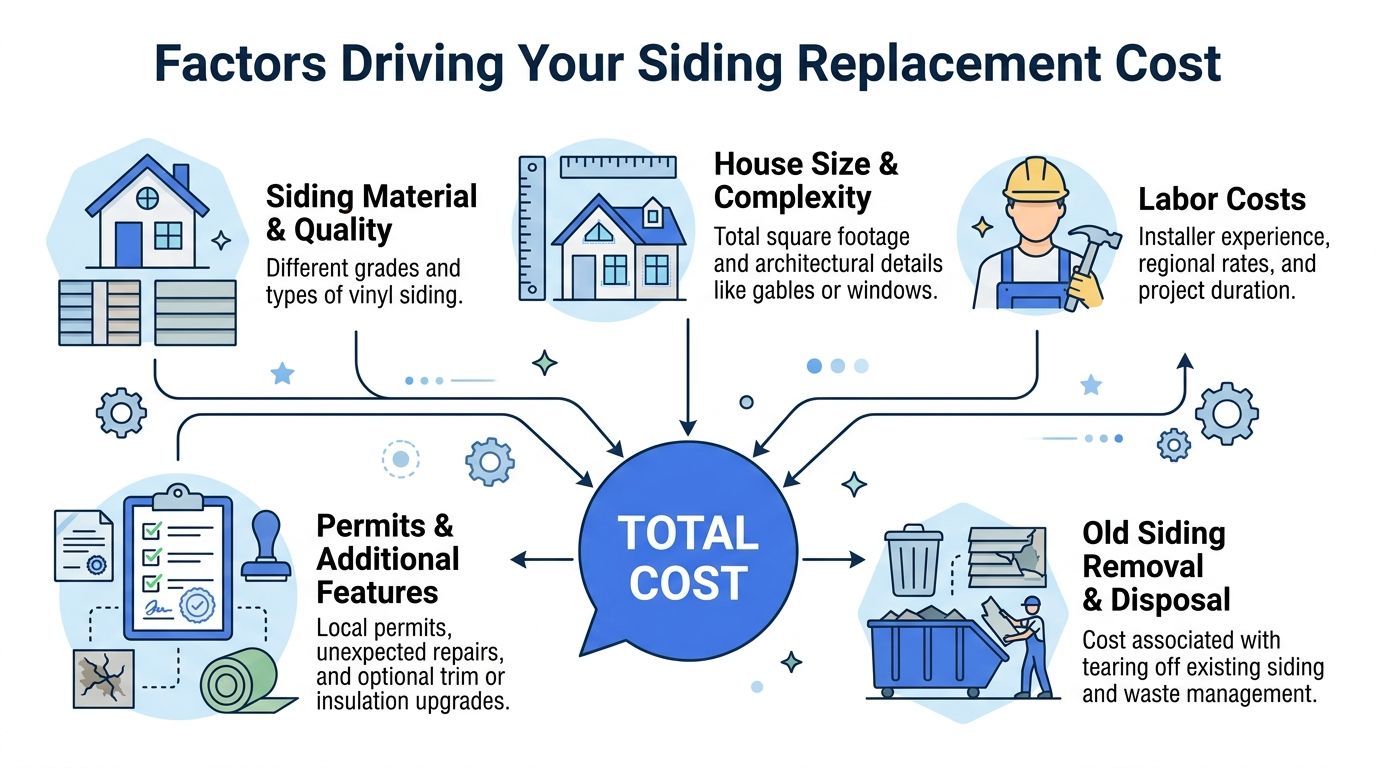
The final number on a siding proposal usually comes down to five things. In Columbus, those cost drivers show up fast once a contractor measures the house, looks at access, and checks what sits behind the existing panels.
If you want more background on profiles, trim options, and replacement planning before you sign anything, review these vinyl siding articles and project insights.
Material grade and thickness
The panel you choose affects both price and performance. Thinner builder-grade vinyl lowers the upfront cost, but it is more prone to movement, waviness, and a less solid look on the wall. Thicker panels cost more, yet they usually hold their shape better and give the finished job a cleaner appearance.
That trade-off matters. A homeowner planning to stay put for years often gets better value from a stronger panel. A seller trying to control project cost before listing may decide a standard residential grade is enough.
Removal and disposal
Tear-off changes the budget more than homeowners expect. According to Boelter Is Better’s cost guide for a 1,500-square-foot home, removing and disposing of old siding can cost $1,000 to $3,000, with added cost possible if repairs or custom trim work are needed.
The line item is not just about hauling debris away. The crew also has to protect plants, contain scrap, expose the wall carefully, and leave a clean surface for the new installation. Sloppy tear-off work often leads to extra repairs, uneven walls, or delays once the new siding starts going up.
Insulation and wall assembly upgrades
Some bids cover only new vinyl panels and basic accessories. Others include upgraded house wrap, foam board, or repairs to the weather-resistive barrier. Those items can improve comfort and wall performance, but they raise the contract price.
Ask direct questions. Does the estimate include new house wrap where needed? Is there any allowance for damaged sheathing or trim rot? Are insulation upgrades priced as an option or built into the base scope?
Estimator’s note: The wall behind the siding is part of the job, even if the first quote barely mentions it.
Trim accessories and finish details
A siding job is finished by its details. Corner posts, starter strip, J-channel, utility trim, light blocks, vent mounts, soffit transitions, and trim around windows and doors all add material and labor.
This area also creates some of the biggest quote gaps. One contractor may include a full trim package and replacement of worn accessories. Another may price mostly wall coverage and leave the rest vague. The lower number looks attractive until the allowances disappear and the change orders begin.
Labor and project complexity in Columbus
Labor cost depends on the house as much as the crew rate. A simple ranch is faster and less expensive to side than a two-story home with gables, dormers, bump-outs, steep grade changes, or tight working space between homes.
In practice, Columbus homeowners see labor move up when the project needs more staging, more ladder work, more cutting around openings, or more time tying new siding into older soffits and trim. That is why two homes with similar square footage can carry very different installation prices.
Insulated Siding The ROI vs The Upfront Cost
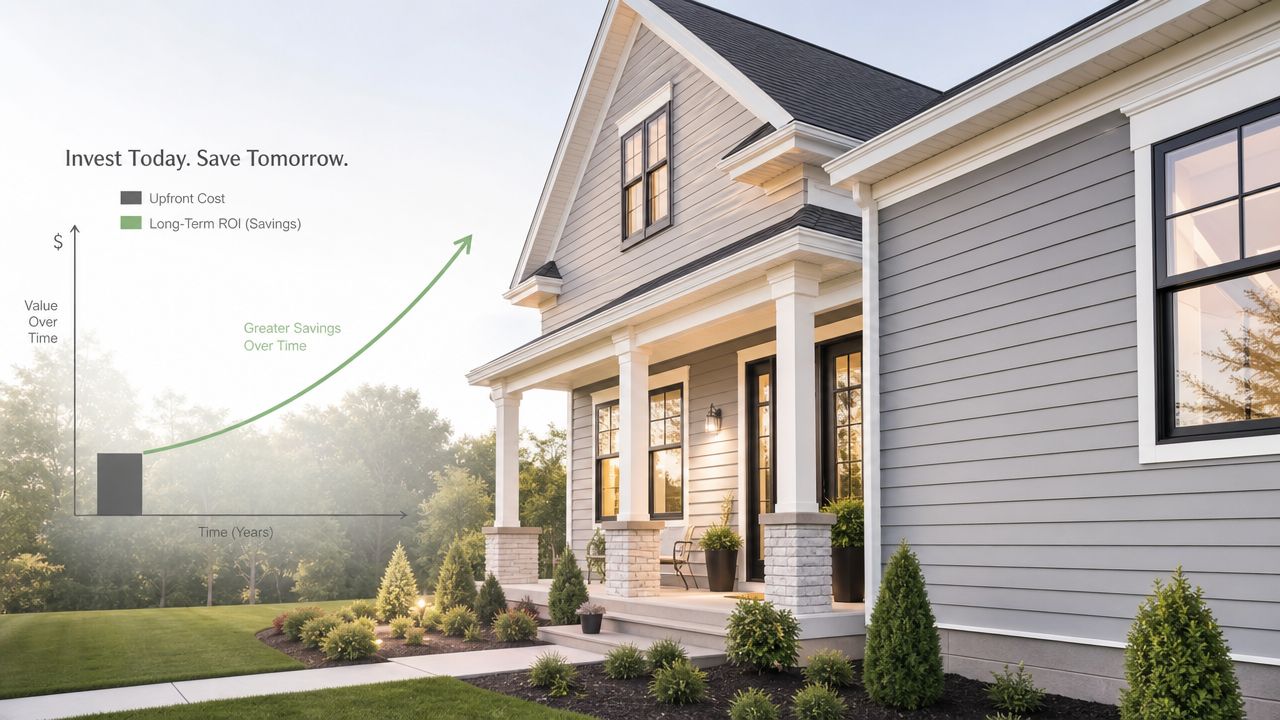
Insulated vinyl siding gets marketed as the “upgrade” option, but the smarter question is whether it pays back in a Columbus climate. Sometimes it does. Sometimes it doesn’t. The answer depends on how long you’ll stay in the house, how drafty the exterior walls are now, and whether comfort matters as much to you as resale.
What insulated vinyl actually changes
Insulated vinyl siding adds foam backing behind the panel. That changes the installed cost and can improve thermal performance at the wall. According to Fixr’s vinyl siding cost guide, insulated vinyl siding costs $4 to $12 per square foot installed compared with $3.50 to $8.00 per square foot for non-insulated vinyl, and insulated vinyl installation on a whole home averages $5 to $12 per square foot. The same source states that the foam-backed version adds about $1 to $4 per square foot to material cost.
That premium is real. So is the potential benefit. The foam layer helps fill the void between the siding and substrate, which can make the wall feel less hollow and can improve thermal performance.
When the extra cost makes sense in Ohio
The stronger case for insulated siding in Ohio is long-term ownership. A HomeAdvisor summary identifies an underserved issue in most siding content: homeowners are often told insulated siding costs more, but they aren’t given a practical way to judge payback. That same source states insulated siding can cost about $8 per square foot, notes a premium of about 40% more than standard, and says recent 2025 to 2026 data shows 10% to 15% heating cost reduction in cold climates, with typical break-even timelines of 12 to 18 years, according to HomeAdvisor’s vinyl siding installation cost page.
That doesn’t mean every Columbus homeowner should choose it. If you expect to move sooner, standard or premium non-insulated vinyl may be the better value. If the house feels drafty, you plan to stay put, and you want both a cleaner exterior and better winter comfort, insulated siding deserves serious consideration.
A short explainer can help you visualize how the upgrade works in practice:
On older Ohio homes, insulated vinyl makes the most sense when the homeowner cares about comfort and plans to stay long enough to let the upgrade earn its keep.
Financing Your Project and Navigating Insurance Claims
Sticker shock is normal with siding. Even when the numbers are justified, many homeowners still need a practical payment plan before they move forward. The two most common paths are financing and insurance, and they solve different problems.
Practical ways homeowners pay for siding
Some homeowners use savings because they want to avoid interest and keep the project simple. Others use a home equity product, a personal loan, or contractor financing because preserving cash matters more than paying everything at once.
When you’re comparing those options, monthly payment matters, but so does the bigger picture. If you’re already balancing a mortgage, car payment, and other debt, understanding how good credit affects mortgage payments can help frame how lenders look at risk, rates, and affordability. That same logic carries over when homeowners evaluate financing for major exterior work.
A sound financing decision usually comes down to three questions:
- How urgent is the siding problem: Active damage or wall exposure usually means delaying the job will cost more later.
- How long will you stay in the home: Longer ownership gives you more time to benefit from the upgrade.
- How stable is the payment: A manageable monthly number is better than forcing a project into cash flow that’s already tight.
Many contractors also offer financing pre-qualification, which can help homeowners understand options before they commit to a project agreement.
When insurance may help
Insurance is different. It generally applies when the siding damage came from a covered event, not from age, fading, or slow wear. In central Ohio, the most common siding claims involve wind and hail. If a storm cracked panels, pulled sections loose, or caused visible impact damage, it may be worth asking for an inspection.
The smoother claims process usually looks like this:
- Document the damage early. Take clear photos from the ground and note the date of the storm if you know it.
- Get a professional inspection. A trained exterior contractor can distinguish storm damage from age-related wear.
- Read the scope carefully. Insurance paperwork may cover some elevations, accessories, or code-related items, but not others.
If the claim is valid, the insurance route can change the financial conversation significantly. If the issue is old, brittle, faded siding with no storm loss, financing is usually the more realistic path.
Project Timeline Maintenance and Long-Term Value
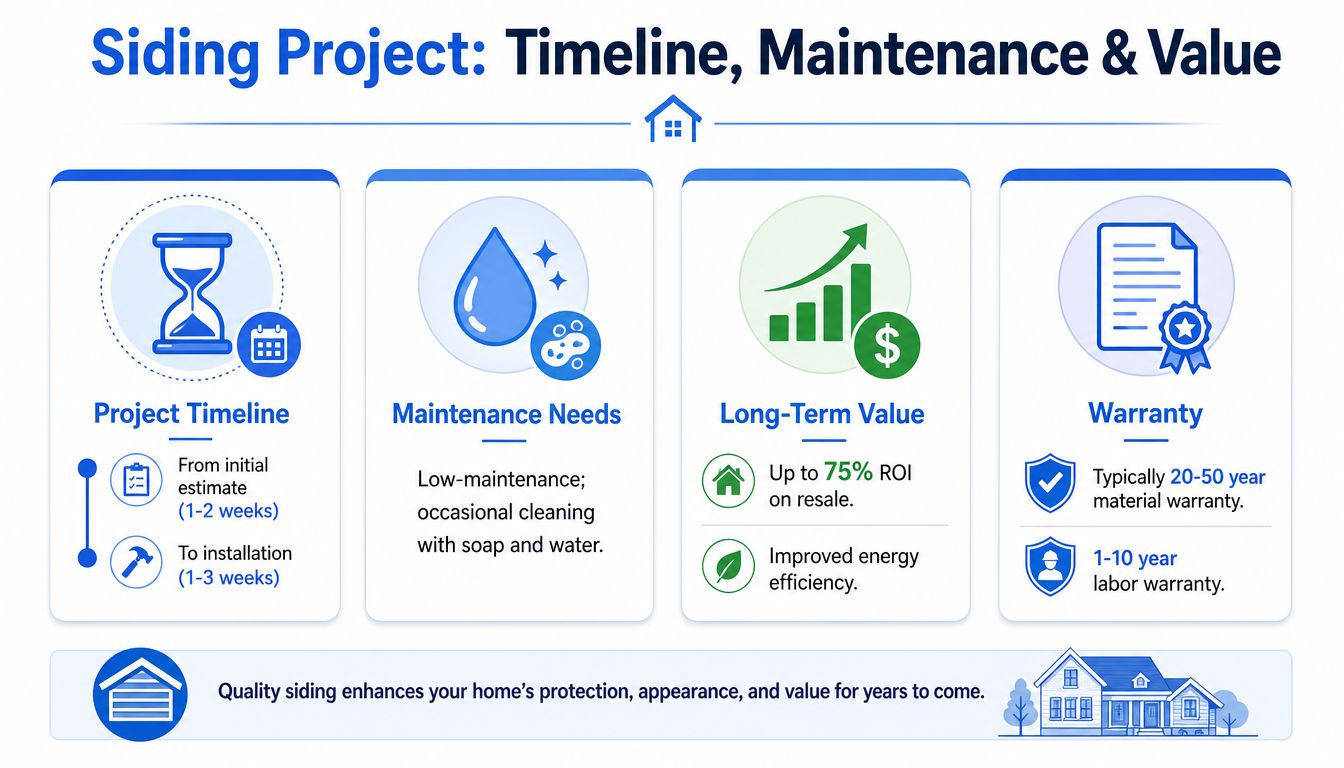
Most homeowners focus on cost first, then ask the next practical question: how disruptive is this going to be? The answer depends on material lead times, weather, and how much prep the walls need after tear-off, but the visible installation phase is usually only part of the overall project.
What the project usually feels like from start to finish
A siding replacement starts with measuring, product selection, and a written scope. Then comes material ordering, scheduling, tear-off, wall prep, installation, trim work, and final cleanup. The visible work on the house may move quickly, but the planning before it starts is what keeps the job organized.
If you want to compare full replacement with broader exterior upgrades, the service details on professional siding replacement in Columbus help clarify what a complete project usually includes.
A useful way to think about the timeline is by stages, not just installation days:
| Stage | What happens |
|---|---|
| Planning | Measurements, product selection, written estimate |
| Prep | Material ordering, scheduling, dumpster or disposal plan |
| Installation | Tear-off, wall inspection, siding and trim install |
| Finish | Cleanup, punch list, final walkthrough |
A good siding project feels organized before the first panel comes off. If the planning is vague, the job usually is too.
How to protect the value after installation
Vinyl remains popular because upkeep is simple. Most homes only need occasional cleaning with mild soap and water, plus a visual check after heavy wind or hail. Maintenance isn't zero, but it's lighter than repaint-dependent products.
The bigger value story is resale and curb appeal. Vinyl siding replacement offers an approximately 80% return on investment, according to NerdWallet's review of Angi ROI data. That's one of the strongest ROI figures among major home improvement projects, and it's a big reason siding often makes sense even when the price initially feels high.
That ROI isn't just about appraisers. Buyers react to what they can see. Straight lines, consistent color, clean trim, and a well-finished exterior tell them the home has been cared for. That changes how the entire property is perceived.
Siding Cost FAQs and Getting Your Columbus Estimate
A few questions come up on almost every siding call, especially when homeowners are still trying to decide whether to repair, replace, or wait.
Can vinyl siding be replaced in the winter
Yes, it can, as long as the crew handles the material correctly and the weather is workable. Cold-weather installs require more care because vinyl moves differently in lower temperatures.
How long does a typical replacement take
That depends on the house, the amount of trim detail, and what the crew finds after tear-off. Straightforward homes move faster. Older homes with repair needs or more complex elevations take longer.
Can I save money by removing the old siding myself
Usually not. The DIY savings idea sounds good until disposal, hidden damage, and wall prep enter the picture. According to Greg the Roofer's siding cost analysis, disposal fees can run $700 to $2,000, and some DIY prep jobs lead to over $5,000 in unexpected repair costs once hidden issues or installation mistakes are uncovered.
How do I know if a quote is too cheap
Look at the scope, not just the price. Missing accessories, vague tear-off language, and no mention of wall condition are all warning signs. If you want a helpful outside perspective before signing, this guide to spotting red flags in contractors is a solid checklist.
The best next step is simple. Get a written estimate that clearly lists material grade, removal, trim, wall prep assumptions, and what happens if hidden damage shows up. That gives you a real number to work from, not just a sales pitch.
For homeowners in Columbus and central Ohio, HIBCO ROOF LLC provides licensed and insured exterior work, free no-pressure written estimates, and practical guidance on siding replacement, storm damage, and financing pre-qualification. If you want a clear assessment of your home's siding condition and a quote that explains the full scope, schedule an estimate and get the numbers in writing.