Roof shingles are overlapping pieces of roofing material laid from the eaves upward to shed water off a sloped roof. That same overlapping water-shedding principle works whether the shingle is asphalt, wood, metal, slate, or synthetic.
If you've ever stood in the driveway after a storm and wondered whether a few loose tabs are a small nuisance or the start of a real roofing problem, you're asking the right question. A shingle is easy to point at, but the roof around it, the layers beneath it, and the way it was installed are what decide whether that roof keeps doing its job.
Table of Contents
- What Roof Shingles Actually Are
- How a Shingle Roof Works as a System
- Common Shingle Types and How They Compare
- How Shingles Are Installed From Starter Course to Ridge
- Warning Signs Your Shingles Are Failing
- Shingle Lifespans, Warranties, and Replacement Timing
- Simple Maintenance Habits That Extend Shingle Life
- What Central Ohio Homeowners Should Keep in Mind
What Roof Shingles Actually Are
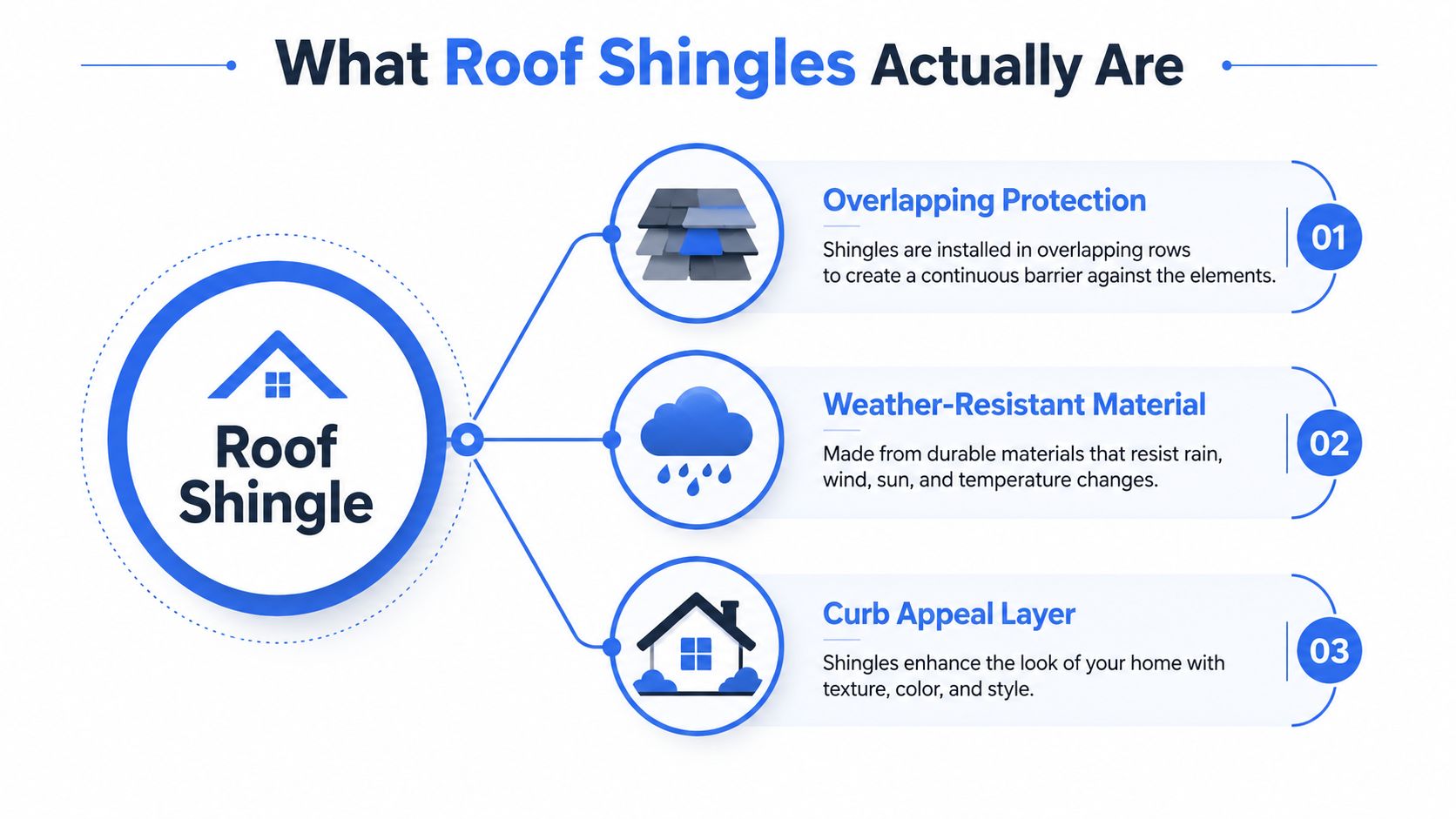
A Columbus homeowner usually notices shingles after wind, rain, or hail makes one look out of place. Shingles are small roof coverings laid in overlapping rows so water runs off instead of sneaking through the seams. That overlapping layout is the basic trick, and it shows up across roof covering materials, from asphalt and wood to metal, slate, and composite products Roof shingles overview.
The part you can picture from the ground
Stand back from a house and look at the roof the way you'd look at rows of siding. Each course overlaps the one below it, so rain hits the upper pieces first and keeps moving down and off the roof instead of settling into open joints. Dictionary usage defines a shingle as a small, thin building material laid in overlapping rows, which matches what homeowners see on the roof Merriam-Webster definition of shingle.
That is why shingles are not a single material. They are a method of layering. Modern shingles can be made from wood, slate, metal, plastic, and composite products such as asphalt shingles, but the installation principle stays the same across those material families Roof shingles overview.
Practical rule: if a roof covering depends on overlap to shed water, the installation pattern matters as much as the product itself.
Why this design has lasted so long
Gravity does most of the work. Water wants to move downhill, and overlapping shingles give it a controlled path to follow. That is one reason shingles are widely used on residential buildings, not just on outbuildings or specialty structures Britannica on shingles.
For homeowners, the next question is usually what sits behind that visible layer. That question matters because the top course is only one piece of the roof assembly.
For a useful marketing-side perspective on how roofing terms get explained clearly to homeowners, roofing company SEO tips from Transactional LLC show why plain language wins attention online and in conversations with customers.
How a Shingle Roof Works as a System
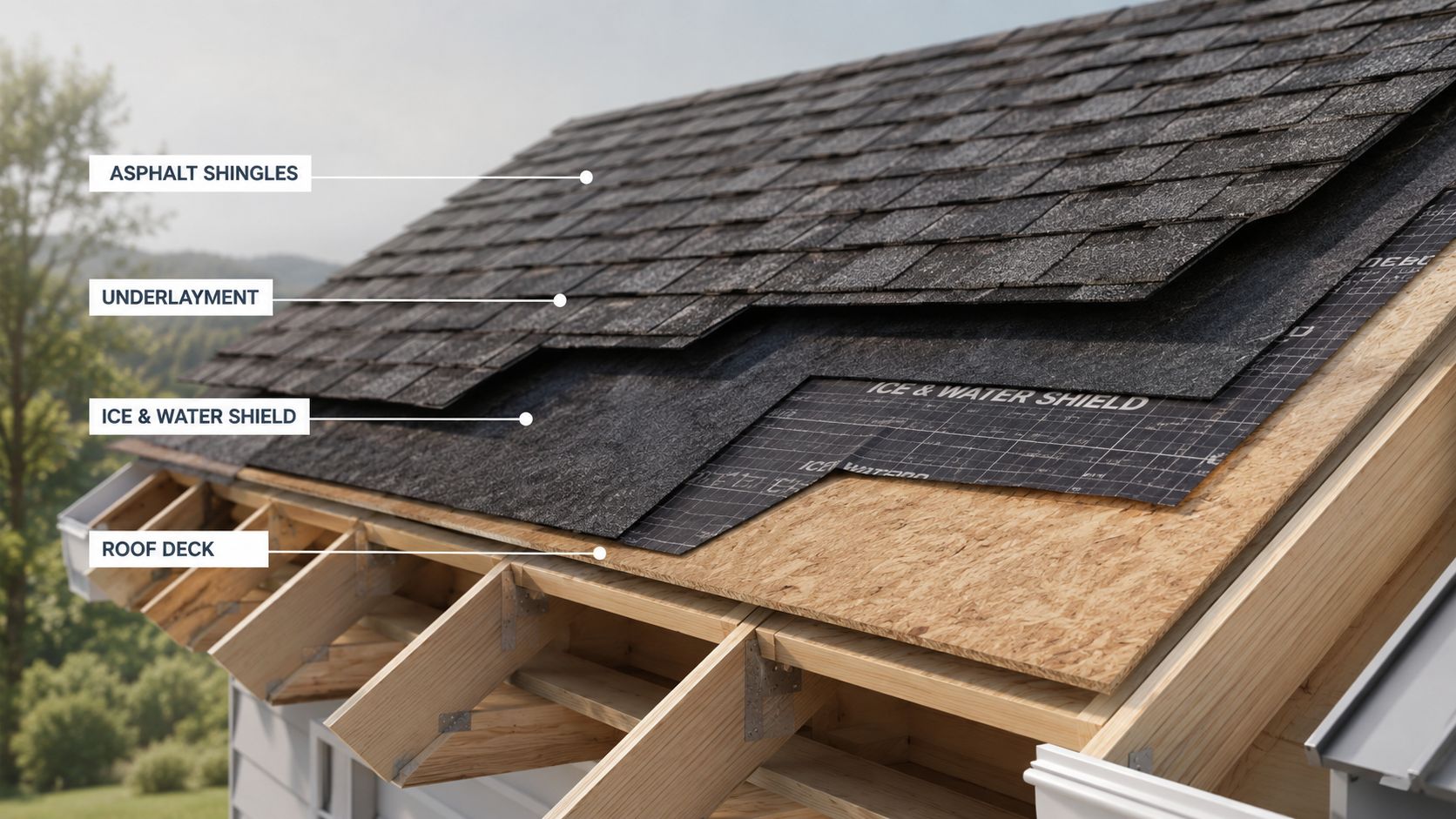
A shingle on its own is just the visible layer. What makes a roof work is the assembly beneath it, including the roof deck, underlayment, flashing, ventilation, and the shingles themselves. Each part handles a different job, and the roof lasts longer when those jobs are coordinated instead of treated as separate pieces.
A homeowner can picture it this way. The shingles take the rain, the underlayment gives backup protection, the flashing handles the tricky joints, and the ventilation helps the roof system manage heat and moisture from the inside. If one part is weak, the whole roof has to work harder.
What sits under the shingles
The roof deck is the structural surface the roofing goes over. It is the base platform, usually made of sheathing, and it has to stay sound so everything above it stays secure. Underlayment is a sheet layer beneath the shingles that adds a second line of defense if wind-driven water gets past the outer surface. Flashing is the metal or other transition material used around chimneys, walls, vents, and valleys so water does not slip into the weak spots where surfaces meet.
That matters because shingles are built as an overlapping water-shedding system rather than a waterproof membrane. The idea is to guide water down and off the roof in layers, while the other parts of the assembly catch what the shingles miss. VA roofing specification
A roof that leaks often is not failing at the center of the field, it is failing at a seam, a penetration, or a transition.
Why slope changes the whole conversation
Roof geometry changes how hard the shingles have to work. On a steeper roof, water moves off quickly and the shingle pattern has an easier time doing its job. On a lower-slope roof, runoff slows down, and the layers beneath the shingles matter even more because water has more time to work at the overlaps and transitions.
That is why the same shingle can behave differently from one house to the next. A steep roof sheds water fast. A lower-slope roof depends more on underlayment details, flashing placement, and clean installation around every opening. The Atlas roofing system guide describes that kind of layered approach for asphalt shingle roofing systems, and it lines up with what homeowners see on real roofs, the less help gravity gives the roof, the more important the hidden layers become. Atlas roofing system guide
The takeaway is simple. A shingle roof works because several parts do different jobs at the same time. The shingles face the weather, but underlayment, flashing, ventilation, and the deck decide whether that outer layer stays dry, stays put, and keeps water moving off the house.
For homeowners comparing roof options, even features like solar shingles vs. solar panels still have to answer the same question, how well does the full roof assembly handle water, heat, and air movement?
Common Shingle Types and How They Compare
A homeowner usually starts comparing roofing materials after the old roof starts showing its age. At that point, the question is less about brand names and more about how each material behaves on a real house in central Ohio. Asphalt shingles are the familiar choice on many homes because they fit a wide range of roofs, are simple to service, and blend in with common neighborhood styles. Wood, metal, slate, and synthetic composite shingles each solve a different problem, so the right pick depends on the house, the roof structure, and the budget.
What each type feels like on a real house
Asphalt shingles give the layered look many picture when they hear “roof shingles.” They are practical, available in many colors, and easier to match later if one section needs repair. Asphalt also has a long development history. A major milestone came in 1903, when Henry Reynolds of Grand Rapids, Michigan, is credited with cutting roofing material into the first individual asphalt shingles, and by 1939 production had reached approximately 11 million shingles IKO asphalt shingle history.
Wood shingles or shakes create a warmer, more natural look. They fit certain home styles well, but they usually ask for more upkeep and are less common on typical Columbus homes. That extra care matters because the roof is not just the outer face, it is a system with underlayment, flashing, and ventilation all working behind the scenes.
Metal shingles have a sharper, more modern profile, and they can also suit a home that wants a cleaner premium look without copying the neighborhood next door. They are part of the same broader conversation as solar shingles vs. solar panels, where appearance and performance have to be weighed together instead of separately.
Natural slate has a distinctive premium appearance and can last a long time, but it is a specialized choice. It usually makes sense only when the structure can support it and the budget is built for that kind of roof.
Synthetic composite shingles are made to imitate other materials while staying lighter and easier to handle than some traditional premium options. For many homeowners, that balance is the main reason they enter the comparison at all.
A quick comparison for homeowners
| Material | Typical Lifespan | Cost Band | Best Fit |
|---|---|---|---|
| Asphalt | About 15 to 30 years, depending on product type and installation quality | Lower | Most Columbus-area homes, straightforward repairs |
| Wood | Often around 20 to 40 years with regular upkeep | Mid to high | Homes where a natural look matters most |
| Metal | Often around 40 to 70 years, depending on profile and finish | Higher | Owners wanting a distinctive look and durable finish |
| Slate | Often 75 years or more when properly installed | Highest | Premium projects and matching historic style |
| Synthetic composite | Often around 30 to 50 years, depending on the manufacturer | Mid to high | Homeowners wanting a specialty look with less weight |
The material name only tells part of the story. What matters just as much is whether the shingle fits the roof shape, the house style, and the hidden parts of the roof assembly that help it stay dry over time.
How Shingles Are Installed From Starter Course to Ridge
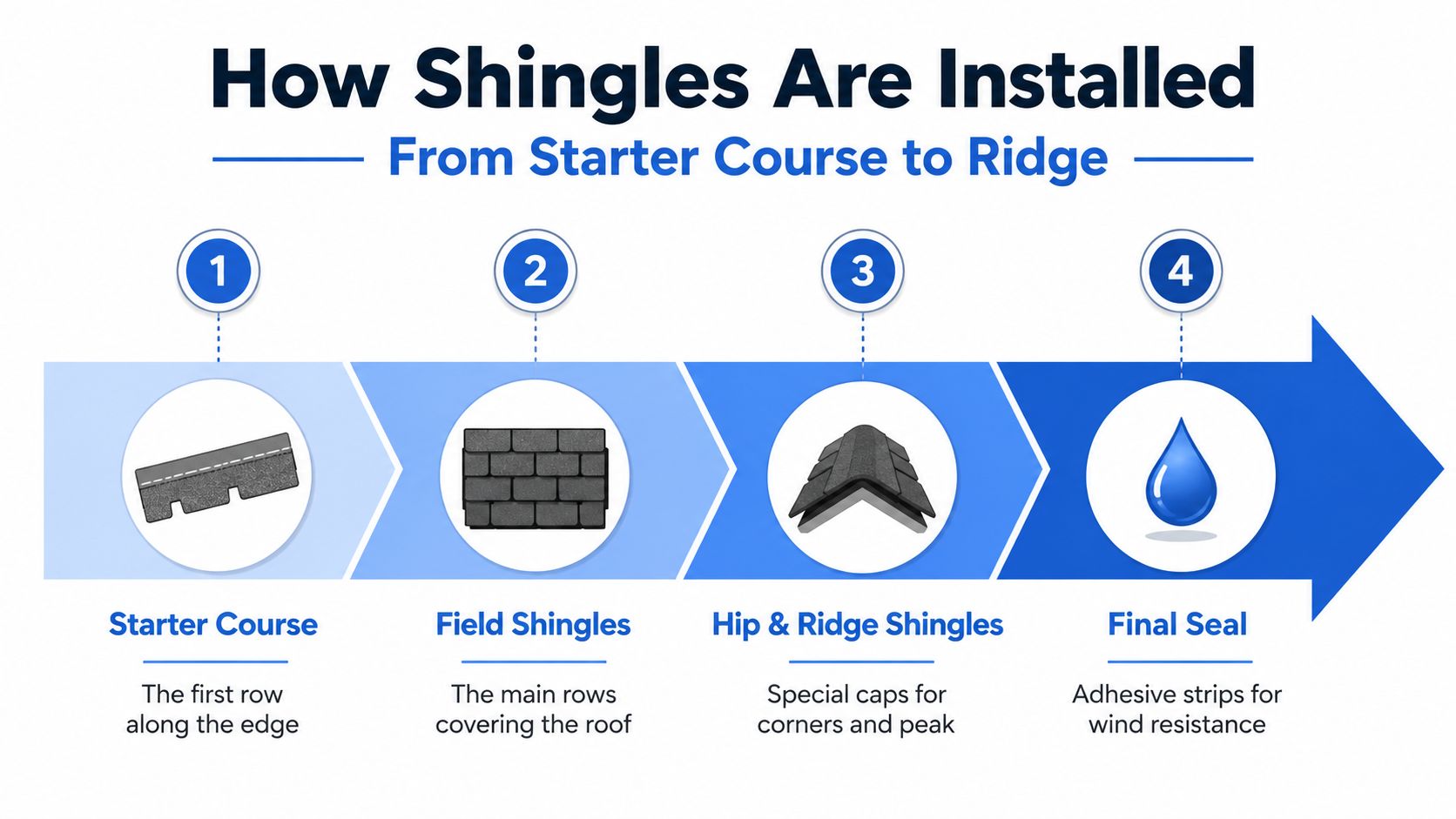
A shingle roof begins at the edge of the house, not at the peak. Crews work from the eave upward, and that order helps water shed the way a roof is supposed to, from one layer to the next instead of sneaking backward through open joints. On a real roof, that sequence is the difference between a system that sheds water and one that leaves paths for it.
The visible sequence on the roof
The first layer most homeowners never notice is the starter course. It runs along the lower edge of the roof, gives the bottom row a sealed base, and helps the shingles resist wind at the eaves. After that, installers place the field shingles, the main rows that cover most of the roof surface and create the finished look people see from the street. At the ridges and hips, crews use hip and ridge caps, shaped pieces that cover the peaks and corners where two roof planes meet.
The roof also depends on the details around openings and transitions. Flashing, thin metal pieces placed where the roof meets a chimney, wall, skylight, or valley, directs water away from those joints so it does not sit in a place where leaks tend to start. A roof can look sound across the broad surface and still fail at one of those intersections if the flashing is handled poorly.
Plain truth: a roof can have good shingles and still leak if the flashing details are sloppy.
Installers also pay attention to overlap and spacing as they work up the roof. The shingle rows have to cover the fasteners and joints below them, and the pattern has to stay even from course to course. That is why earlier specifications matter, but the bigger point for homeowners is simpler: the installer has to follow the roof system as a whole, not just place rows of shingles and hope the rest takes care of itself.
Roof shape changes the work, too. On a low-slope roof, water drains more slowly, so the crew usually relies on extra underlayment protection and careful detailing. On steeper sections, alignment and fastening become easier to see from the ground, but the same basic rule still applies. Every row must tie into the one below it so wind and rain have no easy path under the surface.
The brand name on the bundle matters less than the crew's choices on the roof. If the installer skips the starter strip, rushes the layout, or treats flashing as an afterthought, the roof loses the protection shingles are supposed to provide.
Warning Signs Your Shingles Are Failing
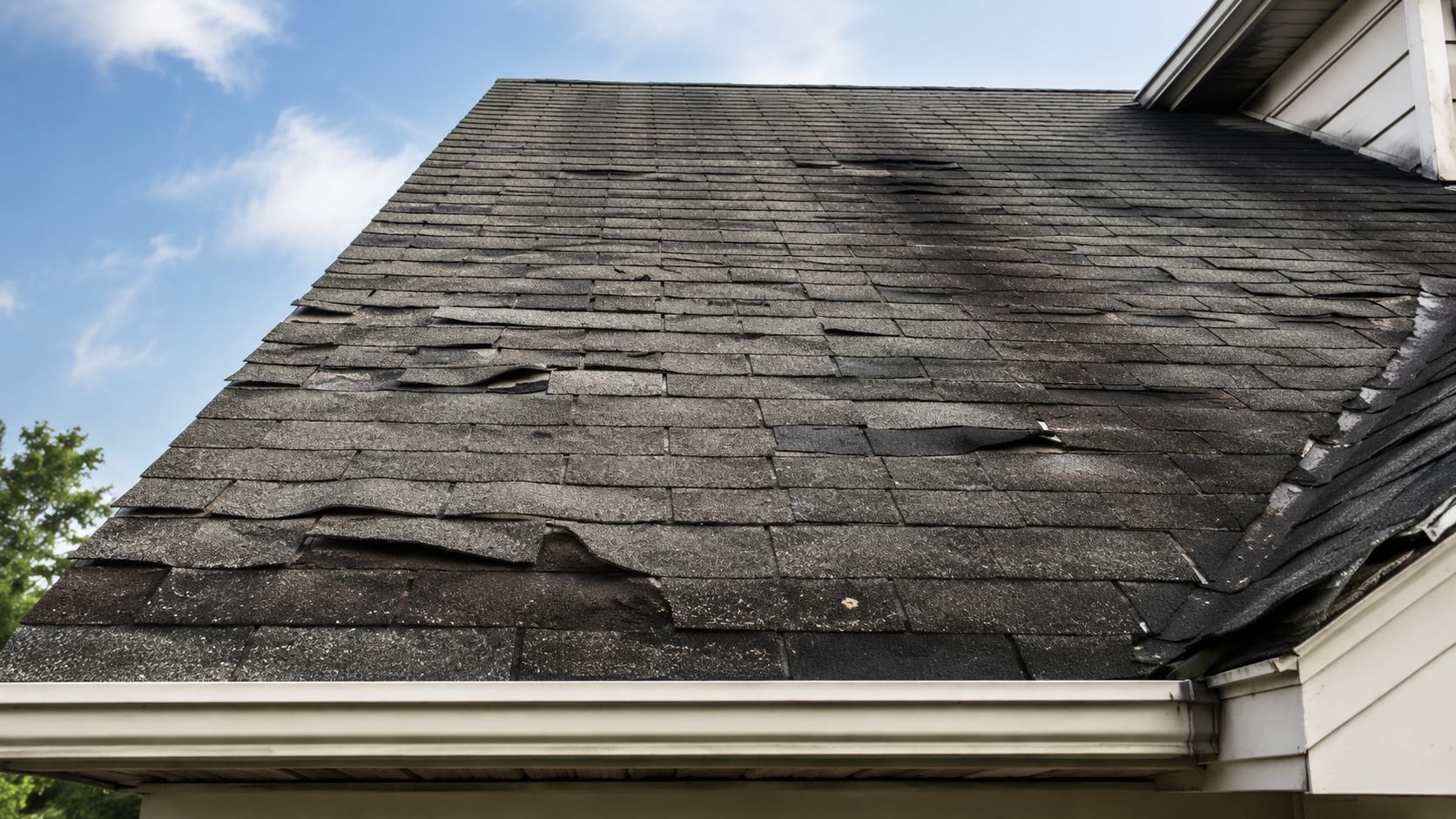
A failing shingle roof usually leaves clues before water reaches the ceiling. From the driveway, homeowners can often spot missing shingles, curling edges, sliding tabs, granule loss, dark patches, and damaged flashing. After a hailstorm, the damage may be harder to see from the ground, but the roof can still be compromised.
What to look for outside
Missing shingles are the obvious sign. Curling or cupped edges mean the material is aging or stressed. Darker spots can show where granules have worn away, which leaves the surface less protected. If a shingle looks lifted at the edges or out of alignment with the row below it, wind may have already started working underneath.
Flashing deserves its own check. A roof can look decent in the middle and still fail at a chimney, vent pipe, or wall intersection. That's one reason a homeowner should look at the whole roof, not just the broad field of shingles.
What can show up inside
Interior clues often show up first in the attic. Stains on the roof deck, musty smells, damp insulation, or daylight peeking around penetrations all point to a problem that's moving past the outer layer. If you see those signs, the roof is no longer just a cosmetic issue.
Here's the part many homeowners miss.
Hail damage doesn't always look dramatic from the ground, but it can shorten the useful life of an asphalt roof if it goes undocumented.
That's especially relevant in central Ohio, where storm seasons can leave subtle impact damage behind. If a roof has been through a hard storm and now shows irregular wear, it's worth having someone inspect the surface, the flashing, and the attic side of the assembly together.
Shingle Lifespans, Warranties, and Replacement Timing
A warranty and a roof's real-life lifespan are two different things. Manufacturer warranties usually cover material defects, while workmanship coverage depends on the contractor. The roof itself still depends on installation quality, ventilation, weather exposure, and whether the full assembly was detailed correctly from day one. A shingle can be made well and still wear out early if the roof system around it is working against it.
Why the number on the wrapper isn't the whole story
Homeowners often hear a long warranty term and assume the whole roof will perform that long. In practice, a roof can age faster if the attic runs hot, if ventilation is weak, if flashing was done badly, or if storms have repeatedly stressed the surface. The reverse is also true. A well-built system can outlast a mediocre one by a wide margin, especially when the underlayment, flashing, and attic ventilation are doing their jobs behind the scenes.
The history of asphalt shingles shows how far the product has come, and how common it has become on American homes. That tells you the material is mainstream, but it does not replace a roof-specific judgment on your home. If you are comparing materials, architectural shingle guidance for 30-year roofs can help show how material choice and installation quality affect the bigger decision.
When repair starts to lose the argument
Repeated leaks in different places are a bad sign. So is widespread curling, missing tabs in several areas, or a roof that has already taken one hard storm too many. If one isolated section failed because of a bad flashing detail, a repair can make sense. If the whole field is showing age, patching becomes a short-term answer, like putting a bandage on a wall crack that keeps opening back up.
A roof replacement is usually more reasonable when the shingles, the underlayment, and the weak points around vents, chimneys, or walls all show age at the same time. That is the point where the problem is no longer one damaged piece. It is the whole assembly.
A local inspection from a roofing contractor such as HIBCO ROOF LLC can help sort out whether the roof needs a targeted repair or a full replacement, especially when the question is less about the shingle brand and more about the condition of the full assembly.
Simple Maintenance Habits That Extend Shingle Life
A roof lasts longer when water, debris, and heat are kept under control. That sounds obvious, but most premature shingle problems start with small things homeowners can influence. Clean gutters, trimmed branches, and regular visual checks do more for a roof than many expect.
Easy habits that protect the roof
Keep gutters clear so water doesn't back up at the edge of the roof. When gutters overflow, water can linger where it should have drained away, and that stress eventually shows up in the shingle edges and surrounding trim. Trim back branches that scrape the roof or drop leaves and sticks onto it, because debris holds moisture and encourages wear.
After a strong wind or hail event, do a ground-level walkaround. Look for shingles out of line, debris in odd places, or flashing that looks disturbed. If anything looks suspicious, get a closer look done by a professional rather than climbing a roof that may already be weakened.
Balanced attic intake and exhaust matter because a hot attic can bake roofing materials from underneath and encourage moisture problems.
That's one reason ventilation belongs in the maintenance conversation, not just in the installation conversation. A roof that can release heat and manage attic moisture usually has a better chance of aging well than one that traps both.
For a practical homeowner checklist, ways to extend the life of an asphalt shingle roof lays out the kind of routine attention that prevents avoidable repairs.
The smartest maintenance habit is simple, though. Have the roof inspected before small issues turn into soaked decking, stained ceilings, or insurance paperwork no one wants to deal with.
What Central Ohio Homeowners Should Keep in Mind
Central Ohio roofs take a beating from freeze-thaw cycles, summer storms, hail, and high winds. That means a shingle that might coast longer in a milder climate can wear out sooner here, especially if ventilation is weak or storm damage has been left unchecked. The roof isn't just facing rain, it's dealing with seasonal swings that keep materials moving, drying, cracking, and loosening over time.
The local question isn't just age, it's performance
When a homeowner asks whether the roof is “still okay,” the true question is whether the whole assembly is still doing its job. That includes the shingles, yes, but also the underlayment, flashing, ventilation, and the deck underneath. A roof with scattered issues can sometimes be repaired, but a roof with broad aging signs is often better judged as a system that's nearing the end of its useful life.
If you're comparing marketing channels or trying to understand how local roofing companies reach homeowners, property intelligence lead generation is one example of how the roofing industry connects homeowners and contractors, but your own roof still deserves an in-person look rather than a generic pitch.
A practical next step
For Columbus and nearby homeowners, the most useful move is often a free inspection and a written estimate from a local contractor who can look at the shingles, the flashing, the attic clues, and the surrounding exterior together. HIBCO ROOF LLC provides inspections, repairs, and full roof replacements for central Ohio homeowners, along with related exterior work when a roof issue is tied to gutters, siding, windows, or skylights.
If you're unsure whether your roof needs a repair, a replacement, or just a closer look after a storm, schedule an honest local assessment and get the facts before the next round of weather hits.
A CTA for HIBCO ROOF LLC.