
Homeowners insurance usually covers a roof leak when a sudden, covered event such as wind, hail or a falling object causes the opening, and usually does not cover leaks caused by age, wear or poor maintenance. Wind and hail accounted for 42.5% of U.S. homeowners insurance claims in 2023, while water damage and freezing accounted for 22.6%, which is why the cause of the opening decides more claims than the stain on the ceiling.
Most homeowners ask whether a roof leak is covered. The sharper question is what opened the roof, when it happened, and whether the repair estimate clears the deductible. The same brown ring on a ceiling can be paid under one set of facts and denied under another, and the difference usually sits in the policy language and the evidence, not in how much water you see. What follows is the cause-first test to run before filing, including the mixed cases where old flashing and a recent hail event meet on the same roof.
Table of Contents
- Covered and Excluded Roof Leak Causes at a Glance
- Sudden Storm Damage Versus Gradual Wear and Tear
- Interior Water, Flooding and Delayed Repairs
- How Deductibles Decide Whether to File
- How to Document a Roof Leak Before Repairs
- How to File a Roof Leak Claim Step by Step
- Partial Roof Damage and Matching
- Working With Adjusters and Roofing Contractors
Covered and Excluded Roof Leak Causes at a Glance
The policy responds to the cause of the opening, not to the presence of water. A roof that wind peeled open on a Tuesday is a different claim from a roof that has been seeping through failed flashing for two winters. The first can be a covered sudden loss. The second is usually maintenance.
| Cause of leak | Typical coverage | What it means for the claim |
|---|---|---|
| Wind removes or lifts shingles | Usually covered | Sudden covered peril; resulting interior water damage usually follows the opening |
| Hail cracks, dents or bruises roofing | Usually covered | Check for a separate wind or hail deductible before filing |
| Fallen tree or branch punctures roof | Usually covered | Treated as a sudden falling-object loss with a dated event |
| Fire or lightning damages roof | Usually covered | Covered peril in standard policies; document the event date |
| Ice or snow forces water under shingles | Sometimes covered | Covered only if tied to an identifiable sudden event; check endorsements |
| Worn, brittle or aged shingles | Usually not covered | Maintenance condition; roof repair or replacement is the owner's cost |
| Failed flashing from long-term exposure | Usually not covered | Gradual failure; insurer may deny the roof repair |
| Long-running seepage or unrepaired leak | Usually not covered | Delayed repairs can exclude added interior damage |
| Rising or surface water entering from outside | Usually excluded | Requires separate flood coverage |
The Insurance Information Institute's homeowners insurance facts show why this split matters financially. Wind and hail made up 42.5% of claims in 2023, while water damage and freezing made up 22.6%. Across 2019 to 2023, about 2.8% of insured homes had a wind-or-hail loss annually and about 1.5% had a water-damage-or-freezing loss, against a five-year average of 5.6% of insured homes filing any claim.
A policy can pay to dry out ceilings and replace insulation after storm-damaged shingles let rain in, while refusing to replace the aged roof that was already near the end of its life. That is the covered peril versus the roof's underlying condition. Interior water damage is where the claim often grows beyond the roof, and water damage coverage explained by Erica's Plumbing is a useful companion if the leak also involves supply lines or drains, because the policy may handle that water under a different part of the form.
Before filing, separate four questions. Is the initiating event covered? Is interior water damage covered? Is the roof paid at replacement cost or actual cash value? Is the deductible standard or storm-specific?
Sudden Storm Damage Versus Gradual Wear and Tear
A windstorm lifts a run of shingles on a 12-year-old roof. Rain enters that night, and by morning the attic decking is wet in one fresh band above the living room. The roof had been serviceable the week before, the storm has a date, and the damage pattern points to a single event. That is the shape of a claim an insurer can evaluate.
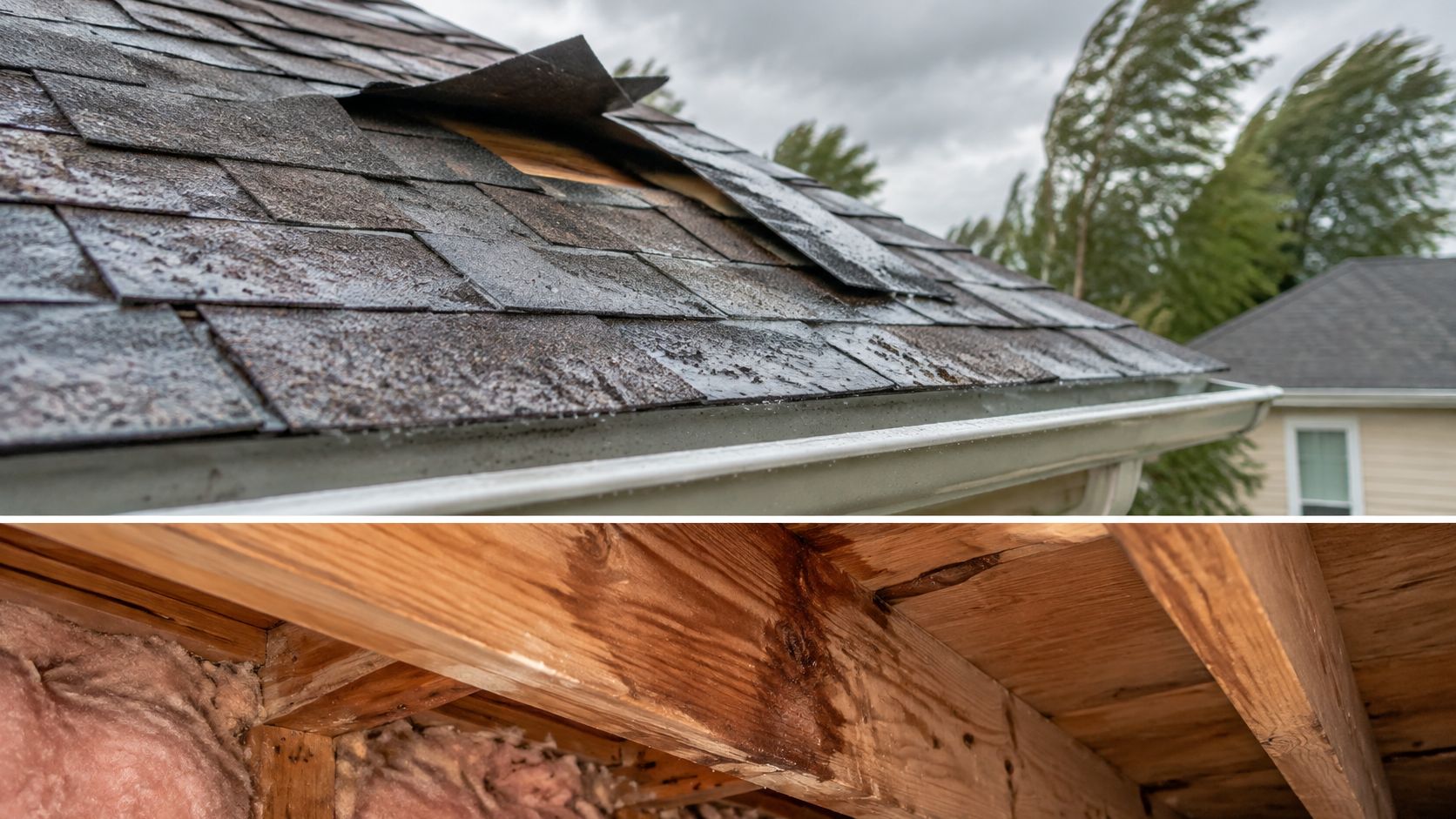
The same house can tell the opposite story. Water shows up after every hard rain, the ceiling stain has rings inside rings, and the flashing around the chimney has been cracked for years. Nothing changed on a specific date. That is a maintenance condition, and the roof repair usually falls to the owner.
The National Association of Insurance Commissioners' homeowners insurance overview frames the distinction around cause. The dwelling is insured for physical damage from covered perils such as windstorm and hail. When wind removes shingles or hail fractures roofing, rain that follows can make the resulting damage eligible, subject to the deductible, limits, exclusions and any wind or hail endorsement. The line is between a sudden, identifiable loss event and progressive deterioration.
What insurers look for
A documented inspection should connect the defect to a date and a weather record. The useful details are wind creasing, lifted tabs, impact marks and fallen-tree penetration. A report that says only "the roof leaks" gives the adjuster nothing to tie to a covered peril.
The NAIC homeowners policy guide is direct about upkeep. Homeowners are responsible for maintaining the roof, including repairing it when it begins to leak, and insurance does not pay to repair items that wear out. That is why brittle shingles, failed underlayment and deteriorated flashing land on the maintenance side of the line.
Mixed causes are where homeowners get surprised. Old flashing, a tired skylight, clogged gutters and a new hail event can all coexist. The insurer asks which failure let the water in, and your evidence has to answer that question.
The test question: Did this opening exist before the storm, and what changed on the date of loss?
For a closer look at how wind damage is documented, wind damage to a roof and insurance coverage walks through the inspection details that separate storm damage from wear.
Interior Water, Flooding and Delayed Repairs
The costliest trap is usually time. Washington's insurance regulator advises that insurers may deny water damage when the policyholder delays reasonable repairs after storm damage, and that prolonged leaks are commonly excluded. A covered opening can create covered interior damage on day one, then create a disputed mess by week six if the ceiling stays wet and the tarp never goes up.
Interior damage is assessed separately from the roof. Ceilings, insulation, drywall and paint can be covered even when the roof itself is not, so the claim needs two buckets: one for the opening and one for what the water ruined inside. Keep those categories apart in your notes and photos.
The settlement basis is the second trap. Ask whether the roof is paid at replacement cost or actual cash value. Actual cash value subtracts depreciation for age and wear, so an older roof can produce a materially smaller payment even when the initiating peril is covered.
Flood is the third trap, and it is a different policy. The Illinois Department of Insurance's homeowner shopping guide states that water damage from a leak in the roof is typically covered, while damage from groundwater, rain runoff or snowmelt is generally excluded. Water that rises or crosses the surface from outside is a flood claim, not a roof leak claim.
Questions to put in writing
- Settlement basis: Is the roof claim paid at replacement cost or actual cash value?
- Deductible type: Does a separate wind or hail deductible apply?
- Roof age: Is there a roof-age limit or a payment schedule based on age?
- Interior limit: Is interior water damage subject to its own limit?
Report the leak the day you find it. Then ask the insurer to answer those questions in writing before you authorize permanent work.
How Deductibles Decide Whether to File
A covered leak can still leave you paying the whole bill. The deductible comes off the top of every payout, even when the cause is covered. With a $1,000 deductible on a $5,000 covered repair, the insurer pays $4,000 and you pay $1,000, as the NAIC deductible and policy playbook illustrates.
Percentage deductibles change the math fast. NAIC affordability material puts them commonly at 1% to 5% of dwelling coverage, with higher percentages possible in higher-risk areas. On a $300,000 dwelling, that range runs from $3,000 to $15,000, and the same repair can produce a check or nothing depending on which percentage your policy uses.
| Deductible | Dollar amount | Insurer pays on a $5,000 repair |
|---|---|---|
| Flat $1,000 deductible | $1,000 | $4,000 |
| 1% of dwelling coverage | $3,000 | $2,000 |
| 2% of dwelling coverage | $6,000 | $0 |
| 5% of dwelling coverage | $15,000 | $0 |
Read the last two rows twice. A $5,000 storm repair under a 2% deductible produces no payment at all, which means the declarations page answers the filing question before an adjuster ever visits. The settlement basis can shrink the check further when the roof is paid at actual cash value, and actual cash value versus replacement cost for roofs explains how depreciation changes that payout.
The three-number decision
Cause comes first. Once the leak traces to a sudden covered peril rather than age or wear, run three numbers before you file.
- Write down the repair estimate. Get it in writing, with line items for shingles, underlayment, flashing and labor, so the comparison uses a real figure instead of a guess.
- Find the deductible on the declarations page. Confirm whether it is a flat dollar amount or a percentage of dwelling coverage, and check for a separate wind or hail deductible that applies only to storm claims.
- Estimate the depreciated payout. If the roof settles at actual cash value, subtract the depreciation for age and wear before comparing what remains against the deductible.
If the estimate clearly exceeds the deductible, filing makes sense. If it falls below, weigh an out-of-pocket repair against putting a claim on your record. If the cause is age or maintenance, budget for roof work and skip the claim entirely.
A written estimate is the first number in that test, and a free inspection produces it. HIBCO Roofing provides free roof inspections and explains whether a repair or replacement is the best option. Homeowners can call or text 614-810-0050 to schedule one.
How to Document a Roof Leak Before Repairs
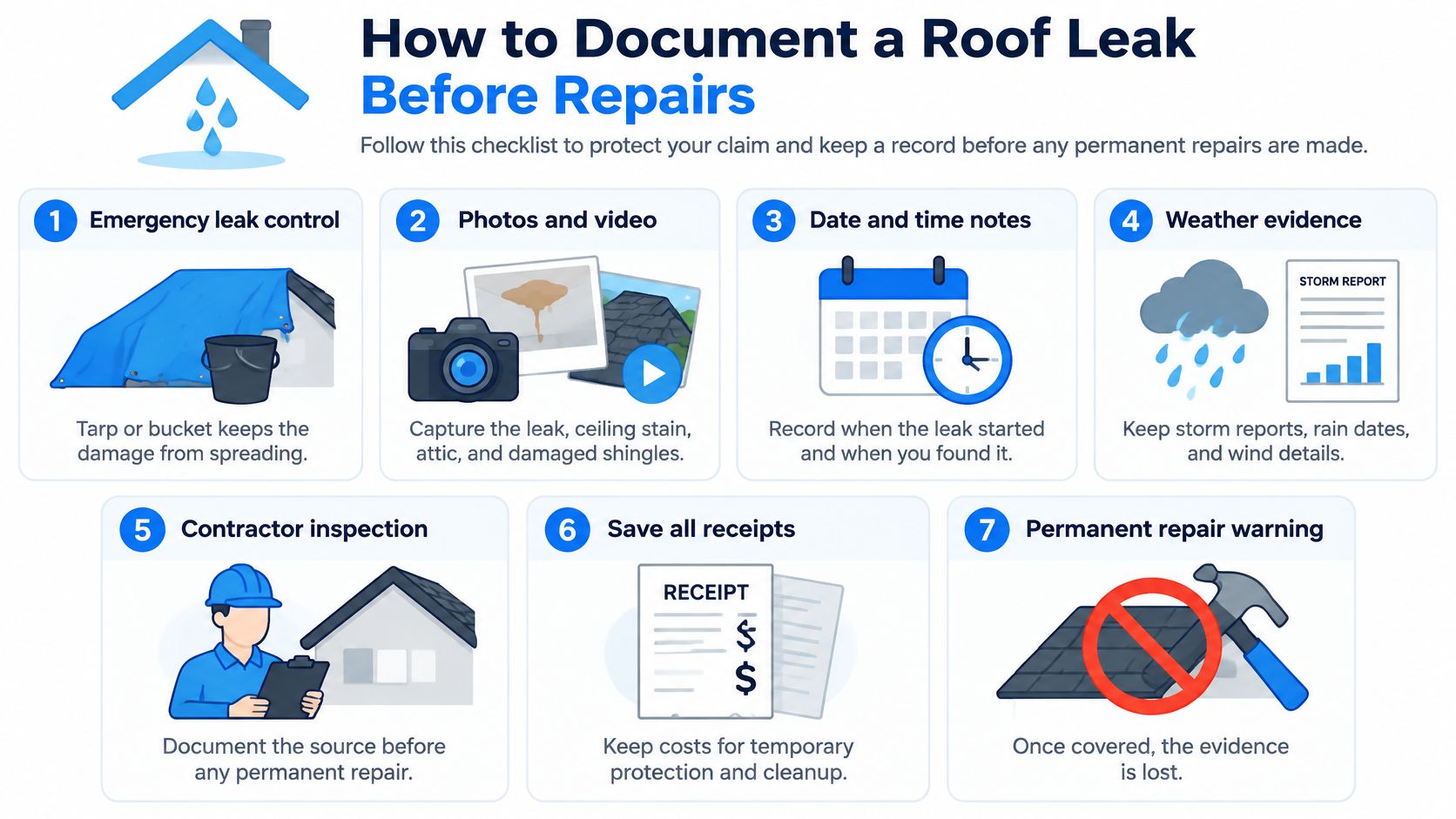
Evidence decides the causation question, and a permanent repair erases it. A new layer of shingles or a replaced vent boot can hide the wind crease, the impact mark or the age of the failed flashing that told the story. Control the leak first, then preserve the record.
The stakes are not limited to major disasters. Insurance Business America's report on Verisk roof claim data notes that roof-related claims costs reached nearly $31 billion in 2024, up 30% from 2022, and that non-catastrophic wind and hail claims grew from 17% to 25% of residential claims between 2022 and 2024. Everyday storms can trigger an inspection and a coverage dispute.
Emergency control is not repair
A tarp, a bucket and a fan are emergency measures. They keep water from spreading and they satisfy the duty to prevent more damage. They are not a permanent repair, and they should come after photos, not before. Once the opening is covered with new material, the original condition is gone.
What to collect
- Dated photographs of the roof and interior. Capture the ceiling stain, the attic moisture and the damaged shingles from the ground and from the roof.
- Fallen or displaced materials. Keep the shingles, flashing or branch that came off, and photograph where they landed.
- Weather records for the date of loss. A nearby storm report ties the damage to a specific event.
- Prior repair records and roof age. These show the roof was in serviceable condition before the event.
- Mitigation invoices. Save receipts for tarps, fans, dehumidifiers and any emergency service.
- A contractor's written inspection. The report should name the likely cause and the date, not just report a leak.
Do not discard damaged materials until the insurer has seen them. An insurer can cover sudden interior damage while denying the cost of replacing an aging roof, so the evidence should separate the two. In central Ohio, wind, hail, freeze-thaw movement and ice can hit the same roof in one season, which makes dated photos more useful than a general description.
Ask for the insurer's written causation and coverage determination. A verbal "roof leak" approval or denial is not enough to plan a repair around.
How to File a Roof Leak Claim Step by Step
Read the declarations page before you call. The deductible type and amount decide whether a claim makes financial sense, and filing before you check is the most common slip. Then follow this sequence.
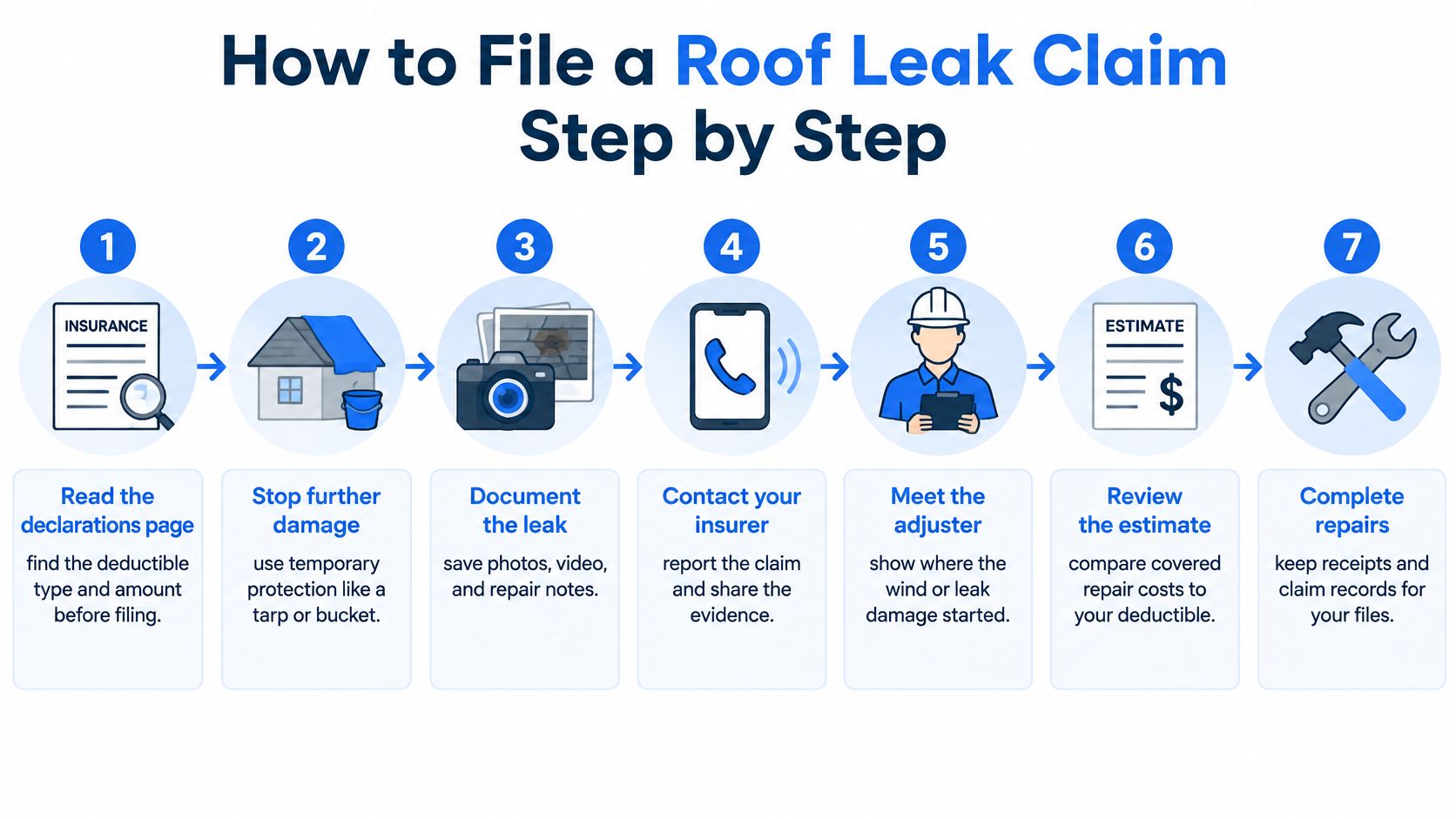
- Read the declarations page. Find the deductible and whether it is flat or a percentage. This one step prevents a claim that cannot pay enough to matter.
- Stop further damage. Place temporary protection over the opening when it is safe, and move furniture away from drips. The policy expects reasonable mitigation, and delay can exclude added interior damage.
- Get a roof inspection with a written estimate. The report should name the likely cause and the date. A vague report invites a denial because the insurer decides on causation.
- Notify the insurer promptly. Give the date you discovered the leak, the cause as you understand it, and the photos. Late notice is a common dispute, so report it when you find it, not after repairs are scheduled.
- Meet the adjuster on site. Walk the roof with them and ask them to note each opening. Areas the adjuster never sees are rarely added to the estimate later.
- Compare the estimates line by line. Put the insurer's scope beside your contractor's scope, then subtract the deductible and any depreciation. Ask for an explanation of any line the insurer left out.
- Get the written determination, then schedule permanent repairs. Keep the invoices and the adjuster's report. A finished claim is a written payment, a repair scope that matches the estimate, and a record you can reopen if hidden damage appears.
Notice and filing deadlines differ by policy and state. Check the notice clause in your policy and report the leak as soon as you find it.
Partial Roof Damage and Matching
Most leaks come from one slope, a valley, or a few sections around a chimney, not the whole roof. That raises a question the claim file has to answer. Does the policy pay for the damaged area, or for a roof that visually matches?
Ask the adjuster to mark each damaged area during the inspection so the estimate lists the affected slopes and the reason for each. A partial repair is often paid only for the damaged section. A full replacement claim depends on whether the damaged shingles can be matched in color, age and profile, and whether the policy or state rules require matching.
Compare the insurer's line items against your contractor's scope. Count the squares, underlayment, flashing and drip edge, and note any item the insurer left out. Keep the contractor's measurements and photos of the existing shingles, because a matching dispute depends on showing what can and cannot be found.
What to ask for: a line item for every slope, with the reason each one is included or excluded.
If the adjuster denies matching, ask for the written reason and the policy language that supports it. Matching rules vary by state and policy, so confirm them before accepting a partial scope.
Working With Adjusters and Roofing Contractors
Three roles decide a roof claim. The insurer's adjuster works for the insurer and determines coverage and payment. The roofing contractor documents the damage, writes the repair scope and estimate, and can meet the adjuster on the roof. You own the policy and give the final sign-off.
Who does what
Before hiring, ask whether the contractor documents storm damage with dated photos and measurements, whether they will meet the insurance adjuster, and whether they explain repair versus replacement in writing. HIBCO Roofing helps document storm damage, meets with insurance adjusters and guides homeowners through the claim process. For a closer look at that step, how roof damage insurance adjuster inspections work explains what the adjuster is trained to record.
Three pressure tactics should end the conversation. A contractor who offers to waive or absorb your deductible is creating a fraud problem for both of you. One who asks you to sign over claim rights before an estimate is taking control of a decision that belongs to you. One who pushes full replacement before any storm inspection is selling a conclusion before examining the roof.
When the adjuster and homeowner disagree, the options are a reinspection request, independent estimates, the policy's appraisal process where it exists, or a complaint to the state insurance regulator. The final coverage decision rests on the policy language and the insurer's written determination.
To schedule a free roof inspection that identifies the cause and whether repair or replacement is the better investment, call or text HIBCO ROOF LLC at 614-810-0050.
HIBCO ROOF LLC inspects roofs across Columbus and central Ohio, documents storm damage and meets with insurance adjusters so the cause and scope are on record before repairs begin. If you're staring at a ceiling stain and don't know whether the leak is a covered event or a maintenance problem, schedule a free inspection and get a written estimate you can compare with your deductible. Visit HIBCO ROOF LLC to book that inspection.