You're standing in the yard after a storm, looking at a roof that still looks mostly fine from the street. Maybe a few shingles are curled, maybe the gutters are carrying grit, maybe there's a stain on the ceiling after the last hard rain. The part most homeowners don't see is the part that usually decides whether that roof lasts another season or starts leaking in the next freeze-thaw cycle.
Table of Contents
- Your Roof Is More Than Just Shingles
- The Foundation of Your Roof Decking and Drip Edge
- The Secondary Water Barrier Underlayment Explained
- Protecting Critical Zones Ice and Water Shield and Flashing
- Finishing the System Starter Strips Fasteners and Ventilation
- Adapting Your Roof System for the Columbus Climate
- How to Spot Problems and When to Call a Professional
Your Roof Is More Than Just Shingles
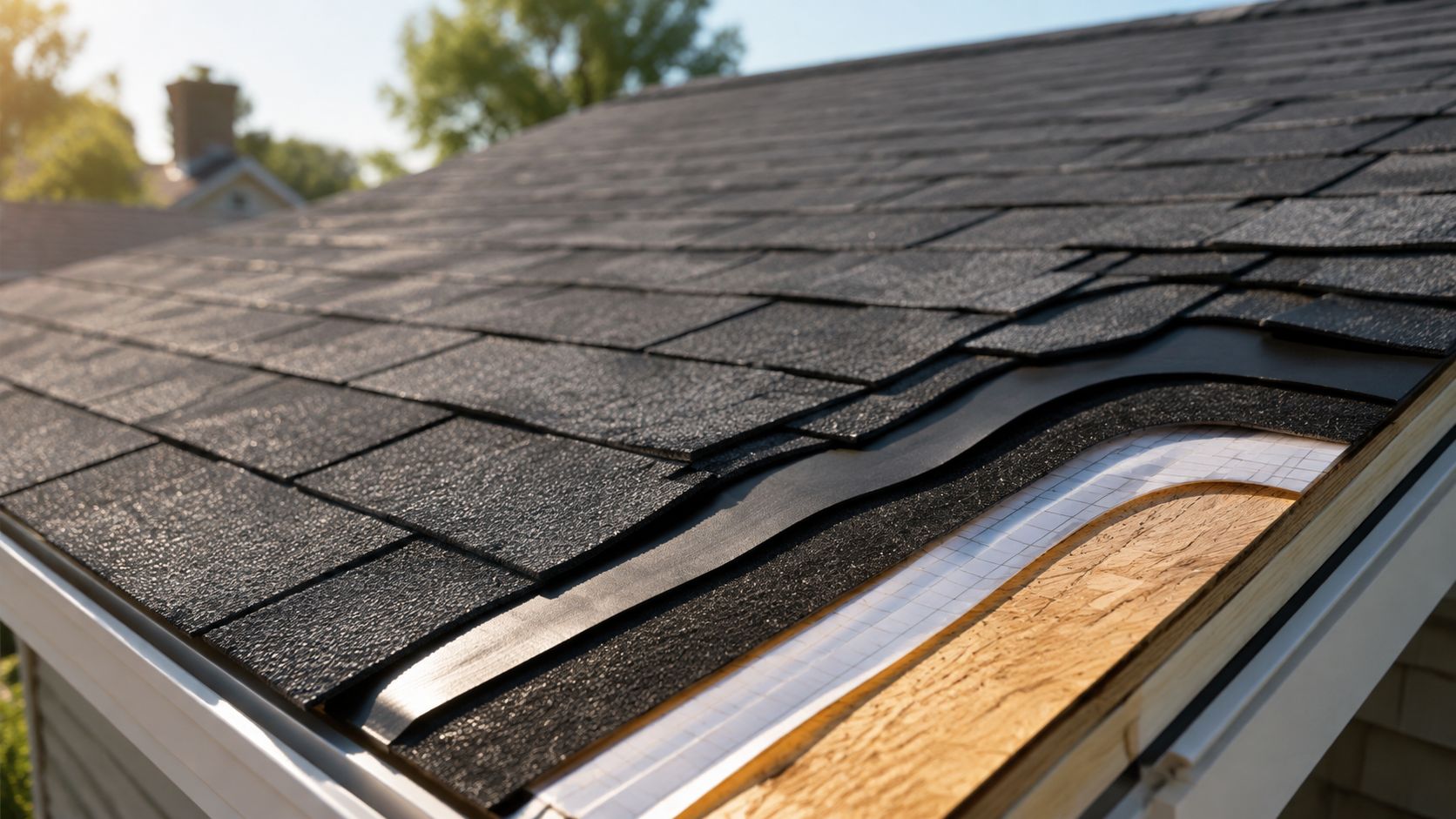
A roof is often perceived as the layer visible from the curb. In practice, what goes under roof shingles functions as the primary weather-control system, and the shingles are only the top layer. Modern shingle roofs are built as a layered system, with decking, underlayment, ice-and-water protection, flashing, starter strips, ventilation, and shingles all doing different jobs to keep water out and the roof structure stable DaBella.
A roof leak often starts below the shingle surface, not on it.
That matters in Columbus because our roofs take winter ice, spring rain, and wind-driven storms. A roof that looks fine from the street can still have a soft deck, worn underlayment, or failed flashing around a chimney. Those hidden failures usually matter more than a few visible shingles.
What roof shingles are and how they work is useful background, but the bigger point is simpler. A roof succeeds when each layer handles its own job, and it fails when someone treats the roof like a decorative surface instead of a system. Once you understand the system, you can judge proposals, repairs, and replacement work with a lot more confidence.
The Foundation of Your Roof Decking and Drip Edge
The deck is the structure everything depends on
The roof deck is the wooden base that carries the entire roofing assembly. It's commonly made from plywood or OSB, and it has to be dry, level, and strong because every layer above it depends on that surface for attachment and load support Protect Preserve Roofing.
If I find soft spots when walking a roof, I don't treat that as a shingle issue. Soft decking tells you the problem has already gone deeper, usually from moisture exposure over time. Sagging lines, bouncing underfoot, and patches that feel spongy are all signs the deck needs attention before new shingles go down.
Drip edge protects the perimeter
The edge of the roof is where water likes to misbehave. Drip edge, the metal trim installed along the perimeter, helps guide water away from the wood edge and into the gutter instead of letting it curl back under the roofline. That's a small piece of metal doing a lot of work, especially at eaves where repeated wetting can rot the edge over time.
Practical rule: if the deck isn't sound, nothing above it gets a fresh start.
For a Columbus homeowner, this is the first place to insist on a real inspection, not just a shingle quote. If the deck needs replacement in sections, that should be addressed before the new system goes on. Roof deck protection details are worth reviewing if you're trying to understand how a contractor evaluates the base layer, but the takeaway is straightforward, the structure under the shingles has to be right before anything else can perform.
The Secondary Water Barrier Underlayment Explained
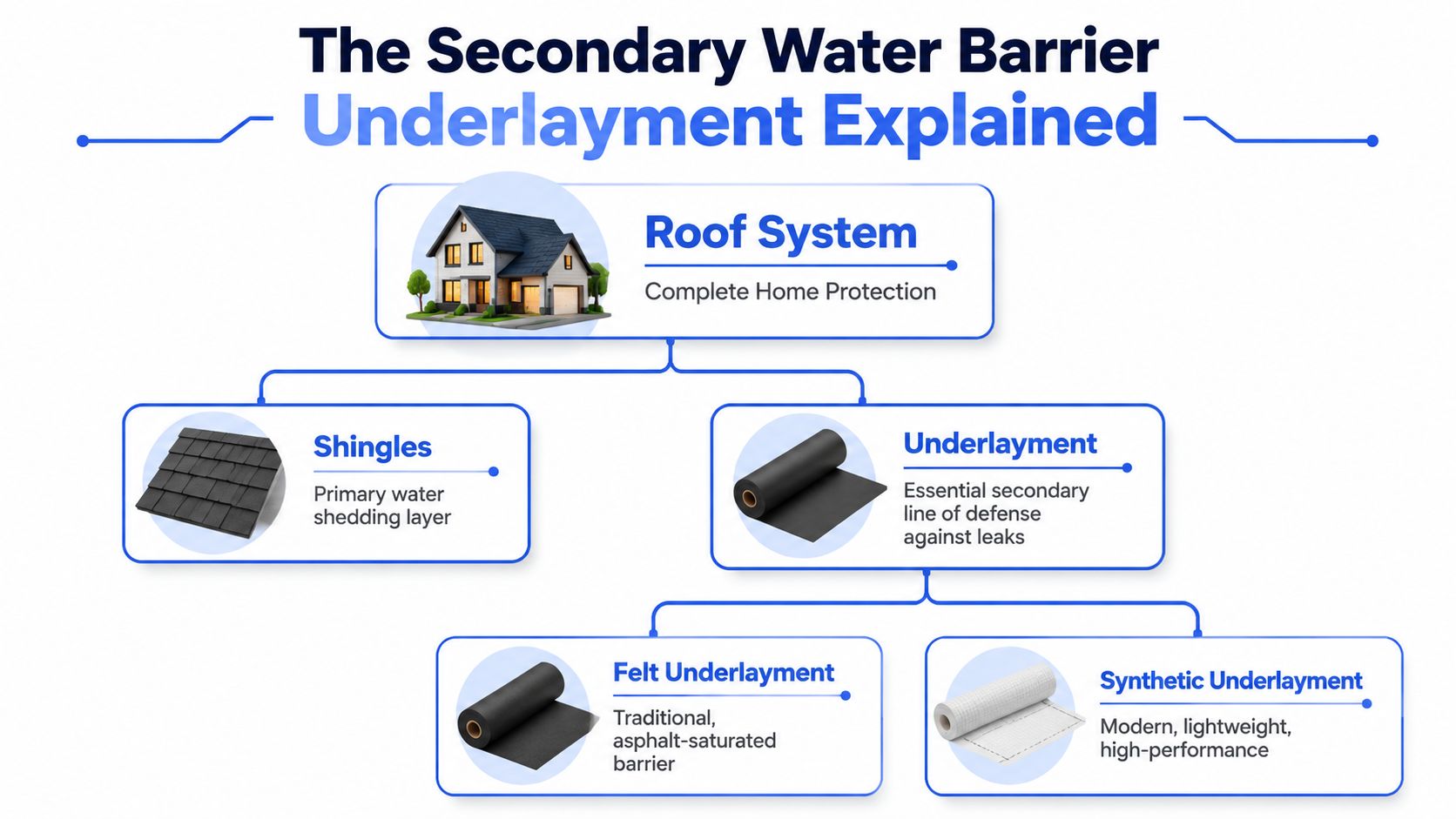
Underlayment is the layer that sits over the deck and under the shingles, and it acts as a secondary water barrier InterNACHI. That wording matters. Shingles are built to shed water, not serve as the primary waterproof membrane, so the underlayment catches wind-driven rain, temporary exposure during installation, and moisture that sneaks past the surface layer Remodel Calculators.
A roof replacement should never be sold as “just new shingles” if the underlayment is integral to weather defense. Modern roofs often use synthetic underlayment because it lies flatter, is lighter to handle, and can offer better water resistance than traditional felt DaBella. Felt still exists, and it still has a place in some assemblies, but the material choice should match the roof design and exposure, not just what a crew happens to have on the truck.
Roof underlayment comparison felt vs synthetic
| Feature | Asphalt Felt, Traditional | Synthetic, Modern |
|---|---|---|
| Material type | Asphalt-saturated paper-like sheet | Non-bitumen synthetic sheet |
| Weight and handling | Heavier and more cumbersome | Lighter and easier to install |
| Lay-flat performance | Can wrinkle or telegraph unevenness | Lies flatter on the deck |
| Water resistance | Serviceable, but less robust in many jobs | Often more water-resistant |
| Current jobsite use | Still used in some assemblies | Widely used in modern roof systems |
Installation details matter as much as product choice. Underlayment has to overlap properly so water sheds downward instead of toward nail holes, and it has to be integrated cleanly with the rest of the roof system. If you see a contractor rushing that part, you're seeing the wrong priority.
What goes under shingles and why underlayment matters is a good companion read, but the practical point here is more important. Underlayment isn't decorative. It's the roof's backup barrier, and on a Columbus home, backup is not optional.
Protecting Critical Zones Ice and Water Shield and Flashing
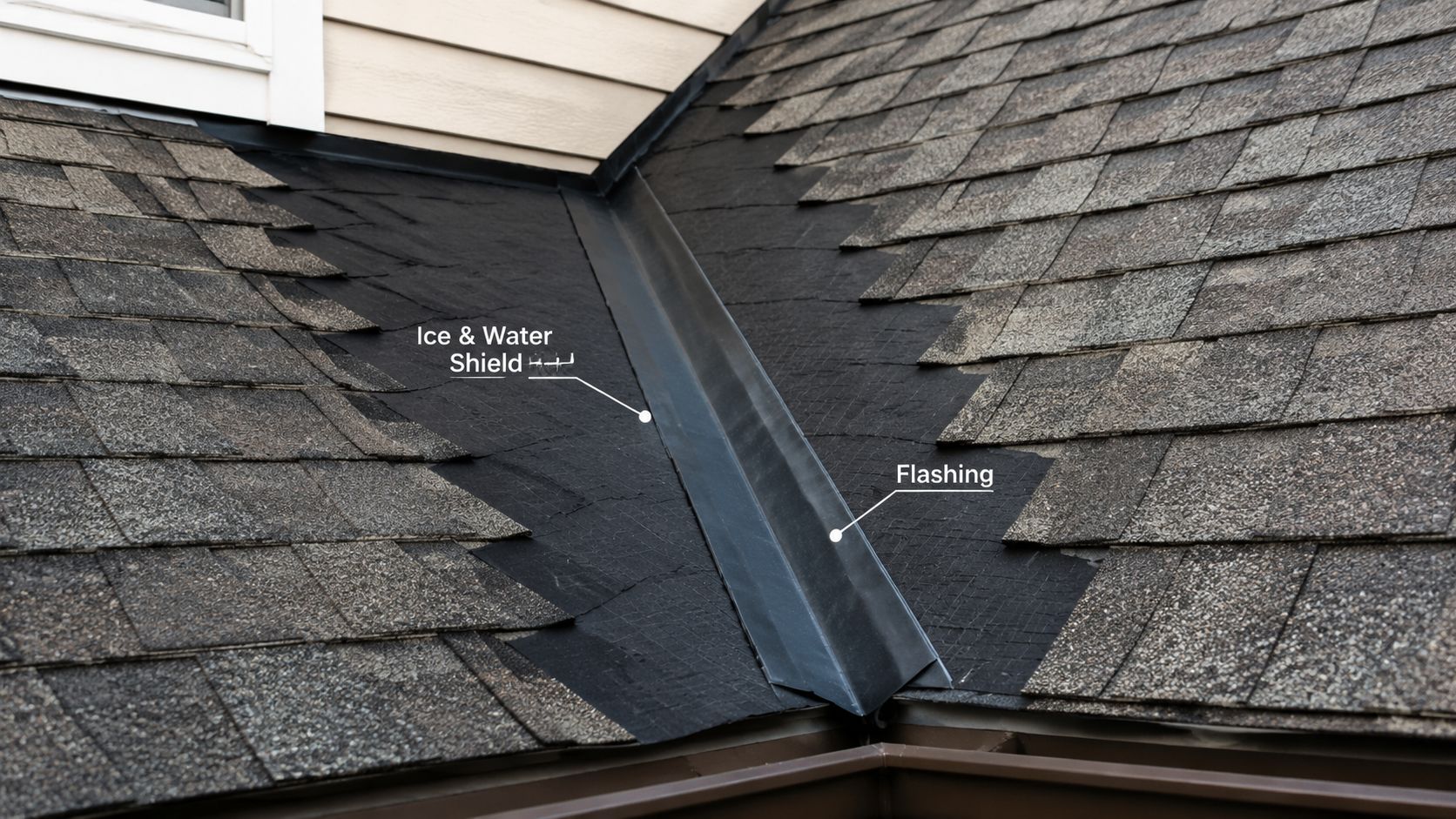
Some roof areas need more protection than the field of the roof. Eaves, valleys, and penetrations are the places where water concentrates, backs up, or changes direction, so they get a self-adhering ice-and-water shield as extra defense Remodel Calculators. That membrane is the reason a roof can take abuse at its most vulnerable points without letting water reach the deck immediately.
Why flashing is non-negotiable
Flashing is the metal that seals joints around chimneys, skylights, vents, and walls. When flashing is done right, water is directed around the penetration instead of into it. When flashing is done poorly, a roof can leak while the shingles still look acceptable from the ground.
A lot of roof leaks in real homes don't start in the open field of the roof. They start where water can bypass the shingles and attack the underlayment or deck directly, especially at valleys and around chimneys. That's why a replacement that ignores penetrations is incomplete, even if the shingles are brand new.
Where the extra membrane belongs
- Eaves and edges: These areas see ice buildup and runoff that can work backward under the roofing.
- Valleys: Water speeds up here and can overwhelm weak details.
- Chimneys, vents, and skylights: Every cut in the roof surface needs a watertight transition.
If you're comparing roofing proposals, ask how the contractor handles these areas before you ask about shingle color. Ice dam fixes and roof protection become relevant fast in Ohio winters because the wrong detail in one vulnerable zone can undo the rest of the system. The shingles matter, but the joints matter more.
Finishing the System Starter Strips Fasteners and Ventilation
Starter strips keep the first course from lifting
A roof's first row of shingles takes more wind stress than most homeowners realize. Starter strips create a sealed edge at the eaves so the first course doesn't lift when gusts hit the roofline. Without them, the edge can become a weak point even if the rest of the field is installed properly.
Fasteners and ventilation complete the system
Roofing nails sound simple, but nail placement affects whether the shingle holds, seals, and sheds water the way it should. Nails driven too high, too low, or at the wrong angle can compromise the layer above and create a path for leaks. That's not a cosmetic issue, it's a system failure.
Ventilation is the part homeowners overlook most often. A roof assembly is now understood as a system-based design, where the deck, underlayment, flashing, starter strips, ventilation, and shingles all share the job of keeping water out CertainTeed. That means attic airflow isn't separate from the roofing job, it's part of how the roof stays healthy from the inside.
Balanced ventilation helps the roof survive winter moisture and summer heat, not just one season.
For a plain-language look at intake and exhaust styles, Richmond Tree Experts' ventilation tips are a solid reference point. On the roofing side, the main takeaway is that ventilation, starter strips, and fasteners are not accessories. They're part of the assembly that keeps the shingles performing for the long haul.
Adapting Your Roof System for the Columbus Climate
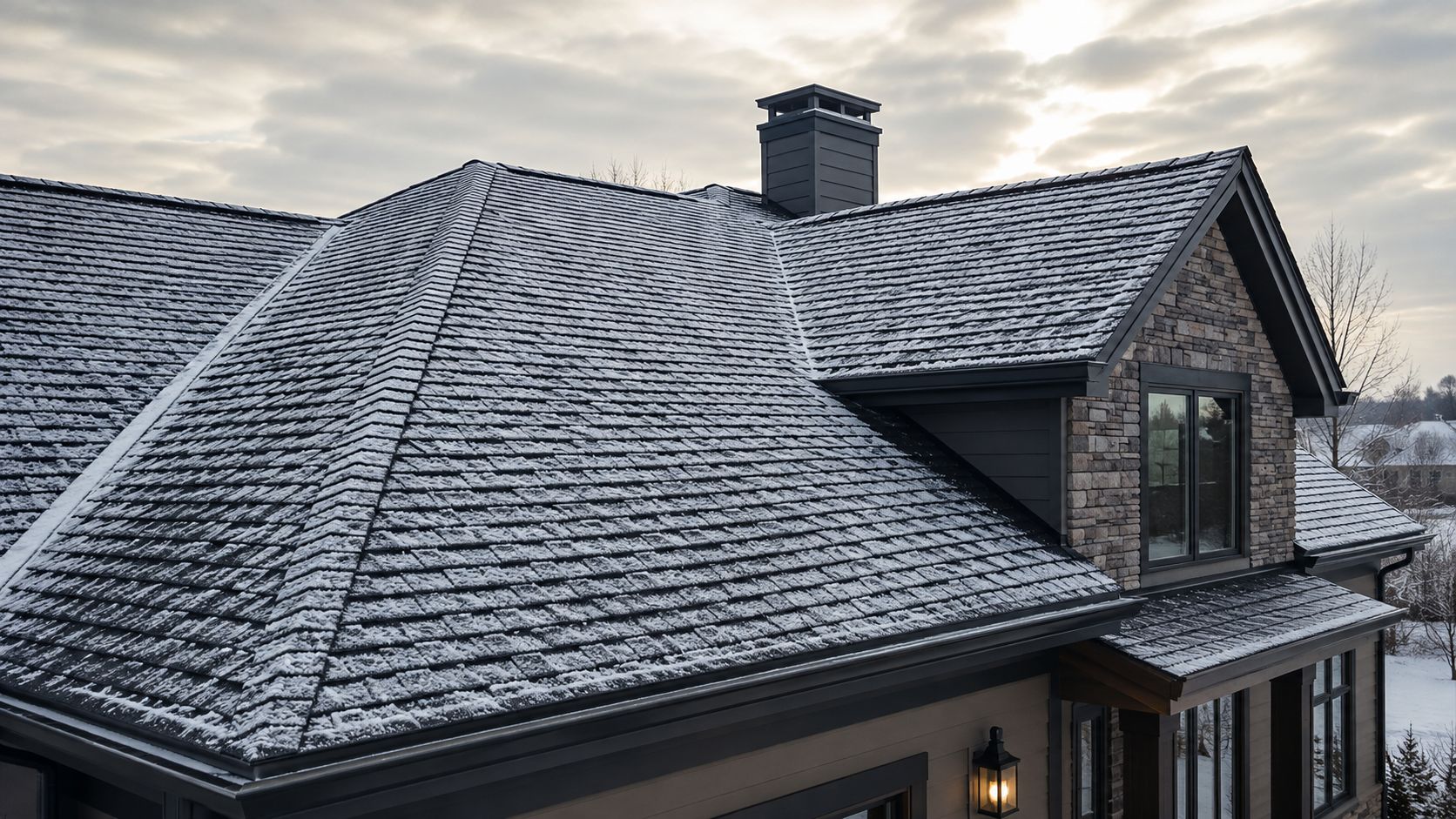
Columbus roofs don't live in a mild, predictable climate. They deal with freeze-thaw cycles, snow, ice dams, and summer storms that can drive rain sideways under the shingles. That's why the layer stack under the roof can't be chosen by habit or by a one-size-fits-all rule.
Local weather changes the details
Industry guidance notes that underlayment type, ice-and-water shield placement, and ventilation are selected based on exposure and roof geometry, especially in regions with freeze-thaw cycles Yellowhammer Roofing. In practical terms, a steep simple roof and a low-slope cut-up roof do not need the same approach. Valleys, overhangs, and complex rooflines need more thought because they handle water differently.
That is why Columbus homeowners should push past generic “code minimum” language. Code compliance matters, but local durability comes from asking whether the system is suited to the home's actual exposure. If a contractor can't explain how their underlayment, ice barrier, and ventilation plan fits your roof shape, the proposal isn't complete.
What to ask before you sign
- Ice barrier coverage: Ask where the waterproof membrane will be installed and why.
- Underlayment choice: Ask whether the roof is getting felt or synthetic, and what tradeoff that choice reflects.
- Ventilation plan: Ask how intake and exhaust will stay balanced after the new roof goes on.
- Penetration details: Ask how chimneys, skylights, and vents will be flashed, not just shingled around.
A Columbus roof should be built for Columbus weather, not for a generic postcard climate. The better the system under the shingles, the better it handles the next thaw, the next gust front, and the next heavy rain.
How to Spot Problems and When to Call a Professional
A homeowner can catch a lot without climbing the roof. Look for ceiling stains near valleys or chimneys, granules piling up in the gutters, and shingle edges that look lifted after wind. If the roof feels spongy when walked on, that points to a possible decking problem, and that needs a closer inspection.
The biggest mistake is assuming the shingles are the only thing that failed. A roof can leak because of damaged decking, worn underlayment, or a flashing issue even when the surface still looks passable. That's why a professional inspection matters before anyone talks about a quick overlay or a partial patch.
A licensed, insured roofer should check the penetrations, the valleys, the eaves, and the deck itself. If a contractor wants to replace shingles without looking at those hidden layers, that's a red flag.
HIBCO ROOF LLC handles roof inspections, leak diagnosis, repairs, and full replacements in Columbus and central Ohio, including underlayment and ice-and-water shield work as part of a complete roofing system. If your roof has stains, soft spots, or storm damage, visit HIBCO ROOF LLC to request a free estimate and get the hidden layers checked before a small problem turns into a bigger one.