Extreme Heat and Your Roof: How to Prevent Costly Shingle Damage
Summer brings sunshine, longer days, and plenty of opportunities to enjoy the outdoors—but it also places extra stress on your roof. While asphalt shingles are designed to withstand years of exposure to the elements, extreme heat can temporarily change their characteristics, making them more vulnerable to damage.
Understanding how hot weather affects your roof can help you avoid unnecessary damage and extend the life of your roofing system.
Why Asphalt Shingles Become More Vulnerable in Hot Weather
Asphalt shingles are manufactured using asphalt, fiberglass, and protective mineral granules. During periods of extreme heat, the asphalt becomes softer and more flexible than it is during cooler temperatures.
This doesn’t mean your shingles are failing. In fact, quality shingles are engineered to perform in hot climates. However, when temperatures soar and the roof is exposed to direct sunlight, the surface can become much more susceptible to damage from foot traffic.
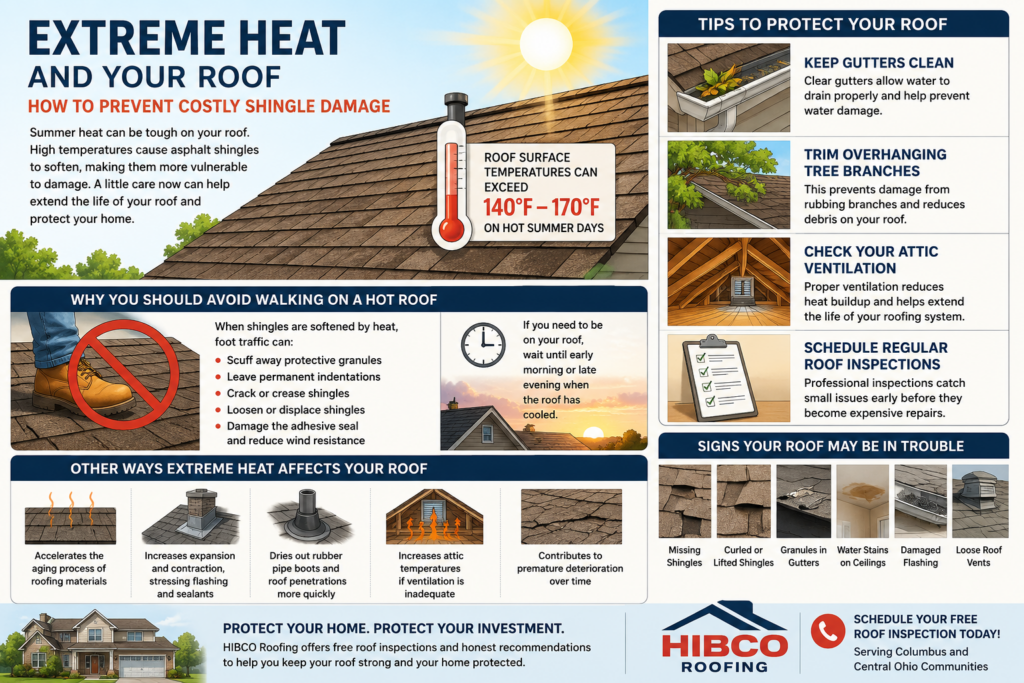
A roof surface can easily exceed 140°F to 170°F on a hot summer afternoon, even when the outdoor air temperature is much lower. At these temperatures, shingles can soften enough that walking on them may leave permanent damage.
Why You Should Avoid Walking on a Hot Roof
Many homeowners don’t realize that simply walking across a hot roof can shorten its lifespan.
When shingles are softened by heat, your weight can:
- Scuff away the protective granules that shield the shingle from UV rays.
- Leave permanent indentations in the shingle surface.
- Crack or crease shingles, especially older ones.
- Loosen or displace shingles, making them more vulnerable during future storms.
- Damage the adhesive seal that helps shingles resist high winds.
Even experienced contractors try to avoid unnecessary foot traffic during the hottest part of the day whenever possible.
If you need to inspect your roof, clean your gutters, install holiday decorations, or retrieve an item that landed on the roof, it’s generally safer to wait until early morning or later in the evening when the roof has cooled.
Other Ways Extreme Heat Affects Your Roof
High temperatures don’t just soften shingles.
Prolonged heat can also:
- Accelerate the aging process of roofing materials.
- Increase expansion and contraction, placing stress on flashing and sealants.
- Dry out rubber pipe boots and roof penetrations more quickly.
- Increase attic temperatures if ventilation is inadequate.
- Contribute to premature deterioration when combined with poor ventilation.
While these changes occur gradually over time, proper maintenance can significantly reduce their impact.
Tips for Protecting Your Roof During the Summer
A little preventative maintenance can go a long way toward extending the life of your roof.
Keep Your Gutters Clean
Leaves, sticks, and debris can prevent proper drainage. Clean gutters help move water away from your roof and foundation, reducing the risk of moisture-related problems when summer thunderstorms arrive.
Trim Overhanging Tree Branches
Tree branches rubbing against your roof can wear away shingles and create easy access for animals. Trimming them back also reduces the amount of debris collecting on your roof.
Check Your Attic Ventilation
Proper attic ventilation is essential during the summer months. A well-ventilated attic allows excess heat and moisture to escape, helping reduce heat buildup that can shorten the life of roofing materials and increase cooling costs.
Watch for Signs of Damage
After periods of intense heat or severe weather, look for:
- Missing shingles
- Curled or lifted shingles
- Granules collecting in gutters
- Water stains on ceilings
- Damaged flashing
- Loose roof vents
Addressing small issues early often prevents much larger and more expensive repairs later.
Schedule Routine Roof Inspections
Many roofing problems aren’t visible from the ground. A professional inspection can identify damaged shingles, deteriorated flashing, worn pipe boots, ventilation concerns, and other issues before they become major leaks.
Annual inspections are especially valuable after severe storms or periods of prolonged extreme heat.
Protect Your Investment
Your roof works hard every day to protect your home from Ohio’s changing weather. By understanding how extreme heat affects asphalt shingles and taking a few simple precautions, you can help maximize the life of your roofing system and reduce the likelihood of costly repairs.
If you have concerns about your roof or believe it may have been damaged by recent storms or prolonged heat, HIBCO Roofing is here to help. We provide free roof inspections, honest recommendations, and expert roofing services throughout Columbus, Gahanna, and the surrounding Central Ohio communities. Whether your roof needs a simple repair or a complete replacement, our experienced team is committed to helping you protect your home for years to come.