You're standing at the kitchen table with two roofing estimates, a coffee that's gone cold, and a question that keeps coming back in a different form. One bid mentions the GAF System Plus Warranty, the other skips it, and you're trying to figure out whether that line item is real protection or just a polished sales phrase.
The short answer is this. System Plus is not a decorative upgrade, it's a procedural contract with real coverage only if the roof, the installer, and the paperwork all line up. If you miss one step, you can lose the warranty before you ever need it. That's why Columbus homeowners should read this like a contractor reads a scope sheet, not like a brochure.
Table of Contents
- Why the GAF System Plus Warranty Matters at the Kitchen Table
- What System Plus Actually Covers
- Eligibility Rules and the Three-Accessory Requirement
- Registration, Transfer, and the Deadlines Homeowners Miss
- How System Plus Compares to Other GAF Warranty Tiers
- Filing a Claim and the Exclusions That Catch Homeowners Off Guard
- Your Warranty-Ready Checklist and Next Steps in Central Ohio
Why the GAF System Plus Warranty Matters at the Kitchen Table
A Columbus homeowner can compare two roof estimates that look almost identical and still miss the line item that changes the deal. One contractor includes the GAF System Plus Warranty, the other does not, and the price gap can look minor until you read the paperwork. That is where people get burned. The brochure-level version sounds simple, but the contract version is full of conditions, deadlines, and installer requirements that decide whether the warranty means anything at all. For the broader coverage details, see the next section and the GAF System Plus warranty comparison.
The roof you're really paying for
System Plus is written for a complete GAF roofing system, not a patch repair and not a mixed-bag reroof. GAF says the enhanced warranty extends coverage beyond the standard shingle-and-accessory warranty, and for qualifying defects it can raise the non-prorated coverage period from 10 years to 50 years. That change matters when a defect shows up years later, because the roof is no longer just a first-season problem. The coverage can also include installation labor, tear-off, and disposal costs when the right GAF components are installed together. A homeowner should read that as a system requirement, not a sales perk.
Practical rule: if the estimate does not clearly show a full GAF system, the warranty line deserves a hard look, not a quick yes.
Where it sits in the warranty stack
System Plus is not GAF's top residential tier, but it is far from bare-bones. GAF positions it as a foundational option for homeowners using architectural or designer shingles, and for single-family detached residences that qualify, the coverage can provide a 50-year 100% coverage period for qualifying defects. That matters because a warranty only helps if it stays meaningful long after the crew leaves and the first storm season is over. GAF's legal sample also shows that this tier is tied to the integrated roofing system, not just the shingle bundle. GAF System Plus legal sample
A homeowner should leave the table with four questions ready. What exactly is covered. Who is allowed to install it. What paperwork has to be filed. And does the quoted price buy more than a line on the estimate. The warranty is only as useful as the contract behind it.
What System Plus Actually Covers
A homeowner usually hears “warranty upgrade” and assumes the whole roof gets a stronger promise. System Plus is narrower and more useful than that. It extends the non-prorated defect coverage from 10 years to 50 years for manufacturing defects that affect performance, which changes how the warranty behaves as the roof ages. That matters because a problem that shows up later is still handled under meaningful protection, instead of under a shrinking benefit that loses value with time. The broader coverage can also include labor, tear-off, and disposal, when the right GAF components are installed together.
Non-prorated coverage means the benefit stays strong
Prorated coverage drops in value as the roof gets older. Non-prorated coverage does not do that during the stated period for qualifying defects. The difference is simple, and it affects real money. A defect in year 12 is not treated the same way as a defect in year 2, and System Plus keeps the benefit steady during that non-prorated window.
A roof warranty that fades too quickly is just paperwork with a logo on it.
The coverage follows the system, not just the shingle
Homeowners get tripped up here because the quote may look complete even when the roof build is not. System Plus applies only when the roof uses a complete GAF roofing system, which means qualifying shingles plus matched GAF components. The component list includes ridge cap shingles, starter strip shingles, leak barrier, roof deck protection, attic ventilation, and pipe boot flashing. That list is not filler. It tells you GAF is backing the integrated assembly, not a random mix of products from different brands. For a closer look at one piece of that assembly, see roof deck protection basics.
What it does not promise
System Plus covers manufacturing defects that adversely affect performance. It does not cover every roofing problem that can show up after installation. If the roof fails because the install was poor, the product mix was wrong, or the damage came from something outside manufacturing, the warranty does not step in and fix it. Homeowners should read that as a contract with conditions, not a blanket promise that protects every part of the roof no matter how it was built.
Eligibility Rules and the Three-Accessory Requirement
A homeowner can buy the right shingles and still miss System Plus if the roof fails the paperwork test. System Plus is only available when a complete GAF roofing system is installed by a GAF-certified contractor, and the build has to include GAF shingles plus at least three qualifying accessory products from the approved categories. That is the gate. If the roof does not clear it, there is no System Plus warranty, even if the estimate looks tidy and the materials list sounds convincing.
What counts as a complete system
The legal sample spells out the component families that make up the system, including GAF shingles, leak barrier, roof deck protection, starter strip shingles, ridge cap shingles, attic ventilation, and pipe boot flashing. That list is doing real work. It shows GAF is backing the matched assembly, not just the shingle package sitting on top of it. Homeowners should check that the estimate names actual GAF components, not vague labels and not whatever substitute the installer prefers to stock on the truck. GAF System Plus legal sample
The three-accessory rule is the trap
A lot of otherwise decent roofs miss eligibility. If the contractor installs the shingles but only one or two qualifying accessories, the roof may look finished to a homeowner and still fail the warranty test. Ask for the accessory list in writing before you sign. A mixed-product reroof can still be a solid roof, but it is not the same thing as a System Plus-qualified roof.
| Qualifying element | Why it matters |
|---|---|
| GAF shingles | The base product has to be part of the system |
| At least three qualifying accessories | This is the minimum threshold for eligibility |
| GAF-certified contractor | The installer has to be credentialed for the warranty to exist |
| Listed GAF system components | The warranty tracks matched parts, not random substitutes |
The installer gate is not optional
The contractor has to be GAF-certified, and that is the part homeowners should verify before the job starts. GAF ties the warranty to installer status because the system has to be built to the manufacturer's method, not just assembled from the right brand names. If you are comparing bids, ask the contractor plainly whether the crew is authorized to place System Plus on the project. If the answer is unclear, treat the warranty as uncertain.
If you are comparing shingle classes while you sort this out, the article on architectural shingles and warranty fit can help you match product type to the level of coverage you are buying.
Registration, Transfer, and the Deadlines Homeowners Miss
A roof can be installed correctly and still lose its warranty paper trail. The GAF System Plus Limited Warranty lives or dies on paperwork, and the deadlines are the part homeowners miss most often. GAF's brochure says the contractor has to register and pay for the warranty within 30 days after installation, and if it is not registered within 45 days, GAF reserves the right not to issue it. That is the cutoff. If the contractor misses it, the warranty may never exist in the first place.
The timeline homeowners should watch
The cleanest way to handle it is to track the process from the day the last shingle goes on.
- Installation finishes.
- The contractor files the warranty registration within 30 days.
- If 45 days pass, GAF can refuse to issue it.
The homeowner's job does not end there. If the warranty paperwork has not shown up within 60 days, the Spanish-language legal sample says to call GAF at 1-888-532-5767, option 5. That means the delivery side is time-bound too, not just the contractor's submission. Keep that number with your roof file, because paper delays happen after good installs too. GAF System Plus Spanish legal sample.pdf)
Keep the installer accountable. If they say they will handle the warranty, get that in writing and ask when the registration gets filed.
Transfer rules need paperwork, not assumptions
A warranty does not just drift from seller to buyer because the roof is still on the house. The transfer rules are in the warranty paperwork itself, and that is why the certificate matters at closing and during resale. If you sell later, keep the warranty certificate, the roof invoice, and the registration record together. A buyer, lender, or agent is likely to ask for all of it.
The practical way to protect yourself
Treat warranty registration like a deliverable, not a favor. Ask who submits it, when it is filed, and how you will know GAF accepted it. Then save every email, invoice, and installation photo in one place. If a dispute ever comes up, that file is what keeps the conversation grounded.
A homeowner should also know how to choose the installer before the paperwork starts. A straight guide to choosing a roofing contractor is worth reading, because the warranty depends on the crew doing the work, not just the shingle label on the bundle.
How System Plus Compares to Other GAF Warranty Tiers
A homeowner usually sees three things in the GAF stack, basic warranty coverage, System Plus, and the top residential tier. The middle tier is the one that gets marketed like an upgrade, but the paperwork matters more than the label. System Plus gives stronger system protection than the standard warranty, and the top tier adds broader installation protection. The question at the kitchen table is simpler, does the roof qualify, did the contractor meet the credential rules, and was the registration handled the way GAF requires? The July 2026 pricing shift makes that question harder to ignore, because value depends even more on whether the roofer documented the right system and filed it correctly. Industry explainer on the July 2026 GAF changes
| GAF Residential Warranty Tiers at a Glance | Coverage Scope | Labor and Tear-Off | Non-Prorated Period | Misapplication Coverage |
|---|---|---|---|---|
| Standard GAF warranty | Shingle-and-accessory coverage | Limited compared with enhanced tiers | 10 years on the comparison GAF gives for the System Plus upgrade context | Not the focus of this tier |
| System Plus | Entire roofing system when required GAF components are used | Can include installation labor, tear-off, and disposal for covered defects | 50 years for qualifying defects | Not included |
| Golden Pledge | Strongest residential protection in GAF's stack | Broader installation-related protection | Stronger than System Plus in the warranty stack | Included at the top tier |
My take on the middle tier
For a typical Columbus asphalt-shingle replacement, System Plus is the right choice when the roof is being built as a true GAF system and the homeowner wants solid defect protection without paying for the top-tier workmanship coverage they may never use. If the installer is qualified, the product list is clean, and the home is a straightforward reroof, the middle tier makes sense. If the project is complicated, mixes materials, or leaves questions about workmanship, the missing misapplication coverage is a real hole in the protection. A homeowner comparing shingle options should also look at a plain guide to architectural shingles and the 30-year class, because the warranty only means something when the product package matches the roof being installed.
When stepping up makes more sense
The top tier earns its keep when the homeowner wants protection against installation mistakes, not just product defects. That is the dividing line. System Plus backs the roofing system against manufacturing defects, but it does not rescue a bad install. If the estimate looks messy, the attic ventilation is questionable, or the crew's process already raises doubts, the cheaper warranty is not the better deal.
Filing a Claim and the Exclusions That Catch Homeowners Off Guard
A claim should start with paper, photos, and timing, not with frustration. Pull the original warranty certificate, the installation records, and clear photos of the defect before anyone starts patching or tearing into the roof. Then contact the warranty administrator with a plain description of what failed, when you first saw it, and what the roof looked like before the problem showed up. System Plus only helps when the issue fits a covered defect in the product or system, so the claim has to match that standard. If the roof was not installed by a qualified contractor or the paperwork was never handled correctly, the warranty may never have existed in the first place. For homeowners who are comparing contractor paperwork before they sign, the broader how to choose a roofing contractor guide is worth a look. For a quick non-roof example of how paperwork protects a home investment, the Birmingham rug stain defense guide shows the same habit in a different setting.
What homeowners usually need ready
- Warranty certificate: Keep the signed or issued warranty document in a safe place, not in the truck glove box or a junk drawer.
- Proof of installation: Save the contract, paid invoice, and any completion notes from the roofer.
- Photos of the defect: Take clear pictures from several angles before anyone starts cutting or patching.
- Roof history: Hold onto ventilation changes, repair records, and any contractor communications.
The exclusions that surprise people
The biggest surprise is misapplication by an uncertified installer. If the contractor was not qualified or the roof was not built to the required system, the warranty does not turn into a cleanup plan after the fact. Low-slope membrane areas are another problem, because the warranty sample excludes them along with several non-listed products. Storm damage, foot traffic, neglect, and other non-manufacturing causes also sit outside the defect promise.
If the failure came from the way the roof was built, the warranty argument gets harder fast unless the top tier included misapplication coverage.
The claim outcome homeowners should expect
Do not walk into a claim expecting a blank check. If the defect is covered, the result still depends on the terms of the warranty, the age of the roof, and the exact nature of the failure. That is why records matter so much. The better your paperwork and photos, the easier it is to separate a real product issue from installation mistakes or unrelated damage.
Your Warranty-Ready Checklist and Next Steps in Central Ohio
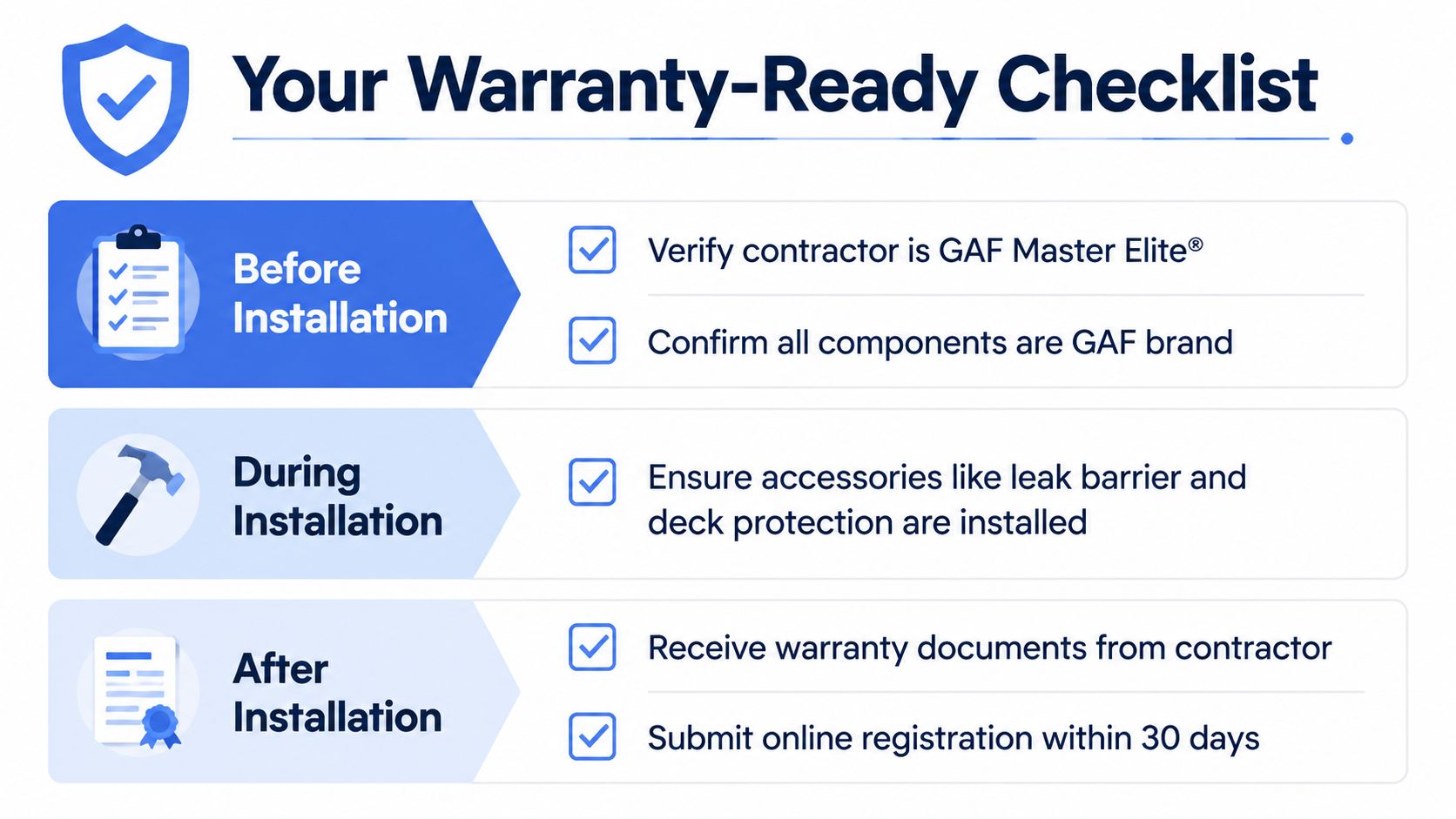
A roof install is the wrong time to discover the warranty paper is thin. In Columbus, make the contractor show you the GAF-certified contractor status, name the exact shingle line, and list the accessory package in writing before the first bundle hits the roof. The estimate should also say who pays the warranty fee, because that detail belongs on paper, not in a hallway promise. If you want a clean way to compare contractor credentials before you sign, the how to choose a roofing contractor guide is a useful companion piece.
The job itself needs the same attention. Confirm that the crew installs the matched GAF accessories required for eligibility, including the parts tied to roof deck support and water management. After the work is done, verify that the warranty is registered within 30 days. If the paperwork has not shown up by 60 days, use the contact number in the legal sample discussed earlier. Keep every document for resale, because future buyers care about the paper trail as much as the roof.
One more practical note. Homeowners already know this instinct from protecting other parts of the house during a remodel. A resource like the Birmingham rug stain defense guide makes the same point clearly, protect the surface before the work starts. Roofing paperwork works the same way, prep beats cleanup every time.
For Columbus homeowners who want a roof inspection, a written estimate, and a contractor who handles the paperwork correctly, HIBCO ROOF LLC provides inspections, roof replacements, and documented installation work across central Ohio. If you are comparing GAF warranty options, ask for a line-item estimate that shows eligibility, then schedule a free inspection and make the contractor prove the System Plus path before you sign.