You're standing in the kitchen on a gray Columbus morning, coffee in hand, and you notice two things you don't want to see in winter. Thick icicles are hanging off the eaves, and there's a brown stain creeping across the ceiling near an outside wall. That's not decoration, and it's not harmless winter mess. It's usually the moment an ice dam has started forcing meltwater back under the shingles and into the house, where it can spread through insulation, drywall, and framing before you ever see a drip.
The good news is that you can remove ice dam from roof safely if you stay grounded, use the right tools, and know when the job has crossed into professional territory. The bad news is that bad removal methods can cost more than the dam itself, because the damage often shows up inside the house after the outside ice is gone. In central Ohio, where winter swings can push roofs through repeated freeze-thaw cycles, that hidden risk matters just as much as the visible ice.
Table of Contents
- Why Ice Dams Threaten Your Columbus Home
- How Ice Dams Form on Your Roof
- Safe DIY Methods to Remove Ice Dams From the Ground
- When to Call a Professional for Ice Dam Removal
- Long-Term Prevention Strategies for Columbus Roofs
- Common Mistakes That Damage Your Roof During Ice Dam Removal
Why Ice Dams Threaten Your Columbus Home
A Columbus homeowner usually spots the problem in stages. First come the icicles. Then a dark patch appears on a ceiling, often along an exterior wall or near a window. By the time that stain shows up, water has already found a path past the roof edge, and the roof is no longer just holding snow. It is holding trapped runoff that can get driven under the shingles and into the structure. The National Weather Service explains that ice dams form when snow melts on the roof and refreezes at colder edges, creating a ridge that blocks runoff and can push water back under shingles into the home. National Weather Service ice dam guidance
Central Ohio winters make that pattern hard to predict. A roof can look fine through one cold spell, then start leaking after a brief warmup followed by another freeze. Columbus sees that cycle over and over, and it is why an ice dam points to a roof system problem, an attic problem, or both. Missing insulation, air leaks, and poor attic ventilation let heat reach the snow in the wrong place, and the trouble usually starts at the eaves where the overhang stays colder than the rest of the roof. The roofing industry treats prevention as a whole-system issue, not just a matter of scraping ice off the edge. National Roofing Contractors Association
Practical rule: if the stain is already inside, the damage is already underway. At that point you are dealing with active intrusion, not just a winter nuisance.
The hidden cost is what homeowners often miss. Independent market summaries say professional removal commonly lands around $1,200 on average, with typical ranges from $650 to $2,000, and more complex jobs can run higher. Other summaries cite damage costs around $5,000 per affected property or insurance claims in the $8,000 to $12,000 range. That spread is why a small-looking ridge of ice can turn into a serious bill fast. Homeowner ice dam cost overview
If the ceiling is already wet, the roof may not be the only thing at risk. Water can soak insulation, stain drywall, and weaken roof decking before spring ever arrives. A damaged roof edge is one problem. A wet building envelope is another. When that happens, water-damage repair becomes part of the conversation too, and waiting usually means more materials to replace and more labor to fix the mess. water damage roof repair
How Ice Dams Form on Your Roof
Heat loss starts the cycle
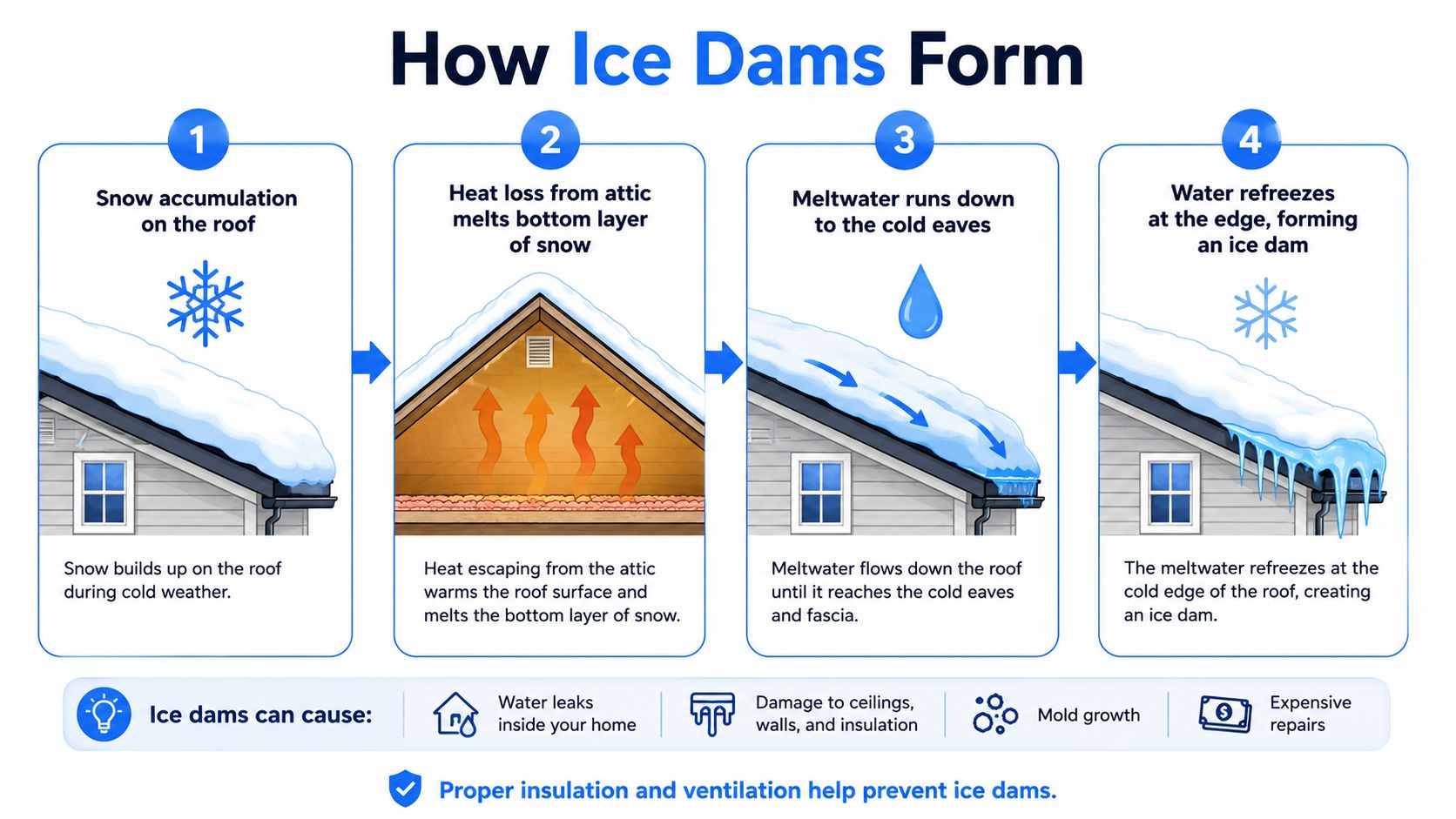
The mechanics are simple, but the fix isn't. Snow sits on the roof, warm air escapes from the house into the attic, and the roof surface gets warm enough to melt the layer of snow touching it. That meltwater then moves downhill until it reaches a colder edge, where it refreezes and starts building a ridge. The National Weather Service explains that ice dams come from heat loss, snow cover, and repeated melting and refreezing, not from the storm itself. National Weather Service ice dam guidance
The attic, not the roof, is usually the original culprit. Warm air leaking through the ceiling plane, missing insulation, and weak ventilation all change roof temperature in uneven ways. In an older Columbus home, that unevenness often shows up first at the eaves because the overhang stays colder than the upper roof. When the attic leaks heat all winter, the roof deck keeps cycling above and below freezing in the same weak spots.
The roof edge becomes the trap
Once the ridge forms, runoff has nowhere to go. It backs up behind the ice, and when the next melt cycle happens, water gets driven sideways and upward under the shingles. That is why a dam can leak even when the roof deck still looks intact from the street. The water is following gravity until the ice blocks gravity from doing its job.
A useful way to read the problem is plain enough. The ice is the symptom, and the temperature difference is the engine. That is why a quick cleanup does not solve recurring dams. The roof will keep repeating the same pattern until the heat escape path changes. As discussed in the prevention section below, attic air sealing, insulation, and ventilation all matter because they influence that temperature balance.
For a closer look at what sits beneath the roof surface, see this overview of what goes under roof shingles. The layer order matters because water control starts long before snow ever lands on the shingles.
A roof can handle snow. It can handle cold. It can even handle melt. It cannot handle meltwater that gets trapped and forced backward for days at a time.
Safe DIY Methods to Remove Ice Dams From the Ground
Start with snow, not ice
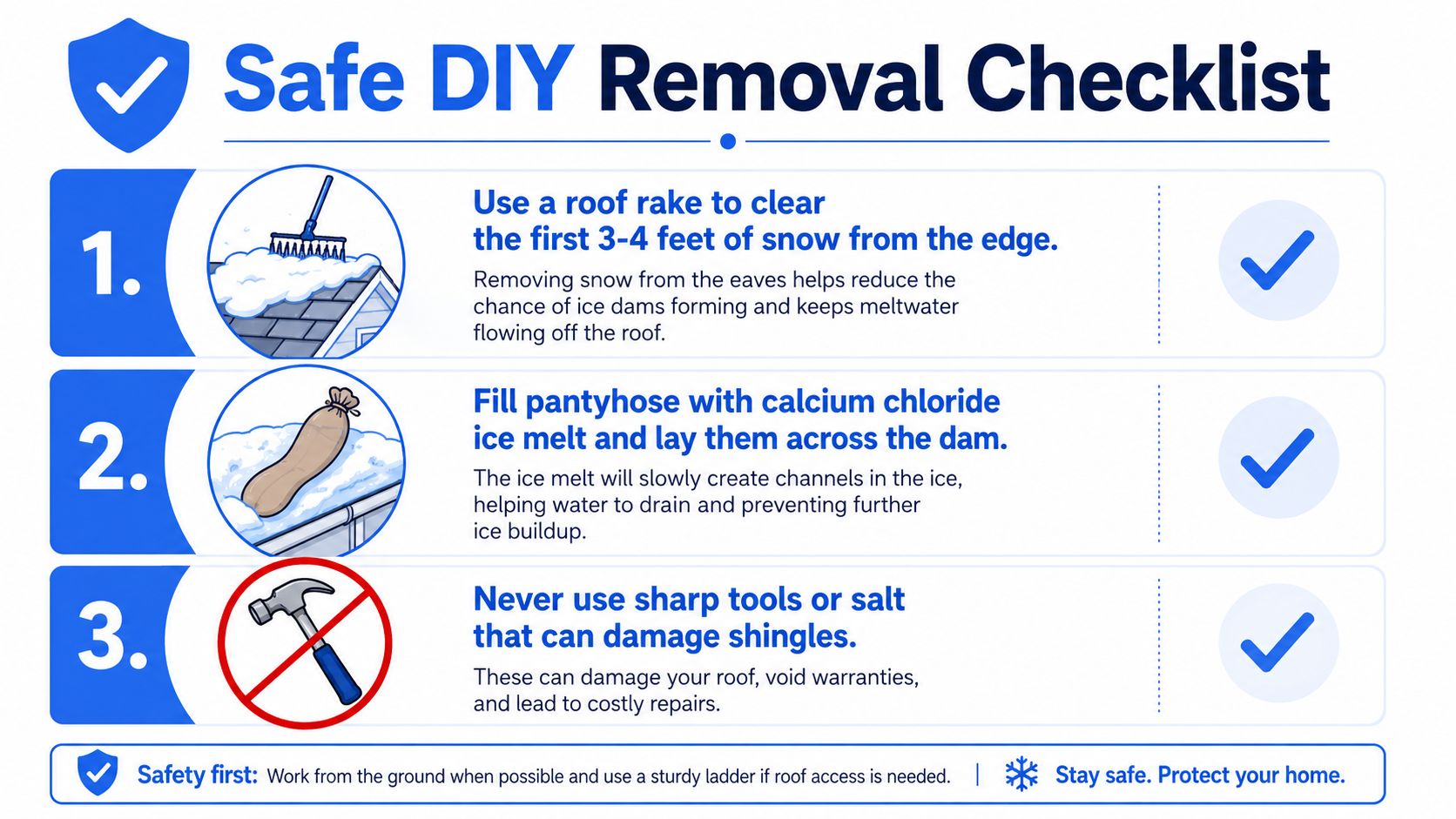
The first move is usually the least dramatic and the most effective. Stay off the roof and use a roof rake from the ground to clear the snow at the eaves, where the dam usually keeps feeding on fresh meltwater. Ground-level cleanup is the safer choice, and Travelers warns against rock salt or sodium chloride because both can harm roofing materials and nearby plants. Travelers ice dam removal guidance
That snow removal does not break the dam apart, and that is fine. It cuts off part of the water supply, which is often enough to slow a leak while you decide whether a controlled melt or a pro is the better call. On Columbus roofs, that matters because a mild thaw after a hard freeze can push water back under shingles fast.
Use calcium chloride, not the wrong salt
If you need a temporary drainage path, fill a nylon stocking or fabric sleeve with calcium chloride, then lay it vertically across the dam so it can melt a channel through the ice. The goal is controlled relief, not force. Once water can reach the gutter or downspout, it stops pooling behind the ridge.
Do not use sharp tools, and do not reach for rock salt. Sharp tools can scar shingles, and sodium chloride can be hard on roofing materials. Keep landscaping in mind too, because the meltwater still has to go somewhere. For gutter-related buildup, this roof and gutter ice dam removal guide explains how to keep water moving where it belongs.
The stocking method works slowly. That is the trade-off. It suits minor leaks and situations where you want to avoid making the roof worse while the ice opens a path on its own.
Keep the work low-risk
The roof rake handles the heavy lifting from the ground. The calcium chloride stocking handles the drainage channel. That is the safe DIY limit. Once the job calls for a ladder on slick ground, or for tools that strike the roof surface, you are no longer doing controlled removal, you are taking on repair risk.
A roof in central Ohio can take snow, cold, and thaw cycles. It does not handle someone prying at shingles or sending water where it should never go.
Practical rule: if you cannot do it from the ground, you need to think hard about whether you should be doing it at all.
When to Call a Professional for Ice Dam Removal
The warning signs are pretty plain
Call a pro when the dam is already leaking inside, when the buildup is thick or spread out, or when the roof pitch and height make ground work ineffective. Multi-story homes, steep slopes, and hard-to-reach valleys raise the risk quickly. If the roof is actively dumping water into the house, speed matters, but speed cannot come at the cost of falling off the roof or punching holes in shingles.
Professional steam removal is the benchmark method because it stays controlled. One field guide describes wet steam at about 215°F with an output of 1 to 2 gallons per minute, then a stepwise process of cutting grooves into the dam and removing ice in manageable chunks from the overhang toward the ridge. Professional steam removal guide
Steam beats force
Steam matters because it melts a path without beating up the roof system. Mechanical chipping, high-pressure water, and improvised force are where people get into trouble. GAF warns that hard-tool strikes and high-pressure water can damage shingles, and I have seen enough eave damage over the years to know that the roof usually loses that fight. GAF guidance on ice dam damage
The same goes for the common idea that hot water will fix it faster. It can make the mess worse and push moisture into places you do not want it. Steam is controlled. A pressure washer is not.
Cost is part of the decision
Professional removal often lands around $700 to $900 per hour, with a commonly cited job length of 4 to 6 hours, and an average total of about $2,700 to $4,500. Challenging access, larger roofs, and bad weather can stretch the work over several days. Professional ice dam pricing guide
That sounds expensive until you compare it with what water intrusion can cost once it gets into ceilings, walls, and insulation. The decision is rarely pay now or pay later. It is usually pay for controlled removal or pay for roof damage plus interior repair. In Columbus winters, that trade-off gets sharper because freeze-thaw cycles keep stressing the same weak spots. As part of the bigger picture, furnace upkeep matters too, and Bender's Oil Service Inc maintenance advice is a good reminder that heat systems and roof problems often overlap.
For homeowners who want a contractor to handle the roof system after the emergency is under control, HIBCO ROOF LLC is one local option for inspections, roof repairs, and related exterior work.
Long-Term Prevention Strategies for Columbus Roofs
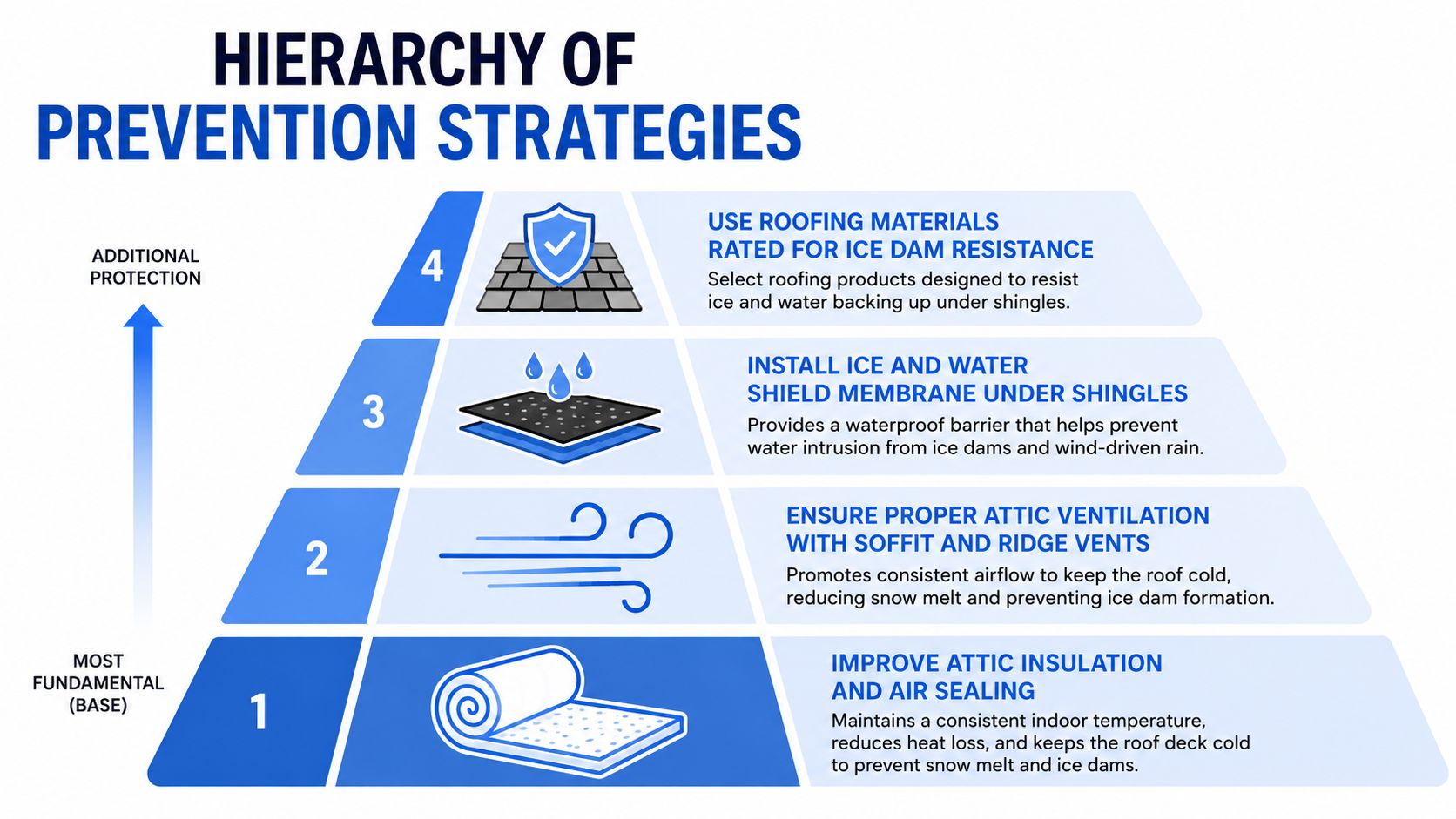
Air sealing comes first
Recurring ice dams point to a building-envelope issue, and Columbus winters keep exposing that weak spot. The roof deck has to stay cold enough that snow melts evenly, and that starts with stopping warm indoor air from leaking into the attic. The National Roofing Contractors Association points to an effective air retarder at the ceiling, high attic insulation, and balanced ventilation at the eaves and ridge as the standard prevention strategy. National Weather Service ice dam guidance
In practical terms, that means sealing attic bypasses around light fixtures, plumbing vents, attic hatches, and other leak paths before adding more insulation. If air keeps escaping, insulation alone will not solve the problem. Homes with the same weak points tend to show the same ice bands year after year.
Insulation and ventilation work together
Insulation helps keep the roof deck cold. Ventilation helps carry away unwanted attic heat before it warms the underside of the roof. Those two pieces work as a pair, not as substitutes for one another. Clean soffit vents, clear ridge vents, and undisturbed insulation coverage all support that cold-roof goal.
Gutters matter too, but not in the way people sometimes think. Clean gutters and leaf guard systems help water move once the snow melts. They do not stop an ice dam by themselves, but they reduce the debris buildup that can make runoff problems worse. If the drainage path is already compromised, ice has an easier time taking over.
Interior habits matter more than people think
The roof often reflects what is happening inside the house. Furnace operation, attic bypasses, and roof penetrations all affect temperature at the roof edge. That is why furnace maintenance deserves a place in the conversation. Bender's Oil Service Inc maintenance advice at furnace maintenance schedule is a useful reminder if you want heating equipment to run cleanly and predictably through winter.
Practical rule: if you keep paying to remove the same dam, the house is asking for a system fix, not another cleanup.
Prevention costs more up front than a quick roof rake session, but it is usually cheaper than repeat emergency calls and interior restoration. Columbus homeowners have to weigh that trade-off carefully. The best outcome is the one where the roof stays cold enough that the dam never forms in the first place.
Common Mistakes That Damage Your Roof During Ice Dam Removal
The wrong tools do the most damage
The quickest way to turn an ice problem into a roof repair is to hit it with an axe, hammer, chisel, or ice pick. Those tools can crack shingles, puncture roofing layers, and expose the deck to water. Hard impacts and high-pressure water both create damage that is expensive to chase later, especially after a Columbus freeze-thaw cycle has already worked water into small weak spots.
High-pressure washers are another bad choice. They can drive moisture under shingles and strip away the protective surface the shingles depend on. Hot water sounds useful until it runs into the wrong place, refreezes, and leaves more hidden damage behind.
Roof access creates its own hazard
Climbing onto an icy roof without proper fall protection is a mistake that can hurt you long before it helps the house. The safer methods stay on the ground whenever possible. If the job requires you to stand where you cannot trust your footing, it has already moved beyond a simple homeowner task.
A lot of damage comes from impatience. People try to break the whole dam at once, then tear at the eaves, bend gutters, or loosen shingles that were still serviceable. A controlled melt path is the better approach. A professional steam removal is safer than wrestling frozen water off the roof with force.
Know the red flags
- Active interior leaks: Water on ceilings or walls means the roof is already losing the fight.
- Sharp-tool temptation: If the plan depends on a hammer, stop.
- Slippery access: If footing is uncertain, the roof is not a safe work zone.
- Large or thick buildup: Bigger dams are harder to control from the ground.
- Recurring damage: Repeated winter leaks usually mean the roof system needs correction, not another patch.
If you are already seeing interior staining, sagging drywall, or repeated leaks in the same spot, that is the point where a licensed roofing contractor should take over. In central Ohio, the cost of a professional visit is usually easier to justify than a torn roof edge, soaked insulation, and a ceiling repair that follows the next warm spell.
If your Columbus home is dealing with an ice dam right now, HIBCO ROOF LLC can inspect the roof, diagnose leak sources, and handle the repair work that often follows winter damage. Visit HIBCO ROOF LLC to request a free estimate and get a local roofing team on the problem before the next freeze makes it worse.