The most popular advice after a storm is to call your insurance company immediately. That's incomplete. Before you file a wind damage to roof insurance coverage claim, you need to know what caused the damage, what your policy covers, and what you'll have to pay yourself. A rushed claim built on weak photos, an overlooked percentage deductible, or an assumed replacement-cost payment can leave Columbus homeowners funding a roof that they expected insurance to handle.
Wind and hail are major drivers of residential property losses. Insurance industry data shows that 2.8% of insured homes experienced a wind- or hail-related loss during 2018–2022, approximately one affected home for every 35 insured homes over that period, with an average claim severity of $13,511 for the overall property claim, not roofing alone (Insurance Information Institute homeowners insurance data). That doesn't mean every roof claim gets paid at that level. Your deductible, roof valuation, exclusions, maintenance history, and policy limits control the result.
Table of Contents
- The Aerodynamic Reality of Wind Damage
- Decoding Deductibles and Coverage Limits
- Replacement Cost Versus Actual Cash Value
- Documenting the Damage for a Successful Claim
- Navigating Ohio Appearance Matching Rules
- Filing the Claim and Working with Your Contractor
- Frequently Asked Questions About Wind Claims
The Aerodynamic Reality of Wind Damage
Most homeowners picture wind damage as a few shingles missing from the roof. That view misses how a roofing system fails. Wind damage is primarily an aerodynamic and installation-system failure, not merely a shingle problem. Air pressure can create uplift at roof edges and eaves, then exploit weak adhesive seals, incorrect nail placement, loose caps, or poorly secured flashing.
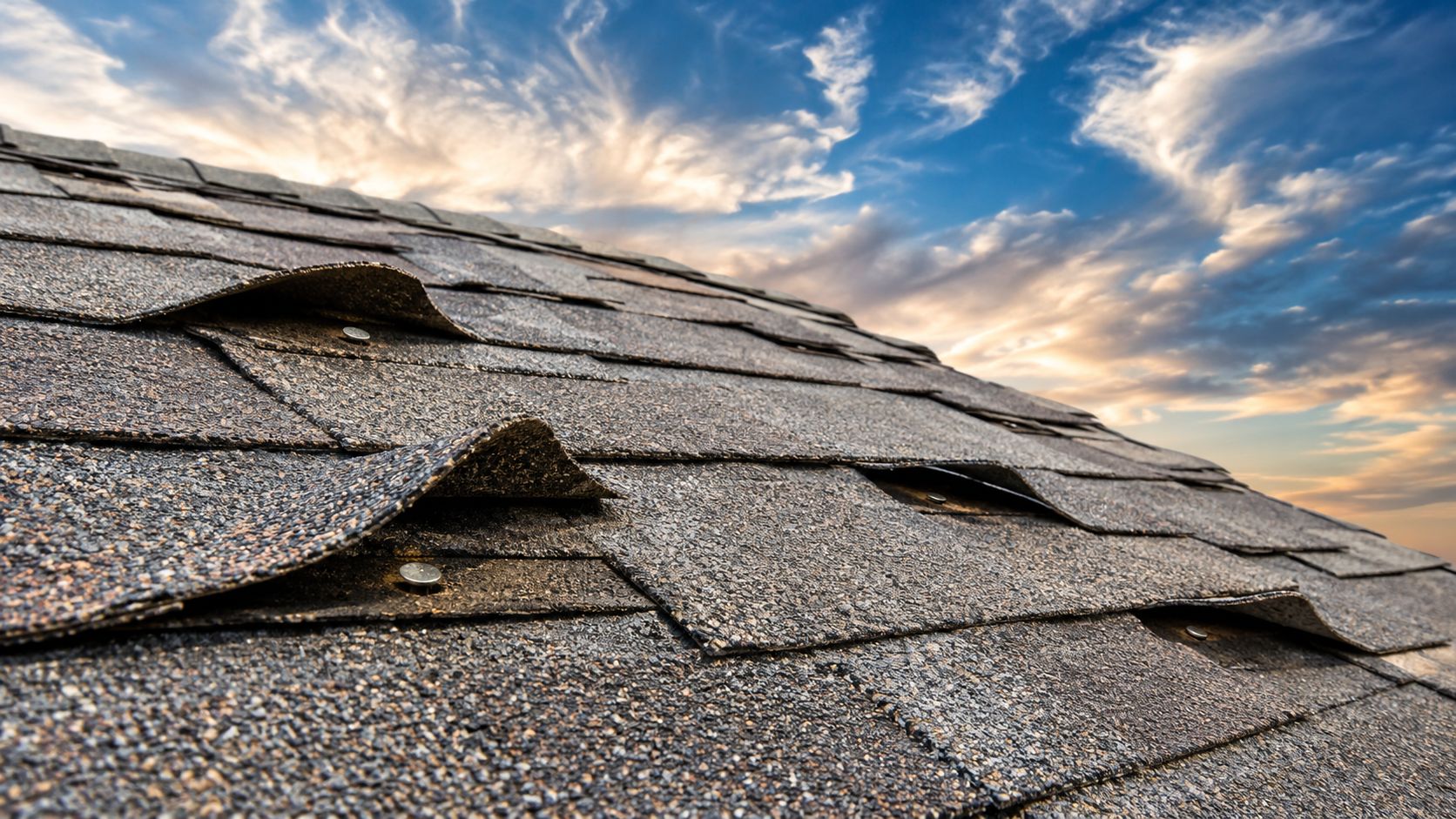
Once a shingle lifts, the storm doesn't need to remove it completely to create a claim issue. A lifted or creased shingle may still look attached from the driveway while its water-shedding function has been compromised. Wind-driven rain can travel beneath the displaced covering and reach the underlayment or roof deck. Moisture may then appear inside the attic or living space later, after the storm has passed.
What an adjuster looks for
A missing shingle is obvious, but it isn't the only useful evidence. A professional inspection should look for:
- Lifted or creased tabs: Creases can show that wind folded the shingle and weakened its bond.
- Exposed fasteners: Raised or uncovered nails can indicate movement or failed installation points.
- Failed hip and ridge caps: These areas face concentrated wind exposure and can allow water into the roof assembly.
- Damaged edge flashing: Loose or bent metal can connect wind impact to later water entry.
- Interior moisture: Attic staining, wet insulation, or ceiling damage may support a path from the roof into the home.
FEMA identifies improper installation and poor shingle-seal conditions as frequent causes of asphalt-shingle damage during high-wind events. Its guidance recommends shingles rated Class F under ASTM D3161 or Class H under ASTM D7158, with starter strips installed according to the manufacturer's specifications (FEMA windstorm resilience guidance).
Practical rule: Don't climb onto a wet or damaged roof to create evidence. Ground photos, attic observations, and a qualified inspection are safer and more useful than a risky ladder inspection.
Sudden storm loss versus aging
Insurers generally look for a connection between a sudden, accidental event and the physical condition they find. Brittle shingles, long-term granule loss, old repairs, algae, and deferred maintenance can give an adjuster grounds to argue that deterioration, not wind, caused the failure.
That doesn't mean an older roof can't have covered wind damage. It means the file needs clear evidence separating new storm impact from pre-existing wear. For homeowners comparing how wind-driven rain is treated in another insurance market, the discussion of wind-driven rain coverage in Florida offers useful context, although your Columbus policy remains the controlling document.
Decoding Deductibles and Coverage Limits
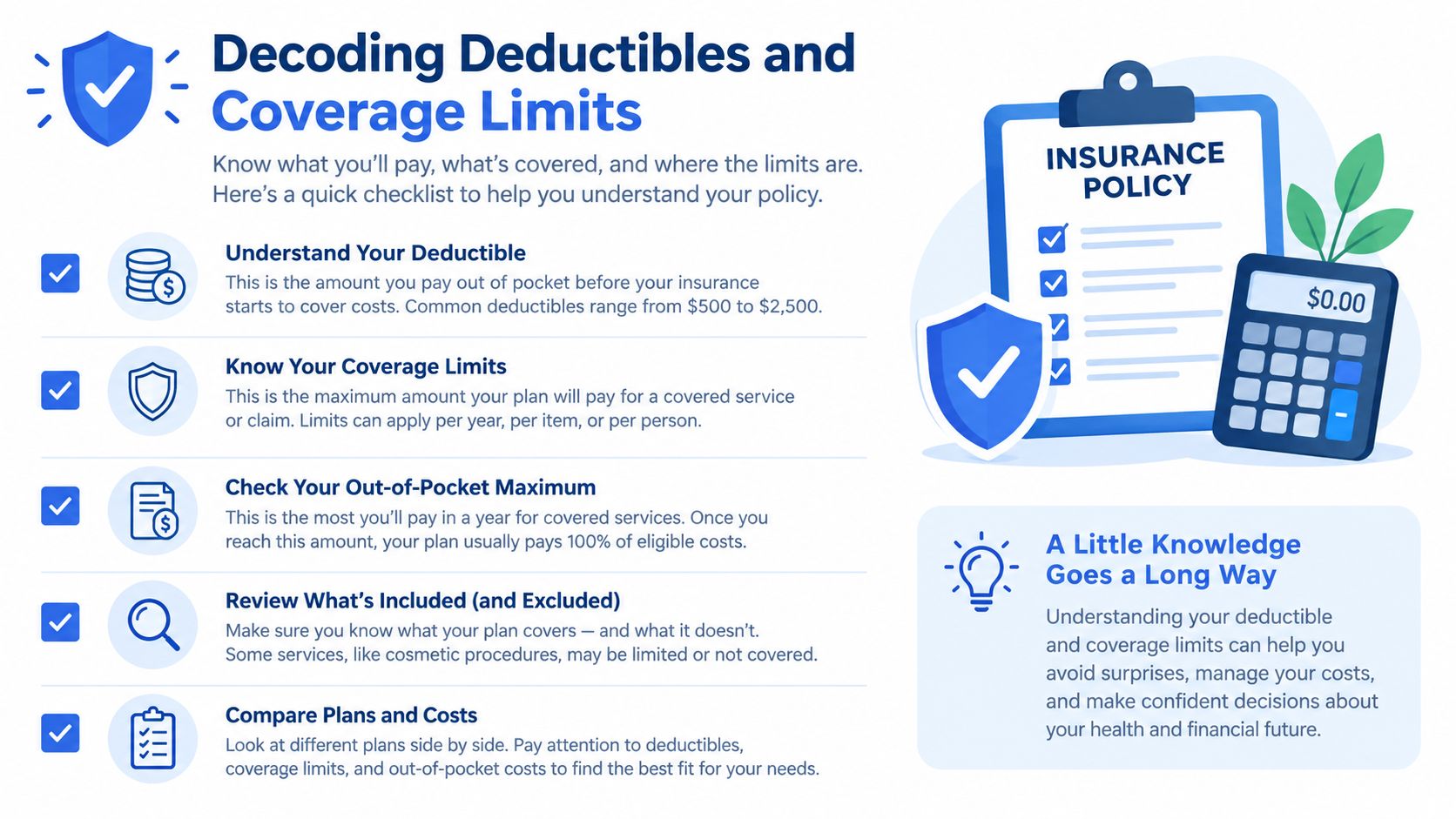
Your declarations page can change the economics of a roof claim before anyone measures a shingle. Start there, then confirm the wording in the policy and endorsements. A deductible is the amount you pay before the insurer contributes to a covered loss, and it applies to each claim rather than operating as a one-time annual threshold (NAIC deductible guidance).
Read the declarations page first
Look for the dwelling coverage limit, ordinary property deductible, and any separate wording for wind, hail, or named storms. A flat deductible is stated as a dollar amount. A percentage deductible is calculated against the covered dwelling amount, not against the contractor's roof estimate alone.
That distinction creates a common Columbus surprise. A homeowner may expect the standard deductible to apply, only to discover that a wind or hail endorsement uses a percentage of dwelling coverage. The physical damage can be covered while the insurer's payment remains limited by a much larger out-of-pocket obligation.
Use this checklist before authorizing work:
- Identify the peril: Confirm that windstorm or hail is listed as covered and check for exclusions.
- Locate the applicable deductible: Determine whether the claim uses the standard deductible or a separate wind or hail deductible.
- Check the dwelling limit: Compare the insured amount with the home's realistic rebuild cost.
- Review valuation language: Find out whether the roof receives replacement-cost or actual-cash-value treatment.
- Look for underinsurance provisions: NAIC consumer guidance recommends insuring the home for at least 80% of its replacement value (NAIC homeowners insurance guidance).
Coverage limits aren't market value
Replacement value means the cost to repair or rebuild with similar materials. Market value includes land and local real-estate conditions, so it isn't a reliable substitute for rebuilding cost. If the dwelling limit is inadequate, a policy may apply a coinsurance or underinsurance penalty depending on its language.
Don't authorize a full replacement based only on a contractor's estimate. First compare the estimate with the applicable deductible, dwelling limit, roof endorsement, and any ordinance-or-law provision. Those figures tell you whether the claim is financially viable and whether code-related work may require separate coverage.
Replacement Cost Versus Actual Cash Value
A declarations page that says replacement cost does not guarantee an immediate full payment for roof damage. A policy may provide replacement-cost coverage for the dwelling while applying actual-cash-value treatment specifically to wind or hail damage to the roof. ACV deducts depreciation based on age and condition, which can leave an older roof with a significant initial payment gap (NAIC property insurance definitions).
The two valuations side by side
| Valuation method | What the insurer generally calculates | What the homeowner needs to watch |
|---|---|---|
| Replacement Cost Value | The cost to replace covered damaged materials with similar materials and quality, subject to policy terms | Deductible, scope limits, exclusions, and requirements to complete the work |
| Actual Cash Value | Replacement cost minus depreciation based on age and condition | A lower initial payment and possible responsibility for the depreciated amount |
| Roof-specific endorsement | A special provision that may apply ACV to roof damage even when the dwelling has replacement-cost coverage | Whether depreciation is recoverable or permanently withheld |
The policy's general dwelling valuation may not control every roof component. Read the endorsements and look for terms such as “roof surface,” “wind or hail,” “actual cash value,” “scheduled roof payment,” “recoverable depreciation,” and “nonrecoverable depreciation.”
Build the payment worksheet before signing
Place the insurer's replacement-cost estimate at the top of a worksheet. Subtract the deductible and any nonrecoverable depreciation, then list recoverable depreciation separately. Add code upgrades only when the policy includes ordinance-or-law coverage and the work qualifies. Keep maintenance, unrelated repairs, and optional improvements outside the covered-loss calculation.
The distinction affects the amount you must finance before reimbursement. A roof with recoverable depreciation may require completion documents and paid invoices before the insurer releases the withheld amount. A roof endorsement with nonrecoverable depreciation leaves that portion as a permanent out-of-pocket cost. Read the payment conditions before signing a contractor agreement.
For a closer explanation of actual cash value versus replacement cost for a roof, compare the policy language with the estimate line by line. If depreciation is recoverable, ask the insurer for the deadline, required invoices, and completion documents in writing. If it is nonrecoverable, include that amount in your funding decision rather than assuming a second payment will arrive after installation.
Documenting the Damage for a Successful Claim
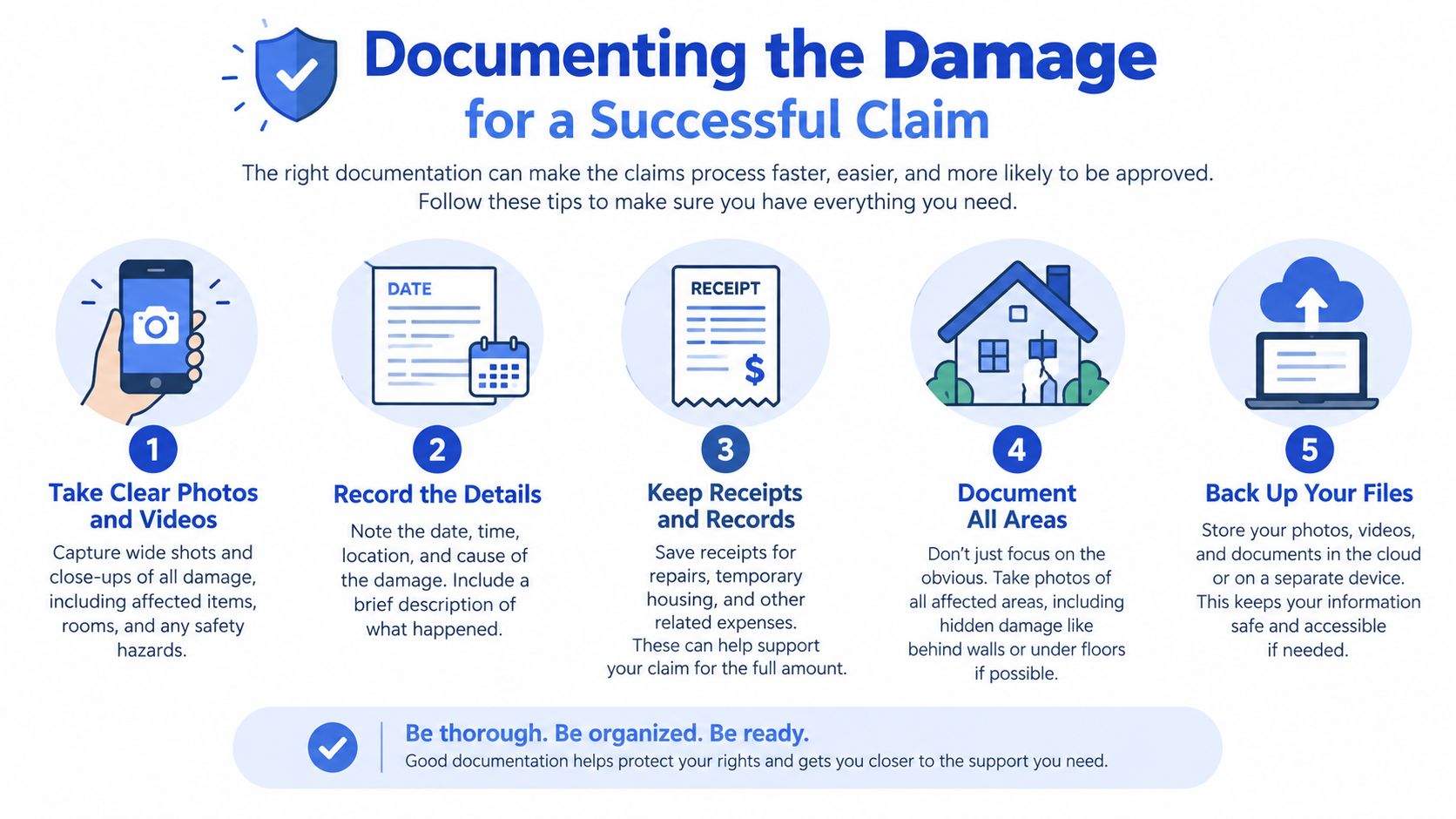
A strong claim file tells one consistent story. The storm happened, specific components changed, water followed a plausible path, and the requested work matches the covered damage. A few driveway photos rarely establish all of that.
IBHS reports that approximately 70%–90% of catastrophic homeowners-insurance claims include roof damage, because roof-cover failure can expose the structure to wind-driven rain and create secondary interior losses (NAIC homeowners insurance topics). That makes documentation of the roof and the surrounding exterior especially important.
Create a dated evidence file
Start with the storm date and a folder for photographs, inspection notes, estimates, correspondence, and receipts. Use wide photos to identify the roof slope and close photos to show the defect. A close-up without location context can be difficult for an adjuster to place on the roof.
A useful inspection record includes:
- Roof surfaces: Photograph missing, lifted, creased, torn, or mechanically damaged shingles.
- Fasteners and caps: Capture exposed fasteners, disturbed nail lines, failed hip caps, and ridge-cap movement.
- Edges and penetrations: Photograph damaged drip edges, flashing, vents, chimney areas, skylights, and valleys.
- Exterior systems: Record dents or displacement affecting gutters, downspouts, siding, fascia, soffits, windows, and screens.
- Interior areas: Photograph ceiling stains, wet insulation, attic decking, drywall damage, and any visible daylight.
Don't clean up or discard damaged materials before the adjuster has had a reasonable opportunity to inspect them. If a temporary repair requires removing material, photograph it first and keep representative pieces when safe and practical.
Separate storm impact from maintenance
Your contractor's report should distinguish fresh storm indicators from age-related brittleness, moss, prior patching, manufacturing defects, and deferred maintenance. That distinction protects the credibility of the file. A report that labels every roof condition “storm damage” can look less reliable than a report that identifies both covered-looking damage and unrelated conditions.
The same principle applies to interior leaks. Note the room, approximate location, date observed, weather conditions, and whether the leak continued. A roof opening, stained decking, and ceiling damage should be mapped together rather than listed as unrelated problems.
Mitigate without changing the loss
You have a practical duty to prevent additional damage, but mitigation isn't permission to perform a full replacement before the insurer investigates. Use a qualified professional for tarping, temporary sealing, or emergency leak control. Save invoices and photograph the temporary work.
Evidence is strongest when it preserves the original condition, identifies the location, and explains the causal path.
A roof inspection for an insurance claim can help organize those details into a usable report. The inspection shouldn't promise coverage. It should document conditions accurately enough for the insurer, contractor, and homeowner to discuss the same roof.
Navigating Ohio Appearance Matching Rules
A partial repair isn't automatically the correct outcome, and a mismatched patch isn't automatically proof that the entire roof is covered. Ohio's appearance-matching rule requires replacement of enough material to produce a reasonably comparable appearance when a covered loss requires replacement and the original quality, color, or size can't be matched (Ohio appearance-matching coverage discussion).
The key phrase is “when a covered loss requires replacement.” The rule doesn't erase the need to prove that the affected area sustained direct physical damage or that repair is unsuitable. An insurer can still question whether the remaining roof is damaged, whether the shingle can be sourced, and whether a repair would produce a reasonably comparable result.
Why patch repairs become disputed
Shingles fade differently by slope and exposure. Manufacturers discontinue product lines, alter colors, and change dimensions. Even if a contractor finds a visually similar shingle, the repaired section may stand out because the existing roof has weathered.
That creates a technical argument, not just an aesthetic complaint. Ask the contractor to document the original shingle's manufacturer, product line, color, size, availability, and condition. Include photographs from multiple roof slopes and explain whether the proposed replacement would create an obvious difference from normal viewing locations.
Ask for the written basis
If the insurer approves only a slope or repair area, request the decision in writing. The response should identify:
- The covered damaged area: Which shingles, caps, flashings, or slopes does the insurer accept?
- The repair assumption: Why does the insurer believe the damaged area is repairable?
- The matching analysis: What comparable material has been located?
- The policy language: Which provision controls the repair, replacement, and appearance decision?
- The unresolved items: Are discontinued materials, code requirements, or related exterior damage excluded or still under review?
A contractor's supplement should answer those same questions with evidence, not just request a full replacement because it is easier to install. If the original quality, color, or size can't be reasonably matched, Ohio's rule may support replacing enough material to achieve a comparable appearance. The insurer may still dispute the scope, so keep the discussion tied to the covered loss and documented repairability.
Filing the Claim and Working with Your Contractor
A wind claim can lose value before an adjuster arrives. The common traps are a separate wind deductible, depreciation the policy will not reimburse, and a repair scope that omits code or matching requirements. Review the declarations page, inspect the property, and record what changed after the storm before reporting the loss.
Wind and hail represented 42.5% of homeowners-insurance claims in 2023. That high share means regional storms can produce many competing claims at once. File within days, not weeks, and prepare your photographs, storm date, policy details, and contractor findings before the adjuster calls.
Use one coordinated inspection
Tell the insurer what you observed, identify the storm date if known, and ask which documents it requires. Arrange for your roofing contractor to attend the adjuster's inspection when possible. The contractor can identify lifted tabs, creases, exposed fasteners, damaged ridge caps, flashing problems, and related exterior damage that a general inspection may overlook.
The contractor does not decide coverage. The adjuster applies the policy for the insurer, while the contractor explains the roof's construction, repairability, and cost. Keep those roles separate, and ask both parties to explain disagreements in writing.
A written record protects you when the estimate later changes. Photograph every slope, close-up damage, interior staining, temporary repairs, and undamaged areas that establish context. Save invoices and communication in one claim file.
Compare scopes, not just totals
Compare the insurer's estimate line by line with the contractor's scope. Check whether it includes:
- Roof components: Shingles, starter strips, ridge caps, underlayment, ice and water protection, flashing, and ventilation.
- Access and removal: Tear-off, hauling, disposal, and debris removal.
- Related damage: Gutters, siding, windows, screens, skylights, and interior repairs.
- Code requirements: Required upgrades supported by local rules and applicable ordinance-or-law coverage.
- Temporary work: Tarping, emergency sealing, and water mitigation already performed.
Separate storm damage from maintenance and elective improvements. If covered work is missing, submit a written supplement with photographs, measurements, product information, and the reason each item is required. This approach is more persuasive than requesting a full replacement solely because it is easier to install.
During storm surges, contractors also need a reliable way to capture urgent calls and homeowner updates. An AI receptionist for roofers can route inquiries, but it cannot replace a documented inspection or policy review.
Use this guide to working with a roof damage insurance adjuster to prepare questions and compare the inspection with the proposed scope. Do not sign a contract assuming insurance will pay an unapproved amount. Confirm your responsibility for the deductible, excluded work, supplements, depreciation, and any balance the insurer does not pay.
Frequently Asked Questions About Wind Claims
Will a wind claim automatically raise my premium?
No automatic result should be assumed. Premium decisions depend on the insurer, policy, claim history, underwriting practices, and broader loss conditions. The practical question is whether the damage appears covered and exceeds the applicable deductible after you account for valuation and exclusions. Ask your agent how a claim may be treated before deciding whether a marginal loss is worth reporting, but don't delay a serious leak or conceal damage.
How long do I have to file?
The deadline comes from your policy and applicable law, so check the notice provision rather than relying on a general rule. Report promptly anyway. Early notice helps preserve evidence, supports temporary mitigation, and reduces arguments that later damage resulted from neglect rather than the original storm.
What if the insurer denies the claim?
Request the denial and its policy basis in writing. Then compare the denial reason with the inspection photographs, contractor report, storm date, and policy language. If the insurer says the roof is old, ask which conditions show age-related deterioration and which observations rule out sudden wind damage.
You can respond with additional documentation, request a reinspection, ask for a supervisor or coverage review, or consult a qualified insurance professional or attorney. Don't authorize a full replacement solely to create a dispute record, and don't destroy the damaged materials before the disagreement is evaluated.
Does wind-driven rain damage inside the home count?
It may, but the policy usually requires a covered opening or covered roof damage that allowed the water to enter. Photograph the exterior defect, attic path, insulation, ceiling, drywall, and contents. A contractor should explain how the water traveled, while the insurer determines whether the policy covers the resulting interior loss.
What happens if the roof is old?
Age alone doesn't answer the claim. The insurer may distinguish sudden wind damage from deterioration and may value the roof under ACV even when other dwelling coverage uses replacement cost. Provide prior inspection records, repair invoices, installation information, and dated storm photos if available. The clearer the roof's pre-storm condition, the easier it is to separate new damage from ordinary aging.
Homeowners policies generally cover only listed perils and only up to applicable limits. The National Oceanic and Atmospheric Administration's severe-storm disaster records show the scale of the national severe-weather loss environment, but a disaster count doesn't decide an individual Columbus claim. Your contract, the physical evidence, and the documented scope do.
HIBCO ROOF LLC provides Columbus-area homeowners with storm and hail inspections, roof damage documentation, repair and replacement estimates, and support during meetings with insurance adjusters. Visit HIBCO ROOF LLC to request a free written estimate and discuss your roof's condition before authorizing repairs.