
If a hail storm yesterday left you wondering about your roof, the right first moves are simple: walk the property at ground level, take clear photos, and get a professional inspection on the calendar. Stay off the roof itself, and hold off on calling your insurer until you have something concrete to describe.
Table of Contents
- Start With a Safe Hail Response
- The Three Stages of Shingle Damage
- Why Two Houses on the Same Street Fare Differently
- The Components Homeowners Forget
- How Big Does Hail Need to Be
- Why the Damage Stays Hidden
- What a Storm Report Actually Records
- Why a Zero Count Doesn't Clear Your Roof
- Comparing a Storm Report with an Inspection
- Physical Evidence Beats a Quiet Summary
- Walking the Property in Order
- Separating Hail Damage from Normal Wear
- When to Call Right Away
- Building a Record That Holds Up Later
- What to Keep and What Not to Cover Up
- Where Your Photos Fit With a Contractor
- What a Storm Assessment Covers
- Choosing Repair or Full Replacement
- Exterior Pieces the Same Storm Can Hit
- How Soon to Schedule an Inspection
- When to Contact Your Insurance Company
- How Long Hail Damage Can Stay Hidden
- Whether to Check More Than the Roof
Start With a Safe Hail Response
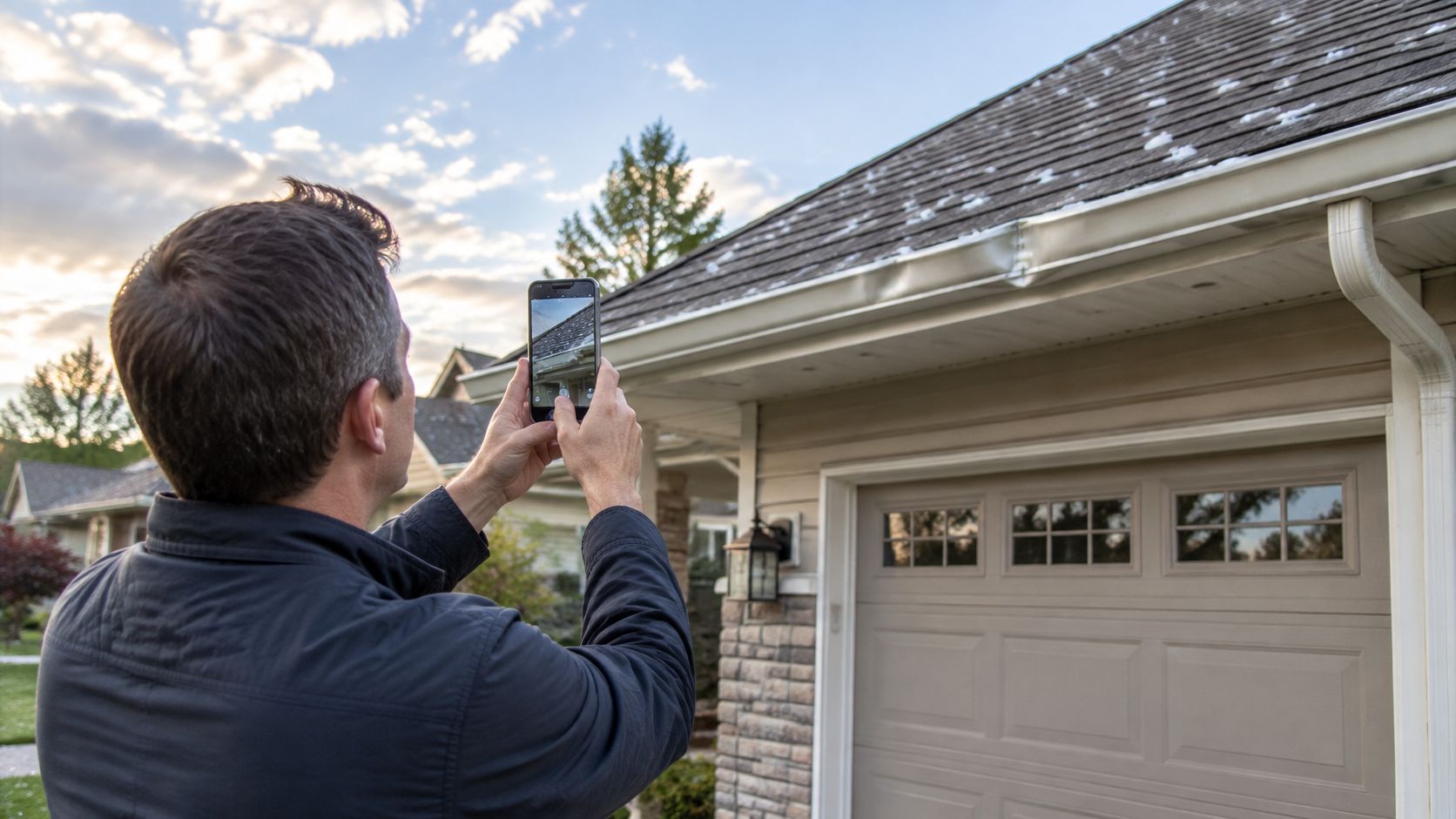
Start in the driveway and work your way around the house. Scan the roof line, gutters, downspouts, siding, windows, and skylights. You're looking for dents, cracked or missing shingles, shifted materials, loose granules, and any sign of water getting inside.
Never climb onto a hail-damaged roof, especially while surfaces may be wet, icy, or loose. Photograph from the ground and let a trained professional access the roof surface.
| Action | Why it matters | When to do it |
|---|---|---|
| Ground-level walk-around | Finds impact and active intrusion | Now |
| Clear, dated photographs | Creates a reliable record of conditions | Now |
| Protect the home | Limits further water damage | If water is entering |
| Schedule professional inspection | Confirms roof and exterior condition | This week |
Think of that table as your game plan for the days ahead. It also maps out where the rest of this guide goes: how hail actually damages materials, how to document what's visible, how to get an inspection scheduled, and how to decide between repair and replacement.
Some things can't wait. An active leak, missing shingles, or a loose piece dangling over an edge all count as urgent. Move belongings away from the water, set a bucket under a drip if it's safe to do so, and get an inspector out quickly. Don't wait for the next storm to show you what this one did.
And here's the part that trips people up: a clean look from the driveway doesn't mean a clean bill of health. Hail bruises often hide where you can't see them, and the only real evidence might be dented soft metal, granule loss, or subtle warning signs inside the house. Take your photos, jot down the date and time, and book the inspection anyway. You're building a dated record, not guessing at causes.
For a wider look at protecting your property and getting recovery underway, follow these steps for how to recover after storm damage. Once you can describe the damage, say when it showed up, and hand over an inspection report, that's the right time to contact your insurer. Keep repair estimates filed separately from your evidence — it makes the cause and scope much easier for everyone to review.
Think of a shingle like a bruised apple. The skin still looks fine from across the room, but the flesh underneath has been crushed, and that damage keeps spreading quietly over time. That's pretty much what hail does to an asphalt roof.
The Three Stages of Shingle Damage
Hail rarely punches clean through a shingle. The damage usually builds in stages, a bit like wear on a pair of work boots:
- Granule loss. The ceramic granules on the surface get knocked loose, leaving the asphalt coating open to sun and rain.
- Exposed mat. Once those granules are gone, the fiberglass mat underneath is out in the open, and UV rays start breaking it down.
- Fractured reinforcement. The inner reinforcement can crack even while the surface still looks normal. This is why a quick glance from the driveway misses so much.
Each stage opens a path for water. It seeps through the weakened shingle, reaches the roof deck, and often shows up as a ceiling stain or a damp smell in the attic weeks later.
Why Two Houses on the Same Street Fare Differently
Two neighbors can get the same storm and end up with very different roofs. Impact angle, wind direction, roof age, shingle quality, and repeated strikes all play a role. A steep roof facing away from the wind might come through almost untouched, while the house next door with fifteen-year-old shingles takes the full beating.
The infographic below shows how a single hail impact can cause damage that stays hidden beneath the surface, all the way from granule loss to the eventual leak into your attic.
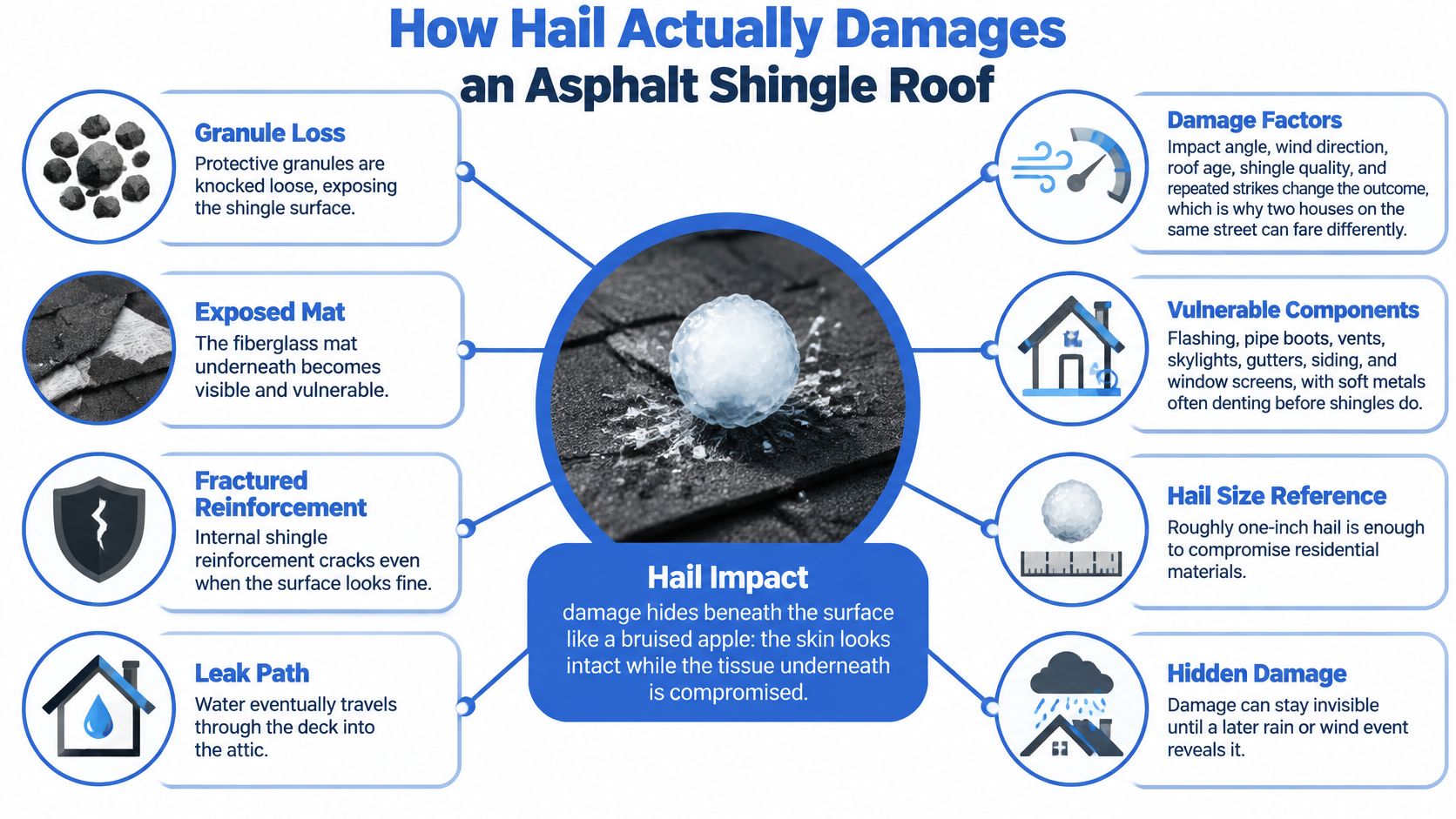
That's the key takeaway from the diagram. The surface you can see is only the first layer. The real risk moves downward, and how serious it gets depends on the details of each house.
The Components Homeowners Forget
Shingles aren't the only thing hail goes after. It also batters flashing, pipe boots, vents, skylights, gutters, siding, and window screens.
Soft metals often show damage before shingles do. A dented downspout or bent vent cap can be your earliest and most reliable clue that the storm had real force behind it.
That's why a solid inspection looks at the whole exterior, not just the roof surface. If you want a broader approach to keeping everything in shape, it's worth reading up on how to schedule twice-yearly commercial roof inspections.
How Big Does Hail Need to Be
Size matters a lot. The National Weather Service sets its severe hail threshold at one inch, the point where damage to aircraft and property becomes likely. A March 2026 hailstorm in Atlanta offers a useful example: even hail smaller than that threshold grounded flights and prompted inspections of dozens of aircraft.
That Atlanta case describes a different region, though, so it doesn't tell us much about conditions in central Ohio. What it does give us is a practical benchmark. Hail around one inch is enough to compromise residential roofing materials.
Why the Damage Stays Hidden
Here's the frustrating part. A bruised shingle usually doesn't leak right away. It just sits there.
The fracture stays dormant until a later rain or windstorm pushes water through the weakened spot. By the time a stain appears on the ceiling, the hailstorm that caused it may feel like ancient history, and tying the two together gets much harder. That's the strongest argument for inspecting now, rather than waiting for proof to drip through the ceiling.
Searching for a hail storm yesterday report can feel like checking the forecast for your own street. The map might show a quiet afternoon, but your roof may tell a different story. The map is only part of the picture.
What a Storm Report Actually Records
Storm reports come together from spotters, radar estimates, and phone calls to the weather service. They capture what someone happened to see and took the time to report.
Think of it like a roll call. If nobody answers for your house, you get marked absent, even if you were sitting on the couch the whole time.
Take the March 2026 hailstorm over Atlanta's airport. The hail stayed below the one-inch severe threshold, and no reports showed up in the Storm Prediction Center's daily storm reports. Even so, it grounded flights and led to inspections of dozens of aircraft.
Why a Zero Count Doesn't Clear Your Roof
Hail often falls in a narrow strip. One block can get pounded while the next one stays dry. Reporting points are usually miles apart, so a small hail core can easily slip between them.
Some storms never get reported at all. If nobody calls in a local report, the official record just stays blank.
A "no reports" line means nobody documented hail at that spot. It does not mean your shingles came through unharmed.
Comparing a Storm Report with an Inspection
| Question | Storm report | On-site inspection |
|---|---|---|
| Did hail fall nearby? | Often yes, at a regional level | Confirms what hit your property |
| Was your roof damaged? | Not determined | Yes, with physical evidence |
| Are soft metals dented? | Not recorded | Visible on gutters and vents |
| Is water entering? | No | Traced to the source |
Physical Evidence Beats a Quiet Summary
The rule of thumb is pretty simple: what you find on your property matters more than a calm regional summary. A dented downspout at your house tells you more than a blank national map ever will.
Start documenting right away. Useful records include:
- Dated photos of dents, cracks, and granule loss
- A written note of when the storm hit and what you noticed
- Close-up shots of gutters, vents, and window screens
That record can make or break a claim later. A recent Texas hail case, for example, came down to whether the date of loss could be proven.
Hail is unpredictable from one property to the next. Two houses on the same street can ride out the same storm and end up with very different results. Use the storm report as a starting point, then let the evidence on your home answer the real question.
For a closer look at how hail size affects roofing materials, check out our guide on what size hail damages roofs.

The morning after a hailstorm, it's tempting to grab a ladder and climb up for a look. Resist that urge. Start on the ground, walk the house once in one direction, and photograph everything before you touch anything. Save the photos in a single dated folder and note which side of the house each one came from. That small habit saves a lot of time later, especially if an insurance adjuster needs to see the details.
Walking the Property in Order
Start at the street and look up at the roofline first, then work down to the gutters and downspout outlets. You're hunting for fresh circular dents, bent aluminum, and piles of dark granules washed into the grass. Those granules matter. They're often the first sign that the shingles have lost their protective surface.
Next, move on to the siding, window screens, and skylight frames. Cracked vinyl, torn mesh, and chipped paint around trim usually point to impact. Finish indoors by checking the ceilings and the attic hatch for fresh stains or pinpoints of daylight.
Take your photos from the ground whenever you can, and leave the roof surface to a professional. Wet shingles, loose granules, and damaged flashing make climbing dangerous.
Separating Hail Damage from Normal Wear
Ordinary aging looks different. It shows up as even wear across the whole roof, curled edges, and granules thinning out over broad areas. Hail is more selective. It tends to leave clusters of round bruises, dented soft metal, and damage concentrated on the side the storm hit. A roof can look fine from the street and still be bruised underneath. Even newer shingles can crack after a direct hit.
Use this table to sort what you find.
| Sign | Where to look | What it may indicate | Urgency |
|---|---|---|---|
| Circular marks | Roof edges, vents, gutters | Fresh hail impact | Same-week call |
| Granule piles | Downspout outlets | Loss of shingle surface | Same-week call |
| Exposed fiberglass mat | Shingle edges, valleys | Deep bruising, leak risk | Same-week call |
| Dented downspouts | Corners, elbows | Storm force reached the roof | Schedule inspection |
| Cracked siding | Walls facing the storm | Impact damage | Schedule inspection |
| Torn window screens | Screens, frames | Wind-driven hail | Note and inspect |
| Ceiling stains | Interior rooms | Water already getting in | Call now |
When to Call Right Away
Call quickly if you spot active leaks, missing shingles, an exposed mat, or dents clustered on soft metal. Those findings call for an inspection within the week, not a wait-and-see approach. A dry ceiling doesn't cancel out a dented downspout.
Property managers and landlords should repeat this walk for every unit and every elevation. One undamaged wall doesn't clear the whole building. If you want a closer look at what bruising actually looks like, check out our guide to hail damage to roof shingles pictures.

A hailstorm from yesterday can leave marks that rain, wind, and even a quick patch job start to blur. That's why your photos and notes should work like a timeline, not a pile of random snapshots. Someone may review that record weeks from now, and it needs to make sense without you there to explain it.
Building a Record That Holds Up Later
Start with wide shots of the whole side of the house, the street, and a nearby landmark so anyone can tell where the photo was taken. Then move in close. Photograph each dent, crack, pile of granules, and torn screen, and try to include something familiar, like a coin or your hand, so the size is clear.
Name your files the same way every time. A simple pattern works well: date, side of the house, then what the photo shows. Future you will be grateful.
Write a short note the same day while the details are fresh. Include the date and time of the storm, what you heard, and what you noticed from the ground.
A good file answers three questions without you in the room: where this is, what changed, and when you first noticed it.
What to Keep and What Not to Cover Up
If it's safe to do so, collect damaged pieces that have come loose, like a cracked shingle or a bent section of gutter. Bag them, label them, and set them somewhere they won't get swept into the yard waste.
Hold off on quick fixes that destroy the evidence before anyone has looked at the roof. A thick coat of sealant over a bruise, or replacing the entire gutter the next morning, can wipe out the marks an adjuster needs to see.
Protecting the inside of your home is a different matter, and you should do it. Move belongings, catch drips, and photograph the stain before you dry it out. That's protection, not a cover-up.
Where Your Photos Fit With a Contractor
Your photos show what you saw right after the storm. A contractor's written assessment adds the findings on the roof itself that you can't safely reach from the ground.
HIBCO Roofing helps document storm damage, meets with insurance adjusters, and walks homeowners through the claim process. Your photos sit alongside that written assessment. They don't replace it, and they don't guarantee any particular outcome on a claim.
Sellers and landlords need the same kind of dated record when an inspection, appraisal, or listing conversation comes up. A buyer or property manager will want to know what the storm did and what was checked.
For a closer look at how photos support that conversation, read our article on hail damage and the roof insurance claim.
Photos taken from the ground only tell part of the story. A professional storm assessment fills in the rest by checking the parts you can't safely reach after a hailstorm yesterday.
What a Storm Assessment Covers
An inspector starts on the shingle field, then keeps going. The same visit should take in flashing, pipe boots, skylights, gutters, and siding.
Age wears a roof down slowly and evenly. Storm damage looks different. It shows up in clusters, looks fresh, and lines up with the side of the house that took the hail. An experienced eye can tell those two patterns apart before anyone starts talking about a claim.
HIBCO ROOF LLC offers free roof inspections to homeowners across the Columbus area. The visit covers storm-damage assessment, documentation, repair options, and help with insurance claims.
The company is a licensed and insured Owens Corning Preferred Roofing Contractor. You get a free written estimate before any work is approved, so you can make the call with real numbers in front of you.
A good inspection separates what hail did from what normal wear already was. That distinction keeps the repair plan honest.
Choosing Repair or Full Replacement
Not every bruise calls for a new roof. Missing shingles, damaged flashing, failed pipe boots, and other storm damage can often be fixed when the rest of the system is still sound.
When the damage is widespread, the answer changes. If bruising covers large areas, the mats show through in many spots, or leaks keep coming back, a full system replacement is usually the smarter investment.
| Choice | Scope | Typical triggers | What you receive |
|---|---|---|---|
| Targeted repair | Fix the failed parts | Missing shingles, bad flashing, failed pipe boots, limited storm damage | A sealed repair and a written estimate |
| Full replacement | New roof system | Widespread bruising, repeated leaks, end-of-life shingles | A complete install, documented materials, and jobsite cleanup |
If your roof or exterior structure needs a professional look after storm damage, compare qualified local contractors before you commit to anything. And if a patio cover took the same hit, compare patio roofing costs before you decide.
Exterior Pieces the Same Storm Can Hit
Hail rarely stops at the shingles. Ask about seamless gutters, leaf guards, vinyl siding, windows, and skylights if they show dents, cracks, or leaks from the same storm.
Financing pre-qualification is worth asking about once the scope grows past a small repair. It doesn't lock you into anything. It simply shows which payment options are available before you authorize work.
Bring your dated photos to the visit. They sit alongside the written assessment and help an adjuster see what changed right after the storm. A clear scope, a written price, and a plan for related exterior damage give you a decision you can explain later.
A hailstorm yesterday raises a few questions that a walk-around and some photos can't fully answer. These four answers will point you to a next step without guessing at how your claim might turn out.
How Soon to Schedule an Inspection
Get a professional inspection on the calendar as soon as you can, even if your ceiling still looks dry. HIBCO ROOF LLC offers free roof inspections and storm damage assessments for Columbus-area homeowners, and the visit doesn't obligate you to authorize any work.
An active leak changes the timeline. Move belongings out of the way, set out buckets to catch drips, and photograph the stain before it spreads. Then ask for the earliest opening you can get. Please don't climb up on the roof to hunt for the entry point yourself.
When to Contact Your Insurance Company
Hold off on calling your insurer until a professional has assessed the roof. That way you can describe specific findings instead of a general worry. Your dated photos, storm notes, and written report give that call a solid starting point.
Have these items ready before you pick up the phone:
- The date and time of the storm
- What you saw or heard from the ground
- Photos of dents, granule piles, and interior stains
- The inspection notes, once they are complete
HIBCO Roofing helps document storm damage, meets with adjusters, and walks homeowners through the claim process. That support doesn't guarantee coverage or any specific payment amount.
How Long Hail Damage Can Stay Hidden
Bruised shingles can sit quietly for weeks, then fail when a later rain pushes water through a weak spot. There's no fixed waiting period before a stain shows up, so a dry week doesn't prove the roof is sound.
Until the inspection, check your ceilings after each rain, glance at the attic hatch for new dampness, and snap a photo if anything changes. Call sooner if water shows up indoors.
Hidden damage is a reason to inspect now, not a reason to wait for a ceiling stain.
Whether to Check More Than the Roof
Yes, and it's worth doing in the same visit. Gutters, siding, skylights, and windows should be looked at alongside the roof. Hail tends to mark soft metal and trim long before the damage is obvious on shingles.
HIBCO ROOF LLC can review seamless gutters, vinyl siding, windows, and skylight work alongside roof repair or replacement. Ask for one written estimate that lists every affected area, then decide what you want to authorize.
If yesterday's hail has you unsure, start with a free inspection from HIBCO ROOF LLC and get a clear written plan before any work begins.