

Water is dripping into the upstairs hallway. The storm passed overnight, but the worry didn't. By breakfast, most Columbus homeowners are asking the same question: How long is this roof replacement going to take?
That question sounds simple, but it usually mixes together two different timelines. One is the time a crew spends on your roof. The other is the full calendar from the first inspection call to the final walkthrough. Those are not the same thing, and that gap is where most confusion starts.
A roof project often feels a lot like dealing with a car after an accident. The repair itself may be quick. The estimate, paperwork, parts, scheduling, and approvals are what stretch the calendar. Roofing works the same way. Inspection, quote review, permit approval, material delivery, installation, cleanup, and closeout each have their own pace.
Table of Contents
- Introduction
- Understanding Roof Replacement Phases
- Variables That Affect Your Roof Replacement Timeline
- Sample Timelines for Common Scenarios
- Tips to Speed Up Your Roof Replacement Process
- Conclusion and HIBCO ROOF LLC Services
Introduction
If you're staring at a ceiling stain in Columbus after a spring storm, you probably don't care about roofing jargon. You want a clear answer, a realistic schedule, and some confidence that your home won't sit exposed longer than necessary.
The good news is that the physical roof replacement timeline is often much shorter than people expect. The less obvious part is everything around it. Contractors have to inspect the roof, prepare a scope, line up materials, pull permits when required, fit the project into the weather, and sometimes coordinate insurance documentation. That's why a homeowner can hear “your roof may be done in a day” and still wait weeks before the crew arrives.
Practical rule: Judge a roof project in phases, not as one big block of time.
In Central Ohio, seasonality makes that distinction even more important. Spring and fall are busy. Summer gives crews longer daylight hours, but it also brings packed schedules. Winter may offer faster availability for planning if conditions cooperate.
The easiest way to reduce stress is to know which part of the process you're asking about. Are you asking when someone can inspect it, when paperwork will clear, when shingles will arrive, or how many days workers will be on the house? Once those are separated, the timeline gets much easier to understand.
Understanding Roof Replacement Phases
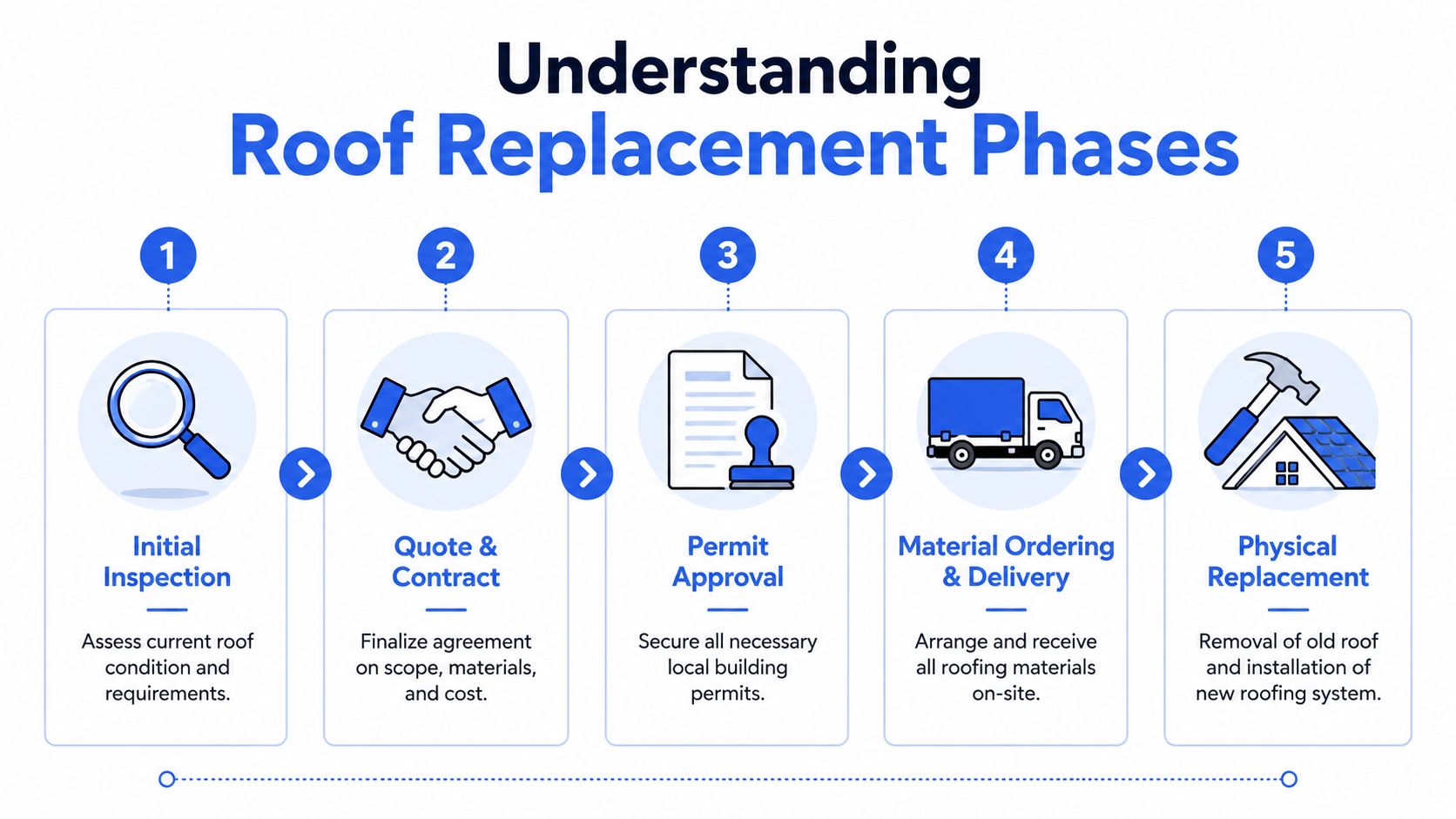
A roof replacement has two timelines running at once. One is the work your neighbors notice when shingles are coming off and crews are on the roof. The other is the quieter schedule that often controls the start date. Inspection notes, estimate review, permit processing, insurance communication, material delivery, and crew availability all happen before the first bundle is opened.
The calendar and the rooftop are different clocks
A roof project works a lot like a trip that has one travel day but several planning steps ahead of it. The day on the road is short. The packing, booking, and schedule coordination take longer than people expect. Roofing follows that same pattern.
For the roof itself, the installation phase is often brief. For standard asphalt shingle homes, the physical installation phase alone typically takes 1 to 3 days, and under ideal conditions a 2,000 sq ft gable roof can be completed in a single day by an experienced 4–6 person crew, according to A Better Roofing's timeline overview. If you want to understand what sits under those shingles and why prep matters, this guide to roof deck protection and what it does beneath the surface helps connect the installation steps to long-term performance.
The longer part is often the waiting between decisions.
That matters in Columbus because local timing can change the order of events. A homeowner dealing with a summer hail claim may spend days or weeks working through insurance documentation before scheduling. Another homeowner replacing an older roof in a slower winter period may get inspected quickly but still wait on a municipal approval or a material delivery slot. HIBCO ROOF LLC often sees the same question phrased two different ways: “How long does the roof take?” and “How long until my project is done?” Those are separate questions.
A simple way to think about each phase
The clearest way to read the timeline is phase by phase.
Inspection and diagnosis
The contractor checks shingles, flashing, ventilation, penetrations, and visible signs of moisture or deck trouble. This phase answers the first decision point. Is the roof a repair candidate, or has it reached replacement age?Scope, estimate, and contractor selection
Homeowners review pricing, materials, warranty terms, scheduling expectations, and what is included in cleanup and protection. This part can move quickly if storm damage is obvious, or take longer if you are comparing several proposals line by line.Insurance review, if a claim is involved
This is one of the least visible timeline drivers. Adjuster visits, supplement requests, approval questions, and payment timing can all affect when work is authorized. The roof may be ready to schedule before the paperwork is.Permit approval
Some projects require permits before installation begins. In Central Ohio, that step may be simple, but it still belongs on the calendar because local office volume and municipality rules can add time.Material ordering and delivery
Standard asphalt shingles are usually easier to line up than specialty products. If the selected color, accessory metals, or ventilation parts are not immediately available, the project date may shift even after the contract is signed.Physical replacement
This is the active jobsite portion: tear-off, deck inspection, underlayment, flashing, ventilation components, and the new roofing material. On the right house, with the right weather and no hidden deck damage, HIBCO ROOF LLC can complete some asphalt shingle replacements in one day.Cleanup and final walkthrough
Crews remove debris, sweep for nails, check grounds and landscaping, and review the finished roof with the homeowner. That final check closes the loop and gives you a chance to ask about ventilation, flashing details, and warranty paperwork.
A practical way to avoid confusion is to picture the project in two buckets. The first bucket is administrative time. The second is rooftop time. Homeowners usually prepare for the second bucket because it is noisy and visible. The first bucket is the one that often determines the ultimate completion date.
A roof may be installed in a day or two. The full project can still stretch across several calendar weeks once permits, insurance, scheduling, and weather are part of the picture.
Ask contractors these two questions separately:
- How many days will crews be actively working on my house?
- How much calendar time should I expect from inspection to final completion?
That small change in wording usually gets a much clearer answer.
Variables That Affect Your Roof Replacement Timeline
A Columbus homeowner can hear “your roof can be done in a day” and still wait weeks for the full project to wrap up. That sounds contradictory until you separate rooftop labor from everything that has to happen around it. The schedule changes based on the roof itself, the paperwork behind it, and the time of year you start.
What changes the install window
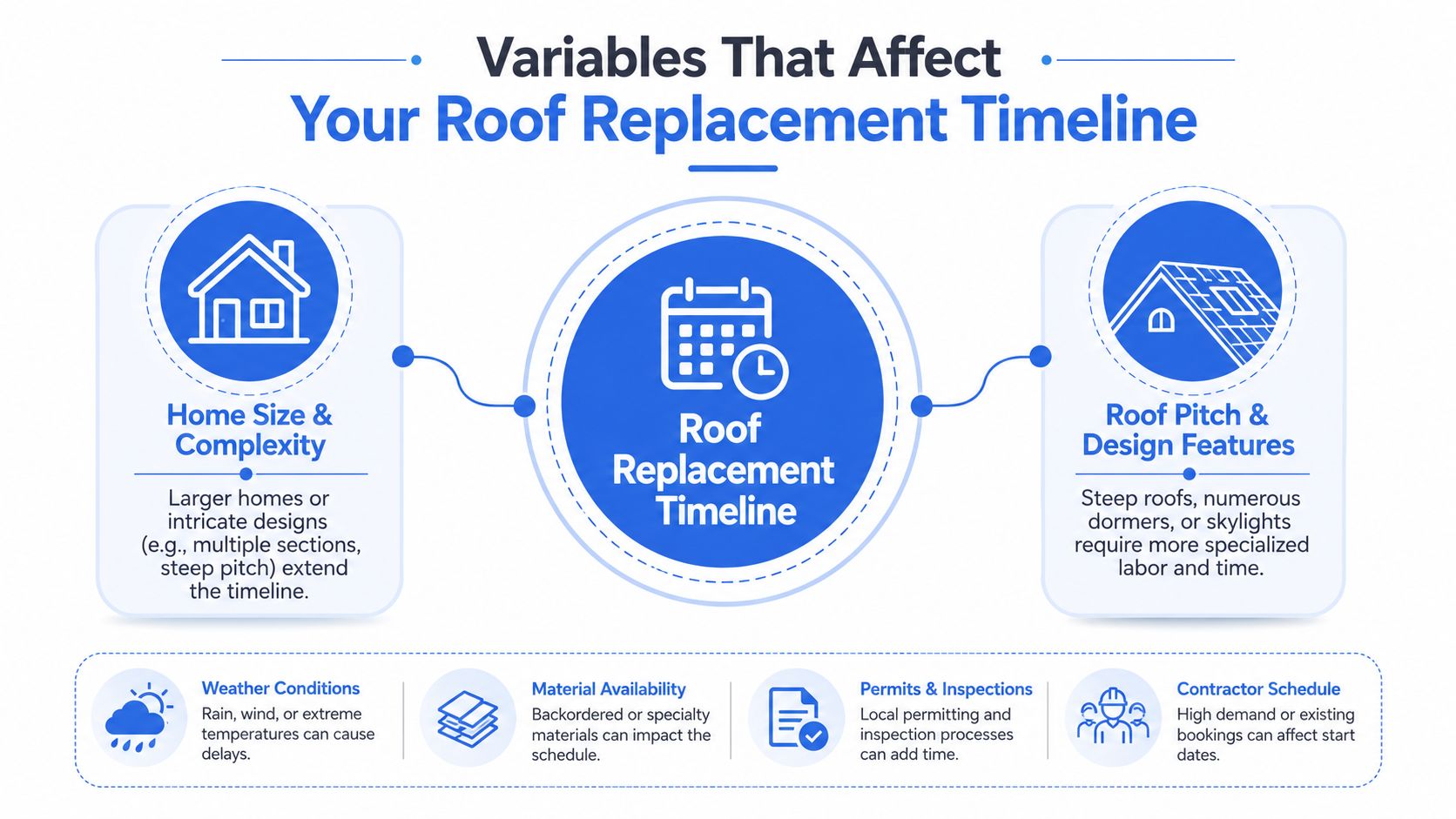
Start with the house. A simple ranch with a basic asphalt shingle roof usually moves faster than a steep home with dormers, skylights, chimneys, and multiple valleys. Each cut, transition, and safety setup adds time because crews have to move more carefully and detail more areas.
Material choice also changes the pace. Asphalt shingles are usually the fastest system to replace on a typical home. Qualis General Contractors' roofing duration guide reports that approximately 85–90% of asphalt shingle roof replacements are completed in one day, while tile and metal roofs often require longer install periods because layout, fastening, and trim details take more labor.
Then there is the surprise factor under the shingles. A roof can look straightforward from the yard and still slow down once tear-off begins. If the crew finds soft decking, rot near penetrations, or sagging sections, carpentry repairs have to happen before new materials go on. Homeowners comparing bids often focus on shingle color and total price, but repair allowances matter too. This guide to how much roof replacement costs and what shapes pricing helps explain why hidden wood repairs can affect both timeline and budget.
For some homes, HIBCO ROOF LLC can complete an asphalt shingle replacement in one day. That option usually fits the right conditions: accessible layout, standard materials, favorable weather, and no major deck repair after tear-off. A one-day installation is real, but it is not the same thing as a one-day project from first call to final signoff.
What stretches the calendar before work starts
The quieter delays often matter more than the noisy ones.
Permit timing is one example. The Illinois Roofing Institute's project timeline guide notes that permit approval can take 1–5 business days, material ordering and delivery often add 1–3 weeks, and crew scheduling can add 2–8 weeks depending on season. Columbus homeowners do not always see those steps, so they can feel like “nothing is happening” even while the job is advancing behind the scenes.
Insurance work adds another layer, especially after hail or wind events. A claim may require photos, a scope review, adjuster coordination, supplements, or approval of updated line items before materials are ordered and the install date is locked in. The roof is ready in principle, but the paperwork still has to catch up.
Central Ohio seasonality also reshapes the calendar. Spring storms and fall booking rushes fill schedules quickly, and those are the same periods when many homeowners want work done at once. AmStill Roofing's timeline discussion explains that peak-season scheduling alone can add 4–8 weeks of delay, while off-peak leads may shrink to 2–4 weeks. In practice, that means a homeowner who signs in late April may wait longer for an opening than one who signs during a quieter stretch of summer or winter.
Material availability can also shift the date after the contract is signed. Standard shingles usually move faster than specialty colors, uncommon accessory metals, or harder-to-source ventilation parts. The roof itself may be simple. The supply chain may not be.
A good way to read your own timeline is to ask which bucket is driving it. If your roof is architecturally simple but the schedule still looks long, the cause is usually administrative: permits, insurance approval, ordering, or seasonal backlog. If the paperwork is clean but the crew expects more onsite time, the cause is usually complexity on the house itself. That distinction helps homeowners ask better questions and set more realistic expectations.
Sample Timelines for Common Scenarios
A Columbus homeowner signs a contract on Monday and hopes to hear hammers by Friday. Sometimes that happens. Often, the calendar works more like a relay race. Inspection hands off to estimate review. Estimate review hands off to permit and ordering. If insurance is involved, paperwork can become the slowest runner on the track.
That is why sample timelines help. They show where time usually goes in real projects, especially in Central Ohio where permit timing, storm volume, and seasonal scheduling can change the pace more than the install itself.
These examples are models, not promises. Your roof may move faster or slower depending on how quickly the front-end steps clear.
Scenario one standard tear-off on a suburban gable roof
This is the roof many Columbus homeowners have. Asphalt shingles. Simple gable lines. Normal driveway access. No unusual product selections.
A realistic schedule often looks like this:
- Days 1 to 3: inspection, photos, estimate review
- Days 4 to 10: contractor selection, product and color choice, signed agreement
- Week 2 or 3: permit processing and material ordering
- Week 3 or 4: crew scheduling around weather
- Install day: tear-off and replacement, often finished quickly on a straightforward home
- Shortly after: final walkthrough or inspection, depending on local requirements
The main lesson is simple. The roof work on the house may be the shortest part of the whole experience. The waiting usually happens before the first shingle is removed.
Scenario two fast-track replacement with quick decisions
Some projects move with very little friction because the homeowner is ready, the roof is simple, and the product choices are standard.
Picture a ranch home in Dublin or Grove City with one shingle layer, no skylights, and easy access for delivery. The owner approves the estimate the same day, picks a common shingle color, and does not need insurance involvement. In that case, the schedule can compress because there are fewer pauses between each handoff.
A simple version often looks like this:
- Day 1: inspection and estimate
- Days 2 to 4: approval, color selection, paperwork
- Week 1 or 2: permit and ordering
- Week 2 or 3: installation
- Soon after: cleanup confirmation and closeout
Homeowners usually call this a "fast roof." What they are really seeing is a fast planning phase. The install crew still needs the same basic preparation. The difference is that no one leaves open decisions sitting on the table.
If you are still comparing bids, a guide on how to choose a roofing contractor without second-guessing the process can help you avoid delays that come from stalled contractor selection.
Scenario three insurance claim after storm damage
This timeline has more stops.
A wind or hail event hits Central Ohio. You notice missing shingles, lifted tabs, or a water stain on a bedroom ceiling. The inspection may happen quickly, but the next phase often depends on the insurance carrier's pace. Photos may need to be supplemented. The adjuster may approve part of the scope first and revisit accessories or code items later. Materials may wait until the approved scope is clear.
A common sequence looks like this:
- Days 1 to 5: inspection, temporary protection if needed, claim filing support
- Week 1 or 2: adjuster visit or remote review
- Week 2 to 4 and sometimes longer: scope discussion, supplements, approval of updated line items
- After approval: materials ordered and install date scheduled
- Install day or days: replacement once paperwork and funding are aligned
- Afterward: final invoicing tied to recoverable depreciation or claim closeout, if applicable
Insurance jobs often frustrate homeowners because the roof problem feels urgent while the calendar feels slow. The best comparison is a two-lane road merging into one. The roofing lane and the insurance lane can run side by side for a while, but the project cannot fully advance until both lanes line up.
Scenario four one-day replacement with HIBCO ROOF LLC
A one-day roof replacement is possible on the right house, under the right conditions, with the right planning.
For example, a standard asphalt shingle home in Columbus with straightforward roof lines, clear access, dry weather, and no major deck repair surprises may be a good candidate for a one-day install with HIBCO ROOF LLC. The key phrase is one-day install. It does not mean one-day from first phone call to completion.
A typical schedule might look like this:
- Initial days: inspection, estimate, homeowner approval
- Next step: permit and material coordination
- Before install: crew assignment, delivery timing, weather check, property prep
- Install day: tear-off, replacement, cleanup completed in one day when conditions fit
- After install: final review and any required closeout items
This option is popular because it reduces disruption. Cars are back in the driveway sooner. Noise is concentrated into one workday. The home is not left open overnight. But the front-end coordination has to be tight for that to work.
Side-by-side comparison
| Scenario | What usually controls the timeline | Installation pace | What homeowners should expect |
|---|---|---|---|
| Standard tear-off on a simple gable roof | Normal decision-making, permit timing, material delivery, crew scheduling | Usually efficient on a straightforward asphalt system | A balanced schedule with modest planning time before work begins |
| Fast-track replacement with quick decisions | Homeowner responsiveness and use of standard products | Often among the quickest installs once scheduled | Fewer pauses between estimate, approval, and production |
| Insurance claim after storm damage | Adjuster timing, scope approval, supplements, claim paperwork | Rooftop work may still move quickly after approval | More waiting off the roof than on it |
| One-day replacement candidate | Careful pre-planning, weather alignment, crew readiness, site access | Installation may be completed in one day | A short disruption window inside a larger planning calendar |
One outside benchmark lines up with what contractors see every day. Statewide Roofing Specialist's start-to-finish guide explains that a standard asphalt shingle roof on a typical single-family home can often be installed in a short on-site window, while the full project calendar stretches longer because permitting, ordering, and scheduling happen before the crew arrives.
The practical takeaway is to match your roof to the right timeline model. A simple replacement with quick decisions may move cleanly. A storm claim in peak season may spend more time in emails, approvals, and municipal queues than on the roof itself. In Central Ohio, that difference is often the whole story.
Tips to Speed Up Your Roof Replacement Process
A roof replacement usually slows down for the same reason a kitchen remodel slows down. The crew is ready, but one missing decision, one permit question, or one insurance reply puts the whole job on pause. In Columbus, that often matters more than the install day itself.
Decisions homeowners can make early
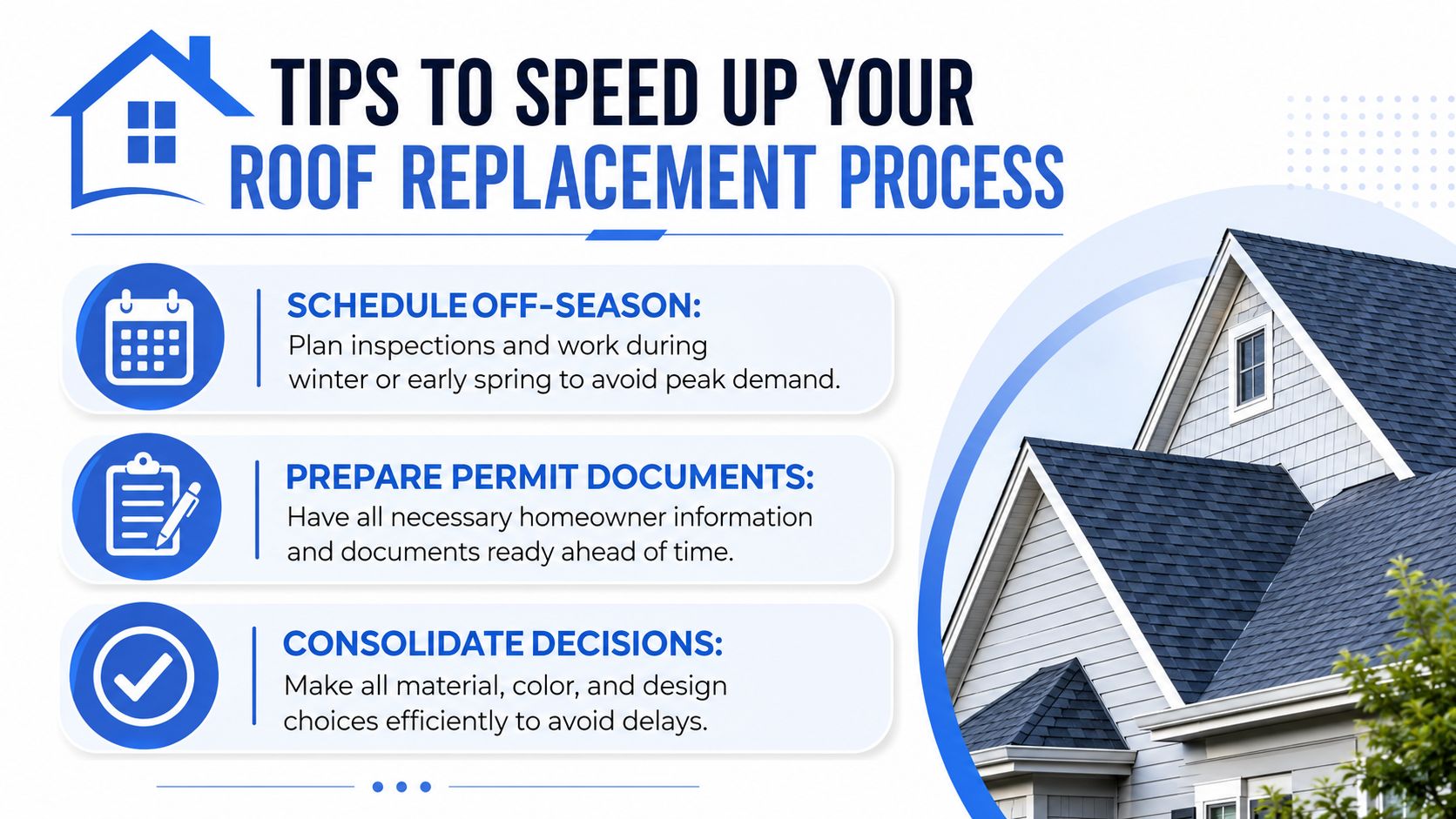
The fastest projects usually start weeks before shingles arrive. If your roof is aging but not actively leaking, schedule the inspection before spring and fall demand fills the calendar. That gives you time to compare proposals, ask permit questions, and choose materials while crews still have room in the schedule.
Speed also comes from fewer open loops. Keep these items together before you approve the job:
Property and claim information
Gather your address, insurance claim number if you have one, prior roof paperwork, and any HOA requirements. A contractor can move faster when those details are not being tracked down one at a time.Product selections
Choose the shingle color, shingle line, ventilation upgrades, skylight scope, and gutter work early. Ordering cannot start until the scope is settled.Contractor approval
Pick your roofer before the next weather break closes. If you are still comparing companies, this guide on how to choose a roofing contractor without second-guessing every step can help you decide without dragging the timeline out.
One Central Ohio example. A homeowner approves the estimate on Monday, sends claim paperwork Tuesday, confirms color Wednesday, and the permit request goes in right away. That file moves very differently from a job where the color, scope, and insurance documents stay unresolved for another ten days.
Site prep that helps the crew move fast
Once your date is on the calendar, treat the house like a jobsite that needs clear access.
Move vehicles out of the driveway the night before. Clear grills, patio furniture, toys, and potted plants away from the perimeter of the home. Unlock gates if the crew may need backyard access. If you store fragile items in the attic, cover them before tear-off starts because dust and vibration are common during replacement.
Small obstacles create real delays. A dumpster with no place to park, a locked gate, or a car blocking material delivery can push a one-day asphalt replacement into a longer stop-and-start job.
Keep the administrative side moving
This is the overlooked part of the schedule for many homeowners. The rooftop work may be short, but permits, insurance approvals, supplements, and material confirmation often dictate the overall timeline.
You can help by answering scope questions the same day, signing documents promptly, and reviewing insurance updates as they come in. If hidden deck damage is found during tear-off, quick approval for the repair keeps the crew working instead of waiting for a callback.
A good target is simple. Keep every handoff moving. When the contractor asks for a signature, color choice, claim document, or change approval, handle it as soon as you can.
Short delays usually come from waiting on answers, approvals, or access.
If your home is a fit for a one-day replacement, preparation matters even more. HIBCO ROOF LLC can complete many eligible asphalt shingle replacements in a single day, but that speed depends on planning ahead, having materials ready, and clearing up paperwork before install day.
Conclusion and HIBCO ROOF LLC Services
For most homeowners, the biggest mistake is expecting one timeline when there are really two. The roof work itself may be short. The full project calendar includes inspection, estimates, contractor selection, permits, materials, weather planning, installation, cleanup, and closeout.
That matters even more in Columbus and Central Ohio, where spring and fall demand can tighten schedules and storm claims can add paperwork before the first shingle comes off. If you understand that up front, the process feels far less mysterious. You can plan around the waiting periods instead of assuming every delay is a problem.
A well-managed roof replacement timeline comes down to three things: realistic expectations, prompt homeowner decisions, and a contractor who communicates clearly from first inspection through final walkthrough. If you're dealing with an active leak, age-related shingle failure, or storm damage, don't wait for the stain on the ceiling to tell you the schedule is urgent.
If you want a local team to inspect the roof, explain the timeline in plain language, and help with insurance documentation when needed, HIBCO ROOF LLC serves Columbus and Central Ohio with free inspections, written estimates, and full replacement support. The company also handles related exterior work such as gutters, siding, windows, and skylights, and many eligible asphalt shingle replacements can be completed in a single day.