Most homeowners spend between $9,000 and $15,000 for a full asphalt shingle roof replacement in 2026, and labor accounts for roughly 60% of the bill. If your roof is simple, the price can stay closer to the low end, but a steeper roof, extra tear-off work, or decking repairs can push the same job into five figures fast.
You're probably staring at a few bids right now and wondering why they don't match. That confusion is normal, and it usually means the contractors are pricing different scopes, not necessarily making mistakes.
Table of Contents
- Why Roof Replacement Bids Vary So Wildly
- Breaking Down Asphalt Shingle Roof Replacement Cost by Component
- The Cost Drivers That Push Your Estimate Higher
- Sample Project Estimates by Home Size and Shingle Grade
- Repair Versus Full Replacement Decision Framework
- How to Evaluate a Written Roofing Estimate
- Insurance Claims, Financing, and Long-Term Value
Why Roof Replacement Bids Vary So Wildly
One homeowner gets a bid for $9,000. Another gets $18,000 for what looks like the same house. Both numbers can be legitimate, and both can be wrong if the contractor left out scope items.
That's why national averages only help a little. A national benchmark for a 2,000-square-foot home can land anywhere from $6,885 to $23,993 depending on shingle grade and project complexity, with installed pricing of $3.44 to $12 per square foot from This Old House's roofing cost guide. A separate 2026 roundup narrows the market to roughly $9,000 to $15,000, with the most common homeowner spend near $10,500 and labor making up about 60% of the total bill. Those numbers aren't contradictions, they're proof that the key pricing driver is the scope under the shingles, not the shingles alone.
The bid is priced like a job, not a product
A roof quote is really a package of labor, setup, tear-off, disposal, flashing, underlayment, and compliance. If one contractor includes decking repairs, upgraded ventilation, and permit handling while another prices only a basic tear-off and re-cover style job, the bids won't line up.
That's also why a roof estimate for the same house can swing hard between markets. One pricing guide places installed asphalt shingle replacement around $3.50 to $6.00 per square foot in major U.S. markets, with local labor conditions creating a spread of roughly 1.94x for the same baseline roof. If you want a useful comparison point for other exterior work, new window investment details show the same pattern, the quote matters more when you know what's inside it.
Practical rule: If a bid is much lower than the others, assume something is missing until the contractor proves otherwise.
Why the same roof can price two different ways
Roof pitch changes labor time. Tear-off complexity changes dump fees. Decking condition changes the job again if the sheathing is soft or damaged. Permit requirements and inspection rules can also move the number because they add time, paperwork, and coordination.
That's why homeowners should stop asking, “What does a roof cost?” and start asking, “What's included in this bid?” Once you think that way, the numbers make sense. A contractor who writes a clean scope is usually the one worth listening to, even if the price isn't the lowest.
Breaking Down Asphalt Shingle Roof Replacement Cost by Component
A roof price should be read like a stack of layers, not one mystery number. The shingles matter, but they're only one piece of the bill.
HomeGuide breaks installed asphalt shingle pricing into $1 to $2 per square foot for materials and $2 to $3 per square foot for labor, with total installed cost at $3 to $5 per square foot and an average total project cost of $5,700 to $12,000 for an 1,800 to 2,500 square foot roof. Another industry breakdown puts shingles and materials at only 25% to 35% of total cost, which is why cheap shingles don't automatically create a cheap roof. The rest is labor, disposal, access, setup, and the overhead of doing the job correctly.
The parts that show up on a real estimate
The line items usually fall into a few buckets. Materials cover the shingles, starter strips, ridge cap, underlayment, flashing, vents, nails, and sealants. Labor covers tear-off, cleanup, installation, detailing around penetrations, and the crew time needed to finish cleanly.
Permits and inspections can also be its own line item. One cost breakdown lists permits and inspection at $400 to $2,640, while labor alone can run $4,400 to $15,400 depending on complexity and jurisdiction. That's a key reason a low material quote doesn't tell you much. A roof is a labor-heavy system, not a commodity box on a pallet.
Asphalt shingle tiers and installed pricing
| Shingle Type | Material Cost per Sq Ft | Labor Cost per Sq Ft | Total Installed per Sq Ft |
|---|---|---|---|
| Three-tab shingles | $3.50 to $5.00 installed price range from Modernize, material and labor bundled | Included in installed pricing | $3.50 to $5.00 |
| Architectural asphalt shingles | Broad market installed guides place them around $6 to $12 | Included in installed pricing | $6 to $12 |
| Luxury or specialty shingles | Higher than standard architectural grades | Included in installed pricing | Higher than standard ranges |
The takeaway is simple. Three-tab shingles are the budget entry point, architectural shingles sit in the middle, and specialty products cost more because they're heavier, better-looking, or both. If you're comparing bids, make sure every contractor is quoting the same shingle class, the same underlayment, and the same tear-off scope. I'd also read a roof-deck protection guide such as this roof deck protection overview before approving any line that sounds vague.
Bottom line: A roof quote isn't really about shingles. It's about how much labor, material stack, and compliance work it takes to install them correctly.
The Cost Drivers That Push Your Estimate Higher
A roof gets expensive for predictable reasons. The contractor is charging for complexity, risk, and time, not just square footage.
Pitch, layers, and access change the labor math
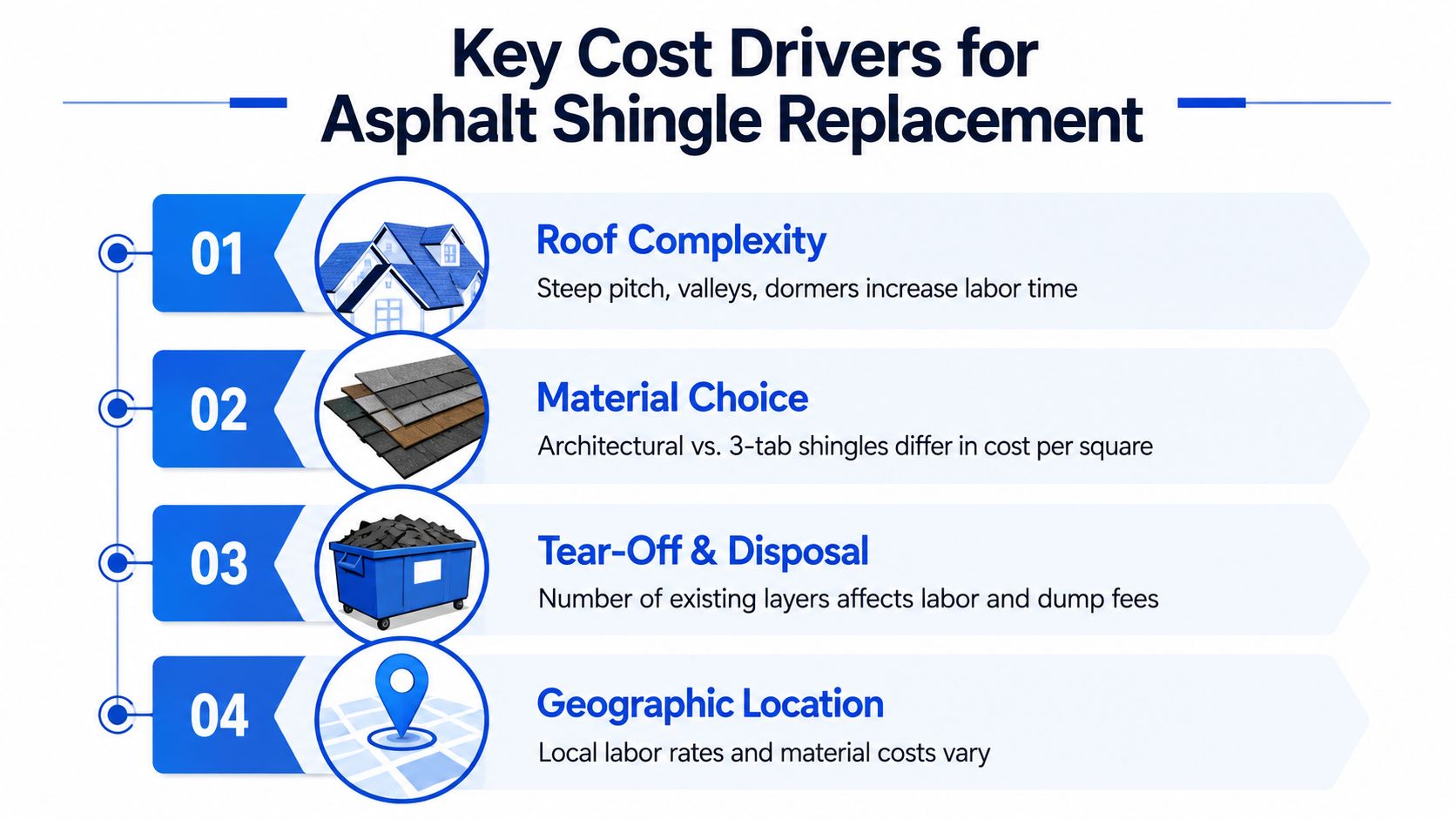
Steeper roofs take longer and require more caution. Valleys, dormers, chimneys, and cut-up rooflines slow the crew down because each transition needs more flashing work and more attention to detail. If the roof has multiple existing layers, the tear-off becomes heavier, messier, and more expensive to haul away.
That's why two roofs of the same size can price very differently. A simple ranch with open access is easier to stage than a tall two-story with a steep pitch and tight yard access. The shingles might be identical, but the jobsite is not.
Hidden repairs are where budgets break
Decking repairs are the sneaky cost. If the sheathing is soft, stained, or rotten, the crew can't just cover it and move on. Underlayment upgrades, ice and water shield, flashing replacement, and ventilation improvements all add material and labor, and homeowners often don't budget for any of them.
Permits matter too. A city or county can require inspection timing, paperwork, or code updates that stretch the job. That's especially relevant for homeowners comparing bids across Columbus and central Ohio jurisdictions, because local code expectations and labor conditions can shift the final number even when the roof size doesn't.
Walk the property before you sign anything. Look for steep slopes, soft spots, old vent penetrations, and signs of prior patching. Those are the details that usually move the price.
The checklist I'd use from the driveway
- Roof complexity: More valleys, dormers, and steep sections mean more labor hours.
- Tear-off burden: More existing layers mean more disposal and more labor.
- Decking condition: Damaged sheathing should be replaced, not hidden.
- Ventilation and flashing: Poor attic ventilation and tired flashing often need upgrades.
- Permit and inspection rules: Local requirements can add time and cost.
If your estimate jumps by several thousand dollars, one of these items is usually the reason. Ask the contractor which one it is. A good estimator will answer directly, and a weak one will hide behind “standard pricing.”
Sample Project Estimates by Home Size and Shingle Grade
A per-square-foot number gets useful only when you apply it to a real roof. The same unit price means very different totals on a ranch, a two-story colonial, and a larger modern home.
Three sizes, three different outcomes
For a smaller 1,700-square-foot ranch, a standard asphalt replacement can land near the lower end of the market when access is easy and the roofline stays simple. A typical 2,000-square-foot roof, using the installed figures already outlined, usually sits squarely in the middle of the national range. Larger homes approaching 2,500 square feet climb quickly because materials, labor, setup, and tear-off all scale together.
A separate market guide notes that a typical 1,700-square-foot roof can translate to $5,840 to $10,100, while a 2,000-square-foot architectural shingle roof often lands around $8,900 to $13,100. That spread is exactly why Columbus-area homeowners should compare local bids against the scope, not just the national average. OutdoorBrite is a useful place to see how exterior projects are often framed in the same homeowner budget conversation, even though roofing and outdoor upgrades are obviously different jobs.
Match the shingle grade to the house and the goal
A starter roof doesn't need premium shingles unless the house, neighborhood, or resale plan calls for it. Three-tab shingles keep the project lean. Architectural shingles cost more, but they bring a better look and stronger market acceptance, which is why they're common on replacements.
For a deeper look at the middle tier, this architectural shingle guide is the right kind of reference before you sign. Architectural shingles are where many homeowners land because they balance cost and appearance without jumping into specialty pricing.
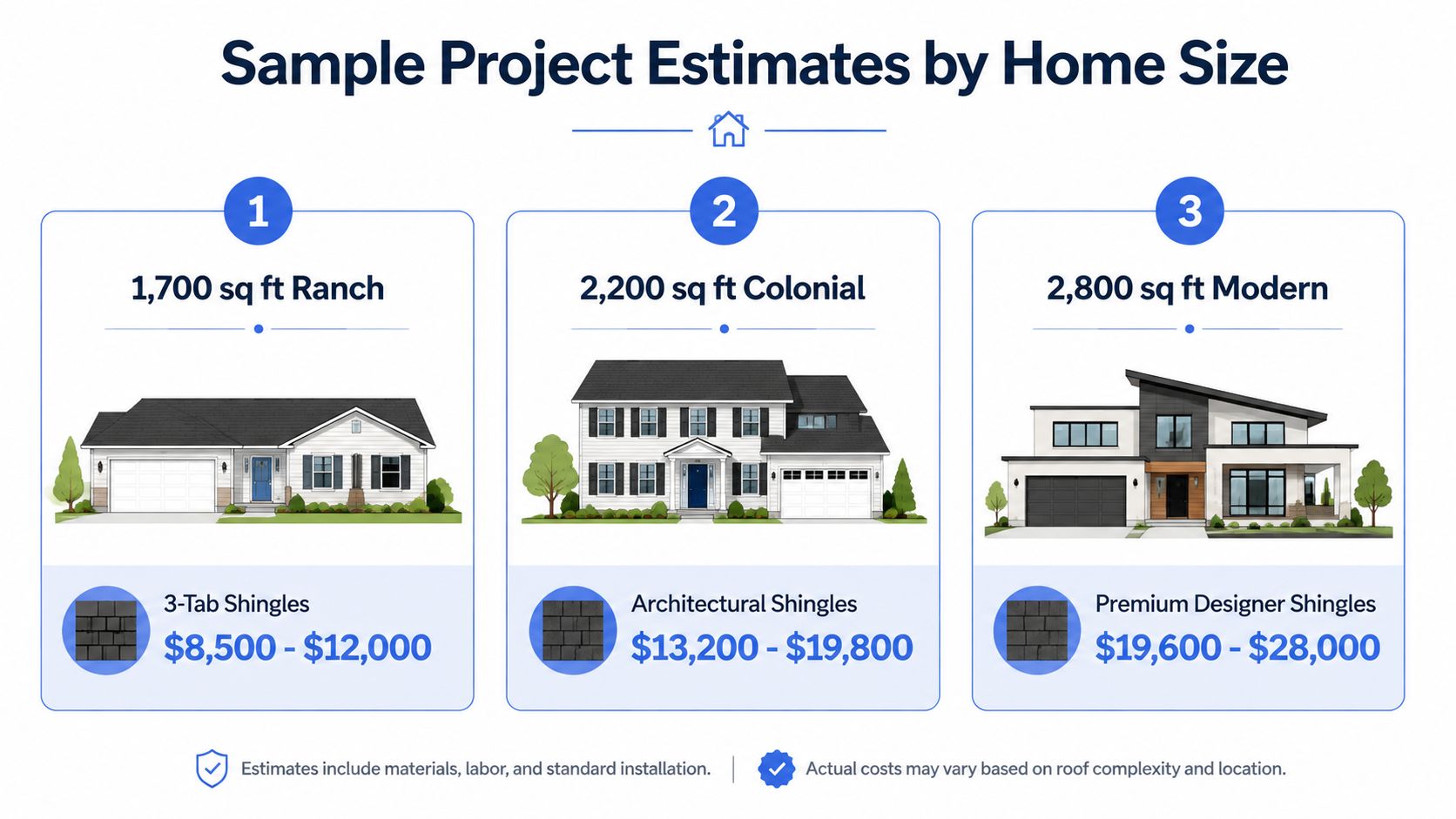
| Home Size | Likely Shingle Grade | What Usually Drives the Total |
|---|---|---|
| 1,700 sq ft ranch | Three-tab | Lower labor time, simpler access, fewer roof features |
| 2,200 sq ft colonial | Architectural | More surface area, more detailing, more labor |
| 2,800 sq ft modern home | Premium designer | Higher material class, more visible finish expectations |
If your roof is bigger, steeper, or more cut up than average, expect the quote to climb. That doesn't automatically mean the contractor is overcharging. It usually means the job is more involved.
Repair Versus Full Replacement Decision Framework
A repair makes sense when the problem is isolated. A replacement makes sense when the roof has started failing as a system.
Repairs still have a place. Neutral pricing guides put average roof repairs around $366 to $1,985, with major repairs reaching $7,000 or more. The moment you're paying for repeated patches, though, the math starts working against you. You're not preserving value at that point, you're funding delay.
Use roof age and leak pattern as the first filter
If the roof is under 15 years old, damage is localized, and the leak is tied to one flashing detail or one storm-hit section, repair is often the smarter call. If the roof is older, leaks are showing up in more than one spot, or the shingles are curling, brittle, or missing in patches, full replacement usually wins.
Most asphalt shingle roofs last 15 to 25 years, so age matters. A roof that's already near the back end of that range doesn't need more temporary fixes unless you're buying time for a planned sale or a larger renovation. For homeowners weighing an overlay, this overlaying a roof discussion helps explain why covering over a tired roof can become a bad bargain.
Don't let delay turn into a bigger bill
Inflation hasn't been kind to roof projects. Recent cost guides show replacement averages rising well above older baseline figures, including a 2025 average roof replacement cost of $17,631 and an asphalt-shingle roof average of $14,959 in 2023 in one pricing roundup. That doesn't mean every homeowner should rush, but it does mean waiting can cost more if the roof is already failing.
My rule: If the roof is leaking in multiple places, patching is a short-term purchase, not a long-term solution.
A full replacement also protects the inside of the house. Once water gets into insulation, drywall, or framing, the repair bill is no longer just roofing. That's the point where homeowners usually wish they had moved sooner.
How to Evaluate a Written Roofing Estimate
A written estimate should read like a scope of work, not a sales flyer. If it's vague, it's incomplete.
What every solid estimate should spell out
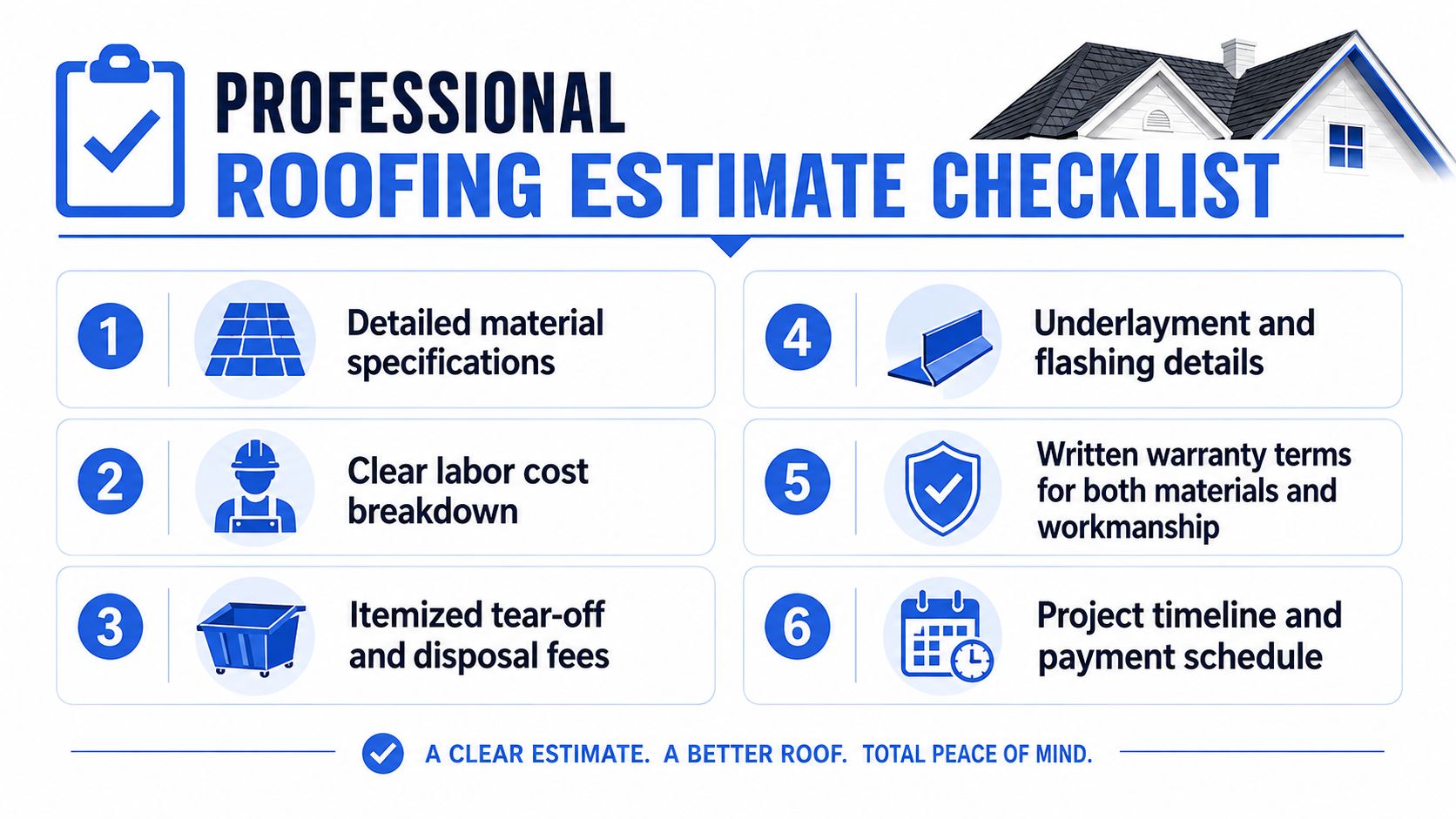
Start with the materials. The estimate should name the shingle brand and type, the underlayment, flashing details, ventilation plan, and any warranty terms tied to the manufacturer and workmanship. It should also state whether the job includes tear-off, haul-away, dumpster use, and decking repair allowances.
Next, look for the practical details. The estimate should show permit costs, the project timeline, and payment terms. If those items are missing, the contractor is asking you to trust a blank spot in the contract.
Red flags I would not ignore
- Vague material descriptions: “30-year shingle” is not enough. You want a brand and product line.
- No tear-off scope: If the bid doesn't say what's being removed, expect surprises.
- Missing flashing details: Valley, chimney, and wall flashing are not optional details.
- Suspiciously low labor: A low labor number can mean rushed installation or thin crews.
- No permit line item: If the job needs a permit, the quote should say so.
A free, no-pressure estimate from a local contractor is useful because it gives you something concrete to compare before you authorize work. HIBCO ROOF LLC offers that kind of written estimate, and it also works as an Owens Corning Preferred Contractor, which matters when you want installation standards tied to the manufacturer instead of a vague handshake promise.
Ask one question on every bid, “What exactly changes if you find damaged decking after tear-off?” The answer tells you whether the contractor has thought through the job.
A clean estimate protects you twice. It keeps the scope clear before work starts, and it gives you power if the final invoice doesn't match what was promised.
Insurance Claims, Financing, and Long-Term Value
Storm damage changes the job fast. Hail or wind turns a roof replacement into three separate questions, what does the policy cover, what will the repair cost in real dollars, and how soon does the work need to start before interior damage spreads.
For homeowners comparing coverage and out-of-pocket exposure, a home insurance claims guide from the Ohio Department of Insurance is a better fit than a generic national explainer because it reflects the kind of claim process Columbus and central Ohio homeowners deal with. The point is simple. If the roof was damaged by a covered event, documentation controls the claim. Clear photos, a proper inspection, and a contractor who knows how to support the file make the process smoother and reduce back-and-forth with the adjuster.
Financing can turn a big job into a manageable one
A roof bill can hit hard. Financing pre-qualification gives you a clear monthly target before you sign, which lets you compare the roof price against the household budget instead of guessing after the work starts. That matters most when the roof is already leaking and waiting only raises the chance of drywall, insulation, and ceiling damage.
A new asphalt shingle roof also adds value in ways that do not show up on the first invoice. It improves curb appeal, helps a home pass inspection, and gives a buyer less room to hammer the price down over roof condition. That is real value, and you should count it when you compare repair versus replacement bids.
For Columbus and central Ohio homeowners, HIBCO ROOF LLC fits that decision path with free inspections, storm damage documentation, insurance claim assistance, system-based installation, and many replacements completed in a single day. If you want a bid you can compare line by line, that is the part that matters.
If your roof is leaking, aging, or showing storm damage, get a written estimate that lists the materials, labor, tear-off, and permit scope in plain language. Visit HIBCO ROOF LLC to schedule a free inspection and compare your roof replacement options with a contractor who works the job the way a homeowner should expect.