
In Columbus, a standard vinyl siding replacement usually lands between $14,000 and $26,000 for a typical home. In the broader local market, full replacements commonly run $12,200 to $36,250, depending on house size, tear-off, labor, and product selection.
When considering vinyl siding replacement near me, you're probably standing in your driveway noticing the same things most homeowners notice first. Faded color. Loose panels after a storm. Trim that looks tired. Maybe a wall that rattles in wind, or siding that still looks rough no matter how often you wash it. The hard part isn't spotting that something's wrong. It's figuring out whether you need a repair, a full replacement, or just a contractor who'll give you a straight answer.
That confusion gets worse when national articles throw out pricing that doesn't match Columbus labor rates, permit expectations, or the way older central Ohio homes are built. A siding job here isn't just about picking a color. It's about tear-off, checking what's behind the panels, deciding whether house wrap is still doing its job, and making sure the crew installs everything so it can move properly through Ohio heat and winter cold.
This guide is built around the full project lifecycle. It stays local, practical, and grounded in what matters when you're hiring someone to work on your house.
Table of Contents
- Your Guide to Vinyl Siding Replacement in Columbus Ohio
- Decoding Your Siding Project Cost in Central Ohio
- The Siding Replacement Process From Start to Finish
- A Vetting Checklist for Your Siding Contractor
- Preparing Your Home for a Smooth Installation Day
- Why Columbus Homeowners Choose HIBCO ROOF LLC
- Frequently Asked Questions About Vinyl Siding
- Is insulated vinyl siding worth the extra cost
- What vinyl siding profile looks best on Columbus-area homes
- Can vinyl siding be installed in winter in Ohio
- How much maintenance does vinyl siding really need
- What should I know about siding warranties before I sign a contract
- Will new vinyl siding help resale value
Your Guide to Vinyl Siding Replacement in Columbus Ohio
Most homeowners don't start by saying, "I want a siding project." They start by noticing a problem that won't go away. A corner pulls loose. A few panels crack. The house looks older than it should. Then the search begins for vinyl siding replacement near me, and suddenly you're sorting through price ranges, product names, and sales language that all sounds the same.
In Columbus, that search needs local context. Homes in central Ohio deal with wind, storm damage, seasonal temperature swings, and plenty of older exterior details that don't show up in generic advice. A clean install matters, but the inspection behind the old siding matters just as much. If a contractor skips that part, you're only covering problems instead of fixing them.
A good homeowner decision usually starts with one simple question. Is this really a replacement job, or is it a repair job that someone is trying to turn into a replacement sale? That's why it's smart to review practical warning signs before you call anyone. This breakdown of whether you need to replace your vinyl siding is useful because it helps you separate cosmetic wear from structural concern.
What local homeowners are usually trying to solve
Some want curb appeal before listing. Some are dealing with storm damage. Others are tired of patching the same area over and over.
What works is a methodical approach:
- Start with the wall condition: Look for cracking, warping, loose sections, and trim movement.
- Ask what's behind the siding: Water management and house wrap condition matter more than surface appearance.
- Match the project to the problem: Repair if the damage is isolated. Replace if failures are widespread or the system is at the end of its useful life.
Practical rule: The right siding decision isn't the biggest project. It's the one that solves the actual problem without creating a bigger bill than you need.
If you're also comparing contractors online, it helps to understand how service-area companies present themselves and how homeowners can judge local credibility. This guide on optimizing local SEO for SABs gives helpful context for spotting the difference between a visible company and a trustworthy one.
Decoding Your Siding Project Cost in Central Ohio
A siding quote can look reasonable on paper and still leave out thousands of dollars in real work. I see that happen when one proposal includes tear-off, dumpster fees, permit handling, house wrap repairs, and trim replacement, while another shows a lower price because those items are missing or left vague.

For Columbus-area homeowners, the useful question is not just "What does vinyl siding cost?" It is "What does this quote cover on my house?"
A realistic range for full vinyl siding replacement in Central Ohio often lands around the mid-teens to mid-twenties for an average home, but price moves fast once the scope gets wider. A 2-story house with a lot of corners, window trim, light blocks, and old material that comes off hard will cost more than a simple ranch with clean wall lines and easy access. If you want a line-by-line explanation of what drives those numbers, this guide on vinyl siding replacement cost is a good place to start before you collect bids.
What moves the price up or down
Square footage is the starting point. It is not the full story.
The homes that surprise owners on price are usually the ones with extra labor built into the shape of the house. Multiple gables, bump-outs, second-story sections over porches, narrow side yards, and heavy trim details all add time. Labor is a major part of siding cost in Columbus, especially when a crew has to slow down to protect landscaping, work around deck roofs, or rebuild problem areas found during tear-off.
Scope also changes everything. One quote may cover siding only. Another may include:
| Quote component | What to ask |
|---|---|
| Tear-off | Is removal of the existing siding and debris hauling included in the base price? |
| Moisture barrier | If damaged sheathing or house wrap is found, how is that priced and approved? |
| Trim and accessories | Are corners, starter strips, J-channel, soffit tie-ins, and mounting blocks listed in writing? |
| Permits and cleanup | Who pulls the permit, and is final cleanup included or treated as an extra? |
That table matters because change orders usually start there. A low number at signing can turn into a much higher final invoice if the quote never spelled out what happens when the old siding comes off.
Cost trade-offs homeowners miss
Material choice affects the total, but so does the level of finish. Standard vinyl with basic trim packages costs less than insulated panels, premium panel profiles, or projects with all new fascia wrap and upgraded shutters. Color can matter too if special-order panels are involved.
There is also the repair-versus-replace question inside the replacement job itself. If a crew finds a few soft sheathing sections around a patio door, that is usually manageable. If they uncover widespread water damage at window perimeters or along the bottom courses, the project cost goes up because the wall has to be made sound before new siding goes on. Skipping that step saves money for about five minutes and creates a bigger bill later.
Why vinyl is still the practical choice for many Columbus homes
Vinyl stays popular in this market for a simple reason. It usually gives homeowners the lowest upfront cost for a full residing project while still offering solid weather protection and a clean finished look.
That does not make it the right fit for every house. Fiber cement can make sense for owners who want a different appearance and are prepared for a higher budget. Wood has its place too, but it comes with more maintenance and a narrower group of buyers willing to keep up with it. For a lot of homeowners in Columbus, vinyl is the material that keeps the project affordable without turning the exterior into another maintenance cycle.
A good siding proposal should read like a scope of work, not a mystery number.
The best quotes are specific. They show what is included, what is excluded, how hidden damage is handled, and who is responsible for permits, disposal, and trim details. That is what lets you compare contractors fairly instead of comparing one complete job to one stripped-down price.
The Siding Replacement Process From Start to Finish
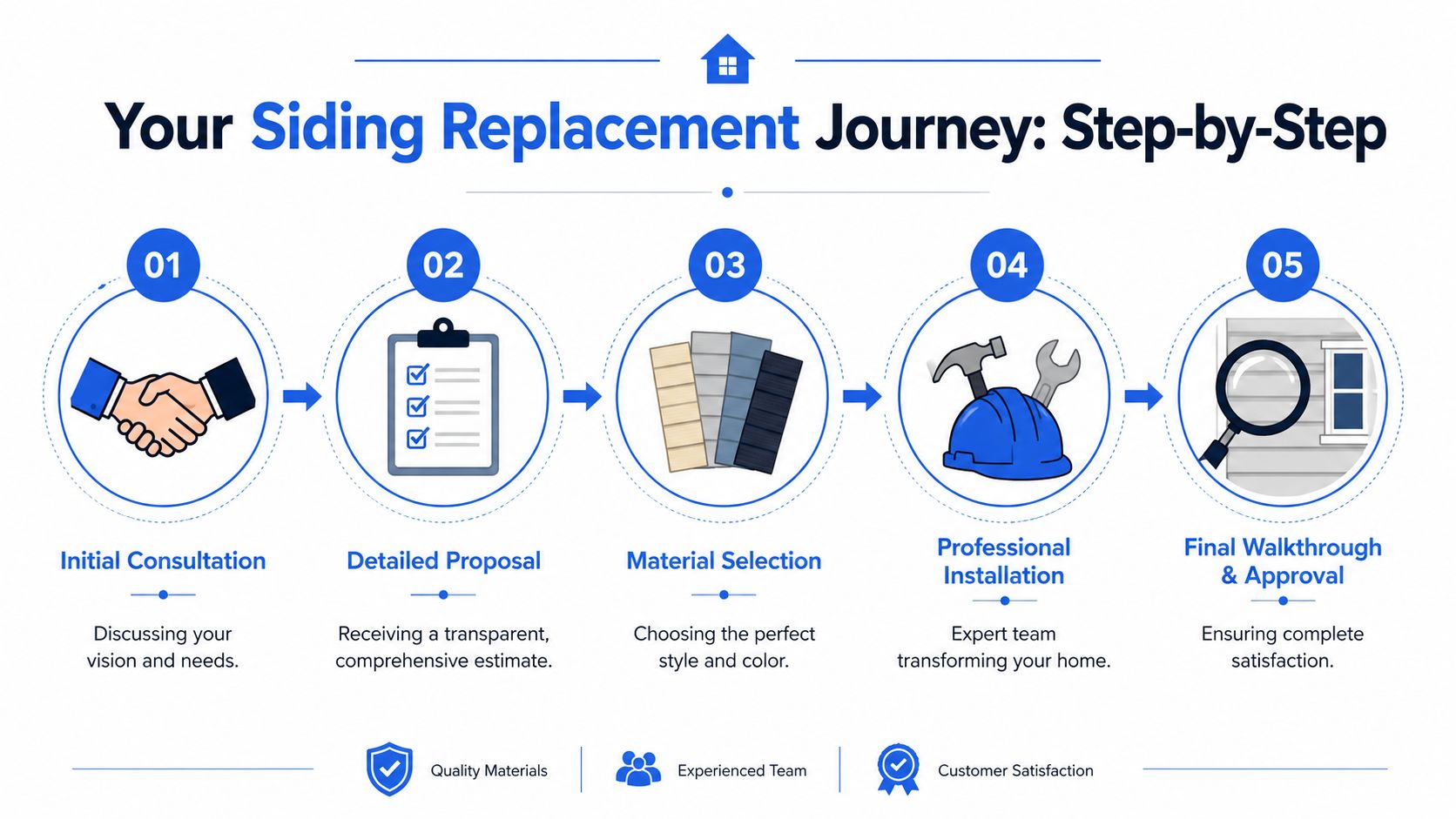
A siding replacement feels intimidating until you see it as a sequence of decisions and checks. Good crews don't just arrive with panels and start hanging material. They follow a process that protects the structure first and the finish second.
When replacement is not the right first answer
This is the step many homeowners never hear enough about. Not every damaged exterior needs a full residing job.
Some siding issues come from a small number of compromised panels after wind or impact. In those cases, a proper repair can be the smarter move. Guidance referenced in this siding repair overview notes that many siding problems come from localized storm damage where full replacement isn't necessary, and homeowners can sometimes save $15,000 to $25,000 by repairing specific panels if the house wrap behind them is still sound.
That last part is the key. A contractor can't make that call from the driveway.
What happens before materials arrive
A real siding project starts with inspection, not color selection. The exterior gets measured. Problem walls get identified. Penetrations like light fixtures, vents, hose bibs, and meter areas get noted because those details affect both labor and finish quality.
Then the proposal should define the scope in plain language. You want to know:
- What comes off: existing siding, damaged trim, accessory pieces
- What gets checked: sheathing condition, wrap condition, water entry points
- What gets installed: panel profile, trim package, starter course, corner posts, finish details
- Who handles logistics: permits, dumpsters, debris removal, material delivery
At this stage, homeowners usually choose profile, color, and accent details. That's where design and practicality meet. Dark colors can look sharp, but they also make installation errors more visible. Busy elevations can benefit from simpler lines. On homes with lots of gables, too many accent changes can make the exterior feel chopped up.
The best-looking siding jobs usually aren't the busiest ones. They use strong color contrast in a few places and keep the rest clean.
If you want to understand one of the detail areas installers often deal with during trim and finish work, this guide to replacing vinyl siding corners gives a useful look at how corner components affect the final result.
What happens during installation
Installation day should look organized. Crews protect landscaping where they can, stage materials carefully, and work in a sequence that keeps exposed walls to a minimum. Old siding comes off first. Then the crew checks what was hidden.
Here, good companies separate themselves from fast companies.
If they find soft sheathing, failed wrap, or signs of water intrusion around windows and penetrations, they stop and document it. They don't bury it. Once the substrate is sound, the crew installs the weather-resistive layer as needed, then starter strips, corner posts, channels, and field panels. Proper nailing matters because vinyl needs room to move. Overdriven fasteners can cause buckling and distortion later.
The last phase is finish work and walkthrough. Fixtures go back on cleanly. Trim lines should look straight. Courses should stay consistent. Debris should be removed, and the homeowner should get a chance to inspect the full perimeter with the contractor.
A professional process usually feels calm from the outside. That's a good sign.
A Vetting Checklist for Your Siding Contractor
A Columbus homeowner usually calls for siding quotes after they notice warping, storm damage, fading, or higher utility bills. Then the bids come in, and one is thousands lower than the others. That is the point where good decisions save money.
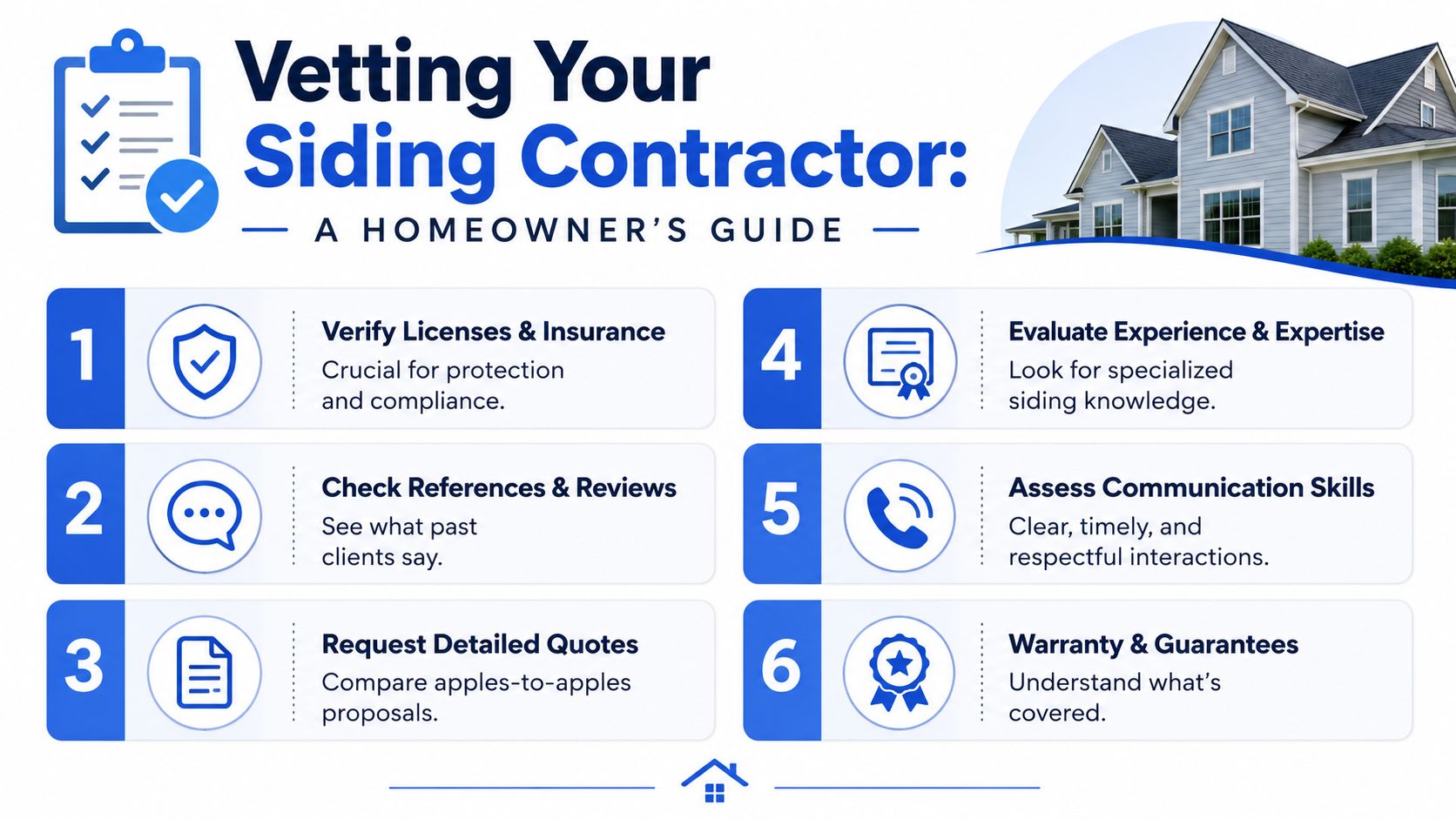
Siding mistakes are expensive to correct after the crew leaves. I have seen low-price jobs turn into sheathing repairs, trim replacement, and warranty disputes because the original proposal was vague or the installer was learning on the house. A careful vetting process matters as much as the color and profile you choose.
National resale reports often show vinyl siding performing well compared with many exterior upgrades, but homeowners in Central Ohio do not get that value from the material alone. They get it from proper flashing, straight lines, correct fastening, and a crew that handles hidden damage properly instead of covering it up.
What to verify before you sign
Start with legal and practical basics. Then go a step further and check how the company runs jobs.
- Insurance: Ask for current general liability and workers' compensation coverage. Do not settle for a verbal "we're covered."
- Local track record: Columbus homes vary a lot by age and build style. A contractor who has worked in Clintonville, Westerville, Gahanna, and older South Side neighborhoods has probably dealt with the trim details, wall conditions, and moisture issues common here.
- Who does the work: Ask whether the company uses employees, subs, or a mix. Then ask who supervises the job on site.
- Trade experience: Some exterior companies sell siding but mainly install roofing or gutters. Ask how many siding replacements they complete in a typical year.
- Permits and code handling: If a permit is needed for your municipality, the contractor should know that before the contract is signed.
- Communication: Slow callbacks before deposit usually mean slow answers once the walls are open.
One check homeowners often miss is the intake process. Good companies ask detailed questions early because scope problems usually start in the estimating stage. The Growform siding template shows the kind of project information a contractor should collect before they price labor, materials, repairs, and scheduling.
Questions that separate serious contractors from sales-first companies
Ask direct questions and listen for direct answers.
How do you handle rotten sheathing if you find it? Who installs soffit and fascia if those areas need work too? What brand and panel thickness are you quoting? Will you replace house wrap where needed? Who removes and reinstalls lights, downspouts, shutters, and exterior fixtures? How is debris picked up at the end of each day?
A contractor who gets vague here usually gets vague later. Clear answers now usually mean fewer change-order fights once the old siding comes off.
What a good written proposal should include
A useful proposal is specific enough that two different people could read it and describe the same job. If the estimate leaves room for guesswork, expect surprise charges.
Look for these items in writing:
| Must-have in the proposal | Why it matters |
|---|---|
| Scope of tear-off | Clarifies whether old siding, foam board, trim, and damaged accessories are included |
| Material description | Shows the manufacturer, profile, color, and accessory package you are paying for |
| Repair process | Explains how hidden water damage or bad sheathing will be documented and priced |
| Flashing and weather barrier details | Confirms the contractor is addressing water management, not just appearance |
| Cleanup responsibility | Sets expectations for haul-away, magnet sweeps, and daily site cleanup |
| Warranty language | Separates manufacturer coverage from the installer's labor warranty |
If two bids are close, the clearer proposal is usually the safer choice.
Good contractors do not need pressure tactics. They should be willing to walk you through scope, explain allowances, show local references, and give you time to compare the paperwork carefully.
Preparing Your Home for a Smooth Installation Day
Once the date is on the calendar, a little prep makes the whole project easier. Most problems on install day aren't technical. They're logistical. Crews lose time when they have to work around patio furniture, locked gates, fragile wall decor, or pets slipping in and out of doors.
Outdoor prep that helps the crew move faster
Start by clearing the perimeter of the house. Move grills, chairs, planters, hoses, toys, and anything decorative away from the walls. If you have items mounted outside, ask the contractor ahead of time who removes and reinstalls them and which ones need special handling.
A few simple steps help a lot:
- Trim access points: Open gates and make sure crews can reach both sides of the home.
- Protect vehicles: Park away from the work zone so trailers, dumpsters, and material deliveries can move in.
- Mark fragile landscaping: Let the crew know where delicate plants or edging need extra care.
Homeowners who prep the perimeter well usually get a cleaner, faster install because the crew can stay focused on the siding instead of moving obstacles all day.
Indoor prep that homeowners often forget
Siding work creates vibration. That means wall-hung items can shift, especially on exterior walls. Remove small framed pictures, mirrors, or shelves that could rattle loose. If you have valuables in rooms along major work areas, move them away from the wall for the day.
Pets and kids need a plan too. Doors may open more often than usual, and noise levels will be high. If your dog reacts to strangers or banging, it helps to arrange a quieter space inside or a visit elsewhere during the heaviest work.
The last thing to confirm is communication. Know who your point of contact is, how change items get approved, and when the final walkthrough will happen. That one conversation prevents a lot of confusion.
Why Columbus Homeowners Choose HIBCO ROOF LLC
A siding job usually feels straightforward until the old panels come off and the critical decisions begin. Columbus homeowners want a contractor who can give a clear scope up front, keep the site organized, answer the phone during the job, and deal with surprises without turning every issue into a fight over change orders.

HIBCO ROOF LLC gets chosen for practical reasons. The company is local, licensed, insured, and used to working on Central Ohio homes where weather exposure, older wall assemblies, and storm-related repairs can all affect the scope. That local experience matters because a clean siding install is only part of the job. Homeowners also need someone who can keep the schedule realistic, protect the property, and explain what is happening in plain language.
The difference usually shows up in the parts homeowners remember after the crew leaves.
- Written estimates with defined scope: Homeowners can see what is included before work starts, instead of sorting out trim, tear-off, and disposal later.
- Straight answers on repair versus replacement: If a section can be repaired responsibly, say that. If the house is at the point where patchwork will keep costing money, say that too.
- Insurance claim support when storm damage is involved: That helps homeowners document the issue and avoid guessing their way through the process.
- Communication during installation: Questions about sheathing repairs, trim details, or color changes get handled while the work is active.
- Cleanup and jobsite control: Nails, scrap, and packaging should be picked up daily, not left for the final day.
- Design guidance without overcomplicating the job: Homeowners often want help narrowing down colors and profiles, not a long sales presentation.
Another reason homeowners call HIBCO is that the company handles exterior work beyond siding. That matters on houses where the siding project connects to fascia, gutters, rooflines, chimney flashing, or storm damage that crosses more than one trade. Fewer handoffs usually means fewer delays and less confusion about who is responsible for what.
I've seen plenty of siding projects go wrong for the same reasons. The estimate was thin. The crew had no clear supervisor. Hidden rot was rushed through. The homeowner did not know who to call once work started. A better contractor relationship is usually less about sales language and more about job control.
For Columbus-area homeowners who want a steady process, HIBCO ROOF LLC stands out by keeping the work clear, documented, and manageable from estimate through final walkthrough. That is what people are really buying. Not just new siding, but fewer surprises and a finished exterior that looks right and holds up.
Frequently Asked Questions About Vinyl Siding
A good FAQ should answer the questions homeowners still have after they understand price, scope, and installation. In Columbus, those questions usually come up around material choices, timing, maintenance, and warranty details.
Is insulated vinyl siding worth the extra cost
Sometimes, yes.
Insulated vinyl can help a house feel less drafty, and it usually hangs flatter on walls with small surface irregularities. It can also give the exterior a slightly more solid look because the panels are backed instead of hollow. On the other hand, it costs more, and it does not replace proper wall insulation or fix air leaks around windows, doors, and penetrations. On older central Ohio homes, I usually tell homeowners to treat insulated siding as an upgrade for comfort and appearance, not as a cure-all for energy loss.
What vinyl siding profile looks best on Columbus-area homes
The house should drive that decision.
Traditional double 4-inch or double 5-inch lap works well on a large share of Columbus homes because it looks familiar and does not fight the original architecture. Dutch lap gives more shadow line and can look sharper on some elevations, but it also reads as more decorative. Board and batten is popular right now, especially in gables or as an accent, though using it on the entire house can date the project if the style does not match the structure. Good siding choices usually look like they belong there.
Can vinyl siding be installed in winter in Ohio
Yes, if the crew handles it correctly.
Vinyl moves with temperature changes, so cold-weather installation requires more care with panel spacing and fastening. A rushed crew can leave panels too tight, which may lead to buckling or noise once warmer weather hits. Winter jobs are common in Ohio, but they depend more on installer discipline than summer jobs do. Dry conditions and proper handling matter more than the month on the calendar.
How much maintenance does vinyl siding really need
Less than wood. More than the sales pitch sometimes suggests.
Vinyl does not need painting, and that is a real advantage. It still needs to be washed periodically, especially on shaded sides where algae or dirt can build up. Homeowners should also keep grills, mulch, and weed trimmers away from it. I have seen more melted and cracked panels from everyday yard use than from storms.
What should I know about siding warranties before I sign a contract
Read two parts separately. The manufacturer warranty and the contractor workmanship warranty.
Manufacturer coverage usually applies to the product itself and comes with limits, transfer rules, and exclusions for improper installation. The workmanship warranty covers how the siding, trim, and accessories were installed. If a contractor cannot explain that difference clearly, that is a concern. A written warranty should also say who handles callback service and how warranty issues get documented.
Will new vinyl siding help resale value
Usually, yes, if the house needs it.
Old, faded, loose, or storm-damaged siding hurts curb appeal fast. Clean new siding photographs better, shows better, and can reduce buyer concern about deferred exterior maintenance. The return is usually strongest when the old siding is clearly worn and the replacement fits the style of the house. Buyers in the Columbus market notice that kind of update right away.
If you're comparing options for a siding project in central Ohio, HIBCO ROOF LLC offers free written estimates for homeowners who want a clear scope, practical guidance on repair versus replacement, and help with the full exterior process without pressure.