Most advice on architectural shingles vs three-tab starts and ends with “pay more for architectural.” That's too simple for a Columbus roof. The right choice depends on how long you'll own the house, how exposed the roof is to wind, what the deck and ventilation system can support, and whether the installation crew follows the product specifications.
A three-tab roof can still be a sensible budget decision. An architectural roof can still fail early if the installer misplaces fasteners, skips critical underlayment, or ignores ventilation. The useful comparison is cost per year of service life plus real-world storm performance, not the shingle label printed on the bundle.
| Decision factor | Three-tab shingles | Architectural shingles |
|---|---|---|
| Construction | Single-layer profile with uniform tabs | Laminated, multi-layer dimensional profile |
| Typical service life | About 18 to 22 years in moderate climates (Roofing Almanac comparison) | About 25 to 30 years under similar conditions (Roofing Almanac comparison) |
| Common wind range | Roughly 60 to 70 mph, depending on product and installation (wind-rating guide) | Commonly about 110 to 130 mph, depending on product and installation (wind-resistance comparison) |
| Appearance | Flat, repetitive, uniform | Layered, textured, shadowed |
| Upfront price | Lower | Often about 15% to 40% higher (historical shingle overview) |
| Best fit | Tight budgets, short ownership, some rentals | Longer ownership, exposed roofs, curb appeal priorities |
Table of Contents
- Why the Cheaper Shingle Isn't Always the Better Deal
- How Architectural and Three-Tab Shingles Are Built
- Wind Ratings and Storm Performance in Central Ohio
- Upfront Cost Versus Cost Per Year of Service Life
- Which Shingle Fits Your Columbus Home Scenario
- When Installation and Insurance Rules Matter More Than Shingle Type
- Your Roofing Decision Checklist Before Signing an Estimate
Why the Cheaper Shingle Isn't Always the Better Deal
The cheapest roof can cost more over time. Three-tab shingles may preserve cash at installation, while architectural shingles can provide a longer service life and higher wind classifications. The practical comparison is cost per year of service life and real-world storm performance, not the label on the bundle.
Three-tab shingles became standard residential roofing after their design appeared around 1935, remaining common on older homes and lower-cost construction through much of the twentieth century (historical shingle overview). They are familiar, lighter, and economical. For a rental or a property headed toward a near-term sale, lower initial cost may outweigh a longer replacement cycle.
Architectural shingles moved toward market dominance as manufacturers promoted laminated products more heavily by the mid-2000s. Their value is not limited to appearance. The thicker laminated profile generally adds rigidity, uplift resistance, and service life.
Practical rule: Match the roof system to your ownership timeline and roof exposure, not the product with the most impressive brochure.
Installation can override the shingle category. Incorrect nail placement, weak starter strips, poor sealant activation, inadequate flashing, missing underlayment, and bad ventilation can shorten the life of an architectural roof. A properly installed three-tab system may perform better than a premium product installed carelessly.
Insurance review can change the calculation as well. Carriers may look for documented wind classification and acceptable installation condition rather than treating “architectural” as proof of storm resistance.
For a Columbus homeowner, Ohio storm seasons make the trade-off plain. Three-tab shingles lower today's bill. Architectural shingles may reduce replacement frequency and offer stronger documented wind performance when gusts reach the roof. Compare the added installation cost with the years of service it may provide, then verify that the selected product and installation meet the insurer's requirements.
How Architectural and Three-Tab Shingles Are Built
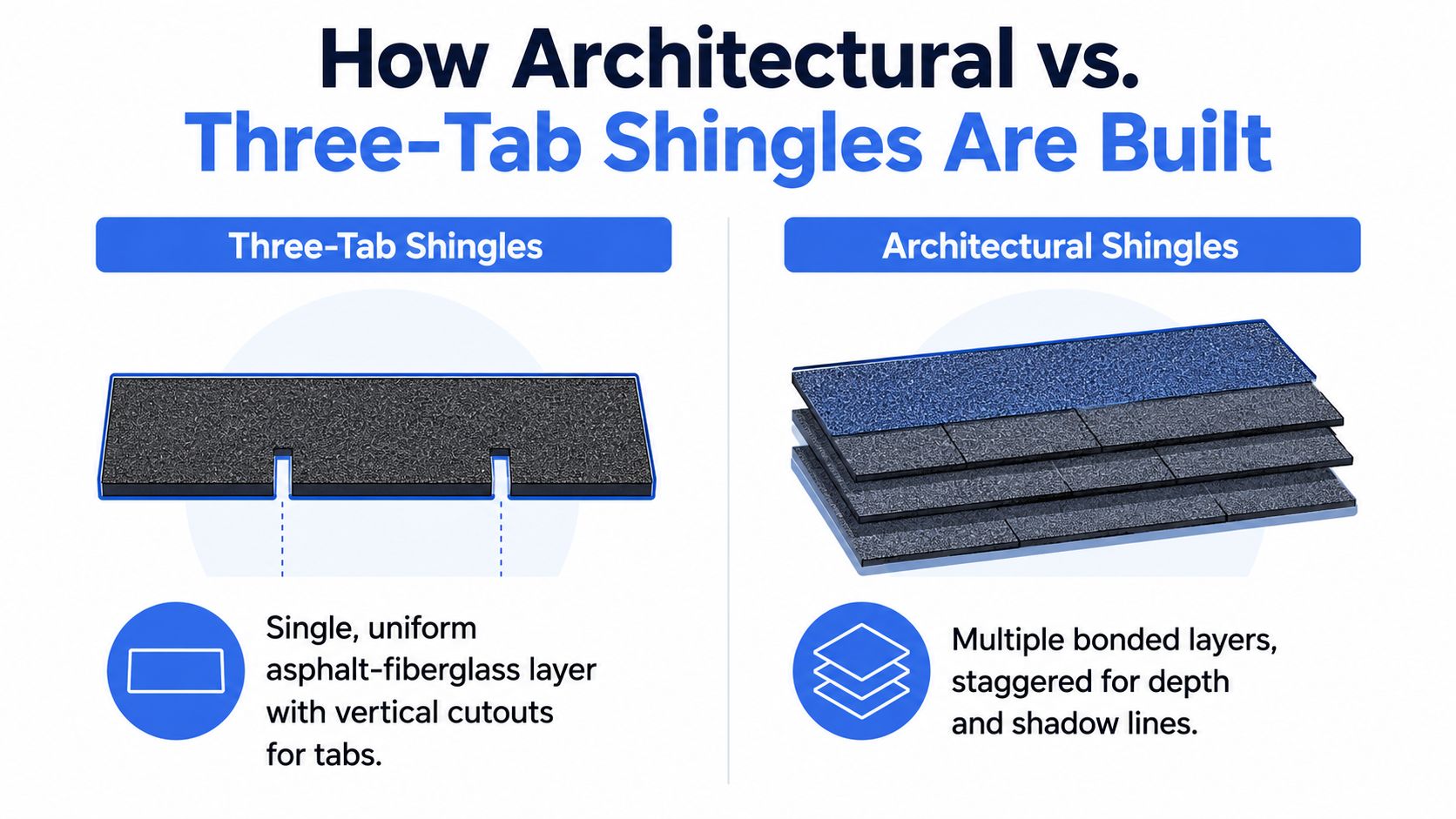
Three-tab shingles start with a single primary asphalt-fiberglass layer and regular cutouts along the lower edge. Those cutouts form the three visible tabs and create the flat, repeated pattern common on older roofs. The design uses less material and stays relatively light, but each exposed tab also presents an edge that wind can catch.
Architectural shingles, also called dimensional or laminated shingles, bond multiple asphalt layers into a thicker profile. Varied cuts create shadow lines and a surface that may resemble wood shake or slate. Both products use fiberglass reinforcement, asphalt, and mineral granules. The meaningful differences are layering, thickness, geometry, and surface texture, rather than a completely different roofing chemistry.
What the added layers change
The laminated construction gives architectural shingles more mass and dimensional stiffness. Three-tab products commonly weigh around 200 to 250 pounds per square, while architectural products commonly fall around 250 to 400 pounds per square (architectural and three-tab construction comparison). A roofing square covers 100 square feet.
More weight can reduce shingle movement, but it does not replace a structural inspection. Older roof framing and the deck must be sound, especially if a contractor plans to install new shingles over an existing layer. Added material also affects the roof assembly, so the estimate should identify whether tear-off, deck repairs, or reinforcement are required.
Three-tab shingles commonly measure 12 inches by 36 inches and show a repeated, uniform face (asphalt shingle construction reference). Architectural shingles use varied cuts and bonded layers to break up that regular pattern. The result is a deeper, more textured roof that often works well on newer subdivisions and homes where appearance affects resale decisions.
The seal between courses matters
Shingle performance also depends on how courses overlap and seal. Each course covers the one below it, while adhesive strips bond the exposed shingle after heat activates the sealant. Architectural products often pair their heavier profile with broader or stronger sealing arrangements, though the exact design varies by manufacturer.
The product label does not show the entire installation system. Review how roof shingles are designed and installed alongside the manufacturer's specification sheet. Confirm the required fastener placement, starter-course method, overlap, and sealing conditions before comparing showroom samples. Those details influence lifecycle cost and real-world storm performance as much as the shingle category itself.
Wind Ratings and Storm Performance in Central Ohio
Wind performance can change the value calculation between shingle types. Many three-tab products fall in the 60 to 70 mph range, while architectural products commonly carry ratings around 110 to 130 mph, depending on the shingle, fastening pattern, and installation conditions, according to this wind-rating guide.
A rating is not a guarantee that a roof will stay intact in every storm. The manufacturer tests a defined installation method. Missing nails, misplaced fasteners, poor starter courses, or a seal strip that never bonds can reduce field performance regardless of the shingle category.
How the tests translate to a roof
ASTM D7158 evaluates uplift resistance for asphalt shingles. Classifications such as Class F and Class H describe how a tested shingle performed under specified conditions, with commonly referenced classifications ranging from about 110 mph to 150 mph, depending on the product and attachment method, as explained in this technical wind-resistance discussion.
A homeowner does not need to memorize every designation. Ask for the product data sheet, identify the stated classification, and confirm that the installation plan matches the tested assembly. An estimate can list a wind class and still fall short if the fastener count, nail placement, or starter-strip method differs from the tested setup.
| Performance Metric | Three-tab shingles | Architectural shingles |
|---|---|---|
| Common practical wind range | About 60 to 70 mph (wind-resistance reference) | Commonly about 110 to 130 mph, with some products reaching higher classifications |
| Vulnerable geometry | Exposed lower tab edge | Heavier laminated profile with fewer exposed loose-tab edges |
| Uplift concern | Tabs can curl, lift, or tear as the seal weakens | Added mass and lamination generally improve resistance |
| Key installation dependency | Correct nailing and seal activation | Correct nailing, starter course, and seal activation |
| Meaning for central Ohio | Less margin during severe gusts | More performance margin when the roof is properly installed |
Central Ohio roofs face wind from fast-moving storm systems, straight-line events, and seasonal thunderstorms. A roof in Franklin, Delaware, or Union County responds to uplift at exposed edges, especially as shingles age and sealant weakens.
The shingle label still does not settle the storm question. IBHS research examines asphalt-shingle roof performance over time under wind, hail, and wildfire conditions, reinforcing that age and installation condition change the outcome (IBHS asphalt-shingle roof performance research). A newer, correctly installed three-tab roof may hold better than an older architectural roof with poor fastening. Architectural shingles provide more wind-performance margin, but workmanship and roof age determine how much of that advantage reaches the house.
Upfront Cost Versus Cost Per Year of Service Life
Three-tab shingles usually win the upfront-price comparison. They do not automatically win the cost-per-year comparison. Architectural products commonly cost about 20% to 30% more initially, while estimates place their service life roughly 10 to 25 years longer than three-tab products (lifecycle cost comparison).
For a moderate-climate reference, three-tab shingles typically last about 18 to 22 years, compared with about 25 to 30 years for architectural shingles (Roofing Almanac comparison). In Columbus, roof pitch, attic ventilation, installation quality, storm exposure, and maintenance affect where a roof falls within those ranges. A price comparison is useful only when both estimates cover the same roofing work.
| Factor | Three-tab shingles | Architectural shingles |
|---|---|---|
| Typical installed comparison cited for 2026 | About $2.45 to $3.50 per square foot | About $3.15 to $4.50 per square foot |
| Typical service-life reference | About 18 to 22 years | About 25 to 30 years |
| Estimated cost per year | About $0.12 to $0.14 | About $0.09 to $0.11 |
| Main financial advantage | Lower initial outlay | Longer service window and lower estimated annualized cost |
| Main financial risk | Earlier replacement and repair exposure | Higher cash requirement at installation |
These are comparison ranges, not a Columbus roofing bid. The final estimate should account for roof measurements, deck condition, flashing, ventilation, tear-off, disposal, access, and required code work. A low number can lose its appeal if it leaves out repairs that the roof system needs before shingles are installed.
A simple homeowner calculation
Take the complete project price and divide it by the realistic service years. Include costs that may return at replacement, such as tear-off, disposal, flashing work, and code-related updates. A three-tab roof may require less cash today, yet an earlier replacement can reduce that advantage over the ownership period.
A homeowner planning to move before the next replacement may not receive the full financial benefit of architectural shingles. Someone staying in the house for many years has more opportunity to benefit from the longer service window, lower estimated annualized cost, dimensional appearance, and higher wind classification. Those benefits still depend on proper nailing, sealing, ventilation, and maintenance.
Before signing, compare architectural shingle service life with three-tab alternatives and request both options on the same written scope. Ask the contractor to identify the shingle's wind classification, included underlayment and flashing work, disposal method, and warranty conditions. Financing can change the cash-flow decision, but it should not conceal a vague scope or an unexplained price difference.
Which Shingle Fits Your Columbus Home Scenario
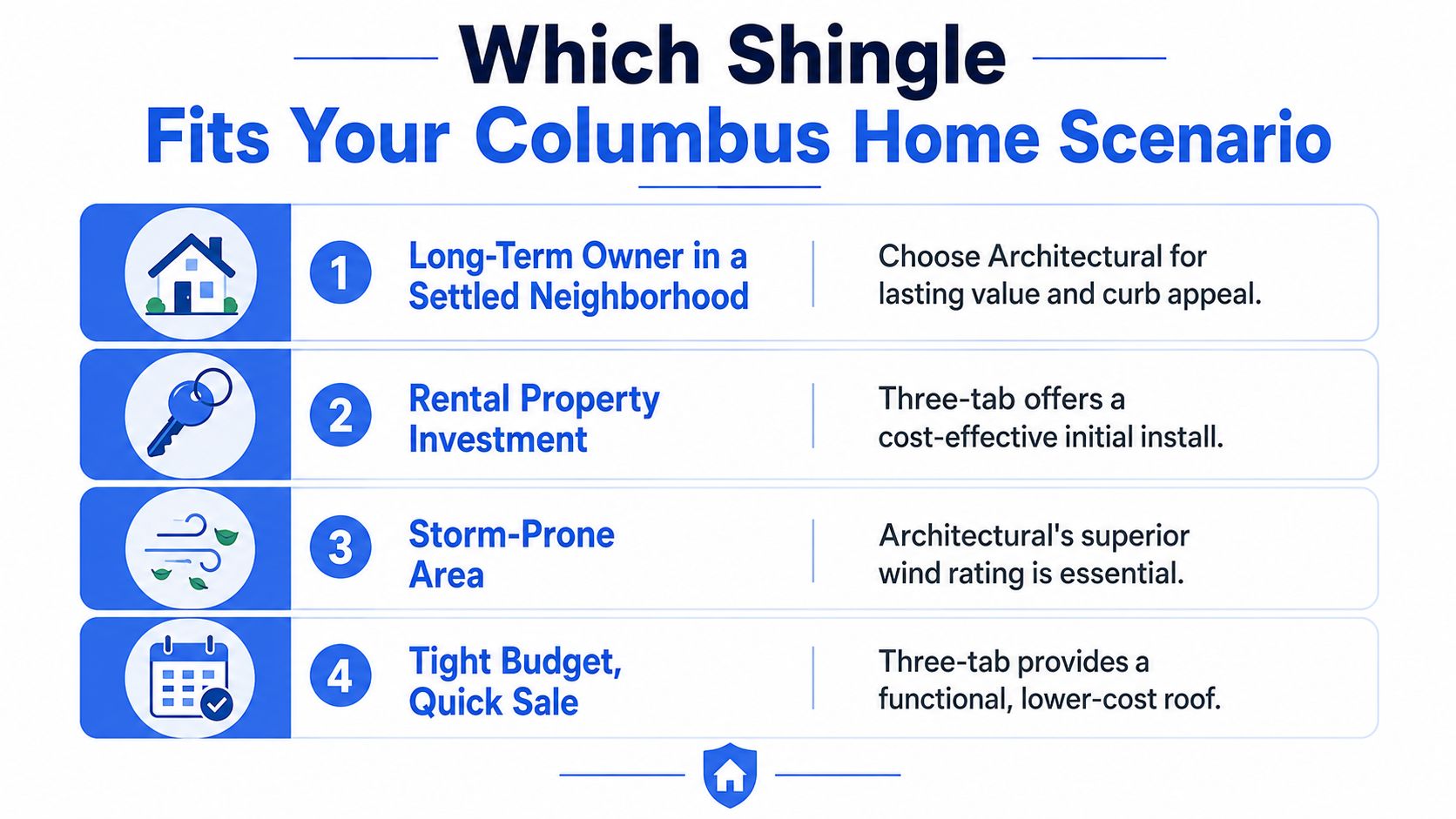
The best material depends on what the property needs to accomplish. A long-term residence, a rental, and a house being prepared for sale don't have the same financial priorities.
Long-term ownership
If you're settled in Clintonville or Upper Arlington and expect to stay for 15 or more years, architectural shingles usually deserve serious consideration. Their dimensional appearance can complement the home, and the longer service-life range gives you more time before another full replacement. The higher wind classifications also provide more margin on a roof that you'll personally maintain through multiple Columbus storm seasons.
That doesn't mean every architectural product is necessary. A contractor should still verify the roof structure, deck, ventilation, and manufacturer requirements before presenting the upgrade as a solution.
A sale within a short window
A homeowner preparing to sell may reasonably choose three-tab shingles if the existing roof is failing and buyers primarily need a functional, documented replacement. The lower initial cost can preserve cash for other inspection items, but the finished roof must still be installed correctly and supported by clear warranty paperwork.
A buyer may prefer the appearance and remaining service life of architectural shingles, so don't assume the cheapest product creates the strongest listing position. Compare the expected buyer response with the additional project cost rather than treating resale as an automatic argument for either option.
Rental property ownership
For a rental owner managing several single-family properties, three-tab shingles can keep each capital project more predictable. The lower entry price may fit a property where cash flow, tenant disruption, and basic weather protection matter more than premium appearance.
The trade-off is a shorter service window and less wind margin. If repeated repairs create vacancy, emergency labor, or management problems, the initial savings may not remain attractive. Compare roofs by expected ownership period and repair exposure across the portfolio.
Exposed lots and local restrictions
Homes near open subdivisions in Powell or exposed areas near the Scioto River face more direct wind exposure than sheltered properties surrounded by mature buildings and trees. Architectural shingles with a suitable tested wind rating can be the more defensible selection, provided the crew installs the system exactly as specified.
Before ordering material, check HOA rules and historic guidelines. Areas such as German Village may impose appearance or material restrictions that limit the available choices. The roof also needs to suit the building's structure, not just the neighborhood's visual standard.
When Installation and Insurance Rules Matter More Than Shingle Type
The shingle category is only one part of roof performance. Installation quality can override the product advantage when a crew cuts corners. A correctly installed three-tab roof with the required starter system, properly placed fasteners, sound underlayment, and complete flashing can outperform an architectural roof installed without attention to those details.
Common failure points include insufficient fasteners, a misaligned drip edge, poor valley detailing, and skipped or incomplete underlayment. Those shortcuts can create leaks and may complicate a manufacturer warranty claim regardless of whether the roof uses three-tab or architectural shingles.
The roof system has to work together
A contractor should inspect the deck, eaves, valleys, penetrations, ventilation, and flashing before recommending material. Ice-and-water protection at vulnerable eaves and valleys can matter during Ohio freeze-thaw cycles, while adequate attic ventilation helps limit heat and moisture stress from below.
A poorly ventilated attic in an older Hilliard ranch can shorten the useful life of either shingle type. The right response isn't automatically upgrading the visible shingle. It may require correcting intake and exhaust ventilation, replacing damaged decking, or rebuilding failed flashing.
Insurance needs a specific answer
Insurance rules vary by carrier, policy, location, product rating, and the cause of loss. Some programs focus on impact resistance or fortified construction, while others may consider wind classifications. “Architectural” alone isn't a universal insurance discount or coverage guarantee.
Ask your agent which documented ratings affect eligibility or premiums before selecting the roof. If you're evaluating contractor protection and want a plain-language explanation of why coverage matters, Duncan & Associates Insurance Brokers' roofer policy resource provides useful context about contractor liability insurance.
You can also review impact-resistant shingle pricing considerations before treating an impact upgrade as an insurance strategy. Confirm the exact rating with the agent, then match the approved product to the estimate.
Your Roofing Decision Checklist Before Signing an Estimate
Bring this checklist to the estimate appointment. Require written answers, because a driveway conversation rarely captures the details that determine how either shingle performs.
Verify the wind rating. Match the proposed product's data sheet to the wind performance listed in the estimate. Confirm that rating applies to the planned fastening pattern, nail placement, and starter-strip method.
Confirm underlayment. Check whether the scope includes synthetic underlayment or felt. Ask what protection is specified at eaves, valleys, wall intersections, and roof penetrations.
Separate warranties. Request the manufacturer's material warranty and the contractor's workmanship warranty. They assign different responsibilities, so a single vague warranty reference is not enough.
Calculate annualized cost. Divide the complete project price by the expected service-life range, then account for future tear-off, disposal, flashing, and repair costs. A lower initial price can cost more per year if the roof requires earlier replacement.
Ask your insurance agent first. Confirm whether the policy recognizes a particular impact rating, wind classification, or fortified standard. The word “architectural” alone does not establish a premium change or coverage benefit.
Inspect the lowest bid carefully. A low estimate may omit fasteners, use thinner underlayment, reuse flashing, or exclude deck repairs. Those omissions can shorten the service life of an expensive shingle as quickly as they can affect a budget product. Installation details may matter more than the label on the bundle.
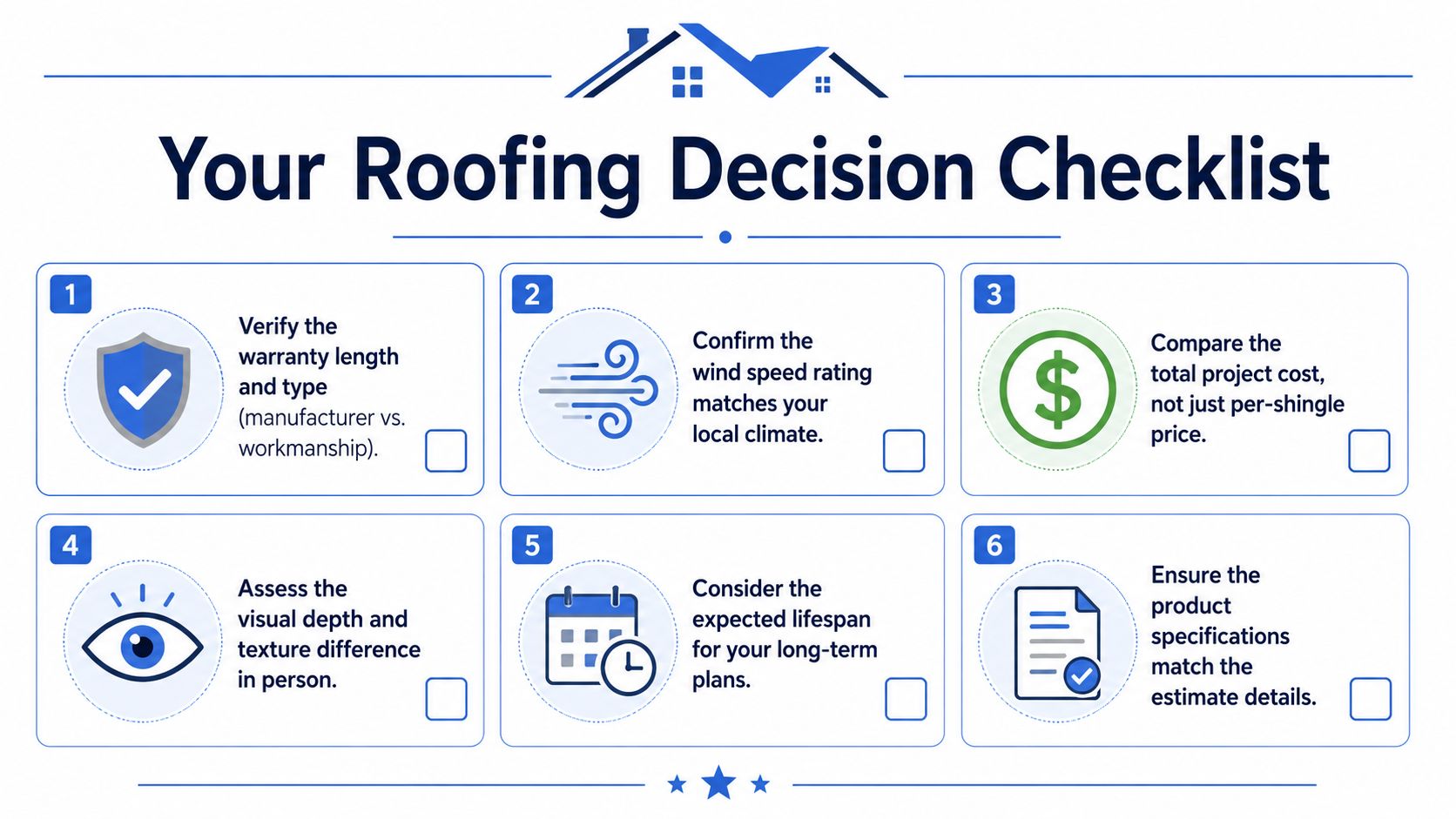
Before signing, get the exact brand, product line, color, wind classification, fastening pattern, ventilation plan, flashing scope, cleanup terms, and payment schedule in writing. Without those details, the price comparison is incomplete.
HIBCO ROOF LLC provides Columbus-area roof inspections, leak repairs, storm and hail assessments, shingle replacements, insurance claim assistance, and written estimates identifying the proposed roofing system. Visit HIBCO ROOF LLC to request an evaluation and compare three-tab and architectural options against your home, ownership timeline, and central Ohio storm exposure.