
Gutters typically last 10 to 30 years depending on material, but replacement is driven more by visible failure and local weather stress than by age alone. In practice, vinyl often lands around 10 to 20 years, aluminum around 20 to 30 years, and galvanized steel around 15 to 25 years, while premium metals can last much longer when conditions are right.
If you're reading this after spotting water spilling over the front gutter in a Columbus storm, or after finding paint peeling off the fascia on a dry day, you're asking the right question. Most homeowners don't really need a date on a calendar. They need to know whether their current gutter system is still protecting the house, or whether it's started losing that fight.
In central Ohio, that answer changes fast. Freeze-thaw cycles, heavy spring rain, summer debris, and fast-moving runoff can turn a gutter that looked acceptable last fall into a problem by the next season. The better way to answer how often gutters should be replaced is to look at material, condition, drainage performance, and how the system handles local weather.
Table of Contents
- Why a Calendar Answer Does Not Really Answer the Question
- How Long Different Gutter Materials Actually Last
- Warning Signs Your Gutters Need Replacement
- How Maintenance and Seasonal Care Shift the Replacement Timeline
- Repair or Replace and How to Decide
- Seamless Gutters and Leaf Guards as a Replacement Upgrade
- A Simple Framework to Decide If It Is Time
Why a Calendar Answer Does Not Really Answer the Question
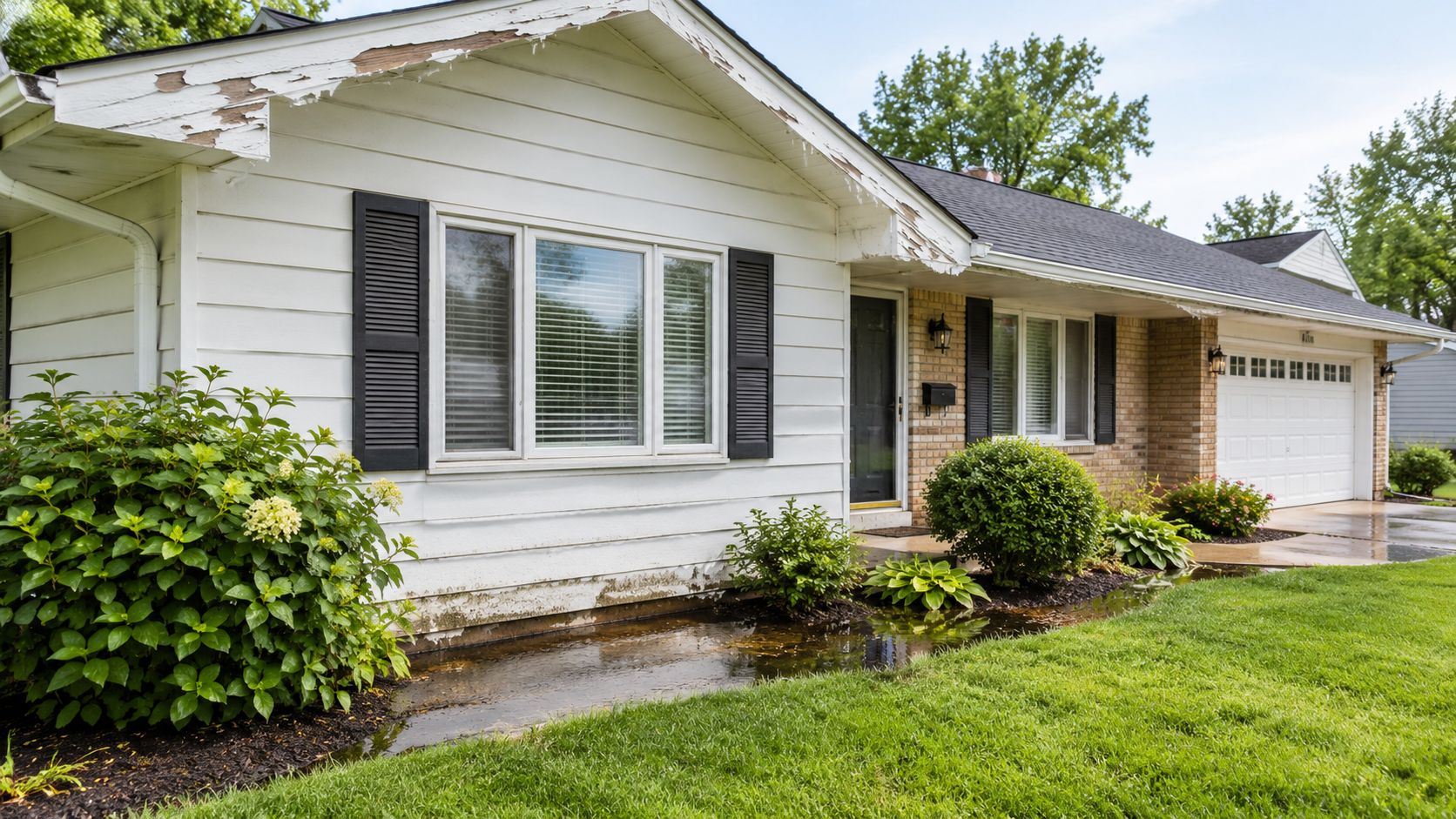
A Columbus-area homeowner usually asks this question after something has already gone wrong. Water is overshooting the gutter in a hard rain. Paint is peeling at the fascia. Mulch is washing out below a roof edge. At that point, the install year matters less than one thing. Is the gutter system still controlling roof runoff, or has it started letting water reach places it should not?
Age matters less than performance
Published homeowner guidance gives broad lifespan ranges by material, but those ranges are only a starting point. Analysts at Angi note that service life can vary widely by gutter type and installation quality in Angi's gutter lifespan guide. That matches what shows up in the field.
Two houses can have gutters the same age and need completely different recommendations. One system still has solid pitch, secure fastening, and clean discharge through the downspouts. The other has seam leaks, standing water, and sections pulling away from the fascia. Age did not decide that. Condition did.
The practical question is simple. Does the system still move water off the roof and away from the house during real weather?
Central Ohio changes the timeline
Central Ohio shortens the usefulness of a gutter system in uneven ways. Freeze-thaw cycles loosen spike-and-ferrule systems and stress old seams. Heavy spring rain exposes poor pitch fast. Tree debris from maples and oaks keeps troughs wet longer, which speeds corrosion in steel and adds weight to already weak hangers.
That is why a calendar answer misses the decision. A front gutter over a simple roof line may stay serviceable for years longer than a rear run taking water from two valleys and sitting under mature trees. Sun exposure matters. Debris load matters. Roof design matters. Maintenance history matters.
On replacement jobs around Columbus, the pattern is consistent. Systems rarely fail all at once because they hit a birthday. They fail because local conditions keep pushing on the same weak points until overflow, separation, or recurring leaks become normal.
A better way to judge timing is to look at four things:
- Drainage performance: Water should reach the downspouts without spilling over the front edge in a normal storm.
- Structural condition: Sagging runs, loose fasteners, and sections pulling off the house usually mean the problem is beyond a simple cleaning.
- Leak pattern: A single corner drip can be a repair. Multiple seam leaks and wet fascia in several areas usually point toward replacement.
- Site stress: Heavy tree cover, ice buildup, and concentrated runoff from steep roof sections shorten the timeline.
For many Columbus homes, that condition-based review leads to the same upgrade path. Instead of reinstalling another seamed system with the same clog points, HIBCO ROOF commonly installs one-piece aluminum runs with gutter guards where the roof and tree cover justify it. That does not make sense on every house, but it often makes sense where repeated seam leaks and debris buildup are what pushed the old system to failure.
So the useful answer is not a number of years. Replace gutters when they stop protecting the house reliably under your actual roof conditions and your actual Ohio weather.
How Long Different Gutter Materials Actually Last
Material matters, but the useful question is how that material fails after years of Ohio rain, summer heat, winter ice, and expansion and contraction at the joints. Two gutter systems can be the same age and be in very different shape depending on what they are made of, how they were installed, and how much abuse they take from tree debris and hard runoff.
Gutter lifespan by material in Central Ohio
| Material | Typical Lifespan (years) | Common Failure Mode |
|---|---|---|
| Vinyl | 10 to 20 | UV embrittlement, cracking, brittle joints |
| Aluminum | 20 to 30 | Seam separation, denting, localized leaks |
| Galvanized steel | 15 to 25 | Rust and corrosion, especially at seams |
| Copper | 50+ | Usually long-term wear rather than early failure |
| Zinc | About 50 | Long service life, fewer typical residential failures |
| Stainless steel | About 50 | Long service life, higher-cost specialty choice |
Those ranges are only a starting point. In Columbus, freeze-thaw movement and debris load usually decide whether a system lands near the short end or the long end.
Vinyl usually gives the least margin for error. The material itself is affordable, but the joints and brackets tend to show stress sooner in a climate with repeated temperature swings. On homes with heavy shade, clogged runs, or ice sitting in the gutter, vinyl often turns into a patch-and-reseal cycle.
Aluminum is what we replace and install most often on standard residential homes. It resists rust, keeps cost in a reasonable range, and holds up well if the pitch, hanger spacing, and outlet placement are right. The weak spots are usually seams, end caps, and areas that get bent by ladders or overloaded by wet debris.
Galvanized steel starts strong but gets less forgiving once the protective coating breaks down. Around central Ohio, that usually shows up first at fasteners, seams, and low spots that stay wet. After rust starts spreading, repairs buy time, but they rarely reset the clock in a meaningful way.
Copper, zinc, and stainless steel last longer, but they only make sense on certain houses. Historic homes, high-end custom work, and owners who plan to stay long term can justify the added cost. On a typical suburban replacement, better drainage layout and fewer leak points usually matter more than upgrading to a premium metal.
That is why HIBCO ROOF commonly steers homeowners toward one-piece aluminum runs when an older sectional system is wearing out. In this climate, reducing seams often does more for service life than chasing the longest material lifespan on paper.
Warning Signs Your Gutters Need Replacement
Most homeowners can catch gutter failure before climbing a ladder. That's the safest place to start, and often the most revealing.
What to check from the ground
Walk the perimeter after a storm, then again on a dry day.
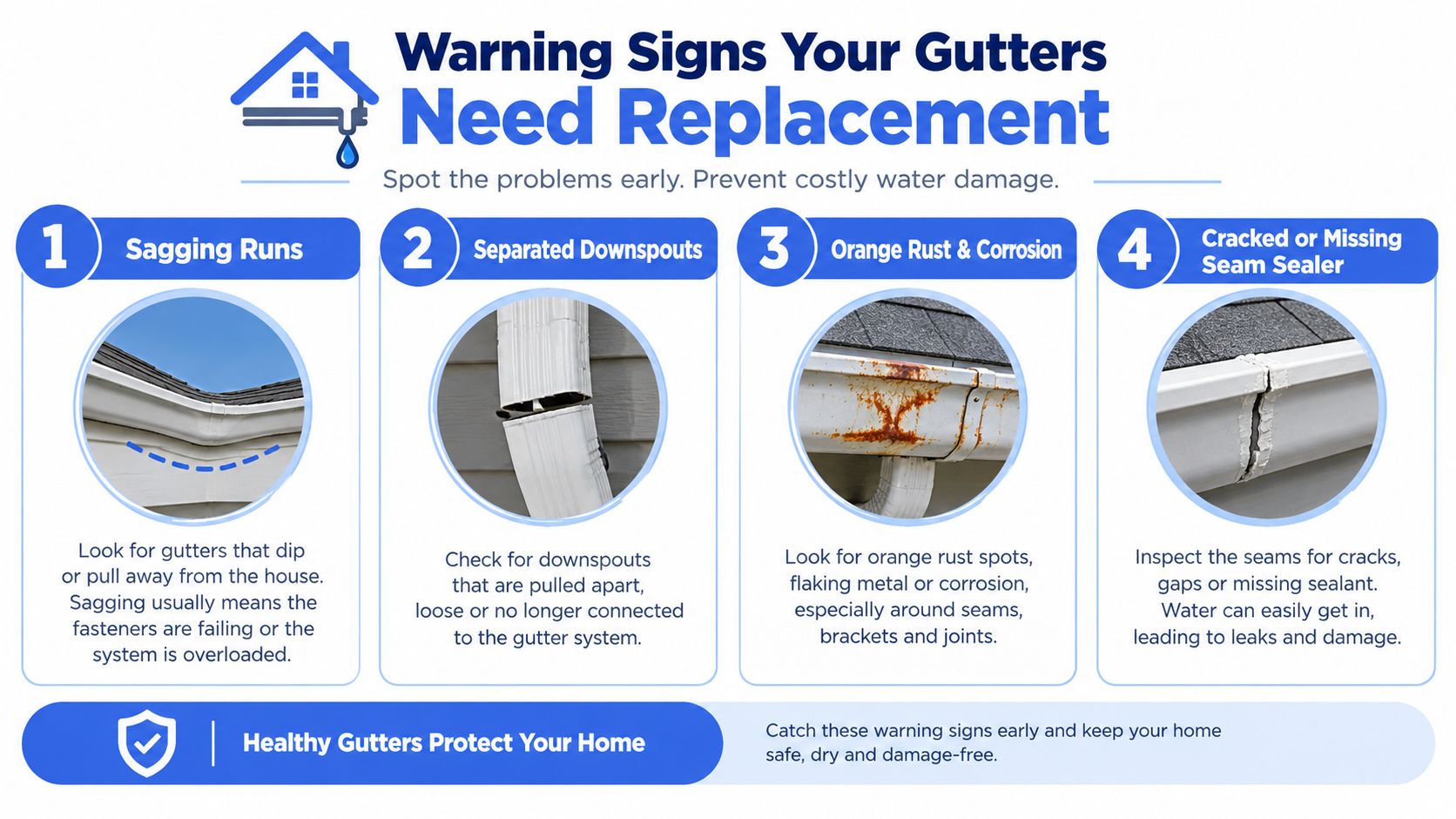
- Sagging runs: A dip in the middle usually means hanger stress, poor pitch, or water weight that has distorted the run.
- Separated downspouts: If joints have pulled apart, water is likely discharging at the wall or foundation instead of the outlet.
- Rust streaks or staining: Orange marks on steel components and dark staining below seams point to recurring leaks.
- Peeling fascia or soffit paint: Water doesn't need a flood to cause this. Repeated minor overflow does the job.
- Mulch washout or soil channels: The ground often tells you where the gutter system is failing before the gutters do.
If you want a homeowner-friendly maintenance reference to compare against your own observations, these Cumming gutter cleaning tips from Hayes Painting give a useful basic checklist.
What to confirm up close
If you can inspect safely, look for signs that the gutter has stopped functioning as a system rather than just getting dirty.
- Standing water after the weather has cleared points to bad pitch or a low spot.
- Soft seams or loose end caps usually mean seal failure.
- Cracks, dents, fading finish, rust, or corrosion are all practical replacement triggers, especially when several show up together, as noted in this gutter deterioration summary.
- Drips from joints on a dry day often mean trapped water is leaking through failed seams.
- Mildew below the gutter line tells you water has been escaping the channel repeatedly.
Two simple field checks
A couple of basic tests help sort out dirt from true failure.
- Level check: Industry guidance commonly uses a minimum pitch of 1/4 inch per 10 feet, roughly a 1:480 slope ratio, to keep water moving in Roofing Calculator HQ's slope guidance. If the run has reversed or flattened, cleaning won't fix it.
- Hose test: Run water at the high end and watch whether it reaches the outlet without ponding or spilling over the front edge.
If you see overflow, sagging, and water marks near the foundation at the same time, stop treating it like a minor maintenance issue.
How Maintenance and Seasonal Care Shift the Replacement Timeline
Cleaning matters, but it isn't a magic reset button. A sound gutter system can get extra life from regular care. A worn-out one just gets cleaned before it leaks again.
What maintenance actually changes
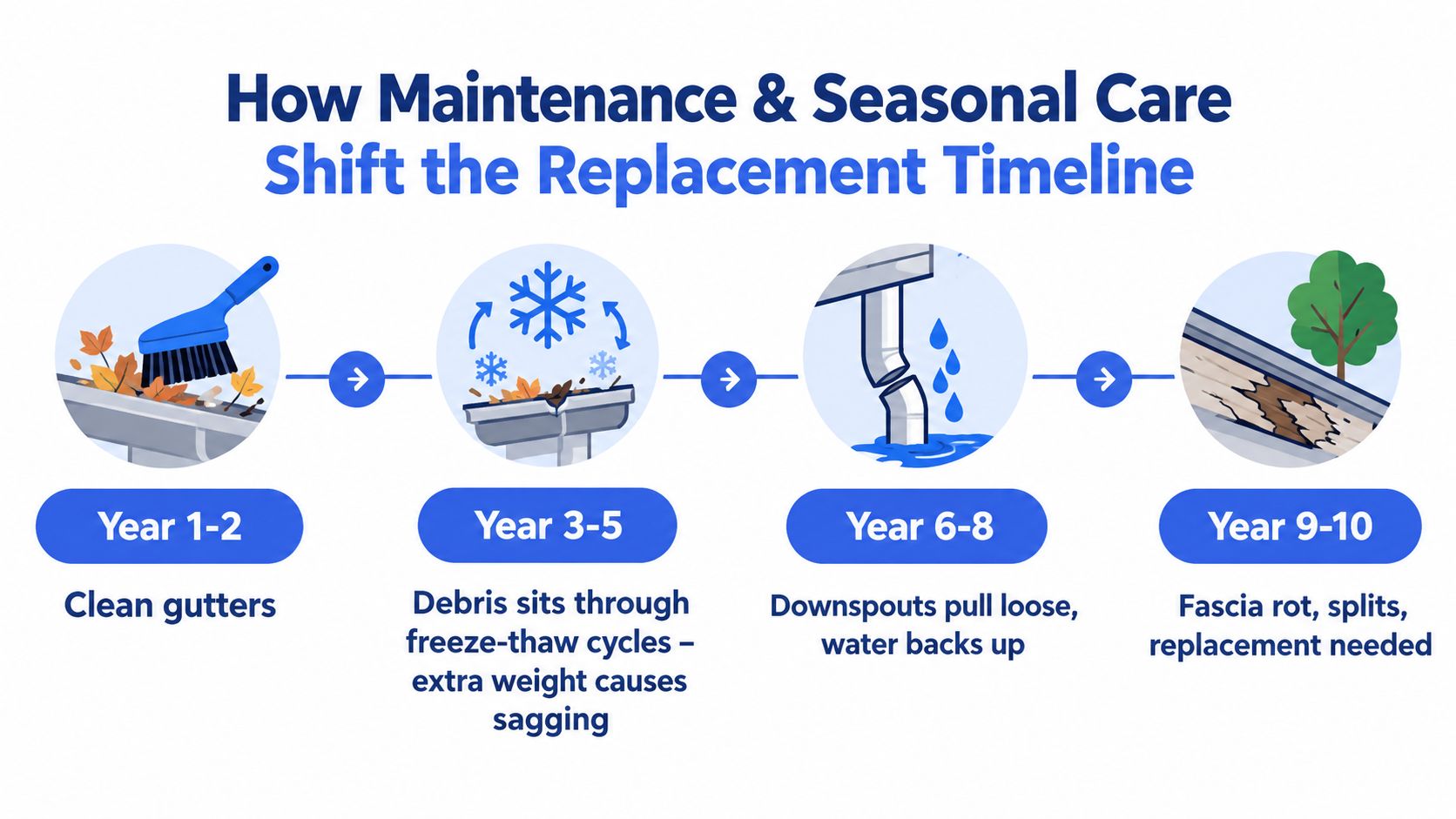
Independent guidance notes that regular cleaning can extend a typical 15 to 25-year gutter service life to 30 years or more, while neglected systems fail sooner because clogging increases standing water, joint stress, rust, corrosion, and bracket fatigue in this gutter maintenance guide. That same guidance says debris-heavy homes often need inspection and cleaning at least twice per year, and some require three cleanings annually.
That fits central Ohio well. Mature maples, oak leaves, spring seed drop, and storm debris don't respect a once-a-year schedule. If a house is tucked under heavy tree cover, twice a year is the realistic baseline, not the aggressive plan.
When cleaning stops solving the problem
Use cleaning frequency as a diagnostic tool.
- If the gutters clear out and perform normally, maintenance is buying you useful time.
- If the same run overflows again within a short stretch, the issue may be pitch, sizing, too few outlets, or seam failure.
- If brackets keep loosening or low spots keep returning, the system is aging mechanically, not just collecting debris.
For homeowners trying to line up maintenance around local seasons, HIBCO ROOF's guide on when to clean gutters is a practical place to compare timing against your own tree cover and roof layout.
Clean gutters protect a good system. They don't rescue a failing one.
Repair or Replace and How to Decide
A small framework beats guesswork. The decision usually comes down to where the failure is, how widespread it is, and whether the gutter still has enough useful life left to justify repair.
When repair still makes sense
Repairs are reasonable when the issue is isolated and the rest of the system is solid.
| Factor | Repair Makes Sense | Replace Instead |
|---|---|---|
| Leak location | One seam or one end cap | Multiple leaks across one or more runs |
| Shape of run | Straight, proper pitch remains | Sagging sections or repeated low spots |
| Fasteners | One loose bracket in solid fascia | Many pullouts or soft fascia behind hangers |
| Material condition | Surface issue, no widespread wear | Corrosion, cracks, brittle sections, recurring failures |
| Repair history | First meaningful repair | Same area has already been patched repeatedly |
| Drainage result | Hose test confirms full flow after repair | Overflow or standing water remains after repair |
A single leaking corner joint on a younger system isn't a replacement case. One damaged downspout elbow after a storm isn't either. Those are repair jobs.
When replacement is the smarter move
Replacement becomes the better call when problems stack up. Neutral guidance on replacement timing says there is no fixed schedule, and that condition should drive the decision, especially when several joints, brackets, or sections are failing at once in Daniel Roofing and Guttering's condition-based discussion.
That is usually the tipping point in the field. Once you have multiple seam leaks, sagging pitch, and water damage below the eaves, the system isn't suffering from one bad part. It has become unreliable.
A similar logic shows up in other exterior trades. Homeowners comparing repair against replacement can see the same decision pattern in these window replacement vs repair costs from C & C Windows & Doors. At some point, repeated patching costs time and money without restoring dependable performance.
For Columbus homeowners pricing the next step, HIBCO ROOF's gutter replacement cost guide is useful for framing a real estimate against repeated repair visits.
The point of no return
Replace the system when:
- Leaks are spread out, not isolated.
- Pitch is failing along a run.
- Fascia is soft or rotted where hangers attach.
- Repairs keep revisiting the same problem, especially at seams and outlets.
At that stage, you are no longer fixing a defect. You are financing the decline of the system.
Seamless Gutters and Leaf Guards as a Replacement Upgrade
A Columbus homeowner usually asks about replacement after a hard rain. Water is jumping a joint over the front walk, the maples are dropping debris again, and nobody wants to pay for another patch that may not last through winter. At that point, the better question is not how many years the old gutters made it. The better question is what upgrade will hold up longer on this house, with this roofline, in this weather.
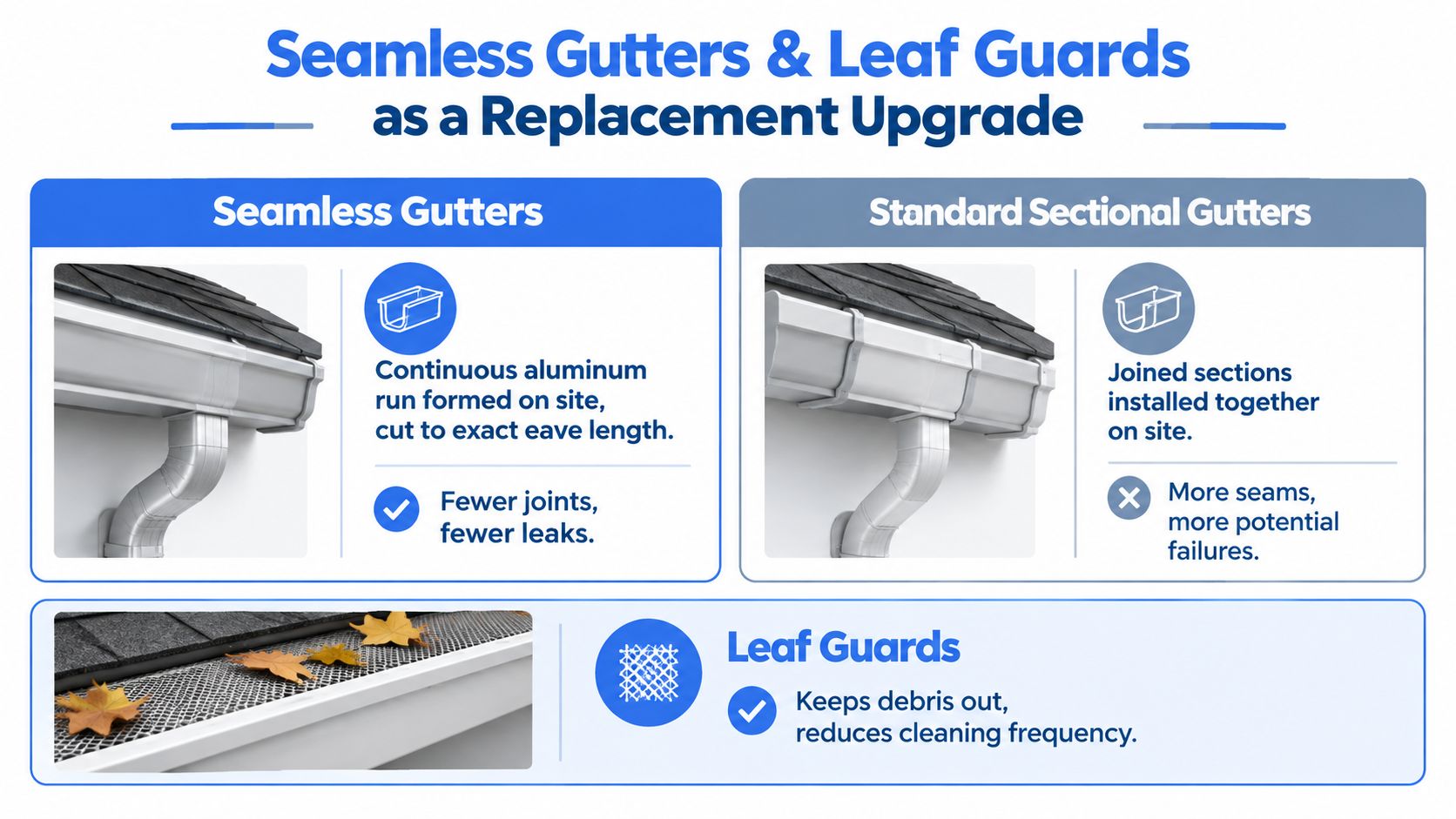
Why continuous-run gutters change the failure pattern
Standard sectional systems have more connection points, and connection points are where I see recurring trouble first. Sealant ages. Joints shift. Ice sits in the weak spots. In central Ohio, repeated freeze-thaw cycles and summer downpours expose those small failures fast.
A continuous-run aluminum system formed to the length of the eave removes most of those joint locations. That does not make the gutter maintenance-free. It does change where problems show up. Instead of chasing leaks at multiple connections, the focus shifts to hanger spacing, outlet capacity, pitch, and whether the fascia behind the gutter is sound enough to carry the load.
That is a better trade in our market.
What to specify on a replacement job
For many homes, 5-inch K-style aluminum is a solid fit. It handles normal roof runoff well and keeps the profile proportional to the house. I move homeowners toward 6-inch more often when the roof is steep, valleys dump water into one section, or the runs are long enough that overflow becomes a real concern during Ohio storm cells.
Leaf protection also needs to match the trees, not just the sales pitch. Fine-mesh covers usually make more sense around maple helicopters, pine needles, and asphalt shingle grit. Larger-opening covers can work where the debris is mostly broad leaves and the roofline is simple.
The details that matter on install are straightforward:
- Hanger spacing that can handle wet debris and winter load
- Downspouts sized for the roof area feeding them
- Pitch that drains consistently without leaving low spots
- Clean transitions at corners, walls, and kick-out locations
- A fascia check before new metal goes up
If you want to see the type of continuous-run gutter installation with leaf guard options commonly used on Columbus-area homes, that page shows the configuration clearly.
One local option in this category is HIBCO ROOF LLC, which installs gutter and leaf guard systems as part of residential exterior work in the Columbus market.
A Simple Framework to Decide If It Is Time
If you want a clean way to answer how often should gutters be replaced on your own house, use a four-step check.
The four-step decision
Identify the material and rough age
Don't worry about finding the exact install date if you can't. The goal is to determine whether you're dealing with vinyl, aluminum, steel, or a premium metal, and whether the system is relatively new, midlife, or likely near the end of its expected run.Look for the three replacement triggers
The clearest triggers are joint or section failure, sagging or pulled fasteners, and water damage near the foundation or below the eaves. If you can confirm two of those on the same elevation, replacement usually deserves serious consideration.Compare repair effort to remaining useful life
A repair only makes sense if it restores dependable drainage and leaves enough good system behind to justify the work. If you already know the material is in the latter part of its service life and problems are spreading, repairs are often temporary.Choose the replacement path that fits the house
Standard sectional aluminum can still work on some homes. Aluminum is usually the stronger long-term choice for reducing leak points. Aluminum with leaf protection makes the most sense where debris is constant and access for cleaning is a hassle.
A practical threshold
Most homeowners don't need a complicated spreadsheet. Use this simple threshold instead.
- One isolated issue: repair it.
- Two visible failure triggers: start planning replacement.
- Recurring problems in the same area: stop assuming the next patch will hold.
- Evidence of water reaching fascia, siding, or foundation: treat it as a building-envelope problem, not just a gutter issue.
The right time to replace gutters is when they stop protecting the house consistently.
A written on-site assessment helps confirm slope, downspout placement, fascia condition, and whether removal will expose soffit or trim repairs that should be handled at the same time.
If your gutters are sagging, leaking at several seams, or pushing water back toward the house, HIBCO ROOF LLC can inspect the system, measure for replacement, and provide a written estimate for gutters, downspouts, and leaf guard options. For Columbus and central Ohio homeowners who want a clear answer instead of another temporary patch, visit HIBCO ROOF LLC to schedule an estimate.