1-inch hail is the widely used severe-weather threshold where asphalt shingle damage can begin, while heavier roofing materials may need hail around 1.25 to 2 inches before visible damage appears. Older, thinner, or weathered shingles can still be harmed by hail around 3/4 inch to 1 inch.
You pull into your Columbus driveway after a summer storm and notice the usual signs of rough weather, leaves on the lawn, water in the gutter, and a few white hailstones melting beside the steps. From the ground, the roof looks normal. No shingles are missing, and there's no obvious ceiling stain.
That doesn't necessarily mean the roof came through untouched. Hail can remove protective granules, bruise the asphalt beneath them, dent metal components, or weaken a roof without creating an immediate leak. The right answer to what size hail damages roofs depends on more than diameter. Roof material, age, impact angle, wind, and the number of strikes all change the outcome.
Table of Contents
- Why Hail Damage Is Harder to Spot Than You Think
- How Hail Size Is Measured and Why It Matters
- What Size Hail Damages Different Roof Materials
- Factors That Make the Same Hail More Destructive
- Real Examples of Hail Damage on Roofs and Exteriors
- How to Inspect and Document Hail Damage for Insurance
- Repair Prevention and Next Steps for Columbus Homeowners
Why Hail Damage Is Harder to Spot Than You Think
After a Columbus summer storm, your driveway may be covered with leaves, gutter debris, and melting hailstones while the roof still looks unchanged. No shingles are missing, and the ceiling is dry. Weeks or months later, dark scattered spots may appear where hail knocked away the shingle's protective granules.
That surface can still repel rain today. Its exposed asphalt has less protection from sunlight and weather, so the roof may wear faster even without an immediate leak.
Damage can hide in patterns
Hail rarely affects every part of a roof equally. One slope may face the storm directly while another is sheltered by the roof's angle or nearby trees. Two neighboring Columbus homes can also show different results because their roofing materials, ages, orientations, and previous wear differ.
A single storm is only part of the story. Repeated smaller strikes can gradually remove surface protection, leaving a weathered roof more vulnerable when the next storm arrives. Size charts often miss this cumulative wear.
The roof can look intact while its protection is reduced
Asphalt shingles rely on ceramic granules to shield the underlying asphalt from ultraviolet light and weathering. Hail can dislodge those granules without tearing the shingle or creating a visible hole.
Finding granules in your gutter can provide an early clue, but loose granules also come from normal aging, installation debris, or gutter abrasion. An inspection should consider whether the granule loss is concentrated, then compare it with impact marks, soft bruising, and damage to exposed accessories.
Practical rule: A roof without a leak may still be damaged.
Cosmetic marks and functional damage differ
A dented metal vent may remain sealed and be mainly cosmetic. A soft bruise in an asphalt shingle is more concerning because the impact can compress or fracture the mat beneath the granules. Cracked tile, lifted flashing, or a weakened seal can allow water inside even while the attic remains dry.
A roof-impact study from the American Meteorological Society supports evaluating hail risk by roofing system and material, rather than relying on stone diameter alone.
An early inspection can identify weakened areas before they become leaks. Treat hail size as a starting point, then judge the roof's condition, exposure, and history of previous storms.
How Hail Size Is Measured and Why It Matters
A weather alert may report quarter-sized hail while your neighbor sees golf-ball-sized stones a few streets away. Hail reports describe the stone's diameter, usually by comparing it with familiar objects. Size helps estimate risk, but the roof's material, age, condition, and exposure determine what that impact does.
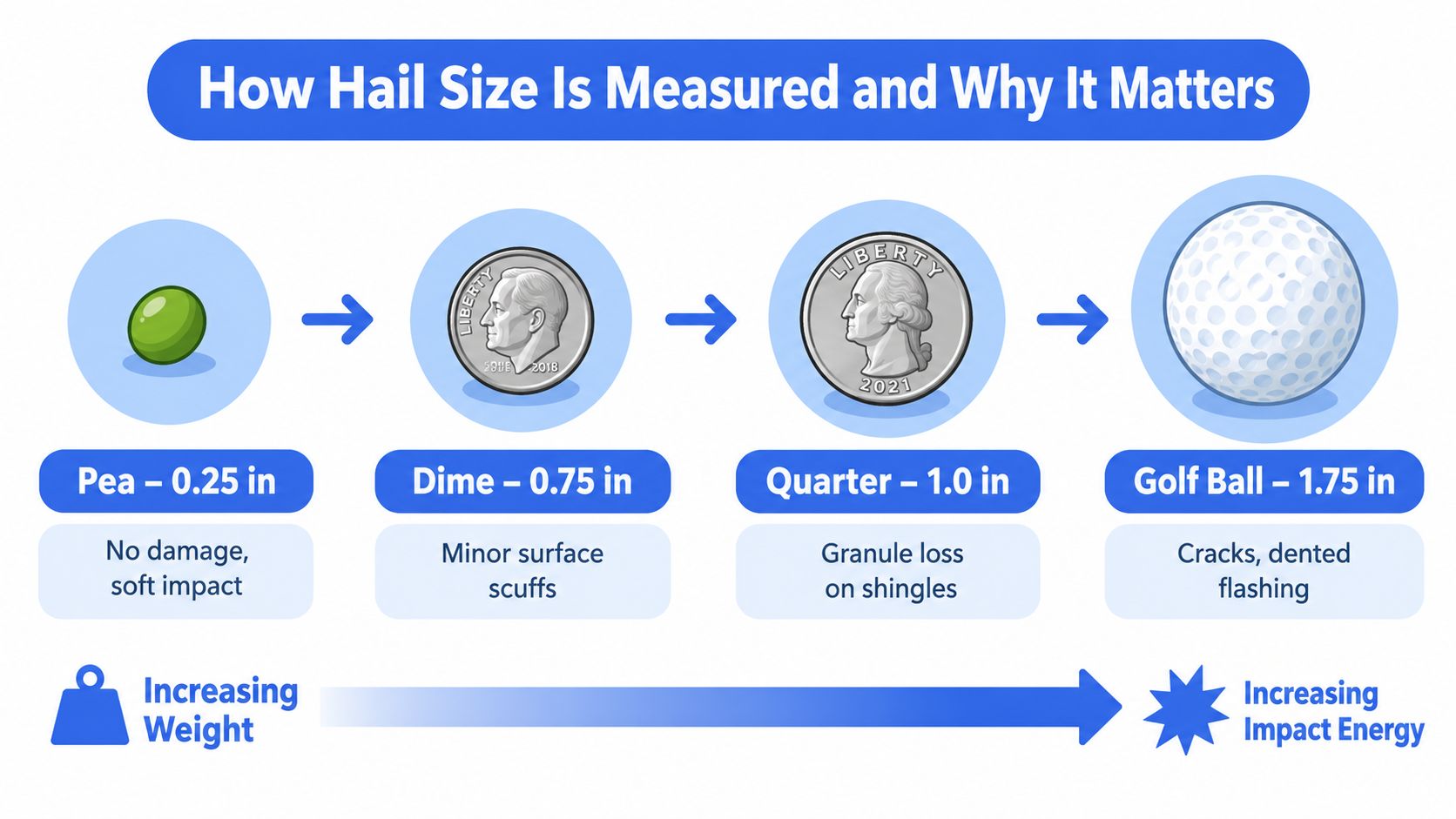
Common comparisons make storm reports easier to interpret:
- Pea: About 0.25 inches. Small impacts may leave little visible evidence, especially on newer, flexible materials.
- Dime: About 0.75 inches. Repeated hits can wear vulnerable roofing surfaces even when individual marks are difficult to see.
- Quarter: 1 inch. This is the widely used severe-hail benchmark.
- Golf ball: About 1.75 inches. Larger stones can affect more roofing and exterior materials, including shingles, tile, flashing, gutters, siding, and skylights.
Why a small increase changes the impact
Diameter is only the starting point. A larger hailstone contains more mass, so it can deliver a harder blow. Wind and falling speed also affect the impact, much like a heavier baseball striking the same surface. The change from a smaller stone to a quarter-sized stone is therefore more than a visual difference.
The National Weather Service defines severe hail as 1 inch, or 25.4 millimeters, in diameter. That benchmark helps weather observers, insurers, and homeowners communicate storm risk. Research has found that asphalt shingle damage can begin around this size, while concrete tile may withstand smaller stones depending on its construction and condition.
A threshold cannot predict the result for every roof. Older shingles may bruise under smaller hail, and repeated sub-severe storms can gradually remove protective granules or weaken seals without producing an immediate leak. A newer, heavier system may tolerate the same storm better. The useful question is whether the reported size matches physical evidence on the roof.
How to interpret a weather report
Use the report as a reason to inspect, not as a final diagnosis. Quarter-sized hail warrants attention to roofing age, material, and storm exposure. Golf-ball-sized hail calls for a closer review of the roof and exterior, including vulnerable edges and accessories.
Reports also describe observed or estimated stones, not every stone that reached your property. A single storm can produce mixed sizes and uneven coverage. Check for concentrated granule loss, bruising, cracks, dents, or loosened components, then document those findings before deciding whether repair is needed.
What Size Hail Damages Different Roof Materials
Roofing materials respond differently because they vary in thickness, flexibility, surface texture, and construction. Lightweight asphalt shingles can bruise sooner than heavyweight shingles. Wood, concrete, and clay products have different failure points, and tile can crack or break in ways that aren't obvious from the lawn.
| Roof Material | Approximate Damage Threshold | What Changes at That Size |
|---|---|---|
| Lightweight asphalt shingles | 1 inch | Granule loss and shingle bruising can begin |
| Heavyweight asphalt shingles | 1.25 inches | Impact damage becomes more likely in the thicker shingle system |
| Wood shingles or shakes | 1.25 inches | Splitting, dents, or impact marks may develop |
| Medium wood shingles and clay tile | 1.5 inches | Cracking and surface damage become more likely |
| Concrete tile | 1.75 inches | Cracks, chips, or damage to vulnerable edges may appear |
| S-shaped concrete tile | About 2 inches | Larger hail is associated with a higher risk of functional damage |
| Membrane systems | About 1.5 to 2.5 inches | The threshold varies by membrane construction |
The National Roofing Contractors Association's roof-specific guidance lists thresholds of 1 inch for lightweight asphalt, 1.25 inches for heavyweight asphalt and wood shingles, 1.75 inches for concrete tile, and 1.5 inches for clay tile. Haag Engineering's published hail threshold table gives similar material-based ranges and shows why a single storm size cannot predict every roof's condition.
A major roofing-impact study found that 3-tab organic shingles may be damaged by 1-inch hail, while 3-tab fiberglass shingles and flat concrete tiles may begin showing damage around 1.25 inches. Heavy wood shakes and thicker fiberglass shingles may need around 1.5 inches, while S-shaped concrete tiles may reach their threshold around 2 inches. The research summary in Natural Hazards and Earth System Sciences also describes a field study where hail smaller than about 1.2 inches rarely damaged roofs or windows, while hail larger than about 2 inches caused substantial damage in over 50% of responses.
The material threshold is a screening guide, not a verdict. An inspector still needs to evaluate the actual roof system.
If you're comparing shingles with another roof type, review how metal roofing differs from asphalt before treating a dent, scuff, or cracked component as a reason for replacement. Repeated impacts matter too. A 2025 materials study found that 25.4 mm hail produced nearly 30% of the granule loss caused by 50.8 mm hail, which shows how smaller stones can create meaningful cumulative wear even without an immediate leak. That finding is reported in the Frontiers in Materials study.
Factors That Make the Same Hail More Destructive
Two houses on the same Columbus street can experience the same storm and end up with different roof conditions. One may have recently installed, flexible shingles. The other may have weathered shingles with reduced granule coverage and a brittle surface.
Roof age and existing wear
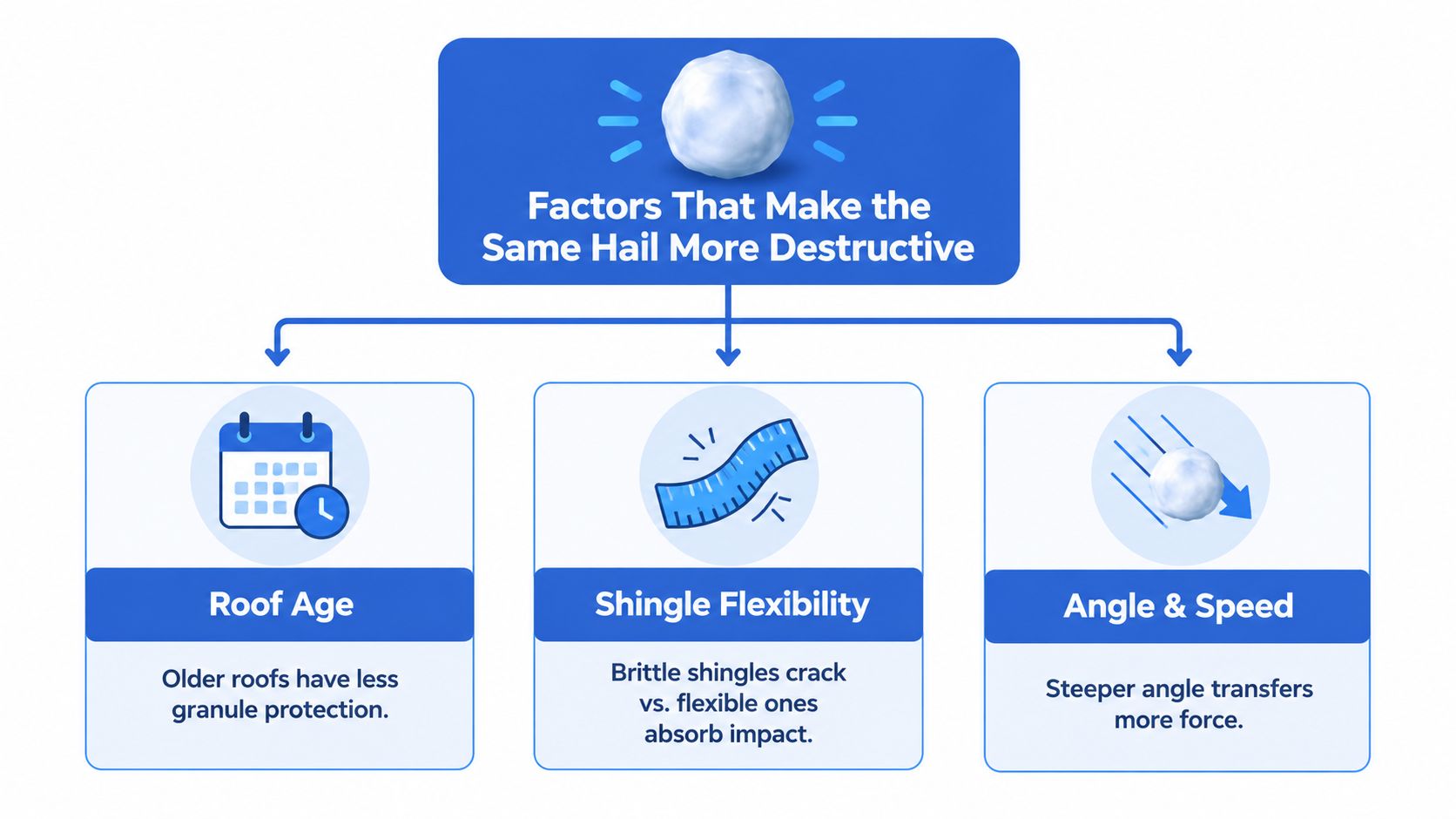
Older roofing generally has less protective granule coverage and less flexibility. Prior storms may have already weakened the surface, so a later impact can create damage that a newer shingle would absorb.
This is why hail around 3/4 inch to 1 inch can matter on an older or thinner asphalt roof, according to the roofing inspection guidance from InterNACHI. The threshold moves with the condition of the material.
Flexibility changes the way a shingle absorbs force
A flexible shingle can bend under impact and recover. A brittle shingle is more likely to crack, lose granules, or develop a bruise in the asphalt mat. Temperature also affects flexibility. A roof's response on a warm afternoon may differ from its response after the material has cooled.
The impact mechanism is straightforward. The shingle flexes downward, stress builds in the mat, and the blow can dislodge granules or create a fracture. Some damage becomes easier to see after repeated impacts or additional aging.
Angle, wind, density, and impact count
A steep roof slope changes the angle at which hail meets the surface. Wind can drive stones against roof planes, siding, vents, and windows instead of allowing them to fall straight down. Dense, solid ice transfers more force than soft hail that breaks apart at impact.
Storm duration and impact count also matter. One stone may leave a mark, while many strikes across the same area remove more granules and increase the chance of bruising.
Inspection clue: Look for a pattern of repeated impacts across the exposed roof field, not only one dramatic mark.
That pattern helps distinguish isolated cosmetic damage from a broader reduction in roof protection. The Verisk 2025 roofing report highlights the concern that repeated sub-severe hail can weaken future impact resistance and accelerate aging before obvious leaks appear.
Real Examples of Hail Damage on Roofs and Exteriors
A roof inspector doesn't look only for missing shingles. The more telling signs can be subtle, especially on asphalt roofing.
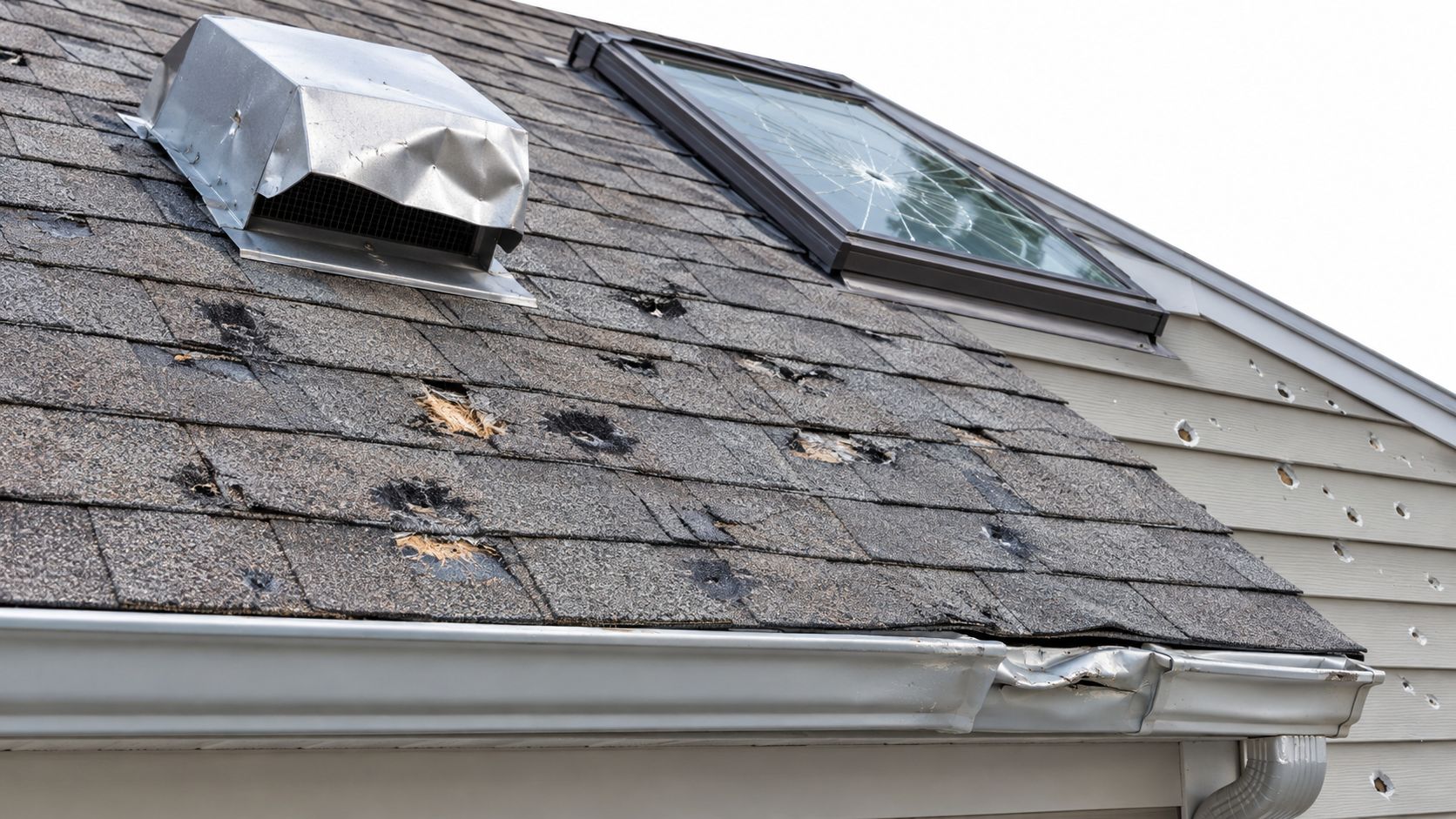
On a shingle, hail can leave a soft bruise that feels slightly depressed compared with the surrounding surface. Granules may be missing from a dark, irregular spot, exposing the underlying asphalt. A mat fracture may remain hidden beneath the surface until the shingle becomes brittle or rain reaches the damaged area.
What to check around the roof
Metal components often make storm evidence easier to find. Inspectors may see round dents in:
- Vent caps: Dents can be cosmetic, but damaged seams or fasteners may affect weather resistance.
- Flashing: Bends, punctures, or separated edges can redirect water beneath the roofing.
- Gutters and downspouts: Repeated impact marks can confirm storm exposure and indicate where hail traveled.
- Skylight frames: Dents, cracked seals, or damaged glazing need prompt attention.
Siding can show clusters of chips, dimples, or cracks on the storm-facing elevation. Windows and skylights may have visible fractures, while cracked concrete or clay tiles can create a more immediate water concern.
Cosmetic damage versus functional damage
A small dent in a metal accessory may not affect its purpose. A bruised asphalt shingle, cracked tile, or damaged flashing can reduce the roof's ability to shed water and resist later weather.
The difference isn't always visible from the ground, and walking a roof without proper equipment can damage shingles or put you at risk. If you find dents on gutters and vents, granules around downspouts, or exterior marks that match the storm direction, arrange a professional assessment rather than assuming the roof is fine.
How to Inspect and Document Hail Damage for Insurance
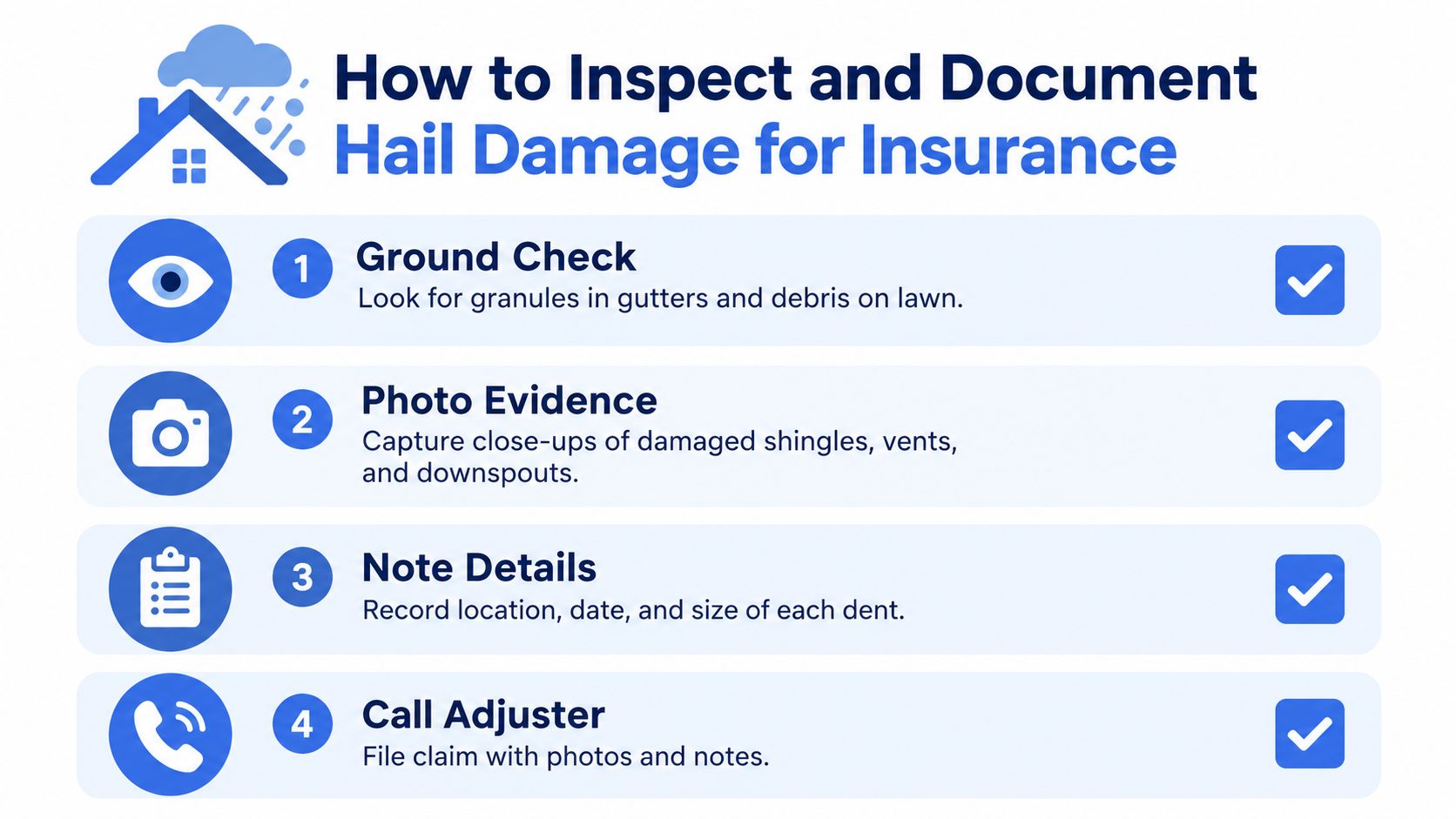
Start at ground level. Look across the roof slopes from the yard, check the gutters and downspouts, and examine siding, window screens, skylights, and outdoor equipment. Don't climb onto a wet or damaged roof, and don't treat a ladder inspection as a substitute for a trained evaluation.
Create a useful record
Take wide photographs that show the property, then closer images of individual dents, bruises, cracked tiles, missing granules, and damaged metal. Place a familiar object beside a mark for scale, but don't press on shingles or scrape away granules to make a defect easier to see.
Record the storm date, the reported or observed hail size, the roof slope or exterior elevation affected, and whether you noticed water intrusion. Keep copies of prior roof invoices, maintenance records, warranties, and any temporary repair receipts.
- Photograph collateral damage: Capture gutters, downspouts, siding, screens, skylights, vents, and flashing.
- Note active water entry: Write down the room, ceiling location, and time you first noticed it.
- Protect the interior: Use containers for drips and move valuables away from the affected area.
- Arrange temporary protection: A qualified professional can cover an exposed area safely to reduce further loss.
For insurance teams handling many files, organized photo sets and consistent notes can reduce confusion during intake. Resources about AI tools for insurance agents may help agencies manage documentation workflows, but homeowners should still preserve original images and communicate directly with their carrier.
Get an inspection before authorizing major work
A contractor can document bruised shingles, dents in metal, cracked tile, and related exterior conditions in a written assessment. Before filing or proceeding, review your policy's coverage, deductible, reporting requirements, and any deadlines with your insurance company.
The roof damage insurance adjuster guide can help you understand why clear documentation matters during the process. Avoid signing a broad agreement before you understand the scope, price, payment terms, and whether the proposed work is repair, partial replacement, or full replacement.
Repair Prevention and Next Steps for Columbus Homeowners
Start with the evidence, not the hail-size report alone. A localized bruise or damaged flashing may call for a targeted repair. Widespread granule loss, repeated bruising, cracked tiles, or an aging roof system may justify a broader replacement review.
Material and roof condition should guide that decision. A professional can compare the damaged area with unaffected areas, assess whether matching materials are available, and determine whether the roof still has reliable service life. The evaluation should also include gutters, siding, skylights, and other exterior components exposed to the same storm.
A practical prevention plan
- Schedule routine inspections: Catch loose flashing, deteriorated sealant, and aging shingles before severe weather exposes them.
- Protect drainage: Keep gutters clear so stormwater can leave the roof without backing up beneath damaged areas.
- Consider impact-resistant materials: During replacement planning, ask about shingle systems designed to improve resistance to impact.
- Maintain the roof surface: Avoid unnecessary foot traffic and address missing granules, lifted shingles, and small leaks promptly.
- Review project financing: If replacement is appropriate, ask for a written scope and financing pre-qualification options before authorizing work.
HIBCO ROOF LLC provides Columbus-area roof inspections, storm damage assessments, repairs, replacements, gutter, siding, window, and skylight services, along with insurance claim assistance and written estimates. A licensed and insured contractor can help you decide whether the damage calls for repair or replacement without relying on hail size alone.
Visit HIBCO ROOF LLC to request a Columbus-area hail inspection and a written assessment of your roof and exterior. Their team can document storm damage, discuss repair or replacement options, and help you understand the next steps before you authorize work.