Two houses on the same street can share similar siding, landscaping, and floor plans, yet one looks dated while the other looks polished. Often, the difference is above eye level. The roof occupies a large part of the visible exterior, so its color affects curb appeal, summer heat absorption, and how naturally the home fits its neighborhood.
Roof color also has a practical side. Traditional dark roofing materials generally reflect only 5% to 20% of incoming sunlight, while light-colored materials commonly reflect about 55% to 90%, according to the U.S. Department of Energy's cool-roof guide. That doesn't make a white roof automatically right for a Columbus home, because insulation, attic ventilation, shade, roof orientation, and winter heating needs still matter.
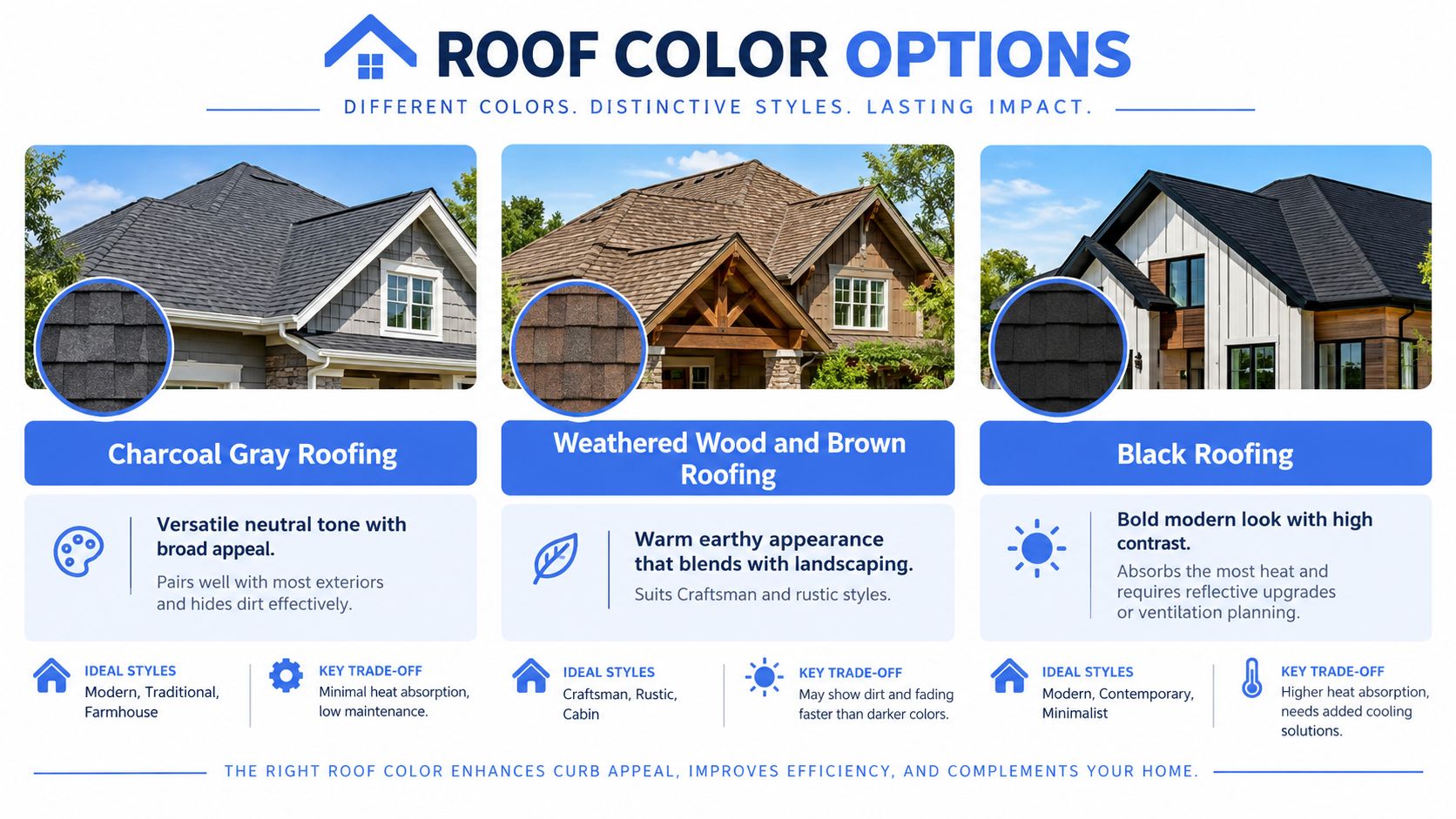
The eight roof color options below are judged by three homeowner outcomes: how the color looks, how it handles heat, and how well it fits the surrounding homes. You'll find practical trade-offs for charcoal gray, weathered wood, black, light and cool white, terra cotta, green, tan, beige, sandstone, and slate blue.
Table of Contents
- 1. Charcoal Gray Roofing
- 2. Weathered Wood and Brown Roofing
- 3. Black Roofing
- 4. Light and Cool White Roofing
- 5. Terra Cotta and Red Roofing
- 6. Forest Green and Sage Green Roofing
- 7. Tan, Beige, and Sandstone Roofing
- 8. Slate Blue and Blue-Gray Roofing
- 8 Roof Color Options Comparison
- Choosing the Right Roof Color for Your Home
1. Charcoal Gray Roofing
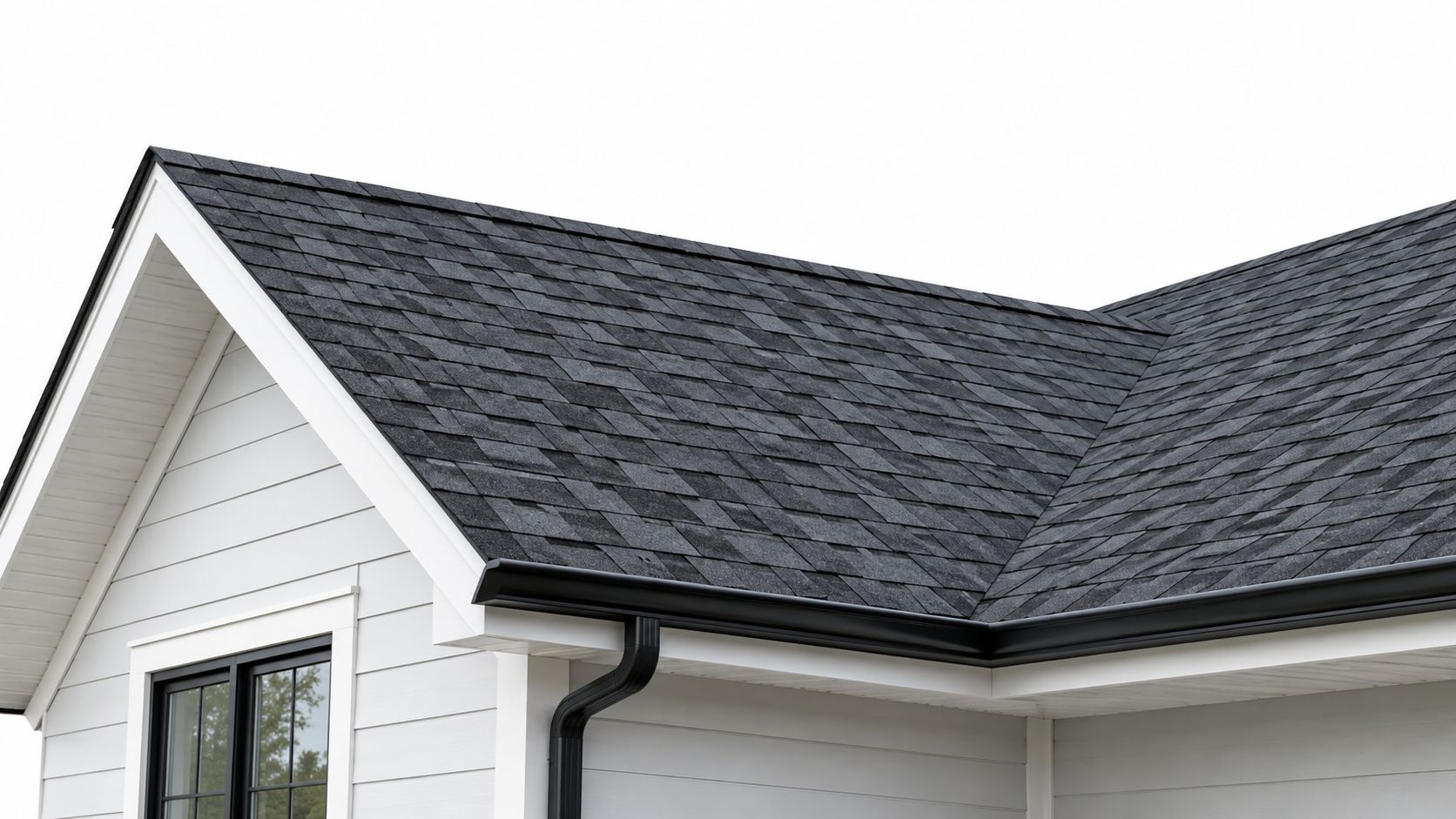
Charcoal gray remains one of the safest choices for a homeowner who wants a roof that looks current without becoming the main feature of the house. It works with white, cream, blue, green, beige, and many brick exteriors. On a typical Columbus-area subdivision home, charcoal architectural shingles can give vinyl or fiber cement siding a sharper, more finished appearance.
The color also hides ordinary roof grime and minor visual wear better than very light shingles. That matters on homes surrounded by trees, where pollen, dust, and organic debris can make pale roofing look uneven. If the lot is shaded, an algae-resistant product is worth discussing with the roofer.
Practical rule: Coordinate charcoal with the gutter and fascia colors, but don't feel obligated to match every exterior component exactly. A slight contrast usually looks more deliberate.
The heat and neighborhood trade-off
Charcoal is still a dark roof color, so it generally absorbs more sunlight than a light or engineered cool-color product. The DOE explains that unreflected sunlight becomes heat and that a white or cool-color roof can reflect up to 90% of incident sunlight, with potential annual air-conditioning energy reductions of as much as 15% in a single-story building under the conditions described in its guide. Actual results vary with the roof assembly, insulation, attic ventilation, HVAC system, climate, and aged reflectance.
Reflective granules and cool-color formulations can narrow the performance gap without forcing you into a bright roof. Ask for the product's tested solar reflectance rather than judging performance from the word “charcoal” alone.
View a sample board or roof design visualization in natural daylight before ordering. HIBCO ROOF LLC offers visualizations that can help Columbus homeowners compare charcoal blends on the actual house.
2. Weathered Wood and Brown Roofing
Weathered wood and brown roofing bring warmth to an exterior without the stark contrast of black or bright white. The blended appearance can echo aged cedar shakes, timber, or natural bark, which makes it a strong fit for Craftsman, farmhouse, Colonial, and wooded-lot homes.
These colors usually work well beside brick, stone, stained wood, and earth-toned siding. They're especially useful when the home already has several natural materials. A gray roof may cool down the palette, while weathered wood can connect the roof to the porch posts, shutters, stone base, or surrounding grounds.
Cedar-look composite shingles are a practical example. They can provide the visual variation of wood with less maintenance than real shakes. Traditional wood-toned roofing also appears in historic-style architecture, including the wood-shake character associated with Colonial Williamsburg in Virginia.
Where brown works best
Brown roofing is forgiving when the home sits near mature trees or landscaping. Leaves and light debris may be less visually obvious than they would be on a solid black or white surface. The right blend should have subtle variation, not a flat painted appearance.
- Match fixed materials first: Coordinate the brown tone with brick or stone, because those materials are harder to change than siding or trim.
- Check impact options: If the area has experienced hail, ask about impact-resistant synthetic products rather than assuming all textured roofing performs the same way.
- Confirm real-wood requirements: Real shakes may be subject to local fire rules, maintenance expectations, or neighborhood restrictions.
From a heat perspective, brown sits in the middle of the dark-to-light range depending on the blend. Don't assume “weathered wood” means cool roofing. Request solar-reflectance information when summer heat is a concern, particularly on a broad, sun-exposed roof.
3. Black Roofing
Black roofing gives a home a strong outline. It creates crisp contrast against white, light gray, cream, and pale blue siding, which explains its popularity on modern, contemporary, and modern farmhouse designs. Black metal panels and black shingles can also make simple rooflines look more intentional.
The trade-off is thermal. Black surfaces generally absorb more solar radiation than other common roof colors. That doesn't automatically disqualify black for a Columbus home, but it does make the roof assembly and ventilation details more important. An attic with inadequate insulation or blocked ventilation can remain uncomfortable regardless of how attractive the shingles look from the street.
A black roof should be selected as part of a roof system, not as an isolated color decision.
A dramatic look needs maintenance planning
Black roofing shows a clean, uniform installation well, but streaks, moss, and contrasting debris can also stand out. Properly maintained gutters, nearby tree pruning, and a product designed for algae resistance can help preserve the intended appearance.
Ask whether the manufacturer offers a cool-roof or solar-reflective black option. The U.S. Department of Energy notes that product performance depends on measured solar reflectance and thermal emittance, not the visible shade. Some engineered dark products are designed to reflect more solar energy than conventional dark materials.
Black metal roofing is common on modern farmhouse and contemporary homes, where it's often paired with white or light-gray siding. Tesla's Solar Roof uses black solar glass tiles, showing how black can function as part of an integrated energy system rather than only as a decorative finish. For a shingle replacement, the practical questions are simpler: confirm the product rating, plan attic ventilation correctly, and inspect a full-size sample outdoors.
HIBCO ROOF LLC can show Columbus homeowners how a black roof may look on their property through a design visualization before materials are ordered.
4. Light and Cool White Roofing
A light roof can make a compact house look broader, while a large roof may become the most noticeable feature of the exterior. White and other cool colors suit contemporary homes, some stucco designs, and properties where reducing summer heat matters. Against dark windows, natural wood, or charcoal trim, the roof creates a sharp, clean contrast. Its neighborhood fit depends on the surrounding homes and the home's architectural style, so judge a full-size sample outdoors rather than choosing from a small swatch.
The U.S. Department of Energy reports that white or cool-color roofs can reflect up to 90% of incident sunlight. In field testing across 12 homes, another DOE summary reported an average cooling-energy reduction of 19% after conversion to white roofs. Treat those figures as reference points, not a promise for every property. Roof orientation, winter sun, insulation, shade, HVAC efficiency, and the material's aged condition all affect the result.
Read the roof rating before choosing the finish
The visible color is only part of a cool-roof decision. Solar reflectance measures the sunlight a surface sends away, while thermal emittance measures how well it releases absorbed heat. The Solar Reflectance Index, or SRI, combines both properties for comparison.
Check the product documentation and look for solar-reflectance or SRI information in the Cool Roof Rating Council directory. On a shaded roof, algae-resistant materials can help where branches slow drying and deposit organic debris. Light surfaces may show staining more clearly than blended dark materials, so include cleaning and maintenance in the appearance decision. Utility or state incentives can change, so confirm current eligibility before including a rebate in the budget.
White roofing offers the clearest summer heat-reflection advantage among these color choices, but the roof covering cannot correct an under-insulated or poorly ventilated attic. Have the contractor assess the complete assembly before expecting measurable energy savings.
5. Terra Cotta and Red Roofing
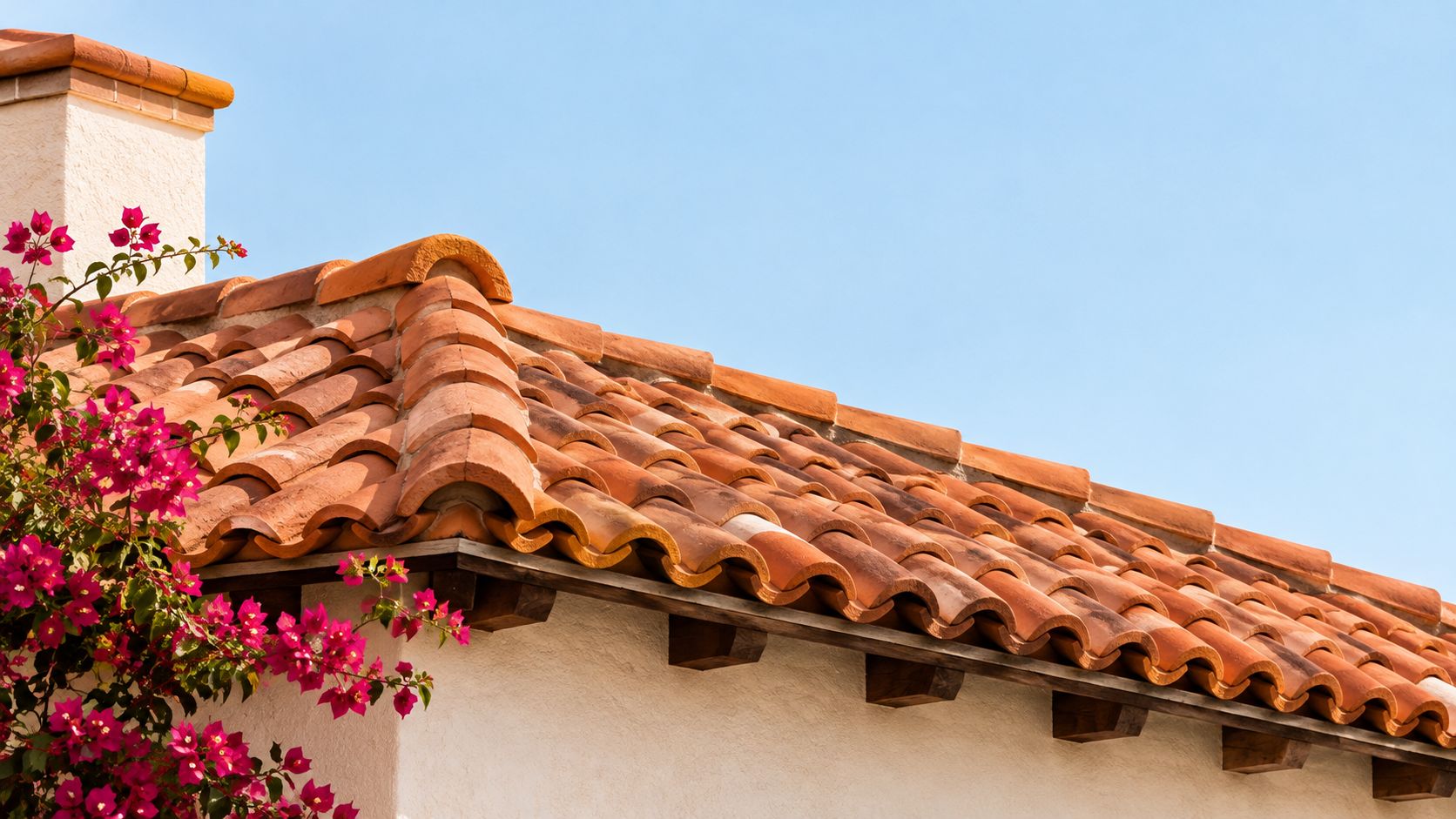
A terra cotta roof can make a plain exterior feel rooted and distinctive, but only when the house can support its visual weight. These warm colors suit Spanish Mission, Mediterranean, Italianate, and Southwestern architecture, where the roof often contributes as much character as the walls. They can strengthen curb appeal on the right structure, while looking out of place on a cool-toned or strictly neutral home.
Clay and concrete tile are common choices. Both can provide long service, yet they weigh more than standard asphalt shingles. A house framed for asphalt should receive clay or concrete tile only after a proper structural review.
Match the roof to the house and its construction
Santa Barbara, California, is known for Spanish Colonial Revival homes where terra cotta tile is a defining feature. Mediterranean-style homes in Florida and the Southwest also commonly use concrete tile. Those regional examples do not establish a safe choice for a central Ohio house. Roof framing, underlayment, flashing, climate exposure, and installer experience all affect the result.
Before selecting a color, have an experienced roofer or structural engineer confirm the structure can carry the chosen tile. Use an installer familiar with tile flashing and underlayment, since those details differ from asphalt-shingle work. Synthetic or lightweight tile can provide a similar architectural direction where full clay or concrete weight is unsuitable. Plan repairs carefully, because careless foot traffic can crack tile and make future service more difficult.
Red and terra cotta also need to work with fixed exterior materials. Their warm undertones may fight cool-gray siding or blue undertones, reducing neighborhood fit as well as curb appeal. Place product samples beside the brick, stone, gutters, and trim, then view them in sun and shade. That test reveals the color more reliably than a small showroom swatch.
6. Forest Green and Sage Green Roofing
A forest green roof can disappear into a wooded lot in summer, then become the most noticeable feature after the leaves fall. Sage green changes that balance, giving a large roof a lighter, quieter presence. Both colors can suit cabins, Craftsman homes, lodges, and houses with stone or stained wood accents, but the right choice depends on the whole property.
Green roofing is less common than gray, brown, or black, so it can give a home distinctive curb appeal. That advantage disappears when nearby houses follow a tightly controlled neutral palette. Check homeowners' association rules before choosing a non-neutral color, and consider whether the roof will look appropriate beside neighboring properties.
Judge green roofing by the house, not the swatch
Green metal roofing often suits forested cabin and lodge settings because it relates directly to the surrounding trees. Green shingles can also work on Craftsman remodels with stained wood trim, fieldstone, or muted siding. Sage is generally easier to manage across a broad suburban roof because it carries less visual weight than saturated forest green. A deeper green needs stronger coordination with the trim, siding, and masonry.
Heat reflection is another trade-off. Sage may reflect more sunlight than a dark forest green, but the color name does not establish the roof's solar performance. If summer heat is a concern, ask about the specific product's documented properties rather than judging from a paint chip.
View samples from the exact shingle or metal line in direct sun, shade, and overcast conditions. Online images and printed brochures can shift the apparent color. Repeat green sparingly in a door, shutter, or trim detail instead of matching every exterior element.
Look across the entire roof, including dormers, valleys, and separate planes. Those features can make a green blend appear busier than a small sample suggests. The strongest result feels intentional: the roof supports the architecture, fits the neighborhood, and works with the seasonal setting without forcing a natural theme onto a formal exterior.
7. Tan, Beige, and Sandstone Roofing
Tan, beige, and sandstone roofing offers a softer alternative to charcoal and brown. These shades suit stucco, brick, natural stone, and transitional exteriors where a black roof would feel too severe. They can also make the roof appear lighter without creating the high contrast of a white surface.
Warm earth tones are common in Southwestern and adobe-inspired designs, but they can work in central Ohio when tied to the rest of the exterior. Prairie-style homes, including designs influenced by Frank Lloyd Wright, often use warm roof colors with brick and wood. A sandstone blend can echo that relationship without copying a historic style too closely.
Test warm tones against permanent materials
Tan roofing can shift noticeably depending on daylight. A shade that looks neutral in a showroom may read yellow, pink, gray, or brown beside existing brick. Test the sample against the actual siding, masonry, gutters, and fascia in morning and evening light.
Color selection rule: Match the roof to the undertones in your brick or stone before matching it to a paint swatch.
From a heat standpoint, tan and beige cover a wide range of performance. A pale roof may reflect more solar energy than a dark brown roof, but color names don't establish a product's solar-reflectance rating. If cooling is a priority, ask for a cool-rated tan shingle and review the documented properties.
A partial repair creates another problem. Even if the replacement is labeled the same color, the blend may not match aged shingles. Confirm availability and inspect a sample beside the existing roof before ordering a repair based only on the product name.
For ideas on coordinating roof tones with siding, review these color schemes for vinyl siding. A design visualization can also show whether the tan reads as refined or washed out across the complete roof.
8. Slate Blue and Blue-Gray Roofing
A slate blue roof can give a white-sided Cape Cod or coastal home more character without the sharp contrast of black. Blue-gray also suits Victorian, Queen Anne, and New England-inspired designs, especially when the exterior includes cream trim, weathered wood, or restrained natural stone. Its curb appeal depends on whether those existing materials provide enough contrast.
The same sample can look crisp beside cool white and muddy or purple beside warm beige. Set samples against the actual siding, masonry, gutters, and fascia, then view them in both sun and overcast conditions. Ohio's changing light can make the blue read stronger at some angles and quieter at others.
Choose the trim first if you want a clear relationship between roof and exterior. White creates a sharper coastal look, while cream softens the combination. View multiple angles before deciding, because valleys, dormers, and shaded roof planes can reveal different parts of a blended shingle.
Neighborhood fit matters as much as appearance. Slate blue can support a historic or coastal character, but it may feel disconnected from a street dominated by warm brown, red, or terra-cotta roofs. A heavily shaded house with dark siding may also lose definition when the roof is too subdued.
Heat reflection should remain part of the comparison. Blue-gray may appear lighter than charcoal, but the color name does not establish a product's solar-reflectance rating. Ask the contractor for the selected product's documented properties if summer cooling is a concern.
Before approving a specialty blend, Check availability for the full roof, including future repair needs. Review the whole system as well, since underlayment, flashing, ventilation, and shingle type affect roof performance. Compare the types of shingles available for the design before placing the order.
8 Roof Color Options Comparison
| Option | Implementation Complexity 🔄 | Resource Requirements ⚡ | Expected Outcomes 📊 | Ideal Use Cases 💡 | Key Advantages ⭐ |
|---|---|---|---|---|---|
| Charcoal Gray Roofing | Low–Moderate; standard asphalt/metal installs | Widely available materials; moderate cost; cool/algae options exist | Neutral modern look; hides dirt; higher summer heat unless reflective | Craftsman, Colonial, Modern farmhouse, suburban homes | Versatile, easy repairs, broad resale appeal |
| Weathered Wood & Brown | Moderate; synthetic easier, real wood needs specialist install | Options from synthetic to real cedar; variable cost and maintenance | Warm, rustic appearance; moderate heat absorption; wood requires upkeep | Craftsman, farmhouse, rustic/wooded sites | Natural aesthetic; good blend with landscaping; textured profiles |
| Black Roofing | Low–Moderate; standard install but needs thermal planning | Premium shingle/metal and cool-coating options; may increase cooling load | Bold high-contrast look; highest heat absorption unless cool-rated | Modern/contemporary, modern farmhouse, solar-integrated designs | Striking, sleek, pairs well with solar and black accents |
| Light & Cool White Roofing | Low; requires cool-rated products and maintenance planning | Cool-rated shingles/metal/membranes; may qualify for rebates | Lower surface temps and reduced cooling load; shows dirt more | Coastal, hot climates, minimalist and energy-focused homes | High solar reflectance; energy savings in warm months |
| Terra Cotta & Red Roofing | High; heavy tiles need structural assessment and specialist install | Clay or concrete tile (heavy, durable); higher material & labor cost | Long lifespan, high thermal mass; distinctive warm appearance | Spanish Revival, Mediterranean, Tuscan, historic styles | Extremely durable, fire-resistant, iconic curb appeal |
| Forest Green & Sage Green | Low–Moderate; standard methods but color runs limited | Green shingles/metal available; limited stock may affect lead time | Blends with landscape; mid-range heat gain depending on shade | Cabins, Craftsman, cottages, wooded properties | Distinctive natural look; softens large roof planes |
| Tan, Beige & Sandstone | Low; standard installation and readily available lines | Common shingle/tile options; moderate cost; cool-rated tans exist | Warm understated look; moderate reflectance and energy impact | Prairie, Southwestern, ranch, stucco homes | Subtle, versatile, complements earth-toned exteriors |
| Slate Blue & Blue-Gray | Low–Moderate; availability varies by product line | Asphalt, metal, synthetic/slate options; some limited SKUs | Cool, muted color; mid-range solar absorption | Coastal, Cape Cod, Victorian, colonial revival | Unique calm tone, pairs well with white/cream trim |
Choosing the Right Roof Color for Your Home
Start with the architecture. Charcoal and black can suit modern, Colonial, and contemporary homes, while weathered wood and brown often support Craftsman, farmhouse, and wooded-lot properties. Terra cotta and red need a compatible architectural language, such as Spanish, Mediterranean, or Italianate design. Green, tan, sandstone, and blue-gray can work well, but they need stronger coordination with siding, brick, stone, trim, and landscaping.
Next, judge the roof by the three outcomes that matter most: curb appeal, heat reflection, and neighborhood fit. A roof that looks excellent on a display board may feel too dark on a small ranch, too bright beside neighboring homes, or too warm against blue-gray siding. Look at the roof from the street, driveway, side yard, and neighboring angles. A steep roof exposes more color than a low-pitch roof, and multiple dormers or gables can make a blend appear busier.
For summer performance, compare documented solar-reflectance and thermal-emittance values rather than relying on labels such as “light,” “cool,” or “dark.” Standard dark asphalt shingles may reflect only 5% to 20% of sunlight, while light-colored materials commonly reflect about 55% to 90%, according to the Department of Energy's roofing guidance. In Columbus and central Ohio, that summer benefit must be balanced against winter heating demand, attic insulation, air sealing, roof orientation, shade, and ventilation. A lighter shingle cannot correct an attic that is poorly insulated or improperly vented.
Neighborhood compatibility also deserves a deliberate check. Review nearby homes, subdivision standards, homeowners' association rules, and likely resale expectations. A distinctive green, blue-gray, or red roof can improve the right property, but it may look disconnected when the surrounding homes use restrained neutral palettes. Product availability matters too, especially for specialty colors or partial repairs.
Homeowners who want a broader exterior palette can browse exterior color palettes before narrowing down the roof. Then order physical samples and view them against the siding, brick, stone, gutters, and trim in morning and evening light. Ask your roofer to confirm the product's solar-reflectance rating and explain how the selected roof assembly handles ventilation, flashing, drainage, and future maintenance.
HIBCO ROOF LLC provides roof inspections, repairs, full replacements, exterior improvements, and roof design visualizations for homeowners in Columbus and central Ohio. Its team can help compare shingle colors on the home before materials are ordered, while also assessing the roof system that supports the appearance.
HIBCO ROOF LLC offers roof design visualizations, inspections, repairs, and full roof replacements for Columbus and central Ohio homeowners comparing roof color options. Visit HIBCO ROOF LLC to request a free written estimate and discuss which color, product rating, and roof system fit your home.