
A Columbus winter can turn on you fast. One day the roof looks fine, the next day a thaw starts, melted snow has nowhere to go, and frozen gutters send water sideways into fascia, siding, and the edge of the foundation. That's the kind of mess homeowners usually notice after the damage has already started, not before.
Winter gutter maintenance is the small job that keeps that chain reaction from getting expensive. For most homes, the work is a recurring schedule, not a one-and-done chore, and the best time to handle it is before the first hard freeze, then again if storms or tree debris keep loading the system. If you're also trying to protect other cold-weather weak points, it helps to insulate your home's pipes while you're thinking about winter prep.
Table of Contents
- Why Winter Gutter Maintenance Matters in Columbus
- Your Essential Winter Gutter Maintenance Checklist
- Preventing Ice Dams A Homeowner's Guide
- Upgrading Your System for Fewer Winter Worries
- When to DIY vs When to Call a Columbus Pro
- Protecting Your Home All Winter Long
Why Winter Gutter Maintenance Matters in Columbus
A Columbus homeowner usually notices the problem after a warm spell. Snow on the roof starts to melt, the gutter line is half full of leaves and sediment, and the water has nowhere to drain because the outlet is already packed or frozen. That is when overflow starts staining siding, wetting soffits, and pushing moisture toward the foundation.
The fix is simple in concept, harder in practice. Winter gutter maintenance is preventive work, not a rescue mission, and that matters because trapped debris holds moisture, freezes, and blocks drainage right when melting snow and rain need a clear path out of the roof system. A gutter that is already loaded with leaves, seed pods, and grit is more likely to ice up in a Columbus cold snap, so the goal is to clear it before winter weather locks everything in place.
Practical rule: if you can still see leaf mats from the ground, the gutters are already behind schedule.
In Central Ohio, timing matters because the roof edge has to handle freeze-thaw swings, storm debris, and melting snow without getting clogged. The maintenance cost is usually modest compared with the damage risk, and gutter cleaning is often far cheaper than dealing with stained siding, soaked trim, or a repair claim after overflow. If you are comparing options, this guide on cleaning gutters without a ladder is a useful starting point for homeowners who want to handle the job more safely.
When I am walking a Columbus property after a snow event, the thing I care about most is whether water can leave the roof cleanly. If it cannot, the problem stops being dirty gutters and becomes a building-envelope issue fast. Keeping gutters ready for winter also pairs well with the rest of the home, including the attic and plumbing, because a house only stays dry when the cold-weather weak points are handled together. If your attic has cold corners or exposed piping, it is also smart to insulate your home's pipes so frozen runoff and drafty spaces do not create a second problem while you are dealing with the roof edge.
Your Essential Winter Gutter Maintenance Checklist
Start with cleaning before the freeze
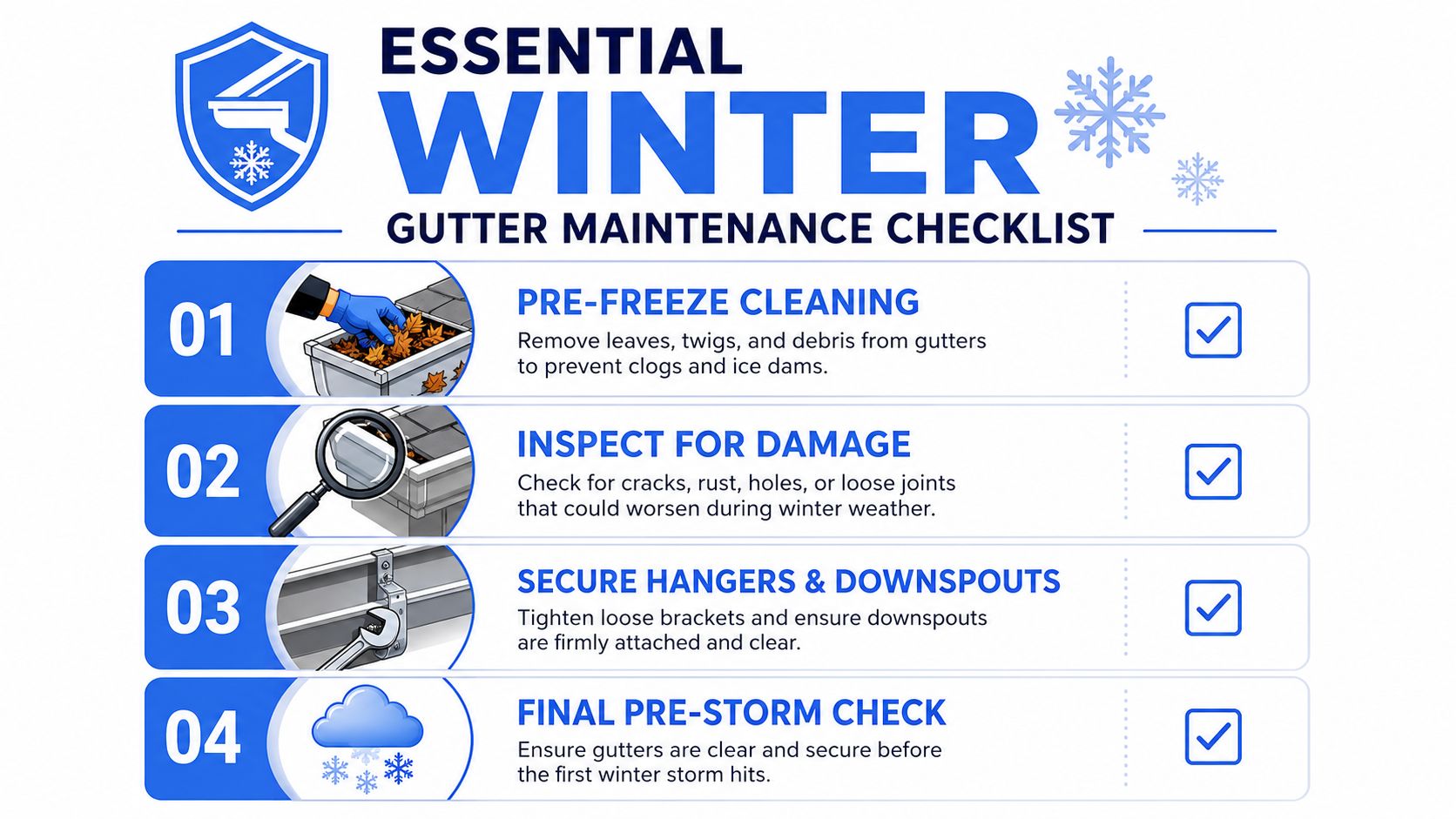
A Columbus gutter usually gives you a warning before winter locks it down. Leaves, seed pods, shingle grit, and packed sludge start holding water, and once that water freezes, you are dealing with a blockage instead of a cleanup. Clear the debris first, then flush each run from the end opposite the downspout so you can see whether water moves freely. Home Depot's guidance says a properly draining system should slope about 1/4 inch per 10 feet toward the downspout, because standing water is a sign the pitch is too shallow and freeze risk is higher Home Depot gutter-cleaning guidance.
If a section still holds water after you flush it, treat that as a symptom, not a nuisance. The cause is usually one of three things, a hidden clog, a sagging run, or a gutter that was never pitched right. Clear the blockage and test it again. If water still lingers, the problem is in the system, not the debris.
If you want to clean from the ground instead of balancing on a ladder, this ladder-free gutter cleaning guide is a practical place to start.
Inspect the parts that fail first
Once the gutters are clean, check the spots that turn winter maintenance into an expensive repair call. Look for clogged downspouts, leaking seams, and loose hangers, because those are the parts that usually fail first when temperatures swing above and below freezing. From the ground, watch for sagging sections, dents, or water stains on the fascia.
If the gutter looks straight from one angle but dips between hangers, it's already telling you something.
A lot of homeowners miss a seam leak because the gutter still appears to be in good shape. That is a mistake. A small drip at a joint can keep wetting the trim every time snow melts, and repeated moisture is what leads to rot and peeling paint below.
Deal with snow and ice after storms
After snow hits the roof, the job shifts from cleaning to load control. A roof rake helps pull snow off the lower roof edge, which reduces weight at the gutter line and cuts down on the meltwater that feeds ice buildup. Winter maintenance guidance also recommends checking that downspouts extend 3–6 feet from the foundation with open drainage paths and properly angled splash blocks winter snow and ice maintenance guidance. That keeps meltwater away from the house instead of letting it pool and freeze near the wall.
Better Homes & Gardens also points to two practical winter moves homeowners use when ice is a concern, clearing roof snow with a roof rake and spraying the inside of gutters with PAM or silicone right before the initial freeze so ice releases more easily Better Homes & Gardens winter gutter guidance. That is an early-season tactic, not a fix for drainage problems, and it works best on a system that is already clean and pitched correctly.
For Columbus homes, the best rhythm is simple. Clean before the first hard freeze, inspect after storms, and check the downspouts again if a thaw is coming. Central Ohio weather does not wait for a convenient weekend, so the gutters have to stay ready for the next freeze-thaw cycle.
Preventing Ice Dams A Homeowner's Guide
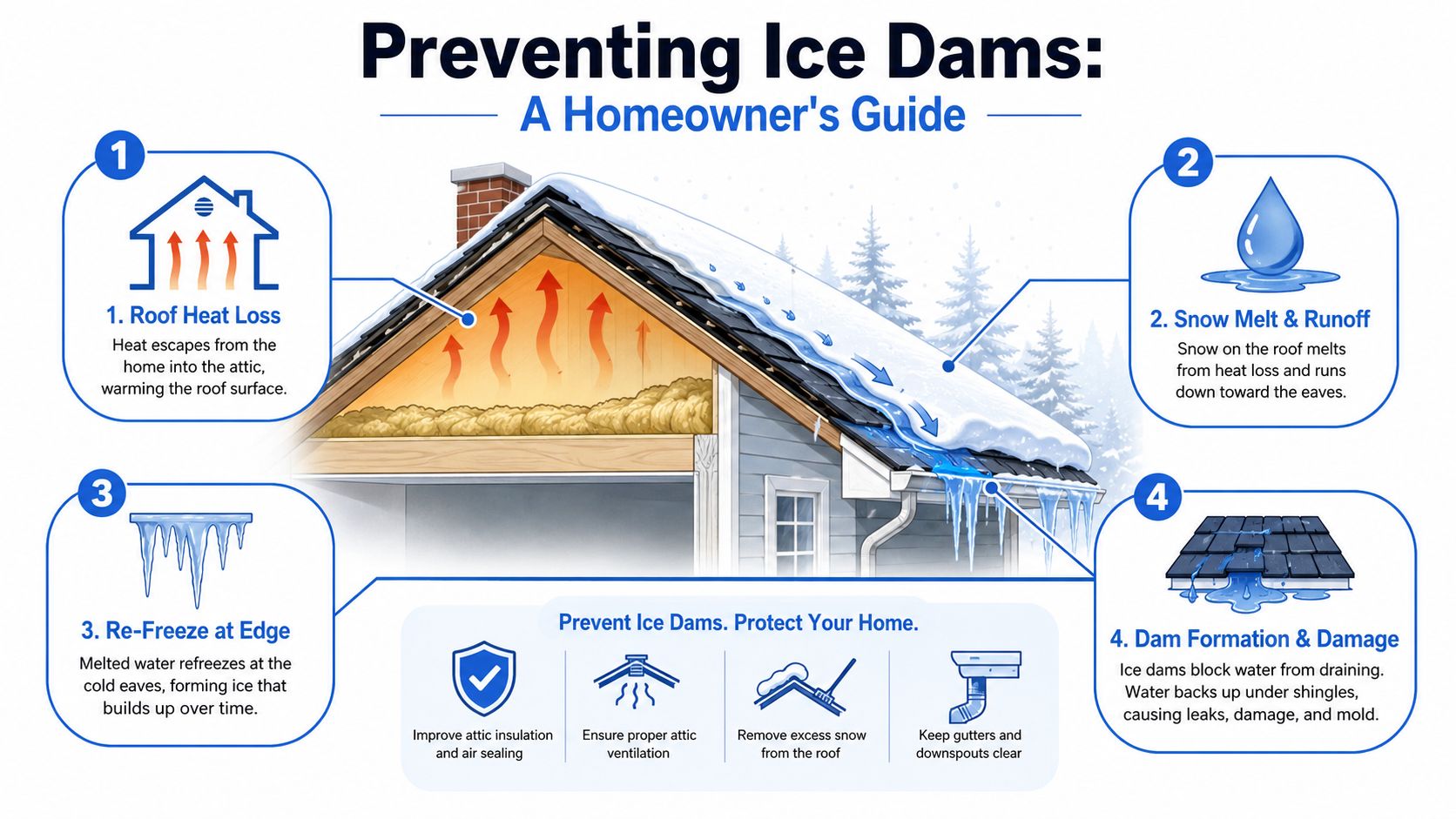
Ice dams are basically a mini-glacier at the eaves. Warm air escapes from the house, melts snow higher on the roof, the water runs down to the colder edge, and then it refreezes where the gutter line and roof edge stay coldest. Once that ridge builds, the meltwater behind it has nowhere to go except back under shingles.
That's why ice dams aren't just a gutter problem. Modern winter guidance ties gutter care to the whole roof system, including attic insulation, ventilation, gutter slope, and downspout drainage, because frozen standing water is a symptom of a system that isn't moving heat and moisture the way it should IKO winter gutter maintenance and ice-dam prevention. A gutter can be spotless and still contribute to the issue if the pitch is wrong or the eaves stay too warm.
Why pitch matters more than most people think
One benchmark used in roofing guidance is a gutter slope of about 3 mm per metre so water doesn't sit overnight and freeze IKO winter gutter maintenance and ice-dam prevention. Another practical benchmark says gutters should have an approximate slope of 1 inch of vertical drop for every 20 feet of gutter length, because shallow pitch lets water pool and freeze into ice patches Lednor Home winter gutter maintenance. The exact measurement can vary by system, but the principle doesn't, standing water is the enemy.
Bottom line: if water hangs around in the gutter after a flush, it's not a harmless puddle, it's a freeze point.
Focus on the roof edge, not just the ice
Columbus homeowners often try to knock ice away from the gutter and feel productive for a few minutes. That usually treats the symptom, not the cause. The better move is to correct the conditions that made the ice in the first place, which means checking attic heat loss, ventilation balance, and drainage at the roof edge before the next thaw.
If you want a deeper look at repair logic after an ice event, the practical breakdown at ice dam fixes is worth a read. The important thing to remember is that recurring ice dams usually point to a roof-envelope problem, not just a dirty gutter. Once that pattern shows up, the gutter is telling you the house needs a system-level check.
Upgrading Your System for Fewer Winter Worries
Some homes need more than seasonal cleaning. When tree cover is heavy or the roof edge keeps collecting ice, permanent upgrades can reduce the amount of winter labor needed to keep water moving.
Gutter guards are the first option most homeowners ask about. They reduce the amount of leaf debris that gets into the trough, which means less clogging during fall and less ice buildup caused by trapped organic matter. HIBCO ROOF LLC installs these systems as part of its gutter work, and they make the most sense when the problem is repeated debris rather than a damaged gutter line.
Heating cables serve a different purpose. They don't remove debris, they help open channels through snow and ice so meltwater can keep moving in cold stretches. That makes them more of a targeted tool for problem areas than a universal fix, especially on shaded roof sections or homes that keep developing ice at the same spots.
How to choose between them
- Choose gutter guards if leaf drop is the main problem and the gutters clog every fall.
- Choose heating cables if the system stays relatively clean but the edge still freezes hard in winter.
- Use both carefully only when the roof design and drainage pattern really call for it, because one tool won't replace proper slope, attic performance, or downspout drainage.
One Gutter's homeowner guidance also notes that gutter guards can reduce debris buildup and that heating cables may help homes prone to ice dams One Gutter seasonal maintenance guidance. That's the right way to think about upgrades, as tools that reduce risk, not magic fixes that excuse neglected maintenance.
For a Columbus home, the decision usually comes down to where the headache starts. If it starts with leaves and twigs, guards help. If it starts with freezing at the roof edge, heating support may make sense. If it starts with both, the gutter system probably needs a closer look before winter gets worse.
When to DIY vs When to Call a Columbus Pro
If the gutters are low, the ground is dry, and you can work safely from a stable ladder with a spotter, basic cleaning is often manageable. That said, winter changes the math fast. Wet shingles, icy ladder feet, frozen ground, and heavy snow on the roof all make this a job with a lot more downside than a fall cleanup.
The simplest rule is to stop the DIY plan when the work stops being ground-level-safe. Visual checks from the ground are smart in slippery conditions, and guidance from gutter specialists consistently warns against risky ladder work when roofs are wet, icy, or structurally questionable GutterBrush winter maintenance guidance. Sagging sections, dents, loose fasteners, blocked downspouts, and fascia staining are all signs that the issue may be bigger than routine cleaning GutterBrush winter maintenance guidance.
When a gutter is pulling away from the fascia, it's not a cleaning problem anymore.
Clear signs it's time to bring in a pro
- Ice on the roof or gutter line, because ladder work becomes hazardous and the system may be frozen shut.
- A steep or multi-story roof, because access risk rises quickly and the inspection matters more.
- Detached downspouts or visible sagging, because those usually point to a repair issue, not a simple clog.
- Fascia staining or mold, because water may already be getting behind the system.
For homeowners who want a local inspection, HIBCO ROOF LLC handles roof and gutter repair work, and the company's gutter service page explains how cleaning and repair are often part of the same problem set roof and gutter cleaning services. In practice, that's where a pro earns the call. A trained eye can tell the difference between a system that needs a flush, a system that needs resealing, and a system that's already starting to fail at the attachment points.
If you're looking at winter damage after a storm, a professional inspection also helps with documentation. That matters when you're deciding whether the issue is routine wear, storm-related damage, or a gutter run that should be repaired before the next freeze.
Protecting Your Home All Winter Long
Winter gutter maintenance works when it's treated like prevention, not cleanup. The biggest wins come from doing the boring stuff early, cleaning before freeze-up, checking pitch and drainage, and looking for the signs that a gutter is starting to fail. Once ice dams show up or water starts staining trim, the problem has already moved beyond maintenance.
The three takeaways are straightforward. First, cleaning on a schedule beats emergency work after overflow starts. Second, ice dams are a system problem, which means attic heat loss, ventilation, and gutter slope all matter together. Third, safety comes first, because a pro should handle anything icy, steep, detached, or clearly damaged.
For Columbus homeowners trying to stay ahead of winter conditions, it also helps to think about the rest of the property as one connected system. If you're checking exterior drainage, it's smart to look at broader cold-weather prep too, including shed foundation winter preparation so meltwater and ground freeze don't create new problems away from the house. Water always finds the weak point, and winter gives it plenty of chances.
If your gutters haven't been inspected yet this season, now's the time to handle it before the next thaw. HIBCO ROOF LLC offers free, no-pressure inspections, repair guidance, and gutter solutions for Columbus homes that need a closer look before winter damage sets in.
If your gutters are overflowing, sagging, or icing up, contact HIBCO ROOF LLC for a free inspection and practical next steps. They can check the roof edge, gutters, and drainage together so you know what needs cleaning, what needs repair, and what can wait.