
You're in Worthington or Dublin, looking at a water stain on the bedroom ceiling while a mid-October cold snap settles over central Ohio. The roof is 17 years old, and it made it through one more winter, but you're no longer asking whether replacement is someday necessary. You're asking whether the best time of year to replace a roof is right now, next spring, or after another season.
My advice is direct: start with the roof's condition, then use the calendar to choose the safest workable window. Fall is usually the strongest choice for a planned asphalt shingle replacement in Columbus, but an actively failing roof shouldn't wait for September. A stable, aging roof gives you options. A leaking or structurally compromised roof gives you a deadline.
Table of Contents
- Why Roof Timing Starts With Your Roof, Not the Calendar
- How Weather Actually Affects a Roof Replacement
- Every Season Ranked for Central Ohio Roof Replacements
- Reading Your Roof's Condition Before You Pick a Date
- Fall vs Winter for Scheduling and Pricing in Columbus
- Warranty, Materials, and Cold-Weather Sealing Risks
- Planning Your Replacement Window Step by Step
- Roof Replacement Timing Questions Columbus Homeowners Ask
Why Roof Timing Starts With Your Roof, Not the Calendar
The homeowner in that Worthington example has two separate decisions to make. First, does the roof need immediate attention? Second, if it's still serviceable, which weather and scheduling window offers the best installation conditions?
Age alone doesn't answer the first question. A roof's current condition, leak history, flashing, decking, ventilation, and the homeowner's future plans matter more than a calendar rule that says every roof should be replaced in spring or fall. Guidance on roof life span is useful for planning, but it shouldn't replace an inspection of the actual roof system.
Conditions that override the season
Some warning signs turn a planned project into a priority:
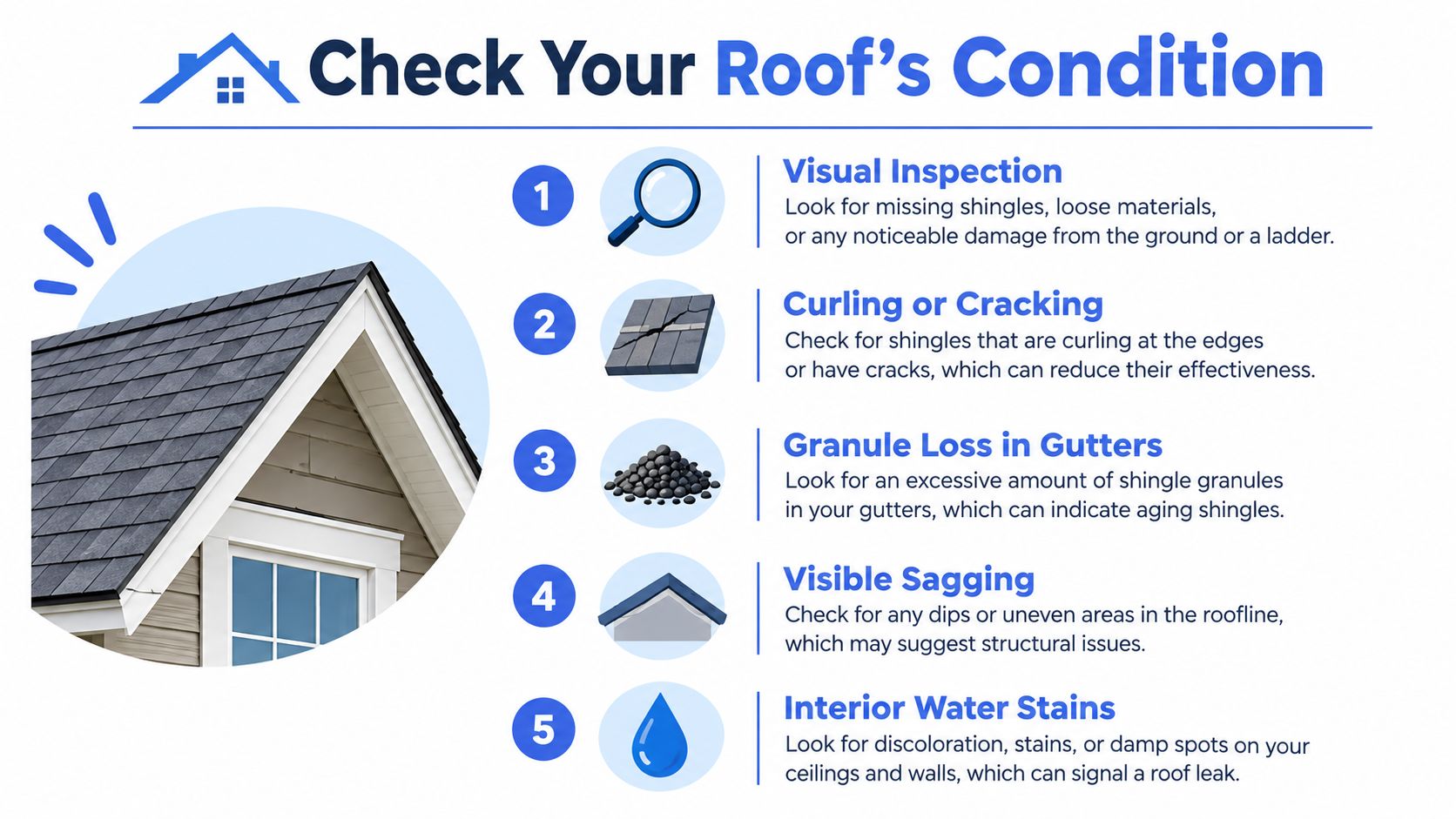
- Active leaks: Water entering the attic or living space can damage insulation, drywall, framing, and electrical components.
- Missing or creased shingles: A wind event can expose underlayment and decking, especially on west-facing slopes that take repeated gusts.
- Sagging decking: A visible dip suggests more than surface wear. The deck or supporting structure needs prompt evaluation.
- Granule piles in gutters: Heavy granule loss can signal that shingles are losing their protective surface.
- Interior staining: A ceiling mark may remain after a leak stops, but it still points to a failure that needs tracing.
A roof with structural risk or ongoing water intrusion needs replacement within weeks, not quarters, regardless of whether the calendar says October or February. Waiting for a preferred season can turn a manageable roof project into interior restoration, emergency tarping, or a larger deck replacement.
Practical rule: If water is entering the house, schedule an inspection immediately. Don't use a seasonal discount as a reason to postpone a failing roof.
A roof that's old but dry, flat, and intact is different. You can compare estimates, watch the forecast, reserve a reputable crew, coordinate gutters or skylights, and choose a practical installation window. The calendar matters in that elective situation. It doesn't outrank the roof when the roof is already losing its ability to protect the house.
How Weather Actually Affects a Roof Replacement
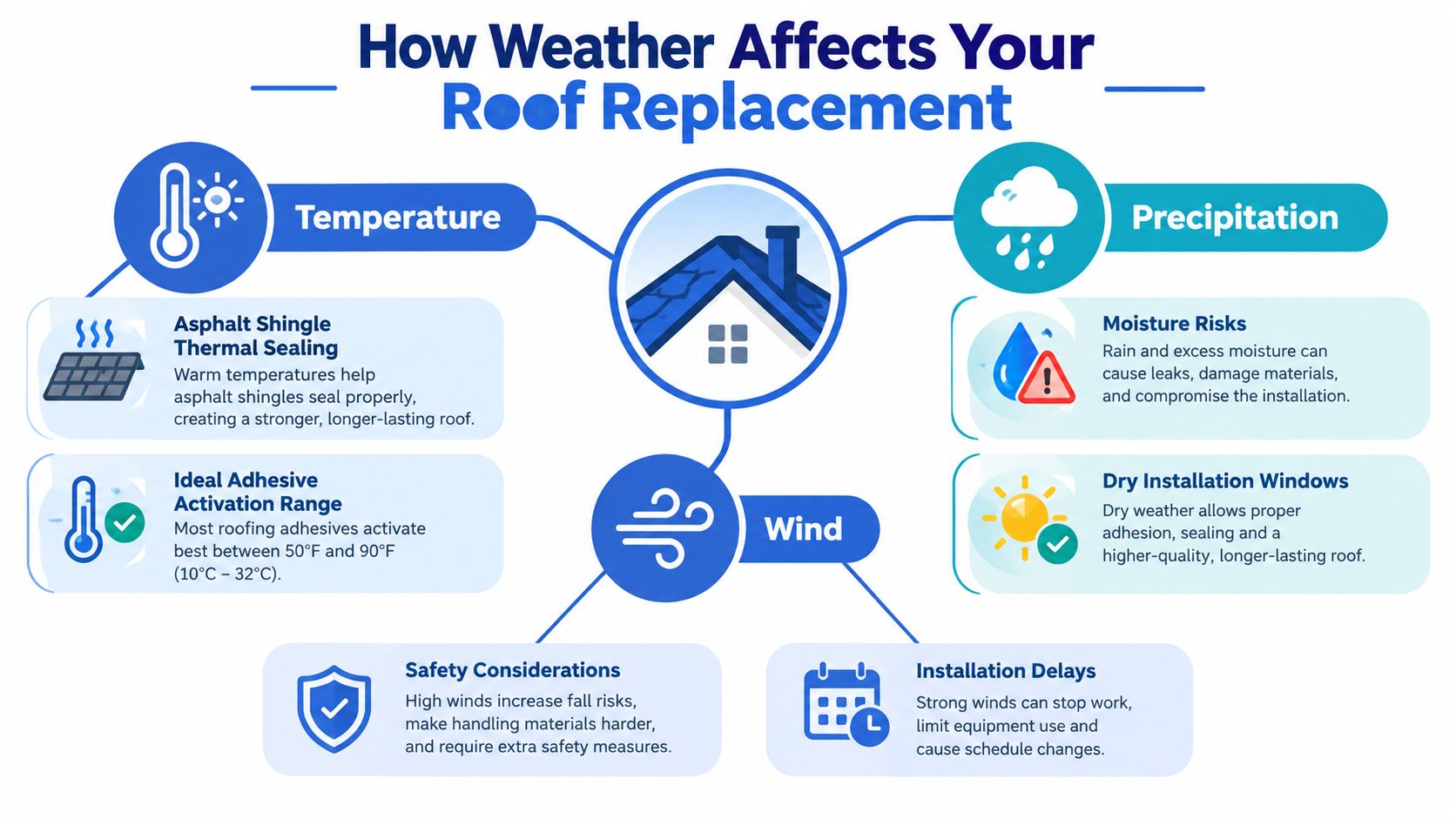
A dry, moderate week gives a Columbus roofing crew room to work safely and finish cleanly. Roof replacement depends on temperature, precipitation, and wind, and each condition affects installation quality, scheduling, and the roof's early performance.
Temperature controls sealing and handling
Asphalt shingles have a heat-activated sealant strip. Sun and warm daytime conditions help each shingle bond to the course below, forming the wind-resistant seal that protects the system. Practical installation guidance commonly places asphalt shingle work around 45°F to 85°F, with broader recommendations around 40°F to 85°F (United Renewals, MyHomePros).
Central Ohio shoulder seasons can create a mismatch between afternoon temperatures and actual sealing conditions. A cold morning, heavy cloud cover, or a freeze soon after installation can slow sealant activation. Below roughly 40°F to 45°F, strips may bond slowly or remain incomplete, making hand-sealing and strict manufacturer procedures more important (Roofing Almanac).
Rain exposes the roof during tear-off
Tear-off removes the old shingles and exposes sections of decking. If rain arrives before the crew dries in that area, the deck and insulation can become wet, installation can stop, and moisture can remain beneath the new roof.
Ask for the contractor's same-day dry-in plan before approving a start date. It should explain underlayment installation, flashing protection, tarping procedures, and how much roof the crew will remove before precipitation arrives. A good plan limits exposure instead of relying on a last-minute tarp.
Wind affects safety and placement
Strong gusts can shift underlayment, disrupt shingle alignment, and make pitched-roof work unsafe. Wind also complicates material staging and cleanup because packaging and loose debris can become airborne.
Check the 7-day forecast, ask what happens if rain reaches an open slope, and confirm that the crew monitors wind during installation. If a storm has already damaged the roof, storm recovery help from AMPM Restoration Services offers guidance for immediate protection and recovery. Severe cold can create separate problems, so review what causes ice dams before winter exposes weak ventilation or insulation details.
Every Season Ranked for Central Ohio Roof Replacements
If your Columbus roof is stable, fall is usually the first date I recommend. If water is entering, shingles are missing, or the deck is sagging, the condition of the roof overrides the calendar. A leaking roof does not become safer because winter or summer is inconvenient.
For a planned asphalt shingle replacement in central Ohio, my ranking is:
- Fall
- Late spring
- Summer
- Winter
The ranking reflects installation conditions, Columbus weather, contractor demand, and the time available to correct problems before the next difficult season.
Fall earns the top spot
Late September through October usually gives crews the best balance of workable temperatures, steadier conditions, and manageable storm exposure. Asphalt shingles seal more predictably in moderate weather than during extreme heat or severe cold. Fall also gives a completed roof time to settle before repeated freeze-thaw cycles become a concern.
September is generally easier to schedule. October remains a strong choice, but Columbus contractors start pushing to finish projects before hard freezes, so open appointments disappear faster. If an inspection shows that your roof can wait, reserve the slot early instead of waiting for the first cool week.
Spring works, but rain complicates it
April and May can offer good installation temperatures, yet spring weather changes quickly. Rain bands can interrupt tear-off, delay dry-in work, and expose the schedule to wet decking. Crews may also be catching up on winter ice damage and spring storm repairs.
Late spring is a practical choice for a roof that needs replacement but missed the fall window. It becomes a weaker choice when the roof already shows water entry, because repeated rain can reveal weak areas while the project is underway.
Summer offers strong installation conditions and crowded schedules
Summer brings long workdays and dependable heat for shingle sealing. The trade-off is contractor demand. Crews often carry a heavy workload from roughly June through November, and storm repairs can push planned replacements further back. The Roofing Brief describes this seasonal pressure in its roofing research.
Plan for two to four week lead times during busy summer periods, and expect pricing to reflect peak demand. Those figures are planning guidance for the Columbus market, not a promise from every contractor. Put the start date, material scope, weather policy, and price in writing before you assume summer will be convenient.
Winter is viable, but it requires a clear protocol
January and February are often easier months to book because contractor demand reaches its annual low point. Lower demand can create pricing opportunities, but savings may be offset by hand-sealing, shorter workdays, snow, wind, and weather delays. Ask how the crew will handle shingle adhesion and whether the manufacturer's installation requirements remain satisfied in cold conditions.
Winter makes sense for an urgent roof that cannot wait or for a stable roof handled by a contractor experienced with cold-weather installation. It is not my first choice for routine replacement when fall or late spring is available. A contractor's winter process matters more than a low quote.
| Season | Sealing Conditions | Weather Risk | Contractor Availability | Typical Pricing |
|---|---|---|---|---|
| Fall | Generally favorable for asphalt shingle sealing | Moderate, with freeze risk later in the season | Reasonable in September, tighter in October | Full seasonal pricing |
| Spring | Often workable, but variable | Rain and wet decking risk | Demand can build quickly | Often standard pricing |
| Summer | Strong heat and long workdays | Heat, storms, and scheduling pressure | Frequently crowded | Premium during peak demand |
| Winter | Cold-weather procedures may be required | Freeze, snow, wind, and short daylight | Often easier to book | Frequently lower during the slow season |
Reading Your Roof's Condition Before You Pick a Date
You don't need to climb onto the roof to decide whether an inspection should happen. Start from the ground, then check the attic and ceilings. Don't walk a questionable roof yourself, especially after a storm.
Match the symptom to the timing decision
Curled or cupped shingle tabs usually indicate aging, heat exposure, or ventilation trouble. If the roof is dry and the deck is sound, you can wait long enough to plan a replacement, but don't assume another winter will be harmless.
Granules collecting in gutters deserve a closer look. A small amount can occur over a roof's life, while heavy accumulation combined with exposed surfaces points toward a roof that should be scheduled soon.
Exposed fiberglass mat means the shingle has lost its protective coating. Treat that as a schedule-soon condition, especially before a season of wind and freeze-thaw movement.
Missing or creased shingles after a storm require prompt inspection. Hail bruising from spring storms along I-70 may not create an immediate interior leak, while wind-lift on a west-facing slope can leave fasteners and underlayment exposed.
Active interior water stains move the project into the replace-now or repair-now category. The visible stain may not sit directly below the roof entry point, so tracing the source matters.
Look in the attic
Attic moisture, daylight visible through the roof deck, and sagging decking are stop-the-presses findings. They can indicate ventilation failure, water intrusion, or structural deterioration that a surface inspection won't reveal.
A roof can look acceptable from the driveway and still fail at the flashing, deck, or attic interface.
Central Ohio's freeze-thaw cycles add another reason to inspect after winter. Ice dam damage can lift shingles and wet the deck, while spring hail can bruise the mat without immediately opening a hole. For broader property-maintenance context, VerticalRent roof repair advice also emphasizes systematic inspection and prompt repair decisions.
Use this simple verdict:
- Wait and plan: The roof is aging but dry, flat, and intact.
- Schedule soon: You see widespread curling, granule loss, exposed mat, or storm-related creasing.
- Replace now: You find active leaks, daylight, attic moisture, sagging, or exposed decking.
Fall vs Winter for Scheduling and Pricing in Columbus
A Columbus roof that is still dry and intact gives you scheduling flexibility. A roof with active deterioration does not. Choose the replacement date from the roof's condition first, then use the calendar to improve installation conditions, crew availability, and price.
For a sound but aging roof, fall is the safer default. For a roof unlikely to survive the next storm or freeze-thaw cycle, winter replacement is the responsible choice. Waiting for spring can turn a manageable project into emergency work.
What fall gives you
September through November provides the strongest balance of weather and installation quality. Crews get warmer daylight, shingles are easier to handle, and the sealant strip has a better chance to activate naturally.
Fall has one clear drawback: contractor demand. Roofing companies are trying to complete exterior projects before sustained freezes, so October appointments tighten quickly. Pricing usually reflects regular or peak seasonal demand, not a slow-season discount. Book early if fall is your target.
What winter changes
December through February often creates more scheduling room, with January and February typically quieter than the fall rush. Some contractors may offer lower pricing during that slower period, but the discount should never outweigh a weak cold-weather plan.
A winter crew may need heated material storage, hand-sealing, limited tear-off, and flexible start dates. Ask how the contractor will protect exposed decking if weather interrupts the project, and confirm that those procedures appear in writing.
Columbus timing also matters. A project scheduled near the end of the Gahanna Oktoberfest may still fit a practical fall window. The first sustained hard freeze means cold-weather procedures must be part of the contract. Franklin County permit offices can slow down in mid-December, so submit paperwork before the calendar becomes crowded.
| Factor | Fall, Sep–Nov | Winter, Dec–Feb |
|---|---|---|
| Shingle sealing | More naturally favorable | May require hand-sealing |
| Scheduling | Predictable early, tight later | Often more flexible |
| Pricing | Usually full seasonal pricing | May be lower in the slow season |
| Material handling | Easier and more forgiving | Brittle shingles require care |
| Daylight | Better work windows | Shorter workdays |
| Best fit | Planned replacement | Urgent work or flexible projects |
A skilled crew can install a dependable winter roof. A careless crew can damage shingles during ideal fall weather. Before choosing the lower bid, request the cold-weather procedure, material-storage plan, start-date contingencies, and workmanship warranty. The right date is the one your roof can tolerate and your contractor can execute correctly.
Warranty, Materials, and Cold-Weather Sealing Risks
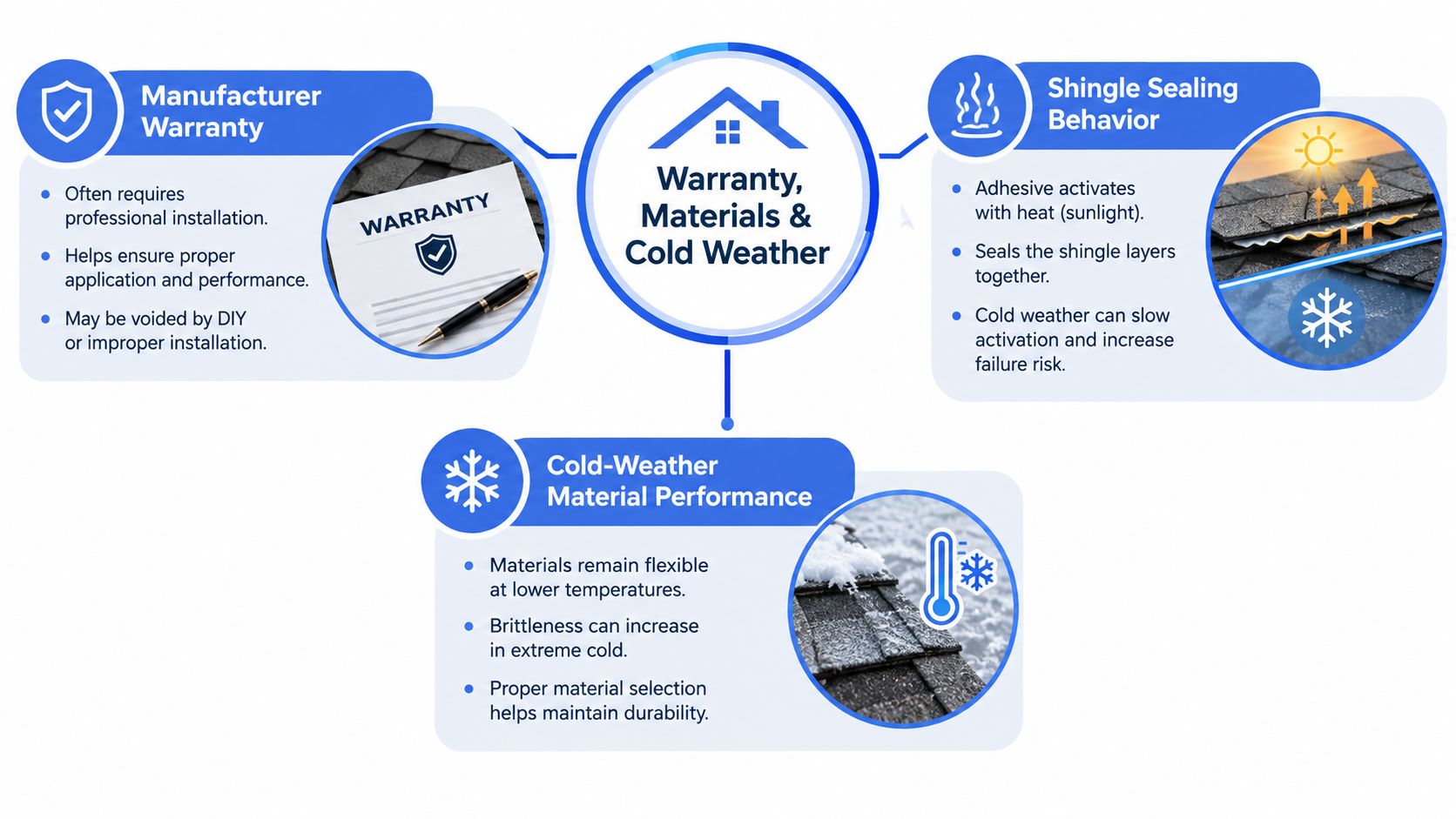
A winter roof does not automatically lose warranty protection. Coverage depends on whether the crew followed manufacturer installation requirements, used suitable cold-weather procedures, and documented conditions outside the preferred range. Get those procedures and responsibilities in writing before work begins.
Asphalt shingles use a thermal sealant strip that bonds tabs to the course below. Below roughly 40°F to 45°F, that seal may activate slowly, and a freeze soon after installation can leave the bond incomplete. Plan for hand-sealing and a follow-up inspection when the weather cannot provide reliable natural sealing.
What cold weather does to the materials
Below about 40°F, shingles become stiffer. Cutting, positioning, and nailing them cleanly takes more care. Cold-weather guidance recommends storing materials in a heated area above 70°F for at least 24 hours when possible to improve pliability and handling (Wilmington Roof Pro).
A GAF technical bulletin gives installers more flexibility. It states that asphalt fiberglass shingles do not have a practical lower or upper temperature limit when crews take appropriate precautions. For cold work, it recommends sunlight and warm daylight conditions (GAF technical bulletin).
That guidance does not make every January day a good installation day. The crew still must control storage, handling, sealant application, scheduling, and inspection. In Columbus, a forecast that stays cold, cloudy, or wet is a poor basis for forcing a project onto the calendar.
Separate material coverage from workmanship
Manufacturer material warranties and contractor workmanship warranties address different failures. Product warranties may extend 25 to 50 years, while workmanship warranties commonly cover 1 to 10 years, depending on the product, contractor, and written agreement. Those ranges describe industry guidance, not a promise attached to every roof.
A material warranty generally addresses qualifying shingle defects. A workmanship warranty protects you when a contractor misaligns courses, skips flashing details, damages tabs, or fails to hand-seal when required. Read the actual warranty documents and confirm whether cold-weather installation changes any obligations.
Shingle lines also differ in handling requirements. A premium product does not remove winter risk. Ask which product the contractor proposes, what its installation instructions require, who performs hand-sealing, and how weather conditions will be recorded. Homeowners comparing storm coverage can review general guidance on Florida homeowners roof insurance, while remembering that a Columbus claim depends on the policy, documented damage, and carrier decision.
Planning Your Replacement Window Step by Step
A good Columbus roof replacement starts before the first shingle arrives. If you want a fall installation, begin the process while contractors still have room to compare options.
Build the schedule backward
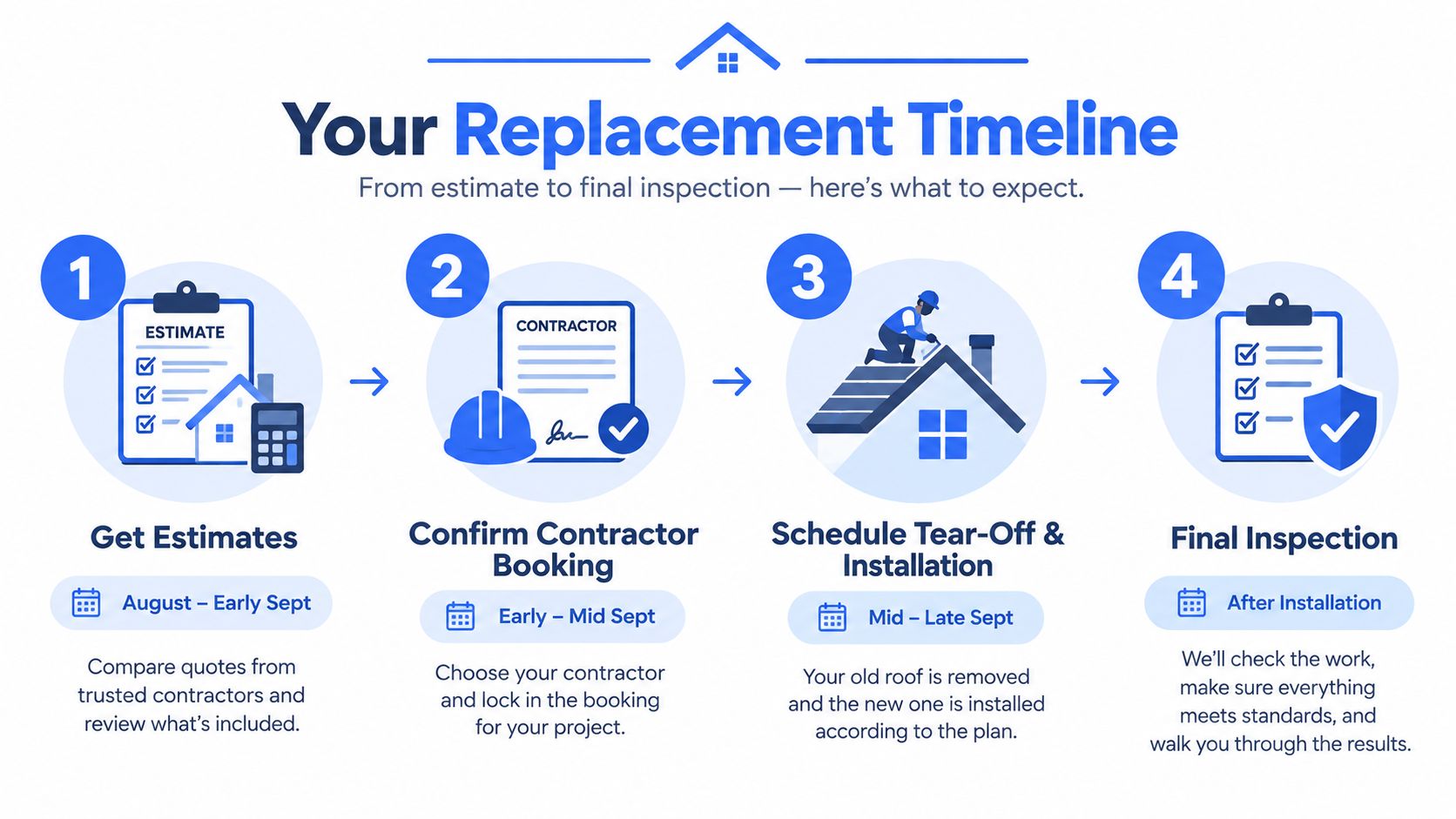
- Get two or three written estimates between August and early September. Each estimate should identify shingle manufacturer and line, underlayment, flashing, ventilation, deck-replacement terms, cleanup, permits, and workmanship coverage.
- Confirm contractor availability before signing. A contractor who says “we'll fit you in” hasn't given you a dependable start window. Ask how weather delays move the schedule.
- Reserve a tear-off window with three consecutive dry days above 40°F. The forecast can change, so the contractor should have a protection plan rather than a promise that rain won't occur.
- Order materials two to three weeks ahead. Fall stock shortages can affect colors and product lines, particularly when several nearby homeowners are replacing roofs at once.
Call references from projects completed during the same season you plan to use. A crew's cold-weather procedures and summer workflow can differ, and a reference from a winter installation can tell you more about winter performance than a warm-weather project.
Use the roof replacement timeline to coordinate the details homeowners often overlook. Notify your insurance carrier if a claim is involved, reserve driveway access for the dumpster, protect vehicles and outdoor equipment, and ask how the crew will handle landscaping.
Before shingles cover the deck, photograph the exposed decking, flashing transitions, pipe penetrations, and ventilation. Keep those images with the contract, product information, permit records, and final inspection documentation. They create a useful record if you later sell the home, investigate a leak, or need to discuss warranty work.
Scheduling advice: Choose a contractor's installation process before you choose a date. A perfect weather window can't rescue poor flashing, rushed tear-off, or incomplete documentation.
Roof Replacement Timing Questions Columbus Homeowners Ask
Does winter installation void a shingle warranty?
No, not automatically. Cold-weather work may require hand-tabbing, warmed materials, sunlight, and strict compliance with the manufacturer's instructions. Get the procedure and workmanship coverage in writing.
How long does a Columbus replacement take?
An average single-family roof replacement commonly takes one to three days. The actual schedule depends on roof size, pitch, layers of existing roofing, decking repairs, flashing, weather, and crew size.
Will insurance cover a storm-driven replacement in any season?
Insurance may cover covered storm damage regardless of season, but the policy, cause of loss, documentation, deductible, and carrier decision control the claim. Don't delay emergency protection while waiting for a preferred month.
What happens if rain reaches an open deck?
The crew should tarp or otherwise protect the exposed area immediately. Work may pause, and the contractor may reschedule the affected slope after the deck and materials are dry. Ask about this response before tear-off begins.
Does metal or slate make winter scheduling easier?
Metal and slate systems don't rely on asphalt adhesive strips in the same way, so winter scheduling can be more flexible. They still require safe temperatures, dry conditions, careful handling, and a crew experienced with that specific material.
Can I wait one more year?
If the roof is still sound, dry, and free of structural warning signs, planning ahead may be reasonable. If you're seeing leaks, exposed mat, missing shingles, sagging, attic moisture, or repeated storm damage, don't trade a manageable replacement for a larger repair.
HIBCO ROOF LLC offers inspections, written roof replacement estimates, asphalt shingle replacements, storm and hail assessments, and related exterior work for Columbus and central Ohio homeowners. Visit HIBCO ROOF LLC to request a free, no-pressure evaluation and determine whether your roof needs immediate replacement or can be scheduled for the next reliable weather window.