A properly installed asphalt shingle roof in Ohio realistically lasts 20 to 25 years, even when the manufacturer warranty claims 30 years, because Ohio's freeze-thaw cycles and storm exposure accelerate wear. Standard 3-tab shingles often age out around 15 to 20 years, while architectural shingles can commonly reach 25 to 30 years when installation and maintenance are strong.
You may be asking because a home inspection is coming up, granules are collecting in the gutters, or a recent Ohio storm left you wondering whether the roof is still dependable. The number printed on the shingle package is only a starting point. In central Ohio, roof age, ventilation, installation quality, hail exposure, and insurance treatment often matter more than the advertised warranty period.
Table of Contents
- The Reality of Roof Warranties in Ohio
- How Ohio Weather Accelerates Shingle Wear
- Lifespan Expectations by Roofing Material
- Spotting End of Life Before Leaks Start
- The Hidden Impact of Age on Insurance Claims
- Maintenance Strategies to Maximize Roof Life
- Deciding Between Repair and Full Replacement
The Reality of Roof Warranties in Ohio
A homeowner in central Ohio finds an old shingle bundle in the garage. The label says “30-year shingles,” so the roof seems to have plenty of life left. Then an inspection reveals brittle sealant, exposed fiberglass, and widespread granule loss. The warranty hasn't changed the condition of the roof.
For Ohio homes, the practical benchmark is an asphalt shingle roof lasting about 20 to 25 years. Standard 3-tab shingles often age out around 15 to 20 years, while architectural shingles commonly reach 25 to 30 years when installation, ventilation, and maintenance are good. Those ranges reflect real service conditions rather than an idealized laboratory environment. Ohio roof lifespan guidance explains why a roof marketed for 30 years may perform closer to 20 years in Ohio.
What the warranty actually means
A manufacturer's material warranty generally addresses defects in the shingles under specified conditions. It doesn't promise that the entire roofing system will remain watertight for the full advertised period, and it doesn't erase damage caused by hail, wind, poor ventilation, improper installation, or neglected maintenance.
A roof also has several working parts beyond the shingle surface:
- Underlayment helps manage water that gets beneath shingles.
- Flashing protects roof transitions, walls, chimneys, and penetrations.
- Ventilation controls heat and moisture in the attic.
- Fasteners and sealant strips help keep shingles secured during wind.
A strong warranty can be useful, but it isn't a substitute for a roof inspection. Homeowners researching coverage should also understand the difference between product terms and complete roofing-system protection, as outlined in this GAF system warranty overview.
Practical rule: In Ohio, treat the 15-year mark as a point for closer evaluation, not as proof that replacement is immediately required.
Age becomes especially important during a home inspection. A roof near the end of its expected service range may still be dry today, but buyers, lenders, insurers, and inspectors will look at remaining serviceability, visible deterioration, and the likelihood of near-term replacement. A realistic roof-age assessment protects you from relying on packaging language that doesn't account for Ohio conditions.
How Ohio Weather Accelerates Shingle Wear
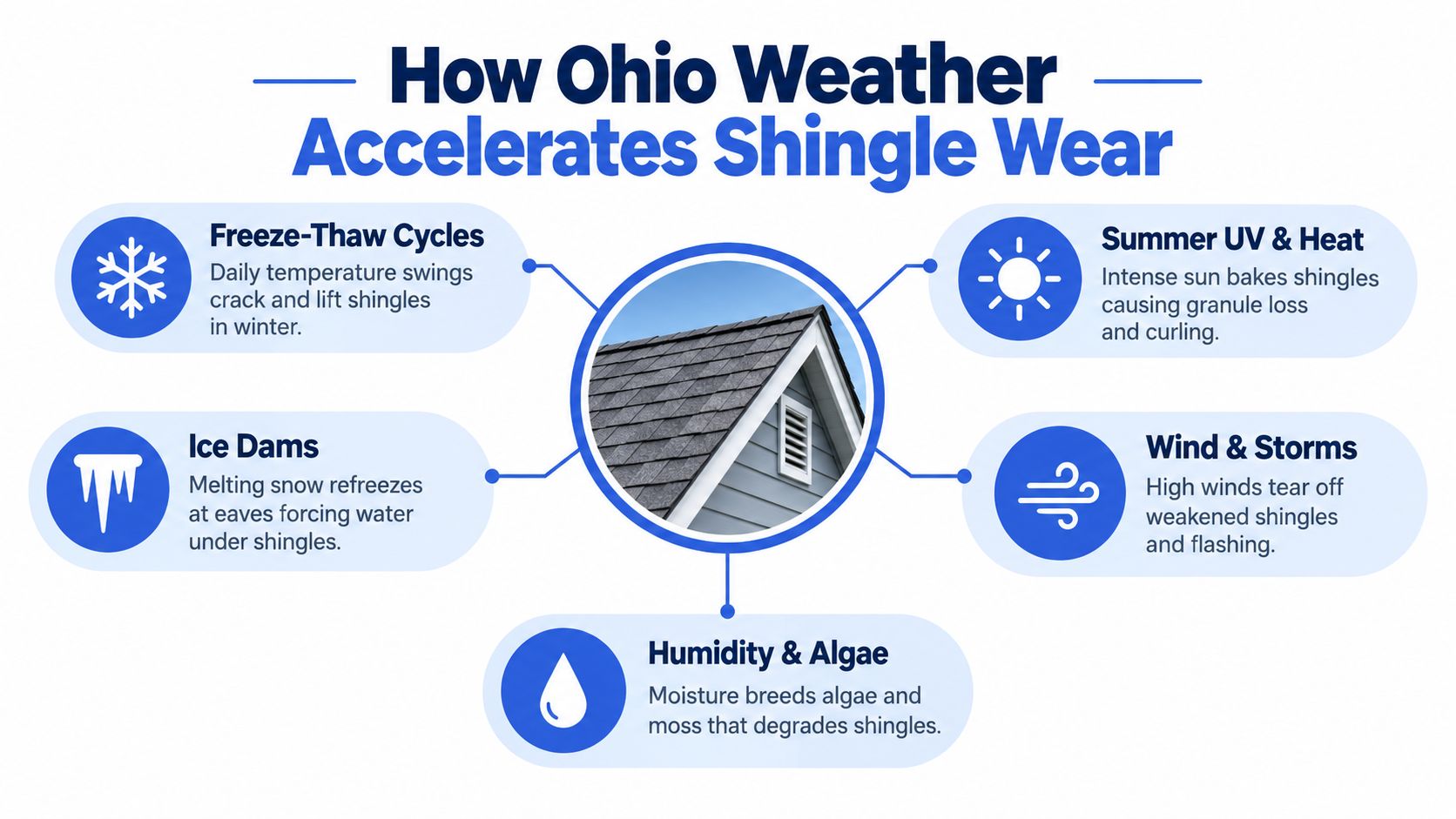
Ohio roofing systems face repeated stress from both seasons and storms. Freeze-thaw cycling can make shingles more brittle, loosen exposed edges, and worsen small cracks. Guidance focused on Ohio conditions estimates that freeze-thaw cycles can reduce asphalt shingle life by 2 to 5 years compared with more moderate climates. Climate-specific roofing guidance explains why temperature cycling matters more than a generic national lifespan.
Winter stress works from several directions
Snow adds weight to the roof structure, while ice dams create a different problem at the eaves. Heat escaping through a poorly ventilated attic can melt snow higher on the roof. That water then refreezes at colder edges, where the ice can obstruct drainage and push water beneath shingles.
Freeze-thaw cycling also affects flashing, sealants, and roof penetrations. A minor opening may expand when moisture freezes and contract when temperatures rise. One season rarely causes total failure, but repeated cycles can turn a small weakness into an active leak.
Homeowners can learn more about the mechanism in this guide to Ohio ice dams. Preventing ice dams requires more than scraping ice from the roof. The underlying heat loss, insulation, ventilation, and drainage conditions need attention.
Summer heat and storms finish the job
Summer sun heats asphalt shingles, dries sealants, and contributes to granule loss. Humidity keeps roof components damp for longer after rain, especially where tree shade limits drying. Moss and algae may not destroy a roof immediately, but they retain moisture and can interfere with drainage and surface performance.
Storm exposure creates sudden damage on top of gradual aging. Ohio storm data recorded 350 hail reports across 35 separate hail days in the past 12 months, including 25 days with hail at or above 1 inch and a largest verified hail size of 2 inches. Hail that size can bruise or crack asphalt shingles. Ohio storm data shows why a roof that looked acceptable before a storm may need documentation and inspection afterward.
High wind can lift weakened shingles and damage flashing. The roof may not leak immediately, but an unsealed or displaced shingle has lost part of its ability to shed water. In Ohio, weather doesn't subtract from a warranty. It changes how quickly the roofing system reaches a condition where repair or replacement makes sense.
Lifespan Expectations by Roofing Material
Material choice sets the starting point, but Ohio weather determines how much of that potential life a roof can deliver. A 3-tab shingle roof generally has less dimensional reinforcement than an architectural system, while a metal roof responds differently to hail, thermal movement, fastener details, and installation quality.
The most useful comparison is not just the advertised rating. Consider the expected Ohio service range, the roof's exposure, and whether the home has adequate ventilation and drainage.
| Material Type | Expected Ohio Lifespan | Primary Climate Vulnerability |
|---|---|---|
| 3-tab asphalt shingles | 15 to 20 years | Freeze-thaw cycling, wind lift, sealant failure, and granule loss |
| Architectural asphalt shingles | 25 to 30 years with good installation and maintenance | Hail bruising, heat, ice dams, and poor attic ventilation |
| Metal roofing | Longer-lived than common asphalt systems, depending on material and installation | Denting from hail, expansion and contraction, and flawed flashing details |
| Synthetic roofing | Varies by product and installation | Impact, thermal movement, fastening, and product-specific weathering |
Architectural shingles usually make more practical sense than 3-tab shingles for homeowners replacing an asphalt roof in Ohio. They have a thicker, more dimensional profile and generally tolerate weather exposure better, although they still depend on correct installation. A premium shingle installed over damp decking or paired with inadequate ventilation won't deliver its full potential.
The trade-off behind longer-lived materials
Metal and synthetic products can offer a longer service horizon, but the decision involves more than durability. Upfront cost, appearance, repairability, flashing design, structural considerations, and contractor experience all matter. A material that lasts longer on paper may not be the right choice if the installation details are weak or replacement components are difficult to match.
For a practical explanation of how expected life varies by system, review this roof lifespan reference. The key is to compare complete systems, not isolated shingle labels.
A stronger material can reduce some weather risk, but it can't compensate for poor ventilation, bad flashing, or careless fastening.
The best roof for a central Ohio home is the one whose material, installation method, ventilation design, and maintenance plan match the property's exposure. A shaded roof with recurring ice dams needs a different evaluation from a sunny, open roof that regularly receives hail and high wind.
Spotting End of Life Before Leaks Start
A ceiling stain is a late warning. Water may travel along rafters, decking, insulation, or wall cavities before it becomes visible inside the home. Homeowners should look for surface and attic clues while the roof still has time for a controlled repair or replacement decision.
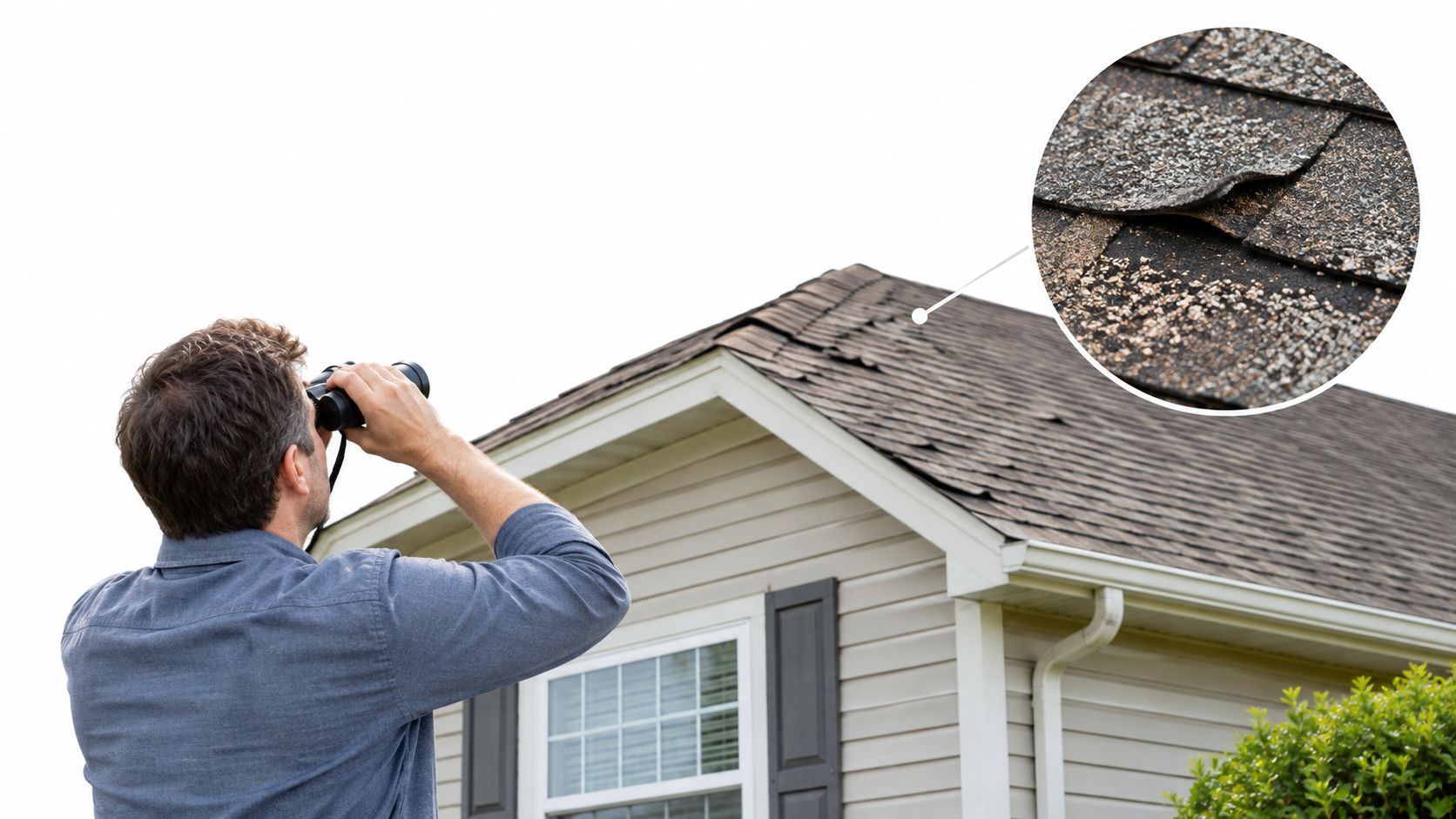
Start with a ground-level inspection
Use binoculars from the yard rather than climbing onto the roof. Look for:
- Curling corners and lifted edges: These signs often point to aging, heat stress, or sealant failure.
- Cracked or missing shingles: Isolated wind damage may be repairable, while widespread damage suggests broader deterioration.
- Bare patches: Granule loss exposes the asphalt surface to sunlight and weather.
- Sagging lines: A dip may indicate decking or structural moisture damage and deserves prompt professional attention.
- Damaged flashing: Check valleys, chimneys, skylights, walls, and vent pipes for separation or visible deterioration.
Granules in the gutters aren't automatically proof that the roof has failed. A small amount can appear after installation or severe weather. A steady accumulation combined with bald areas, brittle shingles, and exposed matting is more concerning because granules protect the asphalt surface from ultraviolet exposure.
Use the attic to separate symptoms
Look for daylight through the roof deck, damp insulation, water marks, mold-like growth, or rusty fasteners. Check the attic after rain if it can be done safely, but don't touch wet electrical components or walk across unsupported areas.
Poor ventilation can make an otherwise younger roof look prematurely old. Excess attic heat can dry and distort shingles from below, while trapped moisture can damage decking and encourage deterioration. That means a contractor shouldn't diagnose every curling shingle as a simple age problem. The inspection should identify whether ventilation, insulation, flashing, storm damage, or the shingles themselves caused the condition.
A thermal camera, moisture meter, attic inspection, and close visual review can help distinguish an active leak from old staining. The goal isn't to collect scary photographs. It's to determine whether the roof has an isolated defect, a ventilation problem, storm damage, or system-wide end-of-life wear.
The Hidden Impact of Age on Insurance Claims
A roof can still shed water and remain difficult to insure. Homeowners sometimes expect a covered hail or wind event to provide enough money for a full replacement, but policy language, roof age, deductibles, maintenance exclusions, and valuation methods can change the result.
Some Ohio policies provide replacement cost for newer roofs, then shift to actual cash value as the roof ages. That valuation subtracts depreciation, so an older roof may be valued below the cost of installing a comparable new system. Some carriers also exclude older roofs or require replacement before renewing coverage. Ohio insurance guidance on hail and wind claims explains why homeowners should review these terms before a storm.
Why the inspection date matters
Roof age affects more than claim payment. It can influence renewal, a home sale, buyer confidence, and financing discussions. A roof may remain serviceable for everyday weather while its remaining claim value and marketability decline near the later part of its expected life.
Insurance thresholds often fall around 10 to 20 years, depending on the carrier and policy. Do not treat that range as universal. Ask your agent how the policy handles roof age, whether replacement cost or actual cash value applies, and what records the carrier expects after hail or wind damage.
Ohio's freeze-thaw cycles add another complication. Repeated expansion and contraction can worsen small shingle, flashing, and sealant defects before a leak becomes visible. If a claim occurs after years of wear, the insurer may distinguish sudden storm damage from deterioration that accumulated over time. Attic ventilation matters here too. Excess heat and trapped moisture can shorten roof life, potentially making age-related exclusions or depreciation more consequential.
Document before trouble arrives
Keep invoices, permits, inspection reports, maintenance records, and photographs showing the roof's condition. After severe weather, arrange a qualified inspection before assuming the damage is covered. A contractor can document bruising, lifted shingles, displaced flashing, and related exterior damage, while your insurance agent explains the policy response.
The practical lesson is simple. Warranty age and insurance age aren't the same thing. Waiting for visible leaks can reduce repair options and weaken your position when coverage is reviewed. A dated inspection and clear maintenance file give both the homeowner and the carrier better evidence of what changed, and when.
Maintenance Strategies to Maximize Roof Life
Maintenance won't stop Ohio hail or eliminate freeze-thaw cycling, but it can prevent small weaknesses from becoming system failures. The most useful work happens at the roof edges, penetrations, drainage paths, and attic interface.
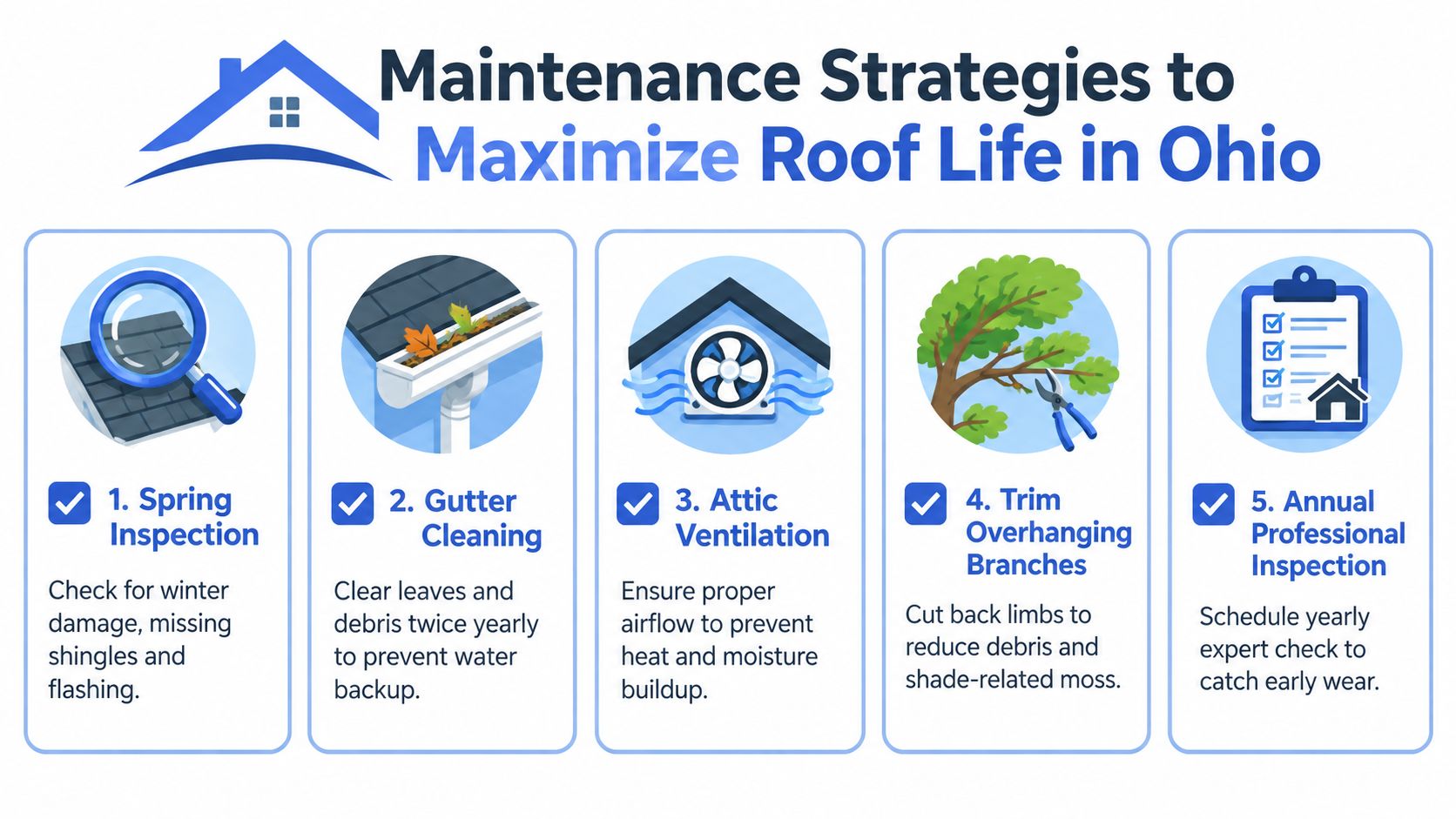
Build a seasonal routine
Spring is for evidence. Look for missing shingles, loose flashing, damaged vents, and gutter sections that pulled away during winter. A professional inspection is especially useful after ice, snow, or wind because damage may be subtle from the ground.
Gutters need clear flow. Leaves, shingle granules, and roof debris can obstruct drainage. Clean gutters and downspouts before heavy rain and before winter conditions create backups. Gutter guards can reduce debris entry, but they still need inspection and cleaning.
Attic airflow deserves a direct check. Make sure insulation hasn't blocked intake paths and that exhaust vents remain functional. A roofing contractor should assess the complete ventilation balance rather than adding a vent wherever space is available.
Reduce the debris load
Trim branches that contact or overhang the roof. Falling limbs can damage shingles, while persistent shade slows drying and supports moss or algae growth. Don't pressure-wash asphalt shingles. High-pressure cleaning can remove protective granules and damage the surface.
A practical checklist includes:
- Inspect after storms: Photograph visible damage from a safe location and schedule an evaluation if shingles or flashing appear displaced.
- Watch the attic: Investigate damp insulation, stains, musty odors, or daylight instead of waiting for a ceiling leak.
- Protect penetrations: Have skylights, chimneys, pipe boots, and wall flashing checked when the roof is inspected.
- Keep records: Save inspection findings and repair invoices for future insurance, sale, or replacement decisions.
Maintenance principle: Drainage, ventilation, and flashing failures can shorten a roof's useful life even when the shingles themselves still look acceptable.
An annual professional inspection gives you a condition baseline. It doesn't mean every inspection produces a repair bill. It gives you time to plan, compare options, and address localized damage before Ohio weather exposes the weakness again.
Deciding Between Repair and Full Replacement
Repair makes sense when damage is isolated and the surrounding roof still has dependable service life. A few wind-displaced shingles on a relatively young architectural shingle roof may need targeted replacement, flashing work, or sealant correction.
Replacement becomes more sensible when deterioration is widespread, the roof is approaching the end of its Ohio service range, or repairs keep appearing in different areas. Widespread granule loss, repeated leaks, curling across multiple slopes, failing flashing, and an older roof can indicate that patching only postpones the larger decision.
Use three questions:
- Is the problem localized or distributed?
- How old is the roof relative to its material and Ohio exposure?
- Would insurance depreciation, renewal requirements, or a pending sale make delay more expensive?
A professional inspection should connect those answers instead of focusing on one damaged shingle. The right choice may be a repair, a planned replacement, or immediate replacement after storm damage.
HIBCO ROOF LLC offers free roof inspections, leak diagnosis, storm and hail documentation, insurance claim assistance, and full asphalt shingle replacement for homeowners in Columbus and central Ohio. Visit HIBCO ROOF LLC to request a no-pressure written estimate and get a roof-age assessment based on your home's actual condition.