
Most roofs should be inspected twice a year, in spring and fall, plus after major storms. That baseline changes as the roof ages, and older or higher-risk systems need more frequent professional attention.
You're probably not standing on a ladder checking shingles every few months. Most homeowners notice the roof only after a ceiling stain appears, a shingle lands in the yard, or a storm leaves branches scattered across the property. In Central Ohio, that delay can turn a small roof defect into water damage before you ever see evidence indoors.
The practical answer to how often should roof be inspected is simple: use the twice-yearly schedule as your starting point, then adjust for roof age, design, weather exposure, and what you can observe from the ground. You don't need to climb onto the roof to stay alert, but you do need a routine.
Table of Contents
- The Standard Inspection Schedule for Most Homes
- How Roof Age and Material Change the Timeline
- The Impact of Central Ohio Weather and Storms
- A Ground-Level Inspection Checklist for Homeowners
- When to Call a Professional Roofing Contractor
- Documenting Your Roof Health for the Future
The Standard Inspection Schedule for Most Homes
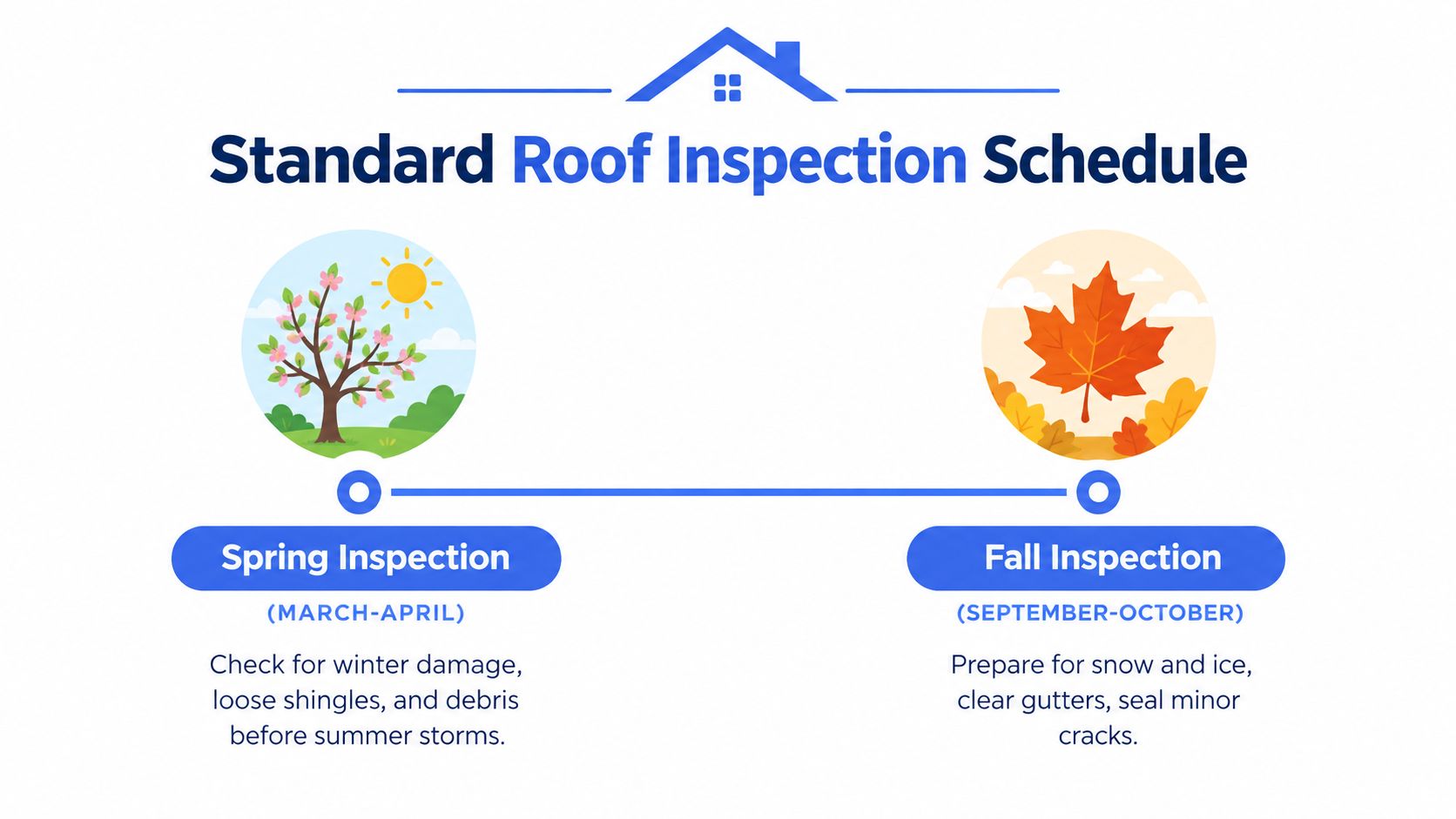
For a healthy roof in the middle of its service life, schedule one inspection in spring and another in fall. This biannual schedule is the widely cited baseline for residential and commercial roofing, with an additional inspection after hail, high winds, or heavy snowfall. National Roof Authority recommends spring and fall inspections with extra checks after major storms.
Spring is the recovery inspection. Winter weather can leave behind loose shingles, damaged flashing, displaced ridge materials, clogged gutters, and moisture problems that aren't obvious from the driveway. Freeze-thaw cycling is especially hard on vulnerable areas because repeated temperature changes can widen small cracks and push water into seams and joints.
Fall is the preparation inspection. Before colder weather returns, a roofer should check drainage, flashing, penetrations, exposed sealant, and areas where leaves collect. A clean, properly draining roof is better prepared for snow, ice, and wet weather than one carrying debris from the previous season.
Why twice a year is the right starting point
The point of an inspection isn't to confirm that your roof looks fine. It's to find manageable defects before they become active leaks. A lifted shingle, separated flashing edge, or blocked gutter may not cause immediate interior damage, but each deserves attention while access and repair remain straightforward.
Use this routine:
- Schedule the spring visit after winter weather has passed. Ask the inspector to focus on storm exposure, flashing, gutters, and signs of moisture.
- Schedule the fall visit before sustained cold weather. Have debris removed and drainage paths checked before leaves, snow, and ice create additional stress.
- Add a post-storm inspection when conditions warrant it. Hail, high winds, or heavy snow can damage roofing between scheduled visits.
- Keep a dated record. Save photographs, findings, repair recommendations, and invoices in one place.
Homeowners who want more detail on preventing small defects can review this guide to preventive roof maintenance. The twice-yearly rule is a baseline, not permission to ignore a roof that's visibly deteriorating.
How Roof Age and Material Change the Timeline
Roof age is one of the strongest reasons to move beyond a standard schedule. As roofing systems get older, minor defects become more likely, and the time between surface deterioration and interior water intrusion can shrink. Guidance commonly places the transition toward more frequent inspections around 10 to 15 years, with some recommendations moving to twice-yearly inspections once an asphalt shingle roof passes 15 years. ABJ Drones discusses the 10-to-15-year inspection transition.
A newer roof may need routine monitoring and post-storm attention, but an older roof deserves a more deliberate risk-management approach. That doesn't automatically mean replacement. It means you need better information about remaining condition, vulnerable details, and hidden moisture.
Inspection frequency by roof age
| Roof age | Recommended frequency | Primary focus |
|---|---|---|
| Newer roof | Routine seasonal monitoring and post-storm review | Installation condition, flashing, drainage, and visible damage |
| Around 10 to 15 years | At least annual professional inspection, with frequency adjusted for condition | Shingle wear, sealant, flashing, granule loss, and early deterioration |
| Past 15 years | Every 6 months is commonly recommended for asphalt shingle systems | Active leak prevention, aging materials, vulnerable penetrations, and repair planning |
| Older or high-risk roof | Quarterly checks may be appropriate | Hidden moisture, drainage performance, recurring defects, and accelerated deterioration |
These age-based recommendations reflect published roofing guidance, including a schedule that moves asphalt shingle roofs from annual professional inspections to inspections every 6 months after 15 years, while flat or low-slope systems may require checks every 6 months to twice a year. The Roofing Brief outlines age-based inspection schedules.
Material and design matter
Asphalt shingles show problems through missing tabs, exposed underlayment, curling, cracking, and granule loss. Metal roofs often need close attention around fasteners, seams, penetrations, and sealant. Flat and low-slope systems deserve particular scrutiny around drainage because water can remain where it shouldn't.
Older roofs with complicated layouts, rooftop equipment, heavy debris exposure, or a history of repairs may need quarterly inspections. Technical guidance also identifies periodic moisture scanning every 3 to 5 years as a way to find wet insulation before visible leaks appear, especially on aging systems. OxMaint describes more frequent inspection and moisture-scanning considerations for older roofs.
If you're trying to estimate whether your roof is approaching a major decision point, this overview of roof life span can help you organize the questions for a contractor. Don't compare your roof's schedule with a neighbor's without considering age, material, slope, and repair history.
The Impact of Central Ohio Weather and Storms
A spring and fall schedule won't cover every risk in Central Ohio. Storm damage doesn't wait for the next calendar appointment, so a significant wind, hail, or heavy-snow event should trigger a roof inspection even if the roof looks normal from the street. Texas facility guidance recommends post-event checks and more frequent inspections for roofs with higher exposure.
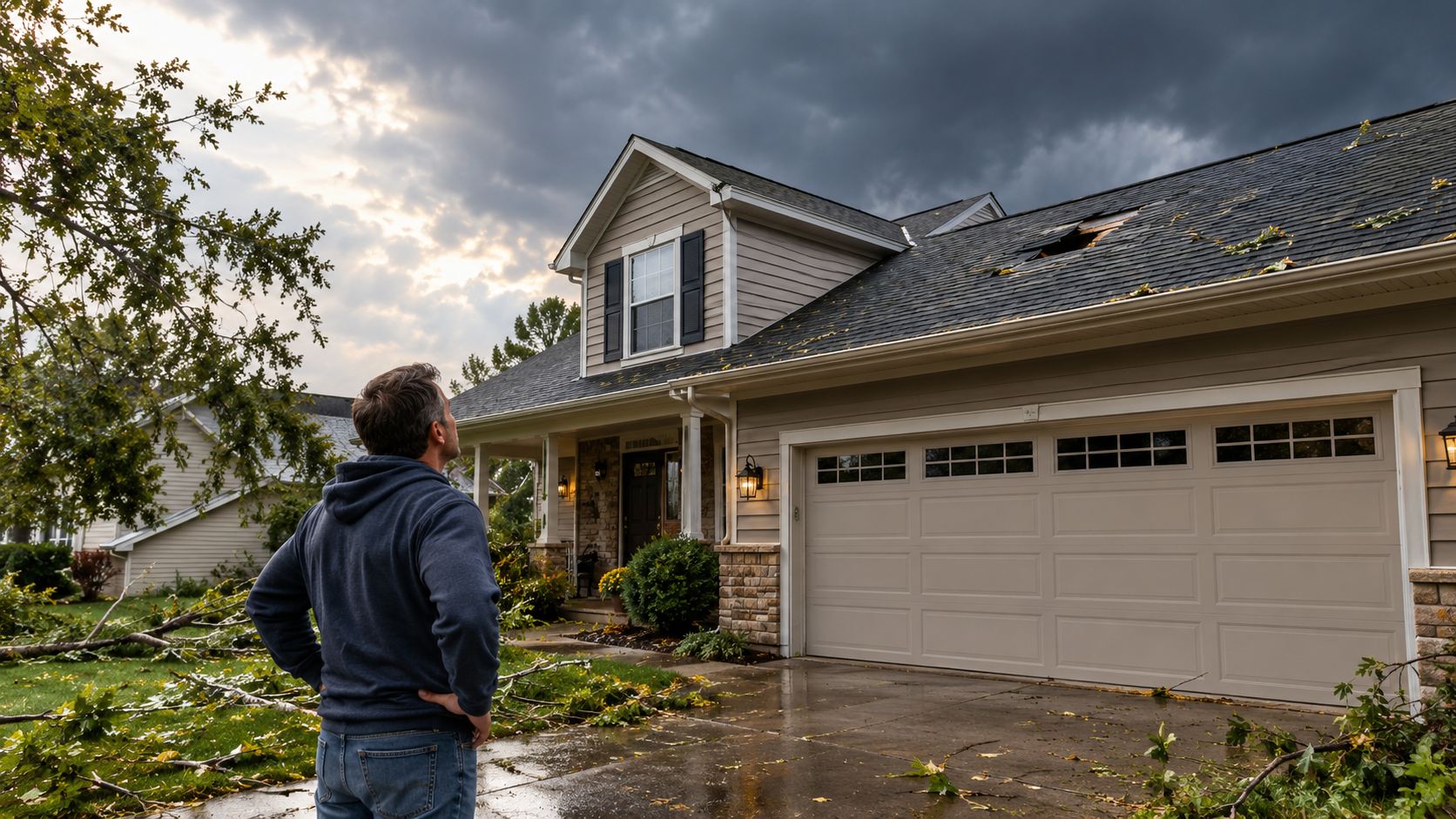
Consider a common Columbus-area sequence. A summer storm passes quickly, and you find no water inside the house. From the driveway, the shingles appear intact. A closer review may still find bruising, displaced tabs, lifted edges, dented metal, or damaged sealant around vents. Hail can leave subtle impact marks, while wind can loosen roofing components without creating a dramatic missing section.
Know which weather events deserve a call
You don't need to treat every rainy day as an emergency. Use the condition of the property to decide how quickly to act.
- Hail: Look for bruised or darkened shingle areas, dents in gutters and downspouts, and damaged exterior metal.
- High wind: Check the yard for shingle pieces, inspect roof edges from the ground, and look for lifted or uneven tabs.
- Heavy snow: Watch for unusual sagging, displaced gutters, and interior moisture after snow loads or melt.
- Winter ice: Check attic areas and ceilings for staining after freeze-thaw periods, especially near roof edges and penetrations.
- Falling debris: Treat branches or other impact evidence as a reason for a closer assessment, even when no leak is visible.
Document what you see with clear photographs before moving debris or making repairs. If the storm caused obvious impact, don't wait for a leak to validate the damage. A prompt inspection gives you a condition record and helps separate storm-related damage from ordinary aging.
Central Ohio homeowners should also pay attention to winter water management. Clogged gutters and poor drainage can worsen ice-related problems, so review this resource on ice dam prevention before cold weather arrives.
A Ground-Level Inspection Checklist for Homeowners
You can monitor a roof safely without climbing onto it. A ground-level check won't replace a professional inspection, but it can help you spot changes early and decide when to schedule one. Use binoculars from the yard, inspect from a second-story window, and never walk on a roof surface unless you have the right training and safety equipment.
Start at the edges, where missing materials and drainage problems are easiest to see. Walk around the entire house instead of checking only the side visible from the driveway.
Five low-friction checks
- Scan for missing or shifted shingles. Look for bare patches, exposed underlayment, uneven rows, or a visible gap in the roof covering. Compare both roof slopes if you can see them from the ground.
- Inspect gutters for granules. A small amount of material may appear over time, but persistent or heavy granule accumulation can indicate shingle wear. Check downspout outlets and the ground below them.
- Study flashing from a safe position. Use binoculars around chimneys, skylights, vents, and roof-to-wall transitions. Rust, gaps, peeling sealant, or visibly displaced metal deserve professional review.
- Look for moss, algae, and dark streaks. Green growth or persistent dark areas can point to trapped moisture or poor drying conditions. Don't scrape the roof yourself.
- Check gutters and downspouts. Confirm that gutters remain attached, downspouts discharge away from the house, and water isn't spilling over one section during rain.
Then inspect the inside. Look at ceilings, upper wall corners, attic sheathing, and insulation for staining, dampness, musty odors, or daylight where it shouldn't be. These signs of a roof leak can help you distinguish an active moisture problem from ordinary exterior wear.
Safety rule: A ground-level inspection is useful precisely because it avoids unnecessary ladder and roof exposure. If you can't see a detail safely, leave it for a professional.
Record the date, weather conditions, locations, and photographs. Repeating the same visual check makes changes easier to recognize, especially when you aren't comfortable judging roofing materials.
When to Call a Professional Roofing Contractor
A homeowner's visual inspection answers one question: what has changed? A professional inspection answers the more important question: what does that change mean? Those are different jobs.
Call a qualified roofing contractor when you see multiple missing shingles, visible sagging, recurring granule loss, damaged flashing, exposed underlayment, persistent ceiling stains, or evidence of water in the attic. A single loose-looking shingle may still need attention, but widespread symptoms suggest the roof requires a complete assessment rather than a quick patch.
DIY observation versus professional diagnosis
| What you can do safely | What a professional can evaluate |
|---|---|
| Check roof edges with binoculars | Soft spots, concealed deterioration, and deck condition |
| Photograph missing materials | Flashing separation and installation details |
| Look for granules in gutters | Whether granule loss reflects localized wear or broader aging |
| Check ceilings and attic areas | Moisture pathways and likely leak sources |
| Note storm debris and exterior dents | Storm-related damage, repair scope, and documentation needs |
A contractor can also assess problems that aren't visible from the ground, including soft areas, concealed moisture, loose fasteners, deteriorated sealant, and separation around penetrations. Don't use a ceiling stain as the inspection schedule. By the time water reaches the interior, the roof has already failed at the surface or at a vulnerable detail.
Professional documentation matters during a home sale, insurance review, or warranty discussion. If you're preparing to list the property, an inspection can identify repair needs before they become a buyer's objection. After a storm, photographs and written findings can establish the roof's condition and support an insurance conversation, although coverage decisions remain with the insurer.
For homeowners who want one company to evaluate roof condition, diagnose leaks, assess storm damage, and discuss repair or replacement options, HIBCO ROOF LLC offers residential inspections and estimates in Columbus and central Ohio. Choose a contractor who explains what was found, provides photographs or written findings, and separates necessary work from optional improvements.
Documenting Your Roof Health for the Future
A roof inspection is more useful when it creates a record you can compare later. Memory won't tell you whether a dark mark was present before a storm, whether a flashing repair held through winter, or when a contractor first identified aging shingles. A simple maintenance file turns scattered observations into a usable history.
Create one folder for the property, either digitally or on paper. Keep the roof's original installation information, product and warranty documents, inspection reports, repair invoices, storm photographs, and correspondence together. Name photos by date and location, such as “north slope,” “garage flashing,” or “rear gutter,” so you can find them when you need them.
What to record at each inspection
- Inspection date: Note when the inspection happened and whether it followed routine seasonal maintenance or a storm.
- Weather context: Record recent hail, wind, heavy snow, falling branches, or other conditions that may affect the findings.
- Observed condition: List missing shingles, granule loss, gutter problems, flashing concerns, moss, stains, or attic moisture.
- Photographic evidence: Take wide views for location and close views for detail. Keep the original files.
- Recommended action: Separate immediate repairs, monitoring items, and longer-term replacement planning.
- Completed work: Save invoices, materials used, repair locations, and any contractor warranty information.
This log helps you make better decisions because you can see whether a problem is stable, recurring, or spreading. It also gives a contractor useful context before the next visit, which can make the inspection more focused.
Don't wait until an insurance claim or home sale to start documenting. Begin with the roof's current condition, then add records after each seasonal inspection and significant storm. A consistent history won't prevent every roofing problem, but it can help you identify changes sooner, plan repairs with less disruption, and explain the roof's condition clearly to an insurer, buyer, or contractor.
The right answer to how often should roof be inspected isn't just a calendar reminder. It's a system that combines seasonal professional inspections, post-storm checks, safe homeowner monitoring, and organized records. For most homes, spring and fall are the foundation. Older roofs and visibly changing roofs need a tighter plan.
If your Columbus or Central Ohio roof is due for a seasonal check, has visible wear, or recently faced hail, wind, or heavy snow, HIBCO ROOF LLC provides roof inspections, leak diagnosis, storm-damage documentation, repairs, replacements, and free written estimates. Schedule an assessment before a small roofing defect becomes an interior water problem.