
“Choose the lightest shingle to keep your house cool” is incomplete advice. Lighter roofing generally absorbs less sunlight, but that doesn't make it the best whole-year choice for every home, especially in central Ohio.
Learning how to choose roof color starts with the product's measured performance, your attic's condition, and the exterior materials you aren't replacing. A roof needs to work through humid summers and cold winters while still looking right from the street.
Table of Contents
- Roof Color Options at a Glance
- How Climate Changes the Right Shade
- Matching Roof Color to Your House and Street
- How Roof Color Holds Up as Shingles Age
- What Roof Color Costs and Saves
- Narrow and Confirm Your Roof Color in Seven Steps
Roof Color Options at a Glance
Lighter shades generally reflect more sunlight, but solar reflectance matters more than the color name on the sample card. Solar reflectance measures reflected sunlight; thermal emittance describes how readily a surface releases absorbed heat.
The U.S. Department of Energy's cool-roof guide reports that dark roofing materials commonly reflect 5%–20% of incoming sunlight, compared with 55%–90% for light-colored materials. Use those broad material ranges as context, not a substitute for the exact shingle's rating.
Roof color families compared on heat and style
| Color family | Typical solar reflectance | Heat and energy behavior | Style fit | Watch-outs |
|---|---|---|---|---|
| White or very light | About 55% to 90% | Lowest heat gain; largest summer cooling benefit | Cape Cod, modern, ranch with light siding | Shows dirt, streaks, and algae sooner |
| Light gray or tan | About 35% to 55% | Moderate heat gain; useful middle ground | Transitional, Craftsman, stone and stucco | Can look flat on overcast days |
| Medium gray or weathered wood | About 20% to 35% | Moderate heat gain; pigment and rating matter | Colonial, farmhouse, traditional brick | Weathering can change the apparent undertone |
| Standard charcoal or black | About 5% to 20% | Highest heat absorption in standard versions | Contemporary, Tudor, dark trim | Greater attic heat load; consider a cool-color version |
| Cool-color dark charcoal, slate, or brown | About 25% to 35% in rated products | Cooler than conventional dark shingles | Dark architectural styles | Confirm the rating and exact color code |
| Red or terracotta tile and blends | Use the exact product's tested rating | Glaze, granules, and pigments determine performance | Spanish, Mediterranean, Mission | Request the rating; red doesn't automatically mean cool-rated |
Treat the intermediate ranges as screening guides, not guaranteed ratings for every product in that color family. Compare like materials: a light asphalt shingle, coated metal panel, and white membrane aren't interchangeable just because their sample cards look similar.
Surface temperature also isn't indoor temperature or a promised utility saving. ENERGY STAR's cool-roof guidance, citing Lawrence Berkeley National Laboratory, notes that a clean white roof reflecting 80% of sunlight can remain approximately 50°F cooler than a gray roof reflecting 20% on a typical summer afternoon.
If you're recoloring existing metal instead of replacing shingles, coating preparation becomes part of the decision. Soca Services Painting's guide to preparing a metal roof for painting is a useful resource for that separate maintenance path.
Practical rule: Use color families to build a shortlist, not deliver a verdict. Climate, the house, neighboring roofs, and upkeep determine which finalist belongs on your home.
How Climate Changes the Right Shade
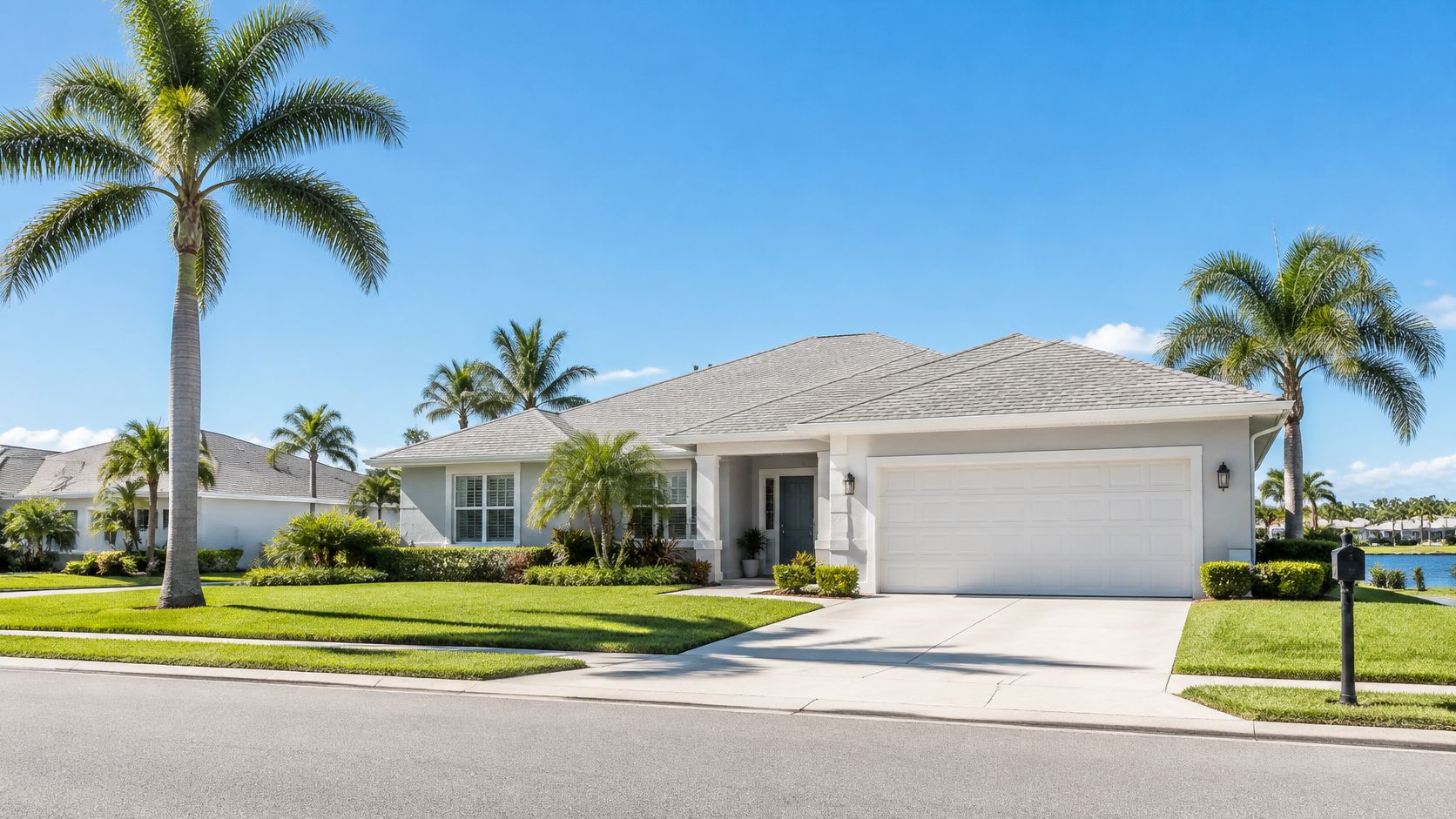
The lightest shingle is not automatically the best year-round choice. In central Ohio, a reflective roof may reduce summer cooling demand, but its benefit has to be weighed against winter heating needs and the home's insulation.
Roof color priority by climate profile
| Climate profile | Cooling benefit of a light or cool roof | Winter heating effect | Color priority |
|---|---|---|---|
| Hot, cooling-dominated South and Southwest | A climate-and-roof review reports up to 15% lower annual air-conditioning energy use in warm or hot climates | Usually a smaller concern where heating demand is low | Prioritize high reflectance |
| Warm zones with some heating | A DOE presentation summarizing PNNL findings reports approximately 6%–12% total HVAC savings for relatively cool roofs and walls in warmer U.S. climate zones | Assess the seasonal heating penalty | High to moderate reflectance |
| Mixed climate, including central Ohio | Cooling gains are smaller than in cooling-dominated regions | Winter heating losses can offset summer gains | Consider moderate reflectance and weigh year-round performance |
| Heating-dominated northern zones | Cooling gains are limited | Reduced solar heat can matter more during the heating season | Consider medium shades; prioritize insulation and appropriate ventilation |
The roof-and-wall savings reported for warm zones are not a roof-only promise. Roof surface temperature is also different from the heat that reaches conditioned rooms. Insulation and air sealing in the attic help limit that transfer, so check attic-floor insulation, gaps around ceiling penetrations, and whether bathroom exhaust ducts terminate outdoors rather than in the attic before paying more for a different shingle color.
Dark doesn't have to mean conventional black
Cool-color charcoal and brown shingles can use pigments that reflect infrared energy without appearing white. The EPA's cool-roof compendium explains why visible darkness alone cannot tell you how reflective a roof is. Compare the product's measured rating, not just its sample color.
There is a seasonal trade-off. Oak Ridge National Laboratory's modeling found that higher-reflectance residential roofs increased cooling-energy savings while potentially increasing heating use. A 2024 Arizona State University comparison likewise found that higher reflectance and emittance reduced cooling needs in cooling-dominant climates. Those findings make a dark cool-color shingle worth considering when its measured rating supports the choice.
Color cannot compensate for worn shingles or poor installation. Learn how heat affects asphalt roof shingles when assessing the condition of an existing roof. A vegetated roof strategy for sustainable homes is a different option, with structural, drainage, and waterproofing needs to plan for.
For central Ohio, start by comparing moderately reflective shades rather than assuming white or black is the answer. The right choice balances cooling, heating, and the roof's role in the whole house.
Matching Roof Color to Your House and Street
On a prominent sloped roof, shingles form one of the house's largest visible color blocks. Start with permanent materials such as brick and stone, then coordinate siding, trim, gutters, and flashing.
A successful pairing doesn't require every surface to have the same undertone. It requires deliberate contrast rather than an accidental clash.
Roof colors that pair with common exterior materials
| Exterior material | Roof colors that work | Colors to avoid | Why it works |
|---|---|---|---|
| Red or orange brick | Charcoal, cool gray, slate | Warm brown or rust | Brown can pull the brick toward orange |
| Gray vinyl or fiber cement siding | Charcoal, weathered wood, medium gray | Very light gray that washes out | Maintains contrast without unnecessary harshness |
| White or cream vinyl | Medium gray, brown, weathered wood | Pure white when it removes needed contrast | Gives the exterior definition |
| Tan stone or stucco | Brown, slate, weathered wood | Bright red | Muted earthy shades coordinate with the masonry |
| Dark or navy siding | Light gray, white, cool blends | Black on black without contrasting trim | Defines the roofline |
Say a brick ranch has warm orange-red masonry and cream mortar. Charcoal or cool gray will often make the brick read cleaner than a warm brown roof, which can emphasize its orange tones.
That isn't a ban on brown shingles. Look at the mortar, window frames, and individual granules before rejecting a blend; a weathered-wood sample may contain enough gray to work.
Check the whole elevation
Bring siding and brick samples to the sun-facing side of the house, or hold the roofing board beside the actual masonry. Include the gutters and fascia in the comparison, especially if they're staying.
For vinyl exteriors, use these color schemes for vinyl siding to coordinate the whole elevation rather than selecting the roof independently. If you're preparing to sell, Homes By Carmen's advice to prioritize curb appeal before listing offers useful context for keeping exterior improvements cohesive.
- Check approval requirements: Ask about HOA architectural review and historic-district guidelines before ordering.
- Clarify insurance concerns: Ask your insurer about material requirements rather than assuming an aesthetic preference is a coverage rule.
- Consider appraisal and resale: An appraiser isn't normally your color-approval authority, but an unusual palette can make the house harder to compare with neighboring properties.
Walk the street at midday with your finalists in mind. Aim for compatibility with nearby roofs, not an exact copy.
How Roof Color Holds Up as Shingles Age
The showroom sample isn't a promise of how the roof will look after prolonged exposure. Sunlight, moisture, tree debris, and uneven weathering can change both the color and the contrast between individual granules.
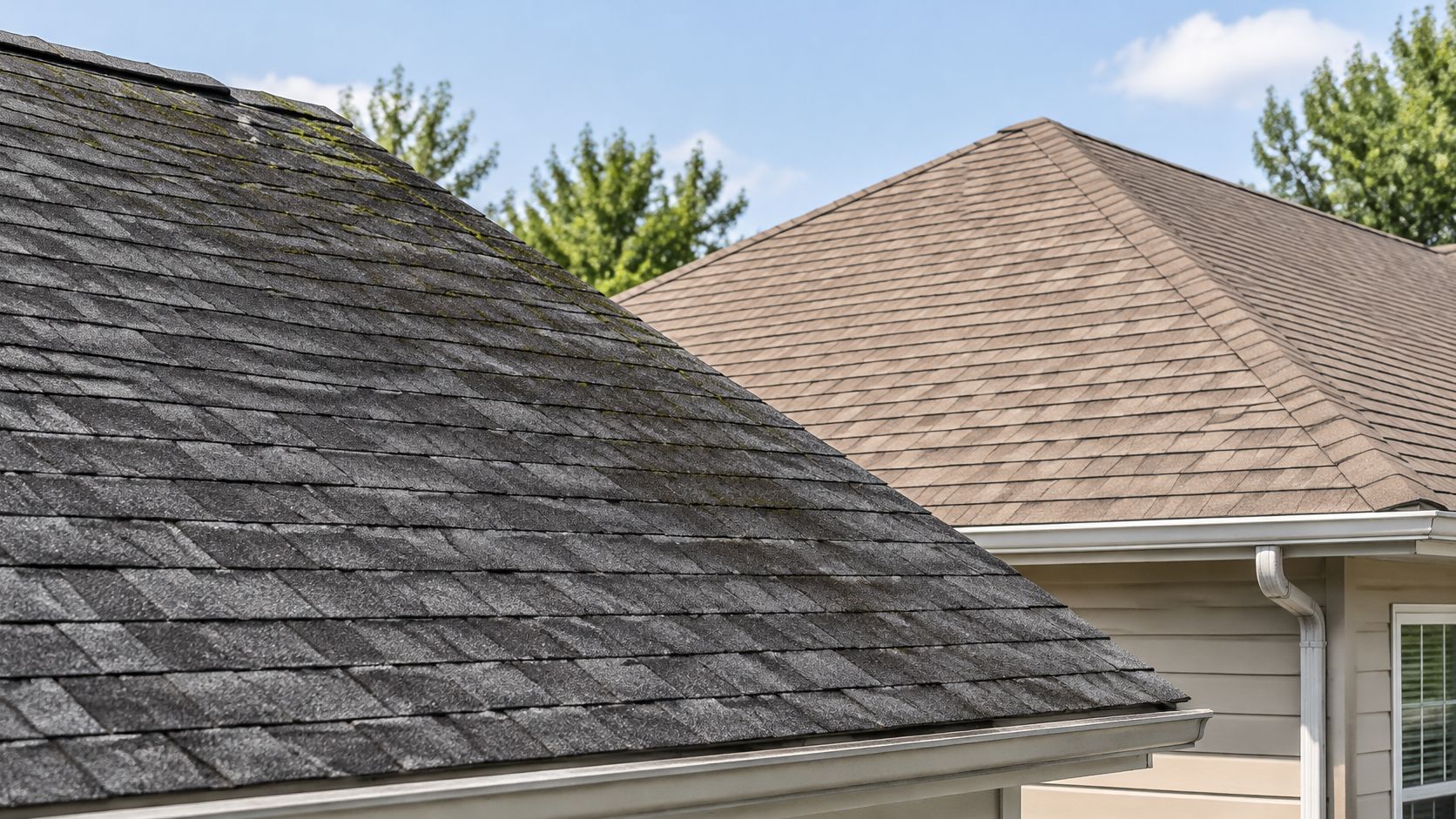
Dark roofs can show pale deposits, dirt, or uneven streaking clearly. Light roofs often make dark algae streaks more conspicuous, while blended shingles may disguise discoloration better than a uniform shade.
Ask what the appearance warranty actually covers
A material warranty isn't automatically a color-retention warranty. Ask whether fading, discoloration, and algae staining are covered separately, and whether remedies include labor or only replacement material.
- Color retention: Request written fade or appearance coverage, including exclusions and how the manufacturer evaluates a claim.
- Algae resistance: Consider algae-resistant granules where trees shade the roof, but don't confuse algae resistance with protection against moss or accumulated debris.
- Maintenance access: Plan for gutter clearing and branch trimming without repeatedly walking on the shingles.
Keep branches clear of the roof and remove debris using manufacturer-approved methods. Don't pressure-wash asphalt shingles to restore their original appearance; aggressive cleaning can damage the protective surface.
Compare weathered appearance and performance
Dirt and weathering can reduce reflectance, so a new-product rating doesn't tell the whole story. Request the manufacturer's aged rating and ask for examples of the exact shingle blend on established local roofs.
Also distinguish cosmetic change from deterioration. This guide to roof life span can help frame questions about repair or replacement when appearance changes accompany curling, exposed asphalt, or leaks.
The best color is the one that still looks intentional and performs after the first decade, not simply the one that looked best under store lighting.
What Roof Color Costs and Saves
Compare standard and cool-rated versions of the same shade on an itemized quote. A price difference often comes from the product line, coating technology, warranty package, or regional availability rather than the color name alone.
Ask the installer to identify the manufacturer, product line, exact color code, and solar-reflectance rating beside each price. Otherwise, you may be comparing a basic shingle with an upgraded system and attributing the entire difference to color.
Make the premium earn its place
Cooling savings aren't whole-house utility savings. In central Ohio, a premium for a reflective product needs a stronger justification than a hot-climate marketing example.
Use a simple payback check:
Simple payback = additional installed cost ÷ estimated annual net energy savings.
Use the difference between the actual quotes, not the full replacement cost. Estimate cooling savings against the cooling portion of your energy bill, then account for any expected heating-cost increase; if net savings aren't positive, energy savings alone won't repay the premium.
A color-retention warranty or algae-resistant granules may still justify added cost for appearance and maintenance reasons. Read the coverage before assigning it value.
- Keep scope equal: Compare the same underlayment, flashing, ventilation work, and installation warranty.
- Separate necessary repairs: Damaged decking and leak repairs aren't optional color upgrades.
- Set a spending ceiling: Decide what you're willing to pay for the preferred appearance before reviewing finalists.
That ceiling keeps a small aesthetic upgrade from displacing more important roof-system work.
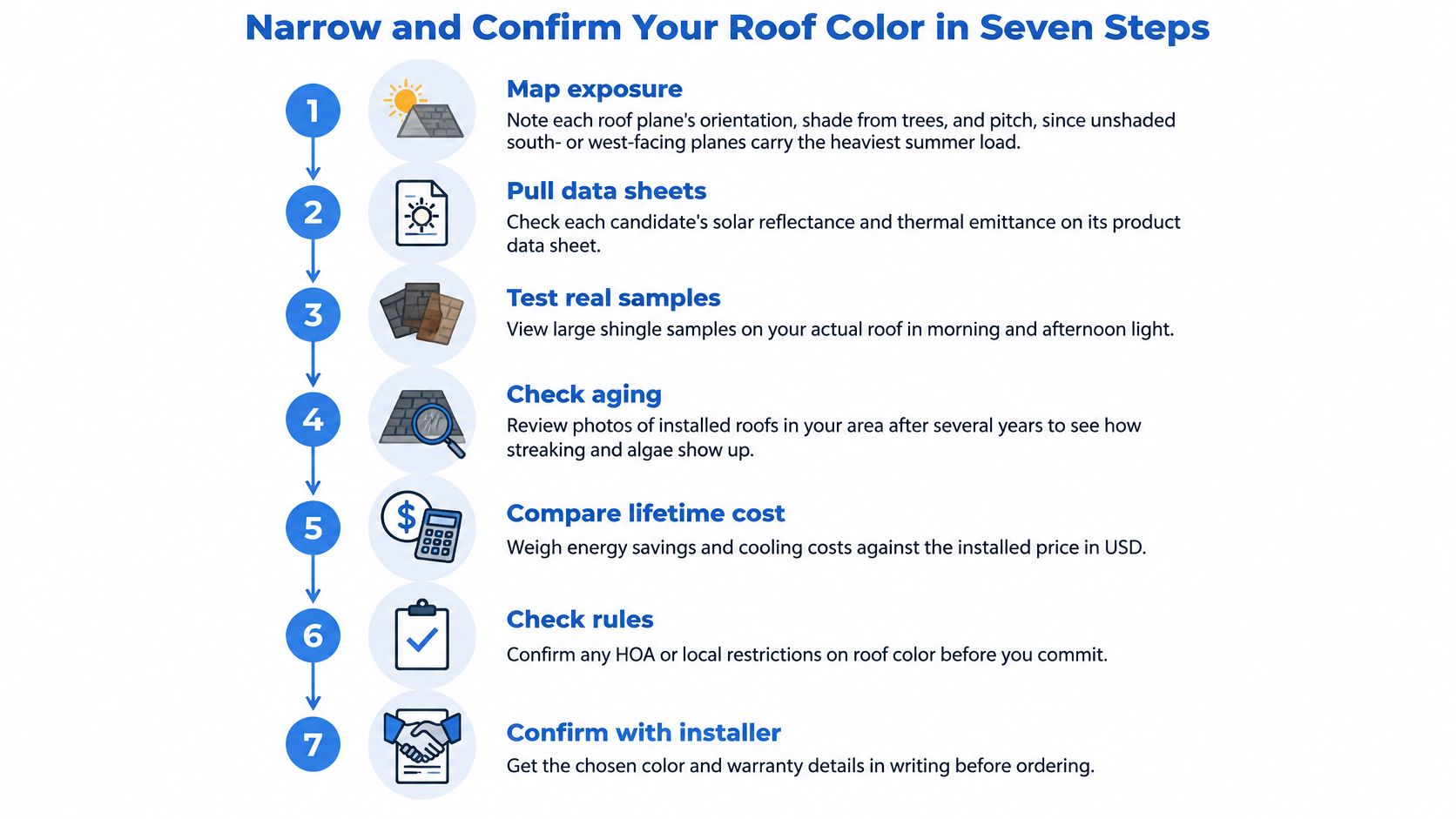
Narrow and Confirm Your Roof Color in Seven Steps
Use a written comparison sheet rather than relying on remembered color names. Keep product specifications, sample photographs, approval documents, and quote details together so the final order matches the decision.
Build a comparable shortlist
Map exposure.
Mark each roof plane's orientation, tree shade, and pitch on a photograph or simple sketch. Unshaded south- and west-facing planes deserve particular attention for summer exposure. Include planned tree removal because today's shaded roof may not remain shaded.Pull each candidate's data sheet.
Record solar reflectance, thermal emittance, and Solar Reflectance Index when listed. Solar Reflectance Index combines reflectance and emittance into a comparative indicator; it isn't a percentage of sunlight reflected. If a salesperson provides only a brochure describing a cool roof, request the technical sheet for the exact product and color.Confirm comparable testing.
The DOE guide to cool roofs identifies standardized reflectance measurements such as ASTM E903 or ASTM C1549. Ask the installer to confirm the reported test method and whether you're comparing initial or aged values. Never assume matching color names across manufacturers mean matching appearance or performance.Check aged performance.
Enter the aged rating beside the initial rating, not in a separate folder you'll forget to review. Ask whether the published figure applies to that exact color or a broader product family. If aged information isn't available, record that uncertainty instead of treating the new-product rating as permanent.
Test the appearance and lock the order
Shortlist compatible colors.
Keep the finalists manageable and eliminate shades that conflict with permanent masonry or existing trim. Choose distinct alternatives rather than nearly identical sample cards that won't clarify the decision. Include the flashing and accessory colors in the proposed palette.Test full-size samples outdoors.
Have the contractor position sample boards safely at approximately the roof's slope; don't climb onto the roof yourself. View them in morning, midday, and evening light, including overcast conditions if possible. Photograph the front elevation from the same street position, then compare each finalist on the same image using a roof visualizer.Verify approval, availability, and the written specification.
Confirm warranty terms, applicable HOA or code approval, and stock availability before signing off. Have the supplier identify the exact color code and production lot, and ask how the installer will handle bundles from different lots. Put the chosen manufacturer, product line, color, accessories, and warranty details into the contract.
A screen preview helps judge overall balance, but the physical sample remains the color reference. Don't approve an order from a phone screenshot alone.
Record the final decision with the installer in writing. Order the color that passes the performance, exterior-pairing, aging, and budget checks, rather than reopening the choice when the delivery truck arrives.
HIBCO ROOF LLC offers free roof inspections, written estimates, and roof design visualizations for Columbus and central Ohio homeowners considering repair or replacement. Visit HIBCO ROOF LLC to compare shingle colors alongside your roof's condition, attic needs, and existing exterior materials.